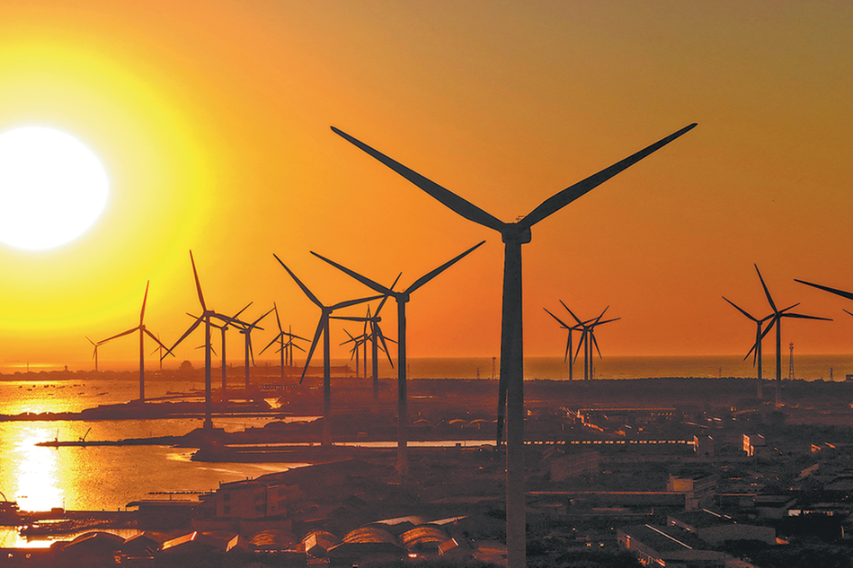
China is stepping up efforts to integrate private capital into its strategic energy infrastructure, creating a robust ecosystem for innovation that will power the nation's green transition and its booming digital economy.
The National Energy Administration recently announced plans to better formulate investment guidelines for private enterprises in major energy projects, including hydropower and oil and gas pipelines. This push aligns with the 15th Five-Year Plan (2026-30) for the energy sector, which aims to roll out landmark projects across new energy bases, power grids and technological initiatives.
Private companies have already become a vital force in energy technology innovation. In 2025, all 10 approved nuclear power units introduced private capital, with private shareholding reaching up to 20 percent.
Furthermore, private firms account for 60 percent of newly approved direct green power projects, 45 percent of the nation's 535 virtual power plants, and operate nine of the country's top 10 electric vehicle charging networks.
The success of this mixed-ownership model was recently cemented by the start of commercial operations at Unit 1 of the San'ao Nuclear Power Plant in Zhejiang province. Managed by China General Nuclear Power Group, the region's first Hualong One reactor marks a historic watershed as the country's first privately backed nuclear power project.