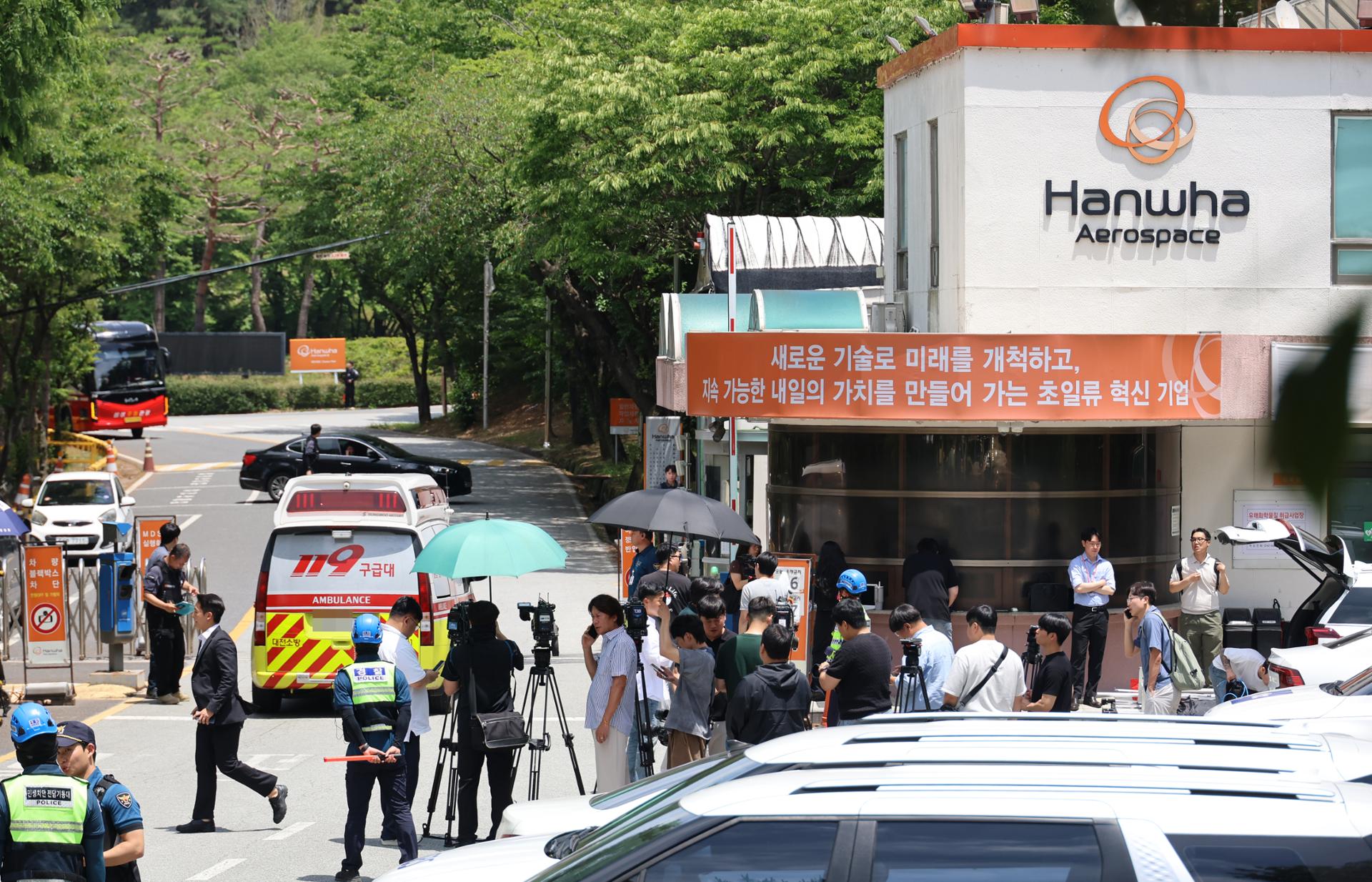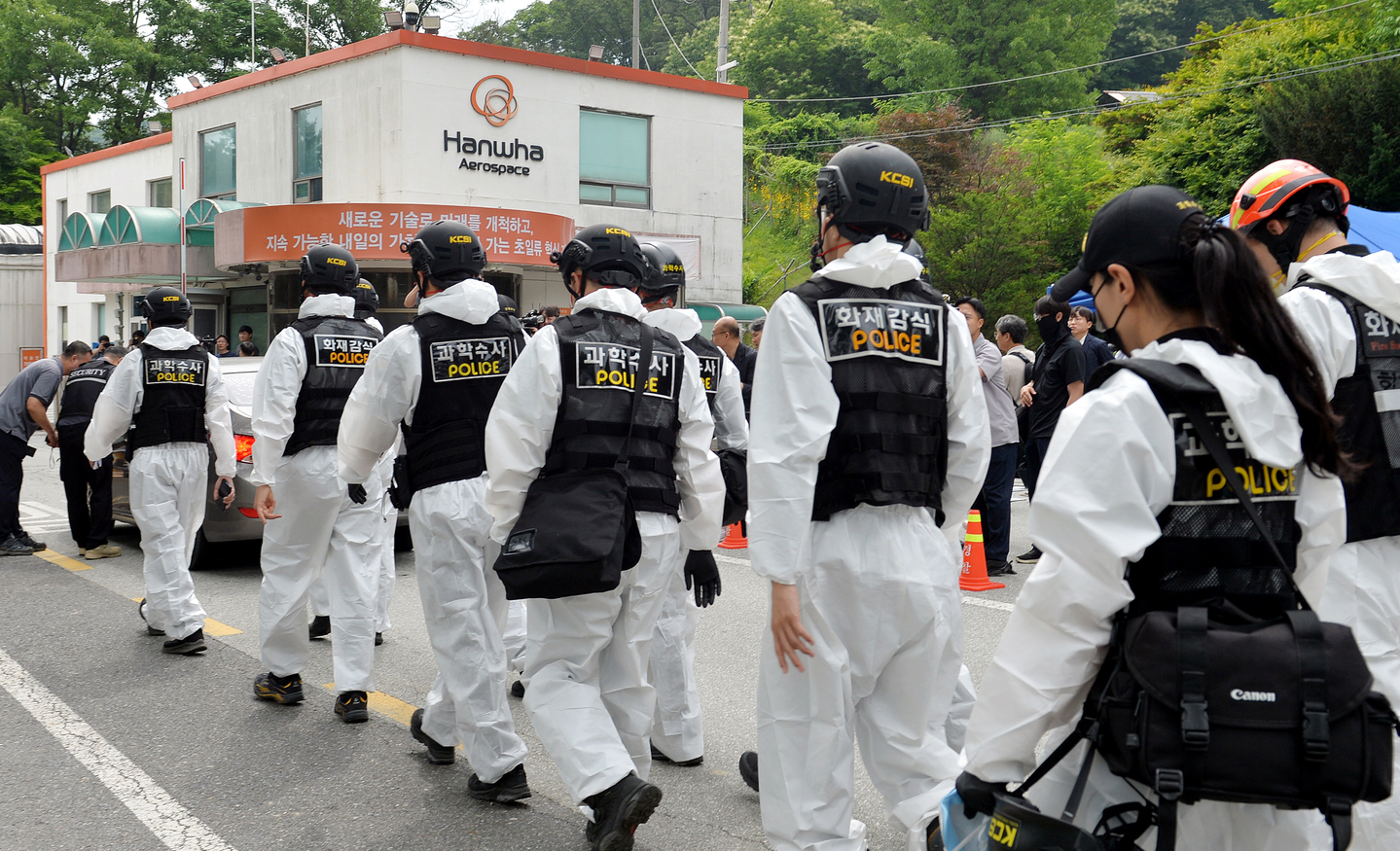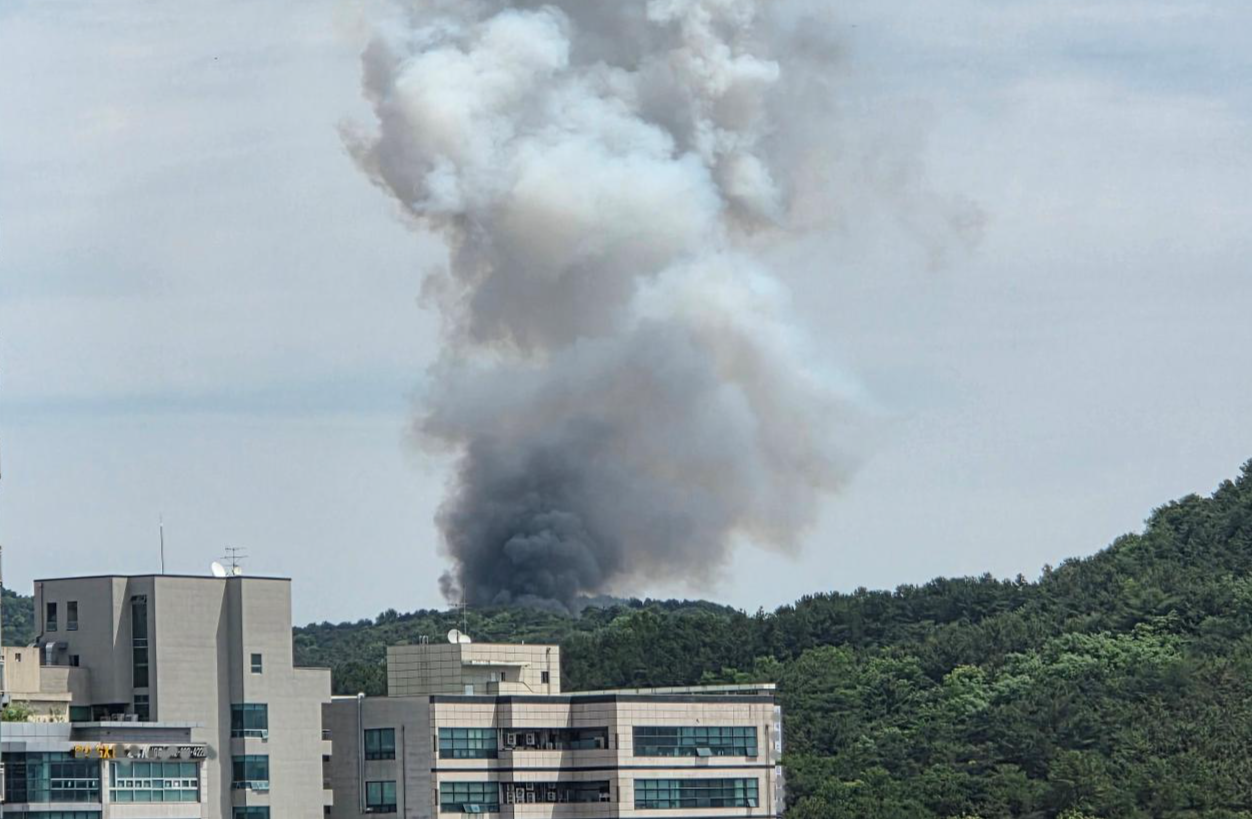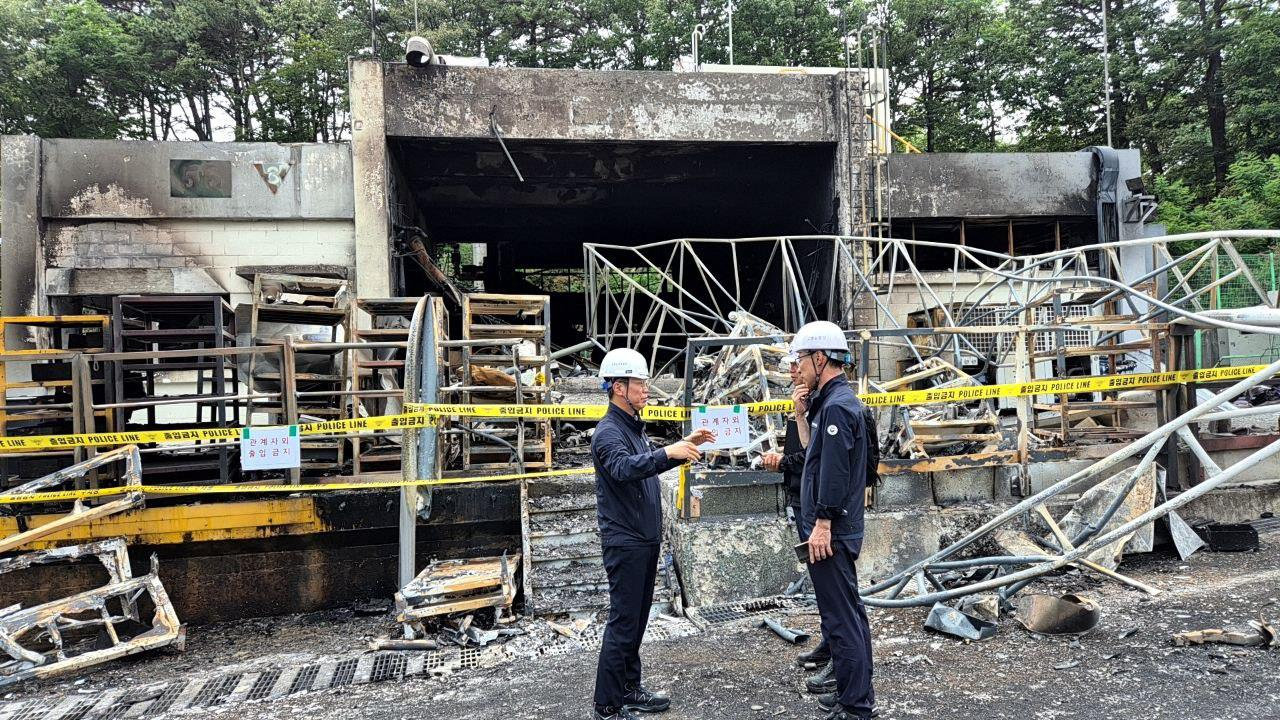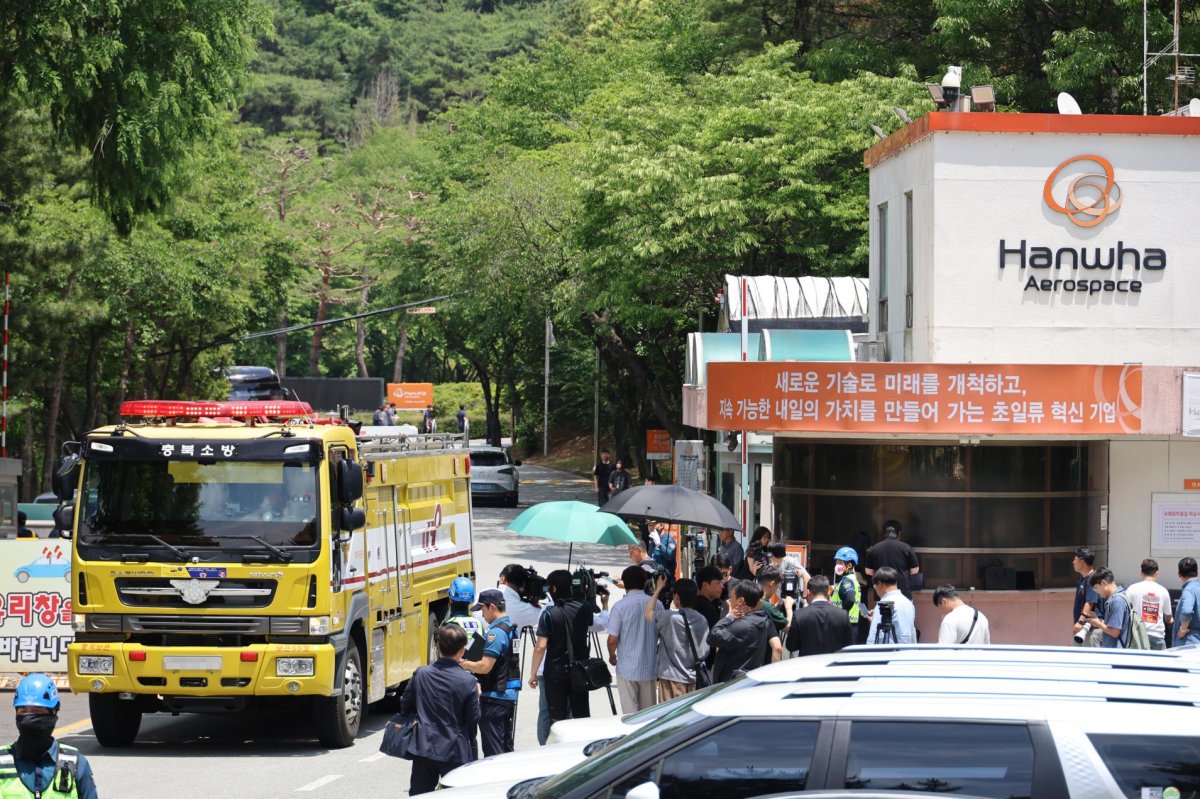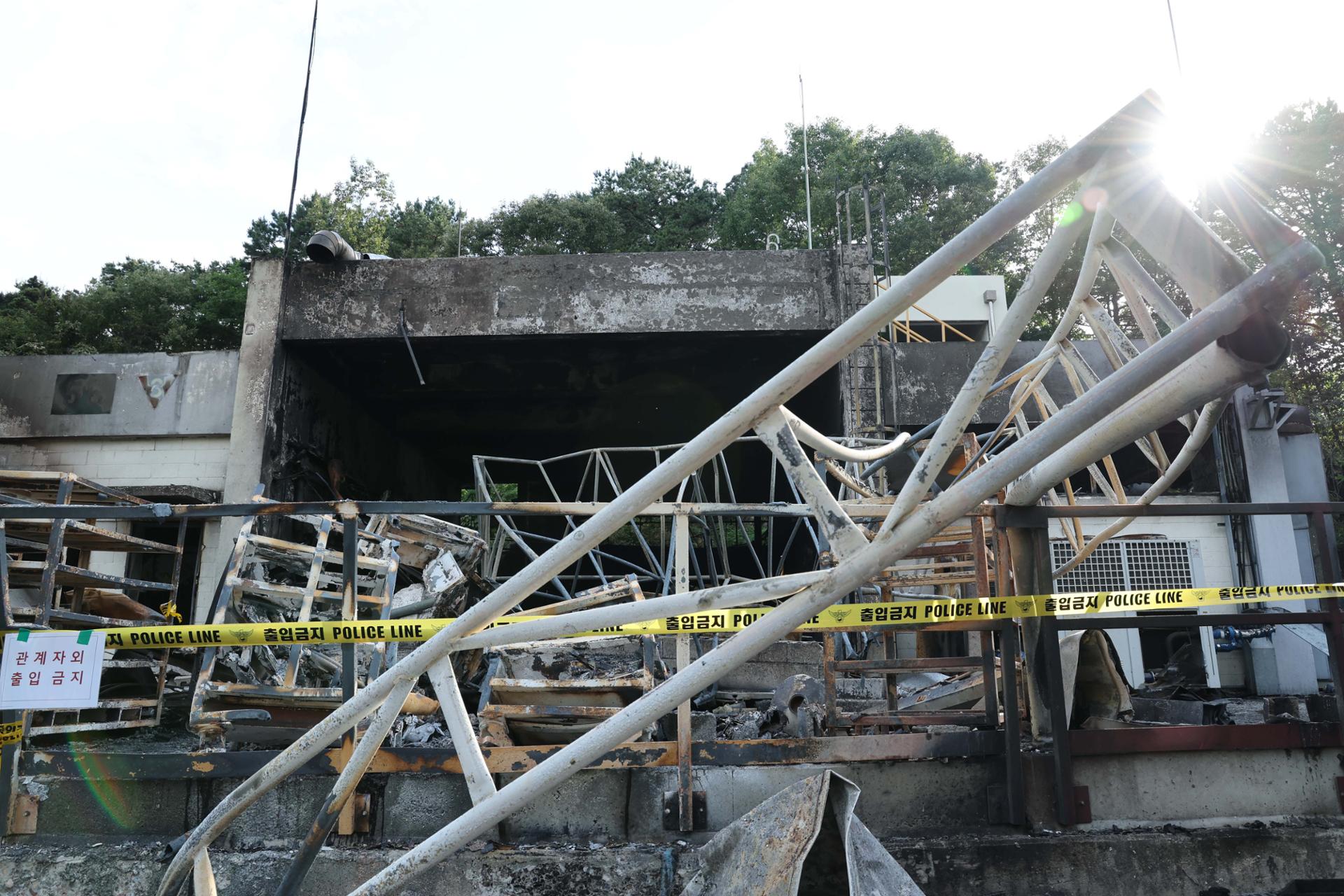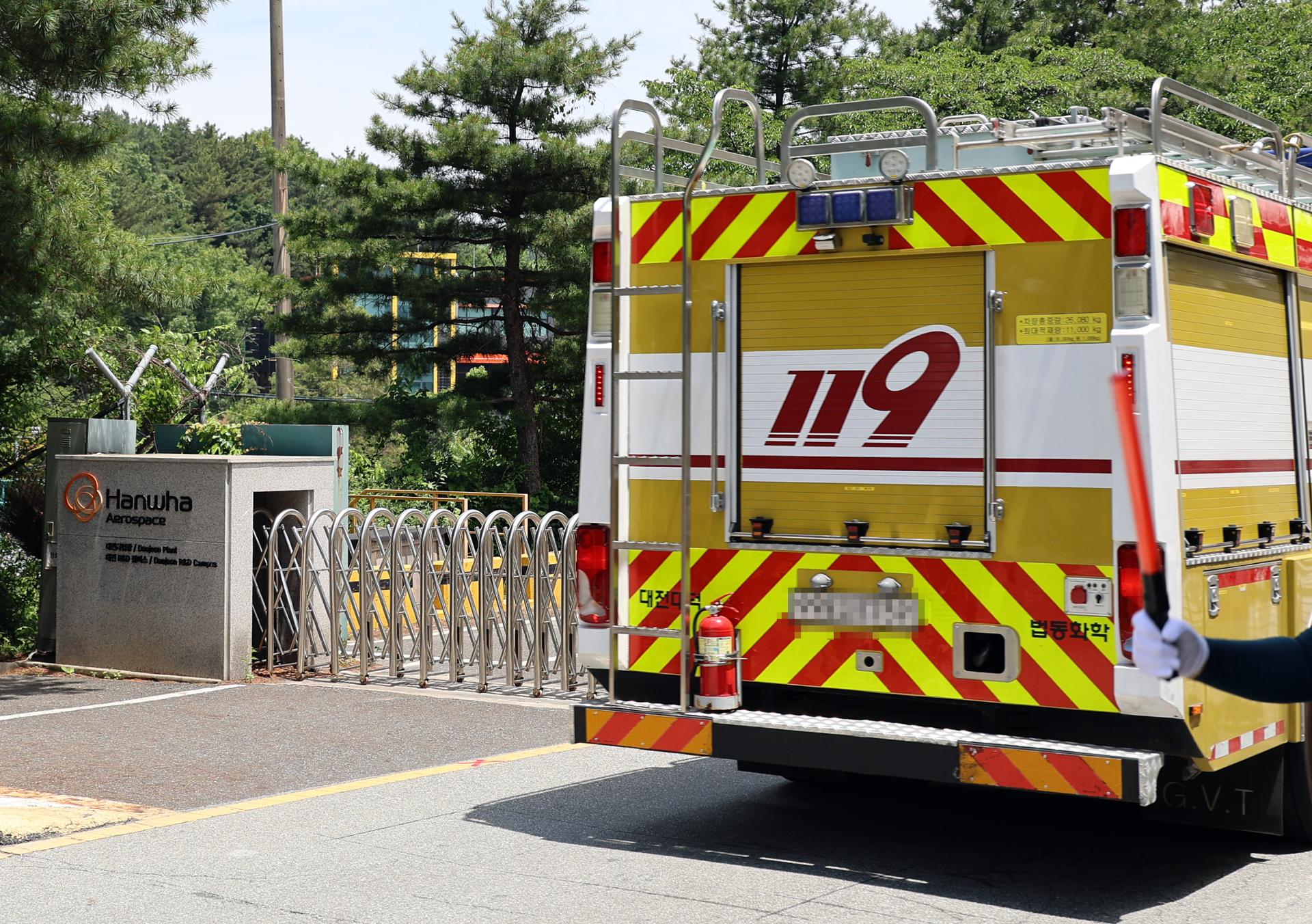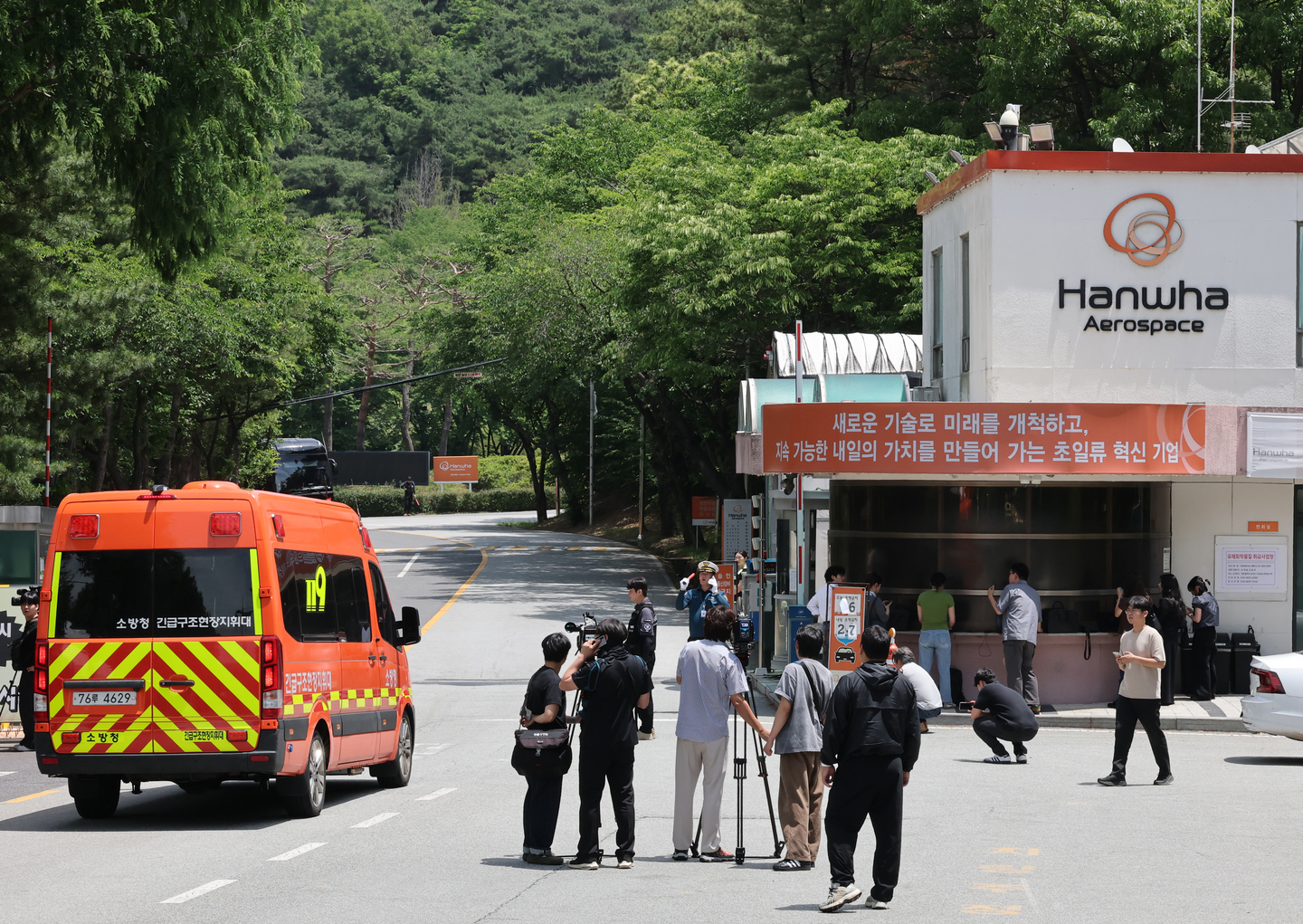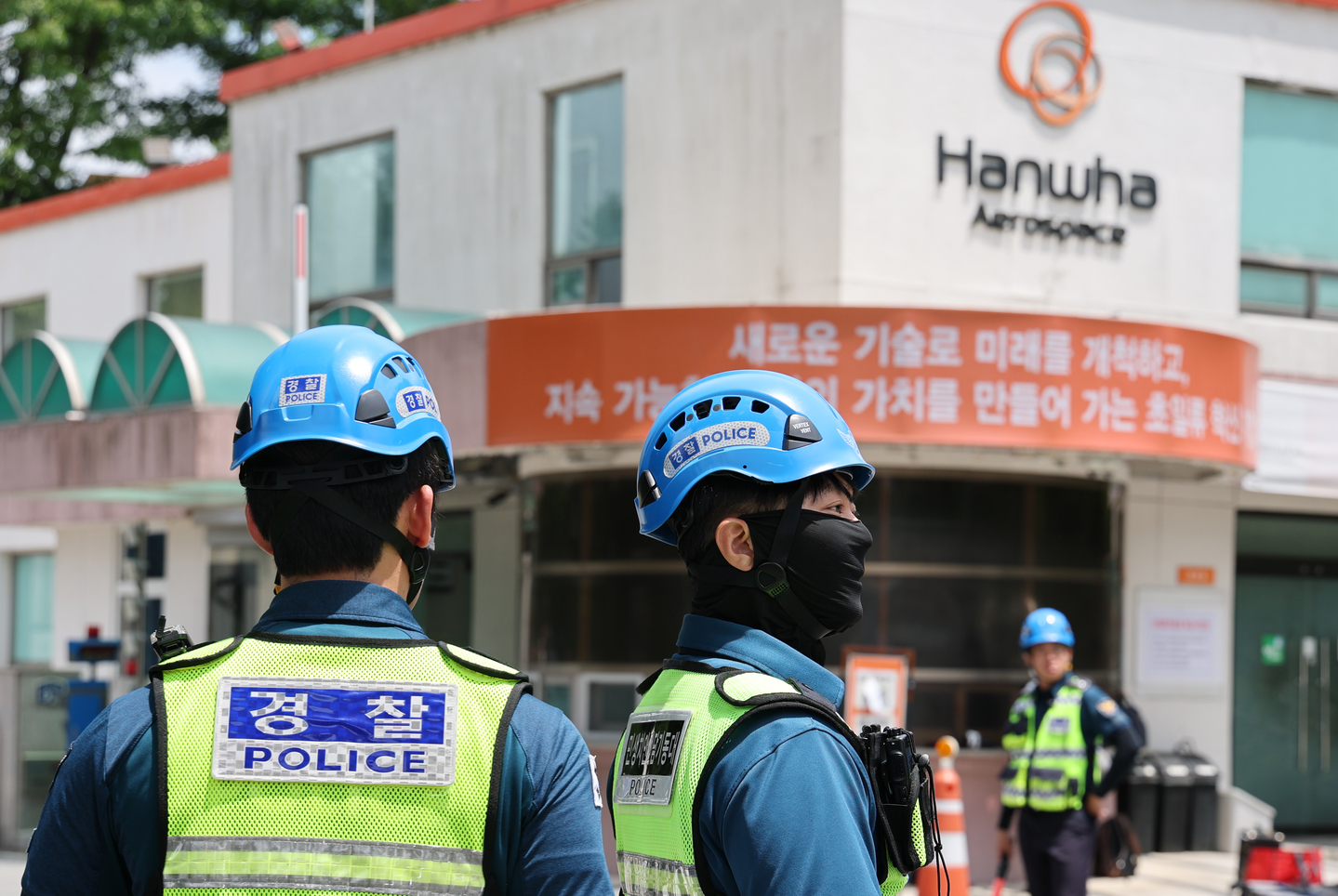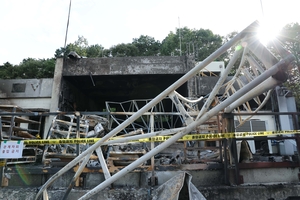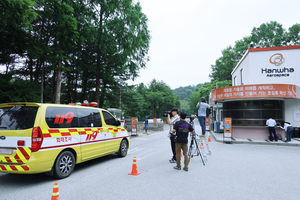
Police identify all five victims, as investigators examine practices at top defense contractor A fire investigation vehicle enters Hanwha Aerospace's facility in Oesam-dong, Yuseong-gu, Daejeon, Tuesday, a day after a fatal explosion at the site. (Yonhap) Police have identified all five workers killed in Monday's explosion at Hanwha Aerospace's Daejeon plant, as investigators examine whether shortcomings in the company's safety management system contributed to the accident.Authorities said Wednesday that the victims included two contract workers in their 20s and three full-time employees — two in their 50s and one in his 30s. The bodies were expected to be returned to their families later in the day.The explosion occurred Monday at Hanwha Aerospace's facility in Daejeon, killing five workers and injuring two others. The site develops propulsion systems for rockets, missiles and space launch vehicles.As the investigation continues, attention is increasingly turning to the company's safety oversight structure.The highest-ranking safety-related position at Hanwha Aerospace is the head of its Environment, Safety and Health office, a role currently held by a department manager-level employee rather than an executive.The official is responsible for leading the company's safety management team and performing the duties of chief safety officer, overseeing companywide safety, environmental and health policies.Industry officials say such an arrangement is unusual for a company of Hanwha Aerospace's size, particularly given the risks associated with defense manufacturing.Several domestic defense peers, including LIG Defense & Aerospace and Hyundai Rotem, maintain executive-led safety organizations.The issue is drawing attention because Hanwha Aerospace has emerged as the nation's dominant defense contractor amid a boom in global arms demand.The company posted record revenue of 26.6 trillion won ($19.3 billion) and operating profit of 3 trillion won last year, while its defense order backlog reached a record 39.7 trillion won as of the first quarter.Safety experts say the absence of an executive-level safety chief alone should not be viewed as evidence of weak safety management. The more important question, they say, is whether safety oversight and risk controls kept pace with Hanwha Aerospace's rapid growth."Hanwha should have thoroughly assessed critical risk factors, including both the likelihood of workplace hazards and the severity of their potential consequences, regardless of whether regulators explicitly required it," said Jung Jin-woo, a professor of safety engineering at Seoul National University of Science and Technology.Following the introduction of the Serious Accidents Punishment Act in 2022, many companies — including Hanwha Aerospace — adopted the Serious Injury and Fatalities framework to strengthen risk assessments and improve the prevention of major industrial accidents. The law was enacted amid criticism that penalties for fatal workplace accidents had been too lenient.But Jung said the effectiveness of such systems ultimately depends not on formal adoption but on how rigorously risks are identified, evaluated and managed in practice.Meanwhile, Hanwha Group Chairman Kim Seung-youn has taken charge of the group's response to the accident.According to industry sources, Kim ordered the company to mobilize all available resources immediately after the blast and established a groupwide emergency task force headed by Vice Chairman Yeo Seung-joo.Kim also instructed the company to provide full support to the victims' families and injured workers while cooperating with authorities as the investigation continues.
Hanwha safety oversight under scrutiny after deadly blast
Police have identified all five workers killed in Monday's explosion at Hanwha Aerospace's Daejeon plant, as investigators examine whether shortcomings in the c
524 words~2 min read