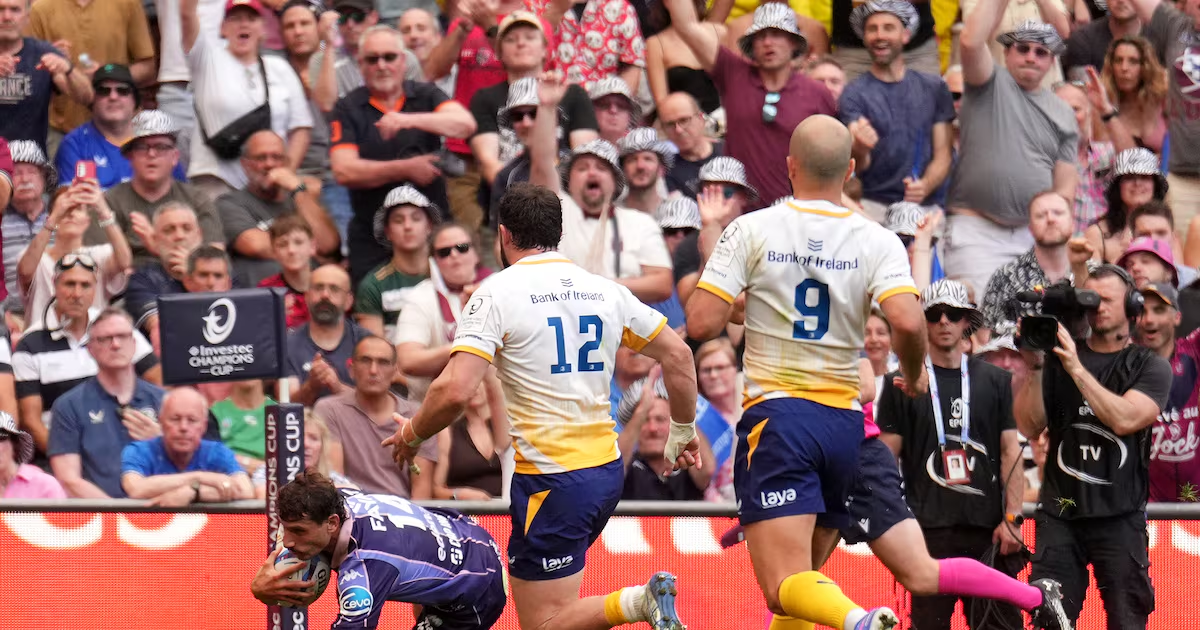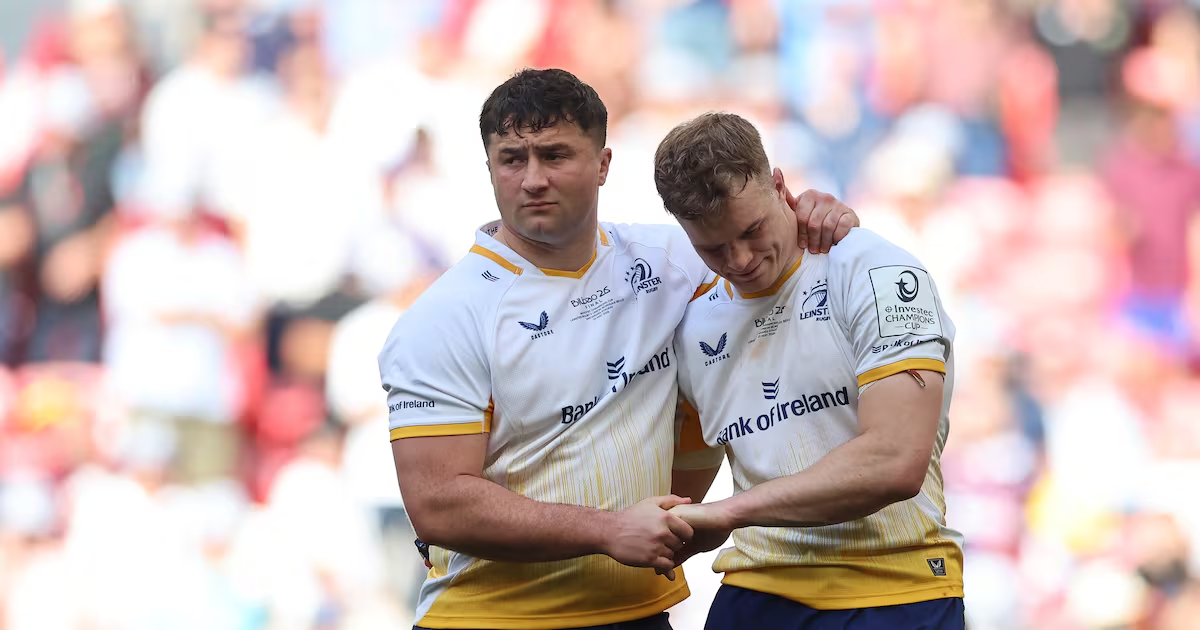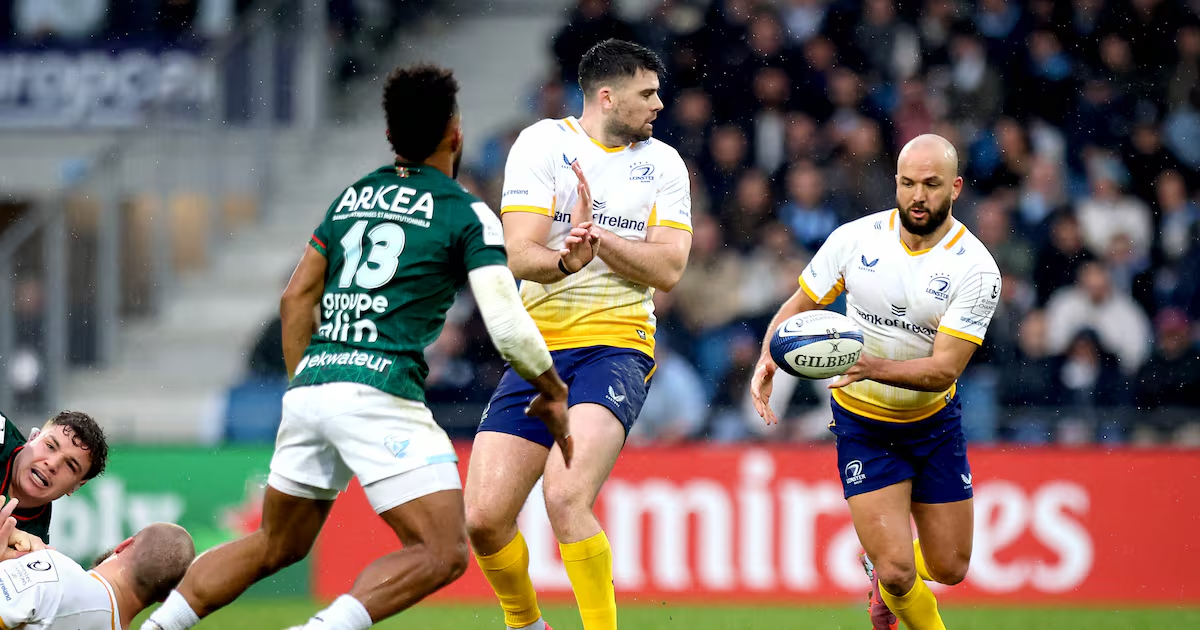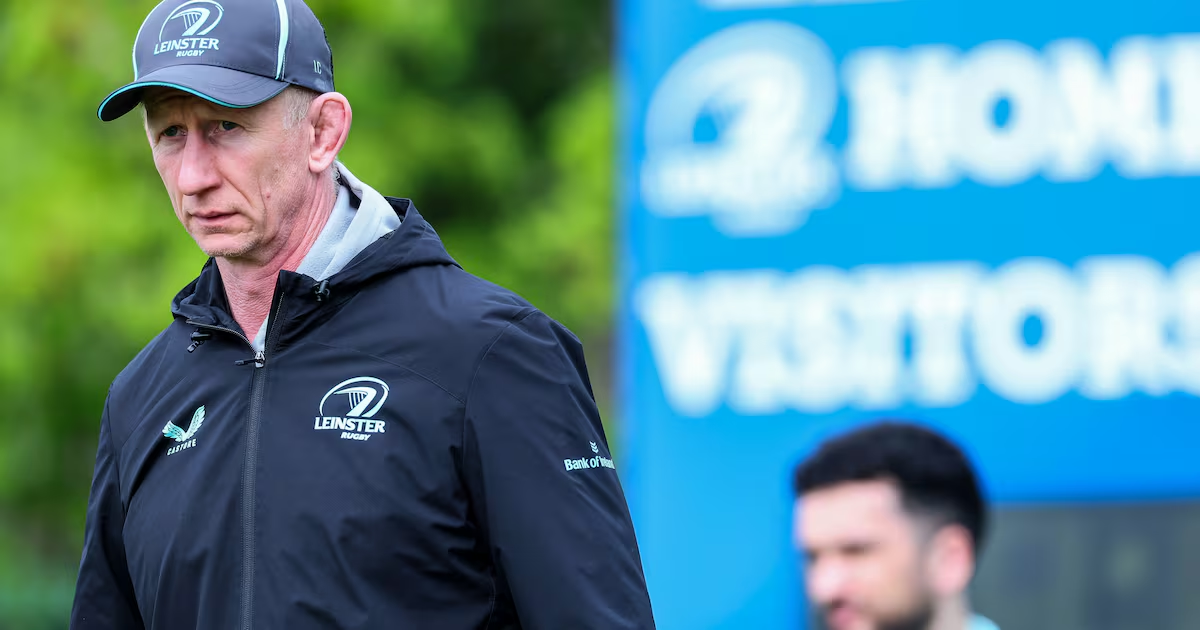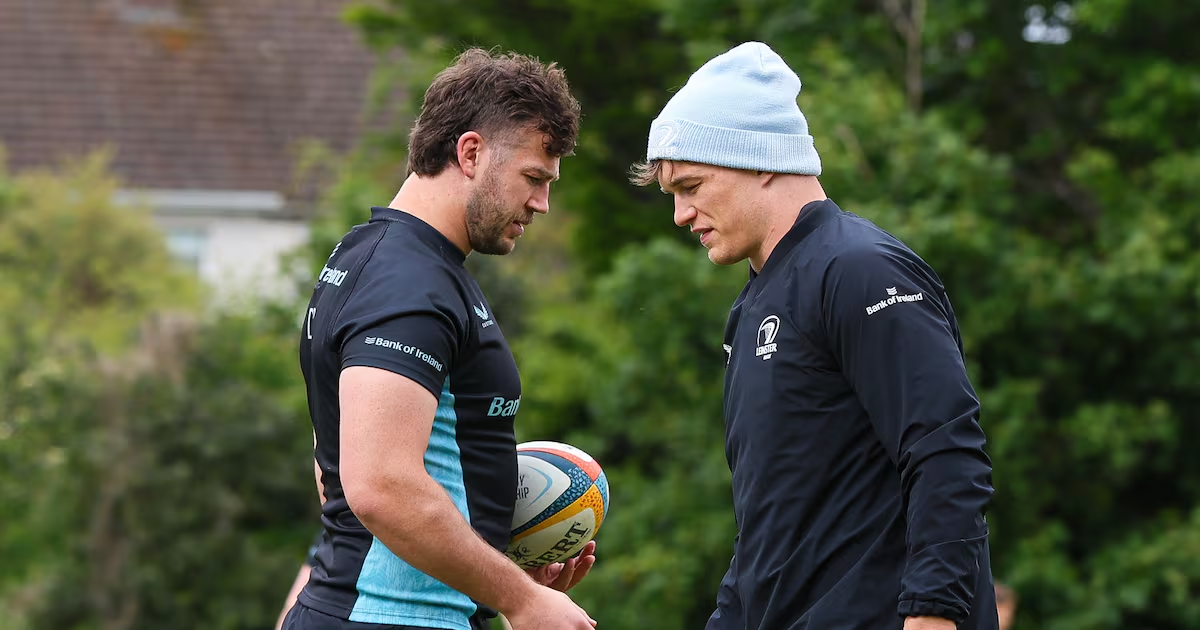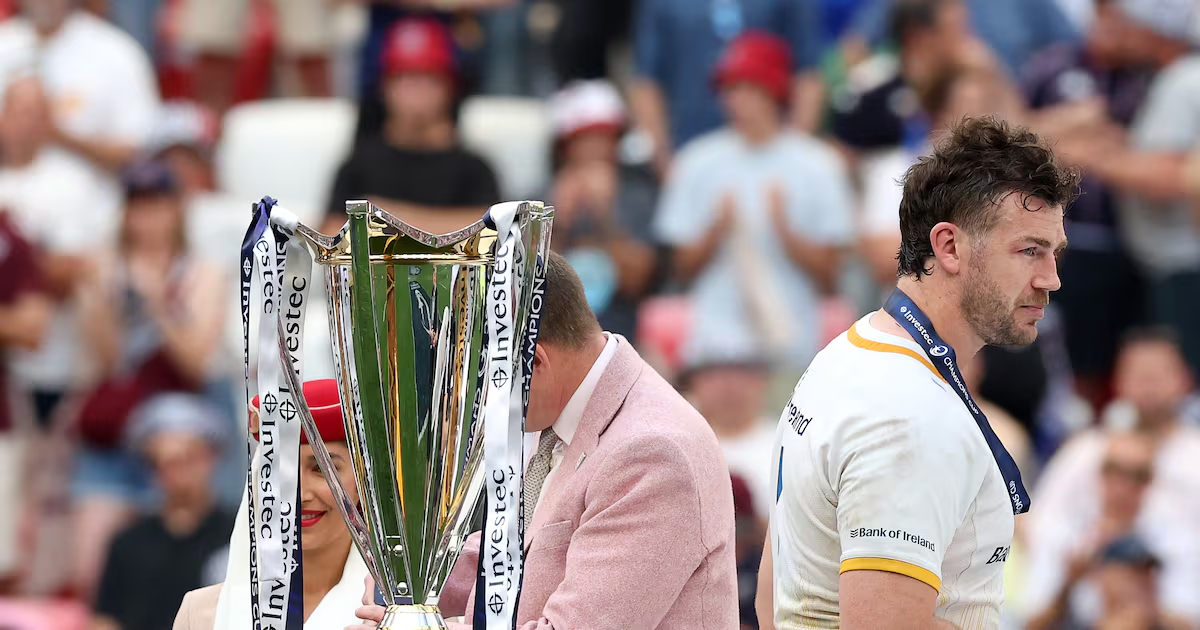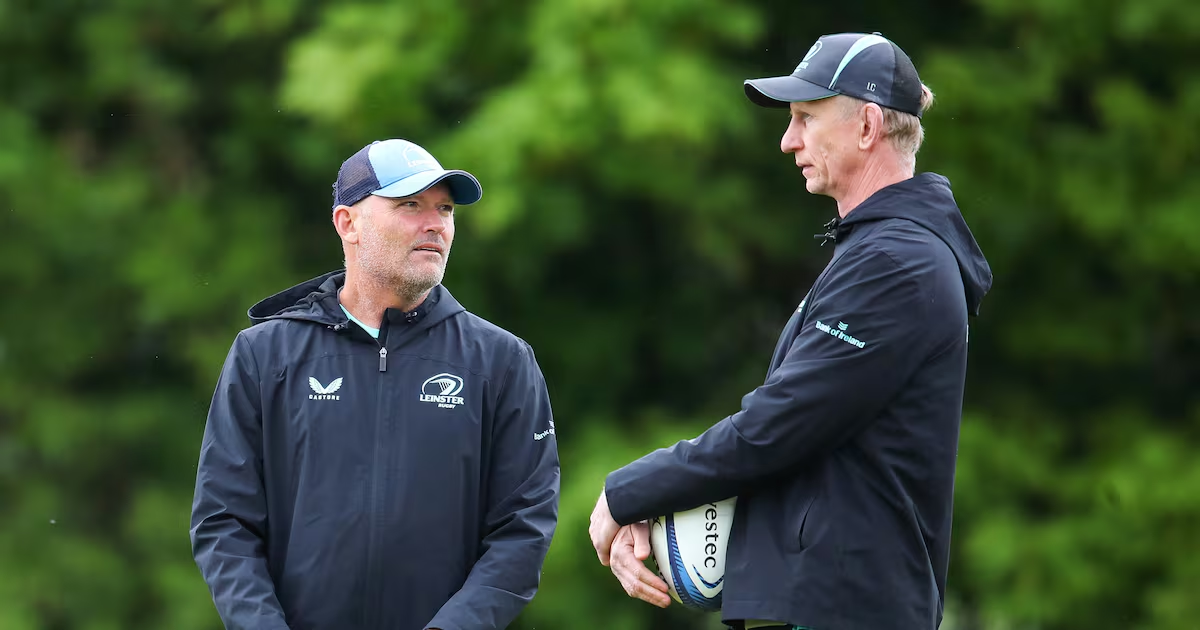
The postmortem following Leinster‘s Champions Cup final defeat will have been geared towards establishing if it was a player, coach or system error. Coaches got it wrong. Players did not turn up. The style of play was found out. All assertions contain more than a grain of truth, but none tell the full story – one that’s both interesting and uncomfortable.Leinster cannot do what their rivals do. Bristol Bears will have at least eight of the current squad leaving at the end of this season but will be able to recruit players of equal or greater quality.In the Top 14, French-eligible players dominate the depth chart in every position. Below it sits Pro D2, a vast reservoir of talent. And when all else fails, the clubs have the financial clout to look elsewhere. When Toulouse lost an inside centre of the quality of Pita Ahki, they signed Tommaso Menoncello from the URC. The best recruit the best.Leinster cannot. The provinces in Ireland are almost entirely beholden to what their academies produce, supplemented by three overseas players and perhaps the odd Irish-qualified player available from abroad. That is the entire toolkit.It has always been interesting to note the minuscule level of chatter around Leinster fielding more or less the same group of players season-on-season. This may need to be reframed as a constraint, not a choice. There have been limited breakthrough players in the last three or four campaigns; not many have changed the conversation at Leinster.That is not a failure of, but rather an absence of, recruitment. Munster are even more vulnerable, while Connacht and Ulster are in better health when you consider the quality they have added to their respective squads. There are two pathways in this country – the clubs and the private schools.The club pathway, for all the romance attached to it, boasts a modest yield when it comes to professional players. The odd one breaks through such as Tadhg Furlong or the Osborne brothers, Jamie and Andrew. The overwhelming majority of professional players in Ireland, something close to 90 per cent, come through the private schools.And here is the problem. The private schools are not in the business of developing players for the provincial academies. Their mandate, their entire reason for being in the rugby business, is to win the Junior and Senior Cups. That is what they are judged on.Leinster's Jamie Osborne is tackled by Pierre Bochaton of Bordeaux Bègles during the Champions Cup final at San Mames Stadium, Bilbao, on May 23rd. Photograph: James Crombie/Inpho Winning a cup is, for the most part, about a well-drilled attack, because the team that does that usually wins at that level. Players filtering into the academies are products of that environment. They are superb athletes, physically advanced, but coached to execute a pattern rather than to read a game.I have written before about seeing rugby players with extraordinary physical gifts and comparatively low rugby IQs. This is the root of it. They are not being coached to think. They are being coached to win a schools competition, and the two are not the same thing.Those players then fill the academies. From the academies, they feed the provinces. From the provinces, they feed the national team. In this current iteration, provinces are trying to upskill the rugby IQ deficit in their academies. My sense is that at 18- or 19-years of age, your journey to that point determines the player you will become. Leo Cullen’s job is twofold: win with Leinster and produce players for Ireland. Roughly 70 per cent of the current Irish squad has come through Leinster, which brings its own complications. Provinces must take on higher financial contributions when it comes to player salaries.Cullen must balance the disparate needs of 50-plus players across a season and balance provincial ambition against the constraints of the national interest in the Ireland team. He is, for much of the season, coaching with one hand tied behind his back. He cannot go to the open market when required.He is completely dependent on what the academies – which is to say, what the private schools – are providing. That is an unenviable position and I am not sure he gets anything like the credit he deserves for navigating it.When the dust settles on this season, I suspect the achievement of simply reaching a Champions Cup final will be more impressive than people currently appreciate. This is essentially the same squad as last year and the year before.That does not happen in northern hemisphere rugby. The top teams in the Top 14, in the Premiership, even the South African sides in the URC, all have turnover, movement, fresh quality arriving. Leinster have continuity by necessity. There is an argument that what they have squeezed from this group over the last three years is an example of overperforming relative to the raw material.Criticism of Leinster senior coach Jacques Nienaber has lacked context. Photograph: Tom O’Hanlon/Inpho Jacques Nienaber deserves a fairer hearing too. He has become the lightning rod for the season’s frustrations, but the criticism lacks context. Leinster’s early URC titles were won before the South African sides arrived and raised the bar considerably. The competition Nienaber inherited is far tougher. When Stuart Lancaster left, the comfortable choice was a like-for-like replacement and more of a system that had been almost working. That word, almost, is the problem. The system had produced a run of agonising Champions Cup final defeats, dating back to the last win in 2018. Whatever reservations I have about whether this style suits the players at Nienaber’s disposal, it is only fair to acknowledge that his tenure has been relatively successful: a URC title against stronger opposition than the squad faced in those earlier years. For all the European heartache, that is not nothing.The squad is older, more careworn. The nature of their Champions Cup heartache has shifted. In the La Rochelle years, Leinster were a player or two short – an RG Snyman-style ball-playing secondrow was the difference between winning and losing those finals.Against Bordeaux Bègles, it was not one or two players. They could not compete at that level. Leinster’s playing ceiling doesn’t go that high with the current crop of players. They cannot evolve the way they play between now and the end of this season, nor should they. They must back what they are doing, stick with the group and try to win a trophy.Leinster’s current style is probably enough to win the URC but the same flaws that surfaced all season are still there. Against the Lions they looked like the Harlem Globetrotters, but I still saw the predictability in the attack, the extra passes for no reason. Lovely to look at, but when it matters most in a final, against a desperate defence, it will not deliver.To win the biggest games, you need big players – and big players know when to venture off a script. They have a feel for the game. I am not sure Leinster have enough of those players right now. If they do, they are not breaking out of the pattern enough to prove it.That is a player responsibility as much as a coaching one. The coaches do not lose finals on the pitch. The players do, and they must own their share.Leinster’s 12-week preseason is the next genuine opportunity to look at how they play and decide whether to evolve it. The coaches have done a great deal with the raw materials available to them. The harder, longer question – the one that goes beyond Cullen and this squad – is whether Irish rugby is building a system that produces the kind of players who can win on the biggest days.Right now, it is building athletes. Winning Champions Cups or World Cups requires something more.
Gordon D’Arcy: Constraints on Leinster put Leo Cullen’s achievements into context
Head coach has been working with essentially the same squad for three years – he cannot go to the market for a quick fix
1,299 words~6 min read