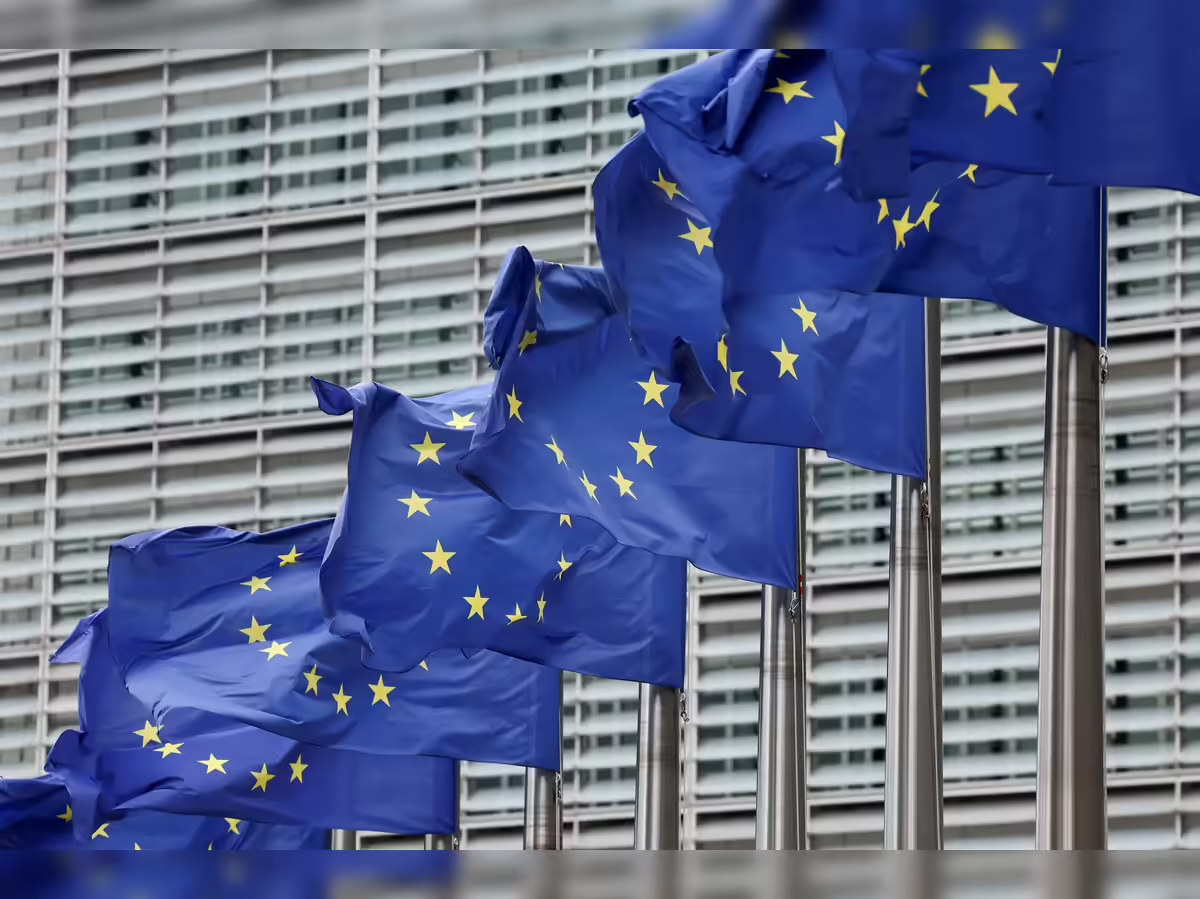
Skip to Content Subscribe Our Offers My Account Manage My Subscriptions FAQ Newsletters Canada Canadian True Crime Canadian Politics Health World Israel & Middle East Financial Post NP Comment Longreads Puzzmo Diversions Comics NP News Quiz New York Times Crossword Horoscopes Life Eating & Drinking Style Sponsored Play for Ontario Travel Travel Canada Travel USA Travel International Cruises Travel Essentials Culture Books Celebrity Movies Music Theatre Television Business Essentials Advice Lives Told Tails Told Shopping Buy Canadian Home Living Outdoor Living Tech Style & Beauty Kitchen & Dining Personal Care Entertainment & Hobbies Gift Guide Travel Guide Deals Savings National Post Store More Sports Hockey Baseball Basketball Football Soccer Golf Tennis Driving Vehicle Research Reviews News Gear Guide Obituaries Place an Obituary Place an In Memoriam Classifieds Place an Ad Celebrations Working Business Ads Archives Healthing Epaper Manage Print Subscription Profile Settings My Subscriptions Saved Articles My Offers Newsletters Customer Service FAQ Newsletters Canada World Financial Post NP Comment Longreads Puzzmo Diversions Life Shopping Epaper Manage Print Subscription HomeNewsWorldEU to reveal new plan to greatly reduce dependence on American and Asian techThe goal of the 'technological sovereignty' plan is to build digital ecosystems that ensure Europe retains control over services and data, and resists foreign interferenceAuthor of the article: You can save this article by registering for free here. Or sign-in if you have an account.The EU wants to boost European tech alternatives and cut reliance on American and Asian companies. Photo by Sameer Al-DOUMY/AFP/FileBRUSSELS — The EU will set out on Wednesday how the 27-country bloc hopes to slash its dependence on American and Asian technology, and favour European digital alternatives.Enjoy the latest local, national and international news.Exclusive articles by Conrad Black, Barbara Kay and others. Plus, special edition NP Platformed and First Reading newsletters and virtual events.Unlimited online access to National Post.National Post ePaper, an electronic replica of the print edition to view on any device, share and comment on.Daily puzzles including the New York Times Crossword.Support local journalism.Enjoy the latest local, national and international news.Exclusive articles by Conrad Black, Barbara Kay and others. Plus, special edition NP Platformed and First Reading newsletters and virtual events.Unlimited online access to National Post.National Post ePaper, an electronic replica of the print edition to view on any device, share and comment on.Daily puzzles including the New York Times Crossword.Support local journalism.Create an account or sign in to continue with your reading experience.Access articles from across Canada with one account.Share your thoughts and join the conversation in the comments.Enjoy additional articles per month.Get email updates from your favourite authors.Create an account or sign in to continue with your reading experience.Access articles from across Canada with one accountShare your thoughts and join the conversation in the commentsEnjoy additional articles per monthGet email updates from your favourite authorsSign In or Create an AccountorThe plans risk further angering the United States, which has pushed back hard at the European Union’s fines and rules in recent years against American tech companies.The bloc has in the past year ramped up its efforts to boost domestic manufacturing across different sectors, and catch up with rival companies in the United States and China.EU tech tsar Henna Virkkunen will unveil the new “technological sovereignty” package in Brussels, including new rules on chips, cloud computing and AI.Get a dash of perspective along with the trending news of the day in a very readable format.By signing up you consent to receive the above newsletter from Postmedia Network Inc.A welcome email is on its way. If you don't see it, please check your junk folder.The next issue of NP Posted will soon be in your inbox.We encountered an issue signing you up. Please try againThe goal: to build digital ecosystems that ensure Europe retains control over services and data, and resists foreign interference.Brussels worries its soft underbelly has been exposed after crises over chips and rare earths with China last year, coupled with fears an angry President Donald Trump could one day pull the plug on U.S. cloud computing via a “kill switch.”In a draft strategy document seen by AFP, the EU said it is reliant on foreign providers for “over 80 percent of its digital products, services, infrastructure and intellectual property,” based on an official 2023 report.The EU, however, insists the push is aimed not at shutting out foreign providers, but at strengthening European industry and keeping itself in the AI race.Based on the text seen by AFP, the package will include:— a new law on cloud computing and artificial intelligence to encourage the construction of data centres in the EU. Brussels hopes the rules will triple the bloc’s capacity in the next five to seven years;— boosting the demand for European-made semiconductors with a new chips law;— a push for the public sector to use more open-source software solutions that ensure greater control and flexibility, and avoid being locked in;— creating a common EU scheme to rate the sustainability of data centres.Cloud computing is dominated by U.S. platforms with the three biggest — Microsoft’s Azure, Amazon Web Services and Google Cloud — making up 70 per cent of the European market.The EU is estimated to spend 264 billion euros (US$307 billion) annually on U.S. cloud software, according to a 2025 report by French consultancy Asteres.Brussels is also expected to impose sovereignty criteria for public contracts in the cloud and AI sectors, and wants to force governments to undertake “sovereignty risk assessments” to identify European providers when needed.The push is partly fuelled by worries over Europeans’ data since the Trump-era 2018 Cloud Act allows Washington to demand access to data from U.S.-based providers regardless of where the information is held.There are fears the new rules could provoke retaliation by Trump. But an EU lawmaker who has worked closely on tech sovereignty told reporters Tuesday Europe “should not bow down to pressure.”“We set our rules in Europe, according to the needs and the demands of the European citizens,” said Matthias Ecke of the Socialists and Democrats, though he expects U.S. providers to remain “dominant” despite the EU push.Brussels is making clear its determination.The European Commission said last week it wants to reserve for European firms a share of the mobile satellite frequencies currently used by U.S. operators.The latest moves reflect a change in Brussels, not just moving away from regulating Big Tech but favouring European technology.Chips, cloud computing and AI “are the nervous system of the modern economy,” powering everything from defence to healthcare, EU lawmaker Oliver Schenk said.“Europe therefore cannot afford to remain merely a consumer of critical technologies developed elsewhere,” the conservative MEP told AFP.Our website is the place for the latest breaking news, exclusive scoops, longreads and provocative commentary. Please bookmark nationalpost.com and sign up for our daily newsletter, Posted, here. Join the Conversation This website uses cookies to personalize your content (including ads), and allows us to analyze our traffic. Read more about cookies here. By continuing to use our site, you agree to our Terms of Use and Privacy Policy.
EU to reveal new plan to greatly reduce dependence on American and Asian tech
Europe worries its soft underbelly has been exposed after crises over chips and rare earths with China last year.
TL;DRAI
The EU announced 'technological sovereignty' rules on cloud, AI, chips to cut 80% dependence on foreign providers. New sovereignty criteria for public contracts will reshape cloud procurement, forcing IT decisions away from AWS, Azure, Google Cloud.
1,162 words~5 min read