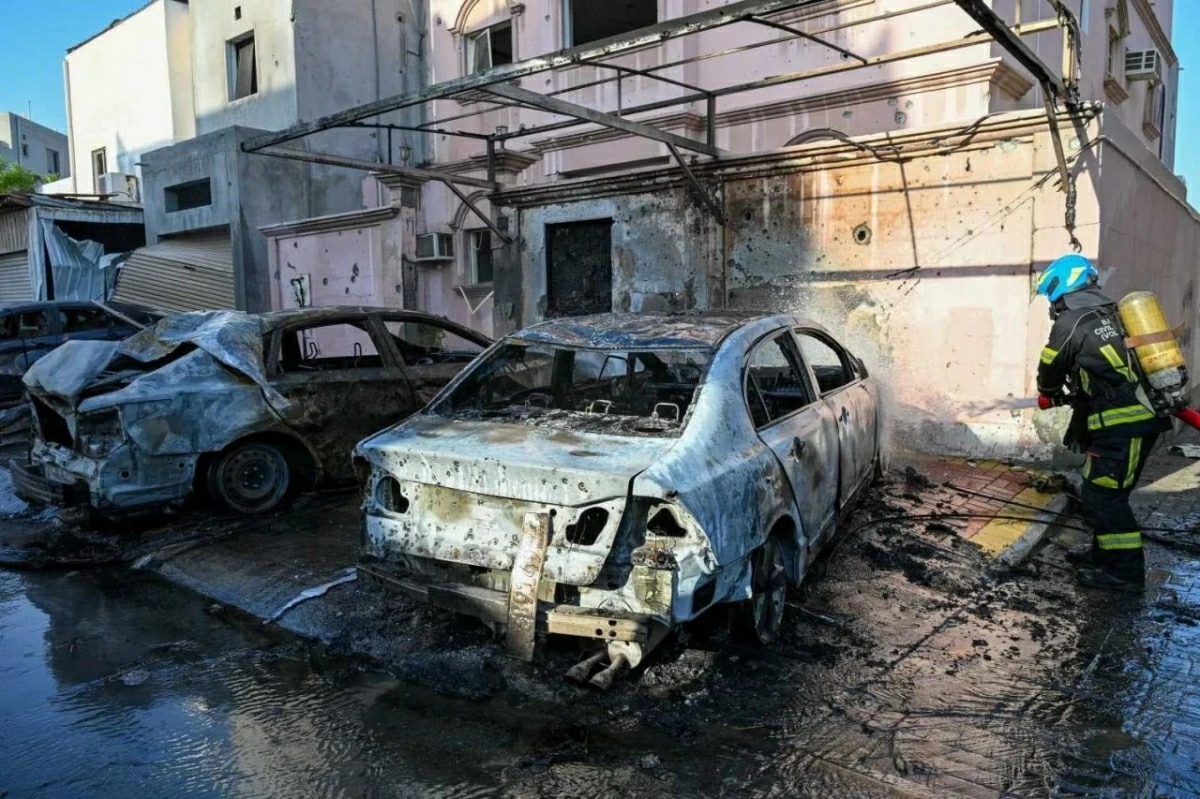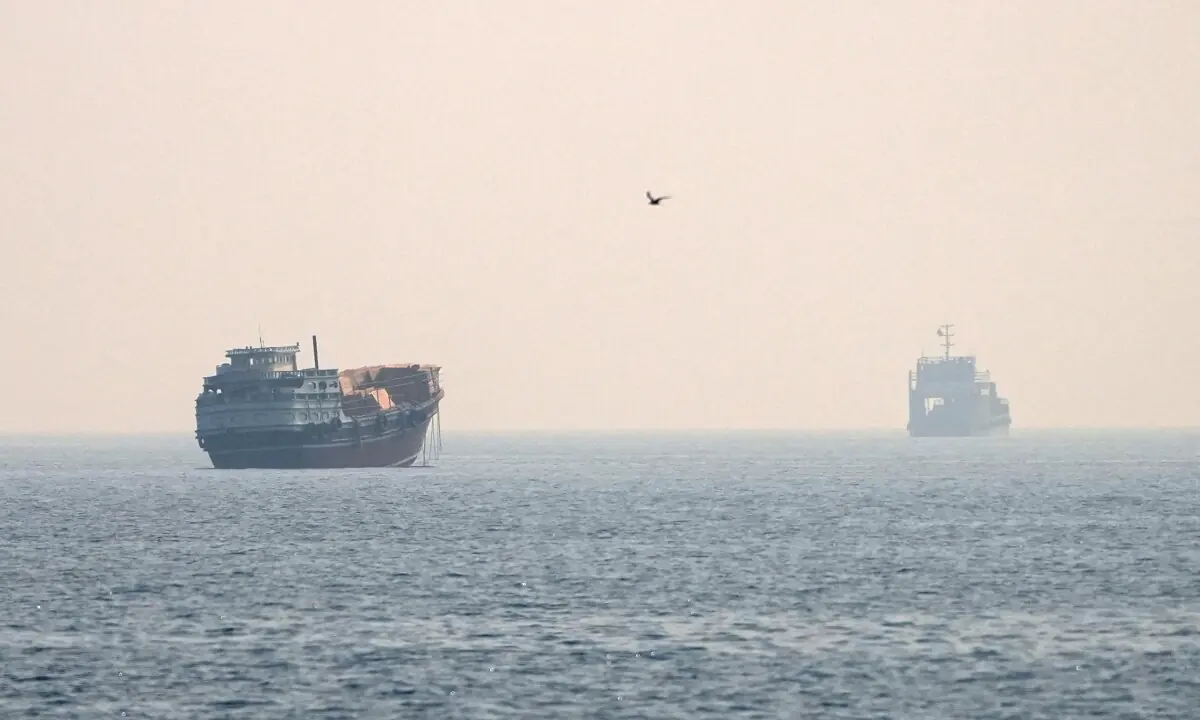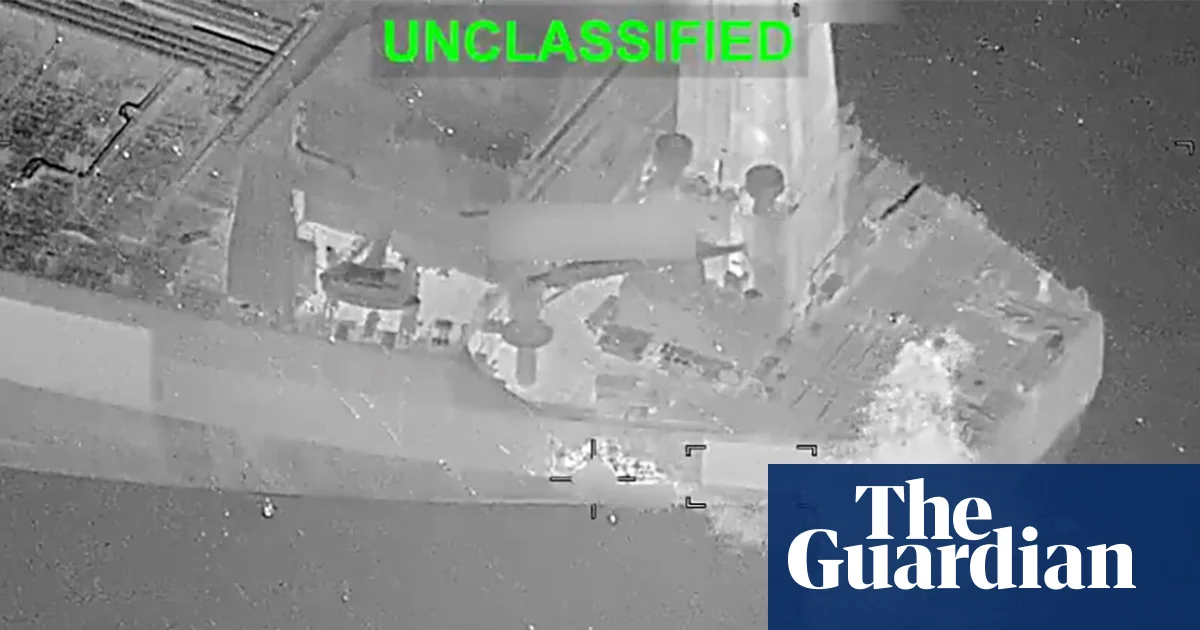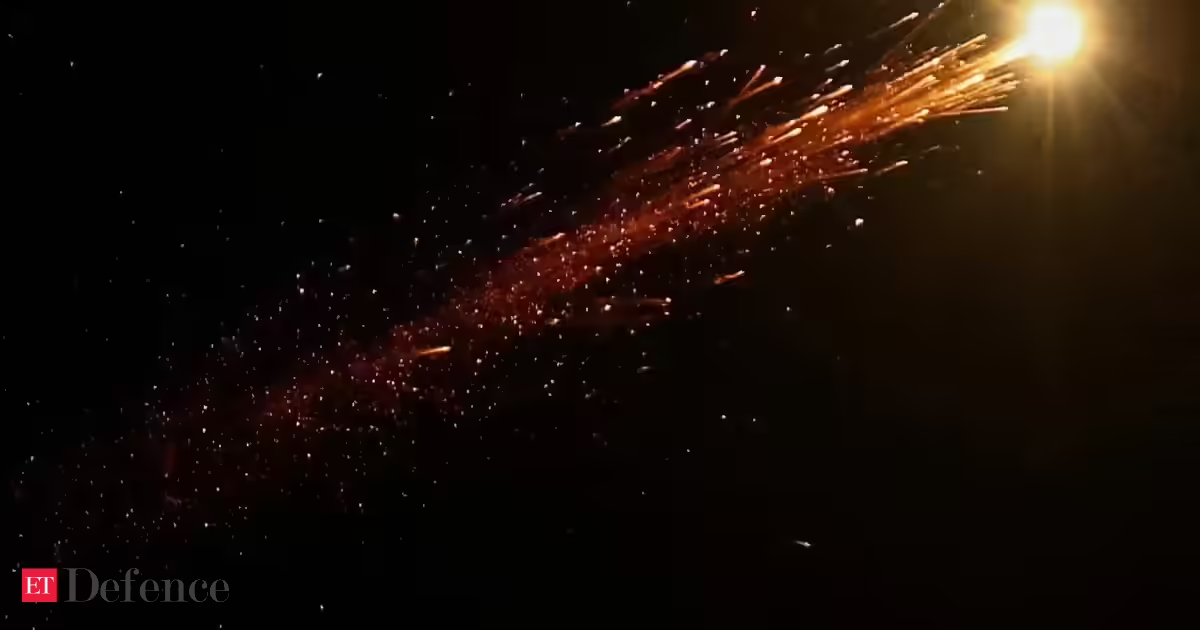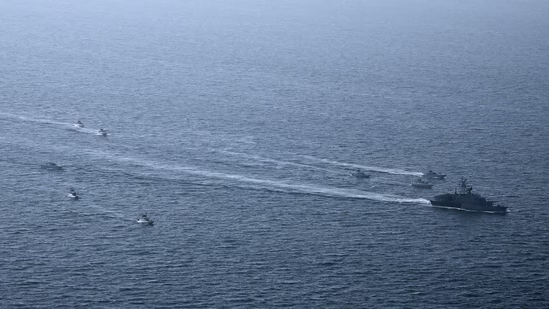
A new series of attacks resumed between Iran and the US late on Tuesday, with Iran firing missiles at enemy vessels and American bases in Bahrain and Kuwait. The Islamic Revolutionary Guard Corps (IRGC) announced that its forces carried out retaliatory strikes against ‘an enemy vessel’, the headquarters of the US Fifth Fleet in Bahrain, and a regional American airbase, according to a report by Press TV.Iran navy ships during a military exercise by members of the IRGC and navy in the Gulf. (AFP)Although Iran did not name Kuwait, a post from the US Central Command (CENTCOM) confirmed that the second country targeted was Kuwait: "An additional wave of Iranian drones attempting to attack US forces in Kuwait failed to impact intended targets tonight."Track Iran war news LIVEThe two drones fired at Kuwait fell apart en route, while US and Bahraini forces intercepted the missiles aimed at Bahrain, it added.CENTCOM also said it responded with strikes on an Iranian military ground control station on Qeshm Island in the Strait of Hormuz.Why has Iran launched fresh attacks on Kuwait and Bahrain?The IRGC, in a statement, said the attacks were in response to the US firing a missile into the engine room of an Iranian oil tanker near the Strait of Hormuz, according to Press TV.According to the statement, "Late last night, the aggressive US military struck an Iranian oil tanker with an aerial projectile in the vicinity of the Strait of Hormuz, causing damage to the vessel's engine room."The IRGC said the incident prompted a response by its naval forces."In response to this aggression and violation of the regulations governing the Strait of Hormuz, an American-Zionist enemy vessel named Panaya was targeted by missiles launched by the IRGC Navy," IRGC stated.The Corps said the retaliatory operations were consistent with its earlier warnings.Also Read | Iran attacks US bases in Kuwait, warns 'era of hit and run is over'; explosions heard in Iraq and Bahrain"We had previously warned that any act of aggression would be met with a different and heavier response, and we acted accordingly. These responses should serve as a lesson.""We reiterate that disrupting the security of the Strait of Hormuz will carry a heavy price for the aggressive US military."What happened to the peace talks?The attacks came after Iran stopped communicating with mediators about extending a ceasefire in the war with the US and Israel, according to reports published Tuesday by Fars and Tasnim news agencies.A regional official involved in the mediation, speaking on condition of anonymity to discuss the talks, told The Associated Press that Iran had not communicated at all on Tuesday after saying that a ceasefire needed to be enforced in Lebanon for negotiations to continue.However, US President Donald Trump maintains that talks are still ongoing and that reports of a cessation of talks are "false and erroneous.”“The conversations between us have been going on continuously, including four days ago, three days ago, two days ago, one day ago and today,” Trump said in a social media post. "Where they lead, one never knows, but as I told Iran, ‘It’s time, one way or another, for you to make a Deal.'"Two days ago, taking to X, Iranian foreign minister Abbas Araghchi said that the ceasefire between Iran and the US was comprehensive and applied to all fronts, including Lebanon. He warned that any violation on one front would be considered a breach of the ceasefire across all fronts and said that the US and Israel would bear responsibility for the consequences of any such violation.
Why Iran launched fresh attacks on Kuwait, Bahrain amid US peace talks: ‘A lesson’
In a statement, the IRGC said the attacks were launched in retaliation for a US missile strike that hit the engine room of an Iranian oil tanker near Hormuz | World News
589 words~3 min read