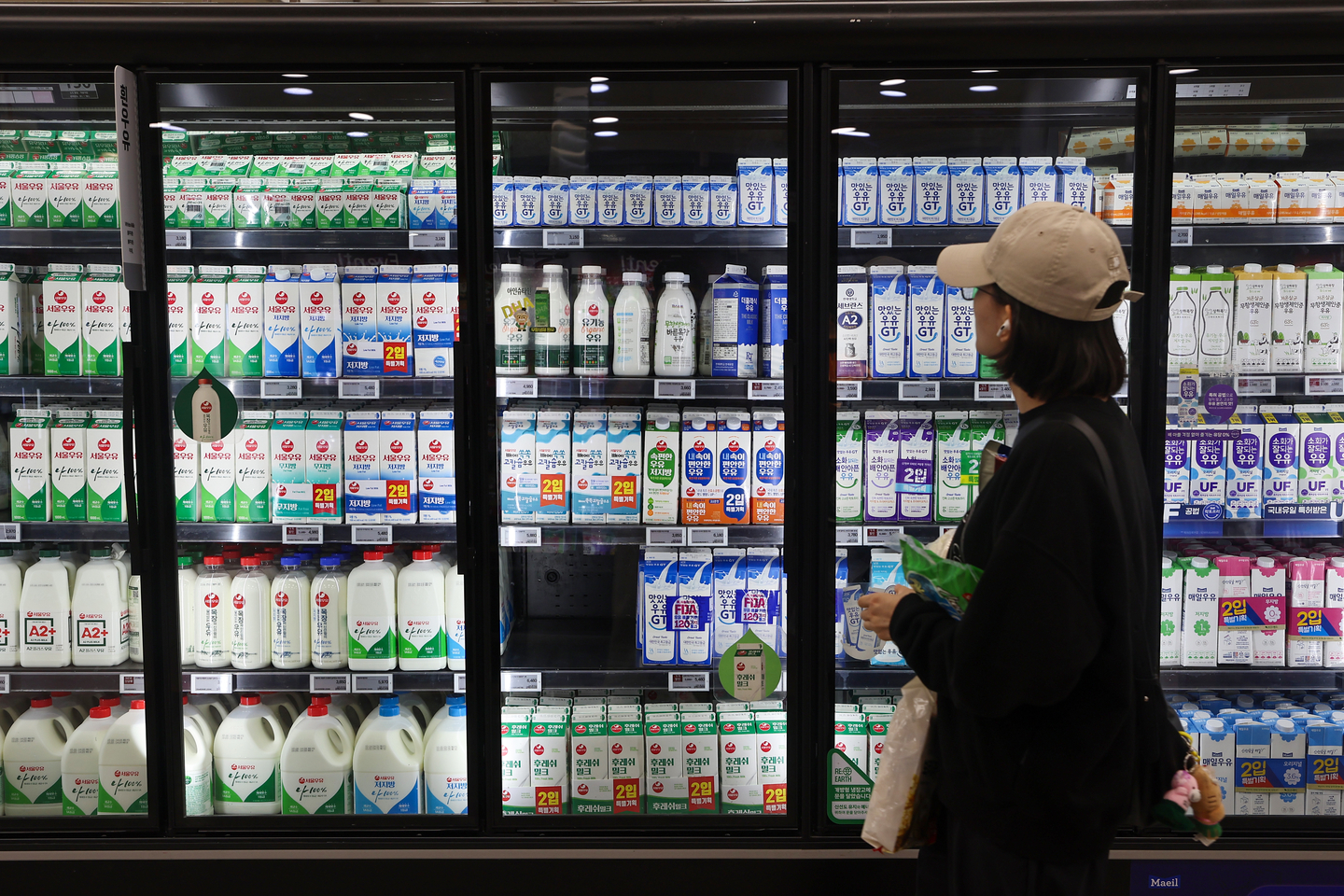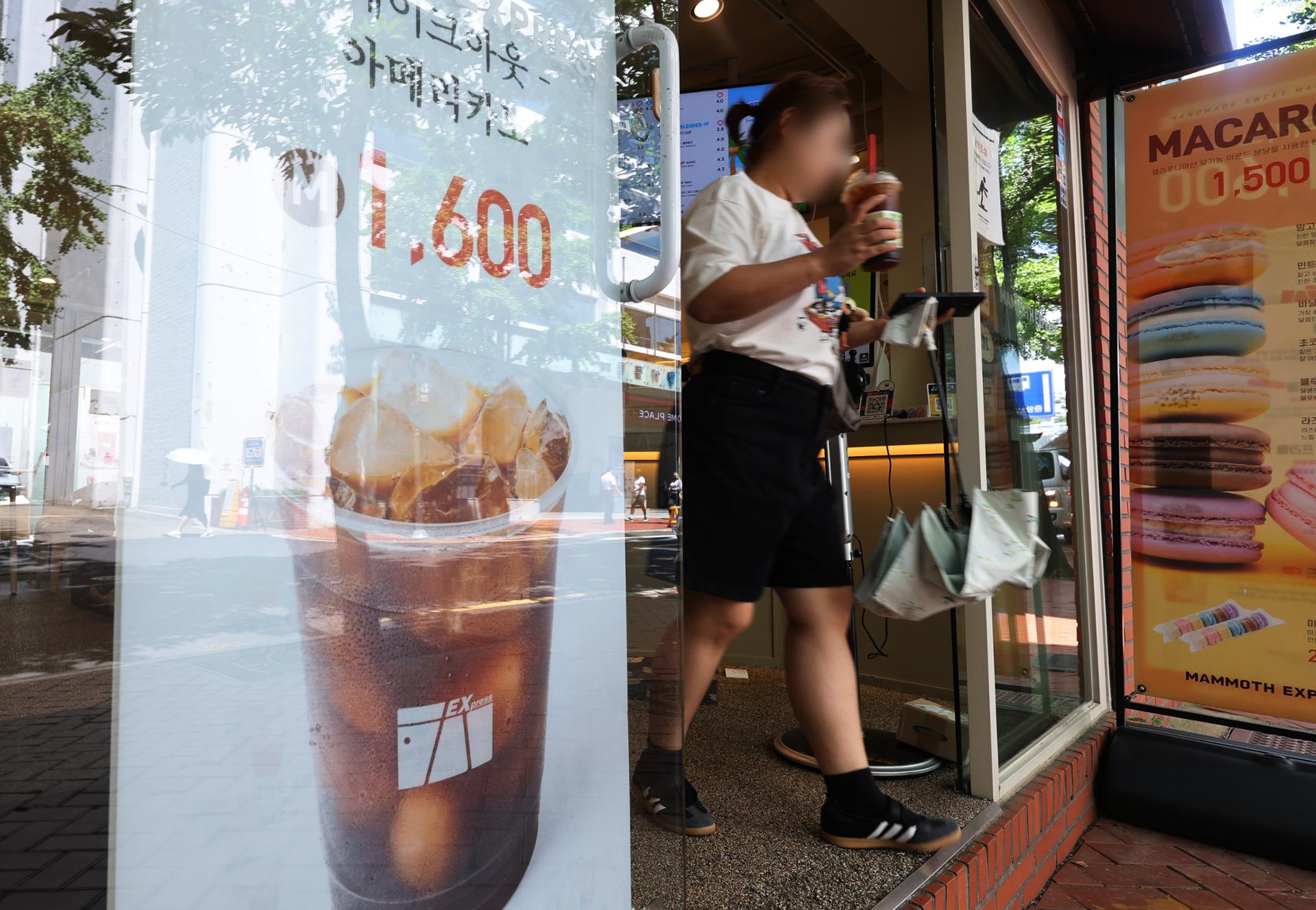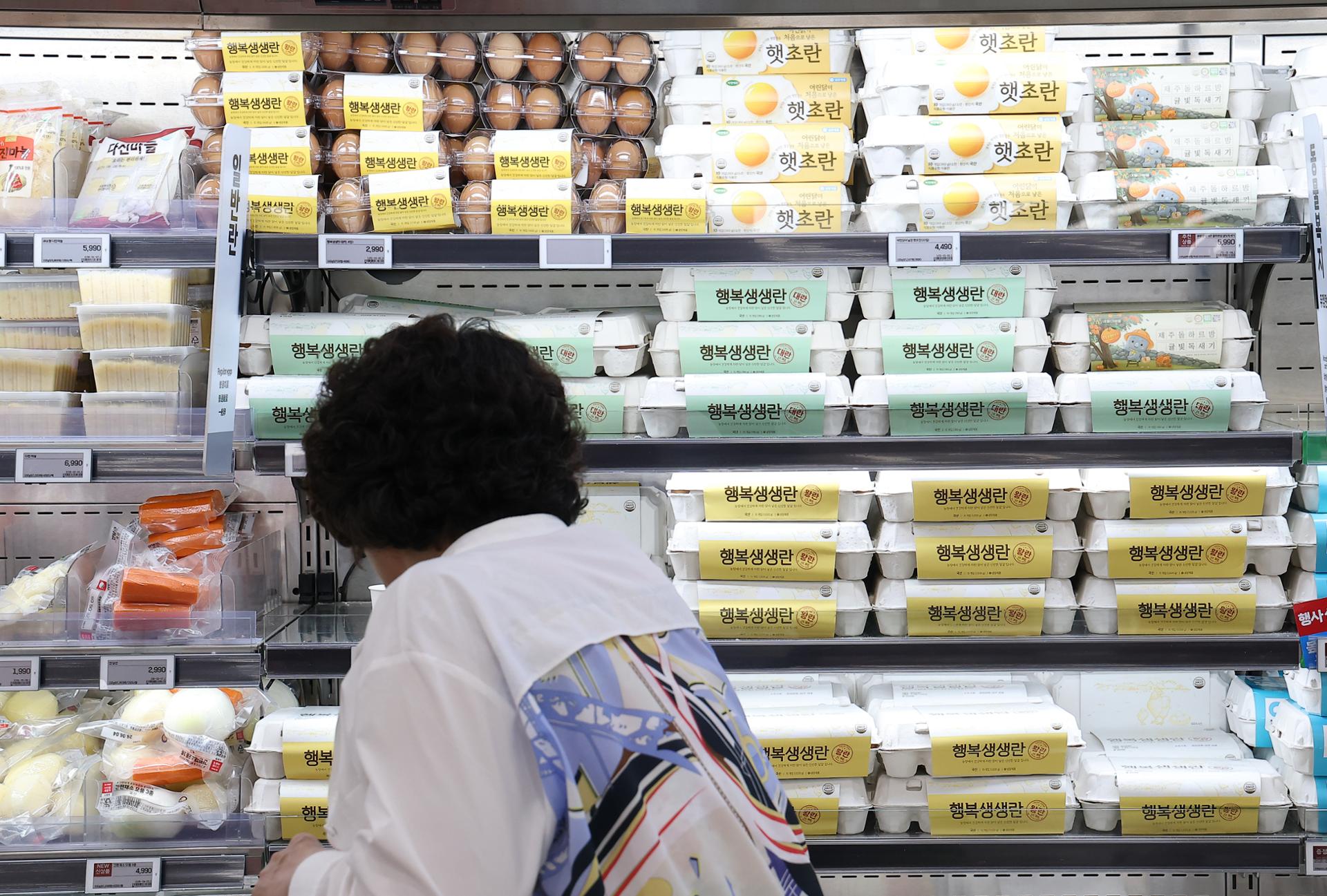
With milk consumption at four-decade low and tariff-free imports increasing, pressure is growing on quota-based dairy system A customer looks at milk products in a mart in Seoul. (Newsis) Korea's dairy industry is approaching a pivotal moment as domestic milk consumption falls and more tariff-free milk imports are set to enter the country.According to the Korea Dairy Committee, the country’s yearly milk consumption per person decreased to 22.9 kilograms last year, down 9.5 percent from 2024 and the lowest in about four decades.Despite weakening consumption, Korea’s milk prices are among the highest in the world. According to Global Product Prices a liter of reduced-fat milk retailed for $3.42 (5,200 won) in Korea as of January this year. That's the third highest among 78 countries surveyed, behind Ghana and Israel, although full-fat milk is both more common and cheaper in Korea.On top of high prices and reduced consumption, the country’s dairy sector faces another challenge, as European milk is set to be imported without tariffs starting next month after Korea removed tariffs on American milk imports in January. Australia and New Zealand will also be able to export milk products to Korea without levies from 2033 and 2034, respectively.Polish sterilized milk products, which account for almost 90 percent of Korea’s milk imports, are already sold at about 1,500 won per liter, about half the price of Korean products. According to the Korea Customs Service, imports of sterilized milk reached approximately 51,000 tons last year, more than 40 times the amount in 2016 as more cafes and bakeries turn to imported milk to reduce cost.As for the reasons behind the high price, dairy industry stakeholders point to high production costs and a regulatory framework that ties raw milk procurement to predetermined quotas rather than market demand.The country’s raw milk quota system was introduced in 2002 to protect farmers and control supply, requiring dairy processors to purchase predetermined volumes of raw milk from farmers at regulated prices depending on the rate of consumer price inflation and production cost.As the dairy processors’ quota is predetermined every two years, the milk industry's ability to respond quickly to changing consumption patterns face limitations. The Korea Dairy Committee is slated to determine the milk procurement quota for 2027 and 2028 this month.With the declining demand for milk, dairy processors find themselves left with excess raw milk that must be converted into less profitable products such as powdered milk, butter or cheese, or even disposed altogether."The milk market has changed dramatically, but the procurement structure has stayed the same," a diary industry official said. "Companies need greater flexibility to purchase raw milk according to actual demand."
Korea's milk dilemma: Less demand, more imports
Korea's dairy industry is approaching a pivotal moment as domestic milk consumption falls and more tariff-free milk imports are set to enter the country. Accord
TL;DRAI
Milk demand fell to 4-decade low (22.9 kg/capita) as tariff-free EU imports enter next month. The quota system (2-year fixed volumes) forces processors to dump excess milk into low-margin products—how static forecasts fail when demand shifts.
439 words~2 min read