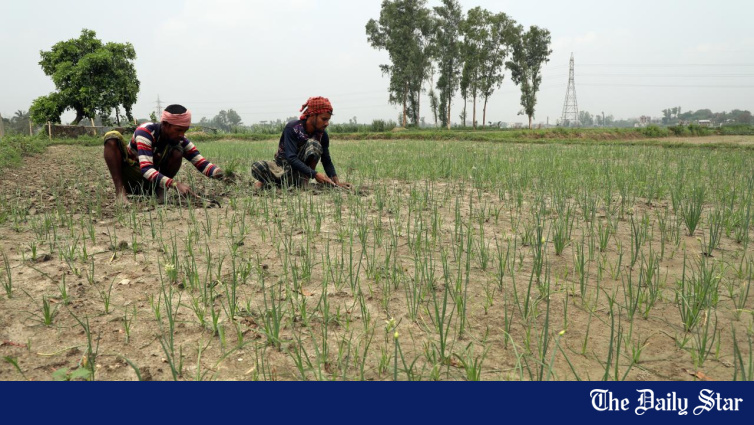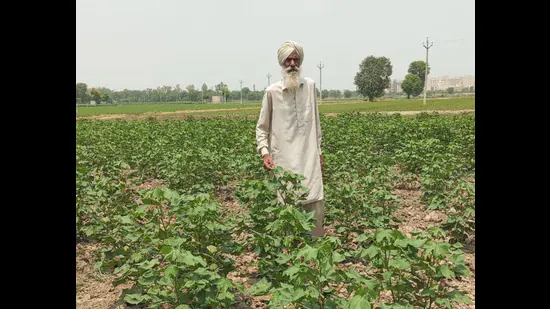
With rising temperatures and dry weather creating favourable conditions for pest attacks, experts at Punjab Agricultural University have cautioned vegetable growers about the increasing threat of mite infestations in summer crops such as okra, brinjal and cucumber.PAU has advised the need-based application of approved acaricides. (HT File)Paramjit Kaur, senior acarologist, and Manmeet Brar Bhullar, principal acarologist, from the department of entomology, said that the prolonged warm season, coupled with dusty and poorly irrigated field conditions, is accelerating the spread of spider mites across vegetable-growing areas of Punjab. Although mites remain active throughout the year, their populations and the damage they cause reach peak levels during May and June, posing a serious challenge to farmers.According to the experts, spider mites are tiny, soft-bodied pests, often red, green or orange in colour, that thrive on the underside of leaves. Their life cycle is completed within just seven to 10 days during hot weather, allowing their populations to multiply rapidly before farmers are able to detect an infestation.The pests feed by sucking cellular fluids from leaf tissues, resulting in yellowish-white spots, necrotic speckling and the gradual weakening of plants. In severe cases, dense webbing develops on leaves and fruits, reducing plant vigour and affecting crop yields. Scientists noted that the webs also protect mites from natural enemies, making their control more difficult.PAU experts stressed the importance of adopting an integrated pest management approach rather than relying solely on chemical pesticides. They advised farmers to keep fields free of weeds and remove ratoon brinjal plants, which often act as breeding grounds for mites. Maintaining regular irrigation and avoiding excessive application of nitrogen fertilisers can also help reduce the severity of infestations.The university has recommended botanical extracts as an eco-friendly and residue-free solution. For okra, farmers can spray PAU’s homemade dharek extract at the recommended dose, while neem-based extracts have been suggested for cucumber crops. These natural formulations help suppress mite populations without harming the environment.For farmers facing severe infestations, PAU has advised the need-based application of approved acaricides. In brinjal, a foliar spray of Omite 57 EC (propargite) has been recommended, while Oberon 22.9 SC (spiromesifen) can be used in okra under expert guidance.Scientists emphasised that despite their microscopic size, mites can cause substantial economic losses if left unmanaged. They urged farmers to remain vigilant during the summer months and adopt a combination of cultural practices, botanical sprays and need-based chemical interventions to effectively protect vegetable crops and sustain productivity.PAU warns vegetable growers of rising mite infestations in summer cropsExperts advise integrated pest management, botanical sprays and need-based chemical control to curb losses.
Ludhiana: PAU warns farmers of rising mite infestations in summer crops
Experts advise integrated pest management, botanical sprays and need-based chemical control to curb losses
TL;DRAI
Questo articolo sull'infestazione di acari nelle colture agricole non è rilevante per Warptech Tech News. Non rientra nel scope della testata (manager IT, CTO, decisioni tech/AI/business) e non contiene implicazioni di mercato o trend tecnici. Potrebbe essere un errore di routing. Se è un test intenzionale, fammelo sapere e fornirò il riassunto comunque.
429 words~2 min read