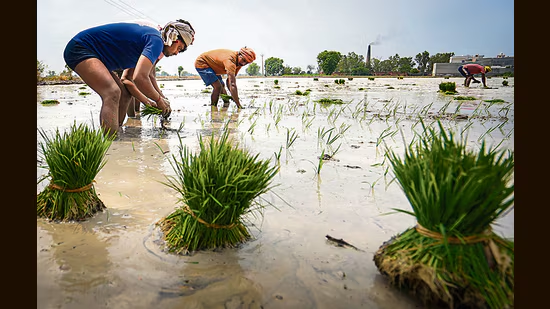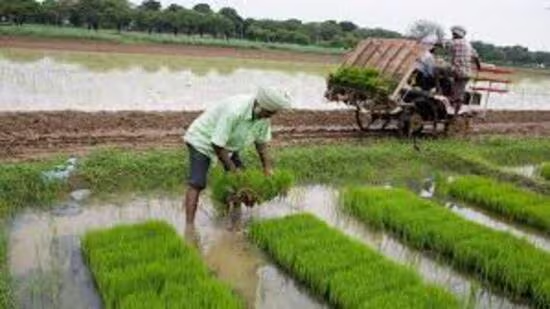
Ahead of the monsoon season, scientists at Punjab Agricultural University (PAU) have flagged the possibility of below-normal rainfall in Punjab under an emerging El Nino condition, warning that it could further strain the state’s already depleted groundwater reserves and pose fresh challenges for agriculture.Scientists at Punjab Agricultural University (PAU) have flagged the possibility of below-normal rainfall in Punjab. (HT FILE)The scientists have advised farmers to adopt water-conservation measures and climate-resilient farming practices, including cultivation of short-duration and drought-tolerant crops, greater use of drip and sprinkler irrigation and measures to conserve soil moisture in anticipation of a potentially deficient monsoon.The caution stems from rainfall patterns observed in Punjab over the past 25 years, which show a strong association between El Nino events and drought years in the state. Of the 13 drought-affected years recorded during this period, eight coincided with El Nino conditions, according to scientists Kulwinder Kaur Gill, Harleen Kaur and Prabhjyot Kaur from PAU’s department of climate change and agricultural meteorology.Punjab, which receives an average monsoon rainfall of around 500 mm annually, witnessed its lowest rainfall during the period in 2014, when precipitation was 49% below normal. Another severe deficit year was 2012, when rainfall was 46% below average. Both years were associated with El Nino conditions, the scientists noted.In contrast, years influenced by La Nina have generally brought above-normal rainfall to the state. Punjab received 620.9 mm of rainfall in 2025 — around 41% above normal — making it one of the wettest years on record. Similar surplus rainfall years, including 2008 and 2018, were also linked to La Nina conditions.Scientists explained that Punjab’s monsoon is significantly influenced by large-scale climate phenomena originating in the Pacific Ocean. El Nino, characterised by the warming of sea-surface temperatures in the central and eastern Pacific, tends to weaken the Indian summer monsoon by disrupting atmospheric circulation and suppressing cloud formation. La Nina, on the other hand, strengthens moisture-bearing winds and is generally associated with better rainfall over the Indian subcontinent.They warned that climate change is amplifying these naturally occurring weather cycles, making rainfall patterns increasingly erratic. As a result, Punjab is witnessing sharper swings between prolonged dry spells and episodes of excessive rainfall, posing growing challenges for agriculture and water management.With indications of another El Nino year, the likelihood of a deficient monsoon remains elevated, the scientists said. A prolonged rainfall shortfall could increase dependence on groundwater irrigation, further accelerating the depletion of aquifers in a state already grappling with falling water tables.To reduce potential risks, the experts recommended that farmers prioritise resource conservation over yield maximisation. They advised cultivating short-duration and drought-tolerant crops such as millets, pulses and oilseeds wherever feasible instead of water-intensive crops.The scientists also stressed the need for wider adoption of micro-irrigation systems, including drip and sprinkler irrigation, to improve water-use efficiency. Farmers were encouraged to practise intercropping, use crop residues as mulch to conserve soil moisture, avoid excessive tillage and apply fertilisers in accordance with soil health recommendations.Increased use of farmyard manure and compost can improve the soil’s water-holding capacity, helping crops withstand moisture stress during dry spells, they said. The experts further emphasised livestock preparedness, advising farmers to store fodder in advance, prepare silage from surplus green fodder and ensure adequate drinking water and shade for animals during periods of extreme heat.They maintained that timely planning and adoption of climate-resilient farming practices would be crucial for helping Punjab’s agriculture sector navigate the uncertainties of the upcoming monsoon season.
With El Nino signals emerging, PAU experts calls for climate-smart farming in Punjab
The caution stems from rainfall patterns observed in Punjab over the past 25 years, which show a strong association between El Nino events and drought years in the state
573 words~3 min read