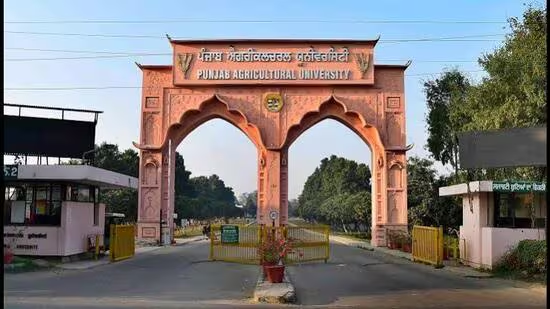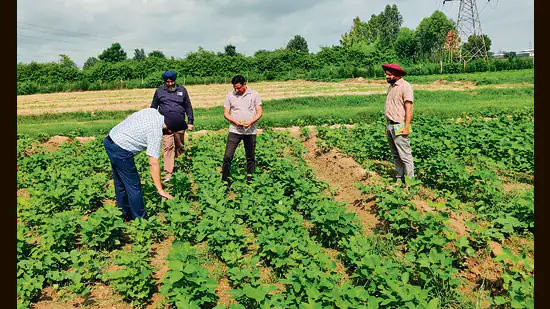
Amid Punjab’s push to diversify its cropping pattern and reduce dependence on water-intensive paddy, Punjab Agricultural University (PAU) has urged farmers to adopt baby corn as a profitable and sustainable alternative, particularly in areas close to urban and peri-urban markets.The university said baby corn fits well into Punjab’s crop diversification strategy because of its short duration. (HT File)PAU experts said the crop matures in just 60 to 65 days, enabling farmers to earn quicker returns while making better use of their land. After harvesting the tender ears, the remaining green biomass can be used as nutritious fodder for livestock, making the crop an attractive option for dairy farmers as well.The university said baby corn fits well into Punjab’s crop diversification strategy because of its short duration. Farmers can raise one crop between the wheat and basmati rice cycle or grow two to three crops between April and September instead of cultivating a single paddy crop, improving land utilisation and offering greater flexibility in crop planning.Highlighting its commercial potential, PAU said demand for baby corn has been rising steadily in domestic and export markets. Once largely imported from Thailand and served mainly in fine-dining restaurants, the vegetable is now increasingly cultivated in India. Growing demand from hotels, airlines, shipping companies and European markets, along with contract farming initiatives by private firms, has opened up new income opportunities for farmers.According to PAU, baby corn is the tender, immature ear of maize harvested within two to three days of silk emergence. Because the ears remain enclosed in the husk during growth, the crop is naturally protected from several insects and diseases, reducing the need for pesticides and making it comparatively free from pesticide residues.For cultivation, the university has recommended its single-cross hybrid variety, Punjab Baby Corn-1, which produces uniform-sized ears and yields around 8.4 quintals of dehusked baby corn per acre. It has advised farmers to sow the crop between April and the first week of August, with harvesting carried out within two to three days of silk emergence to ensure optimum tenderness and quality.PAU also highlighted the nutritional value of baby corn, saying it is rich in protein, vitamins, calcium, iron and phosphorus while being low in carbohydrates, high in fibre and fat-free, making it a healthy addition to consumers’ diets.VC flags heat, water stress risks to cropsAmid prolonged heat, rainfall deficit and growing water scarcity, PAU vice-chancellor Satbir Singh Gosal has asked its scientists to intensify field outreach and remain prepared to help farmers tackle emerging challenges during the kharif season, warning that extreme weather could delay paddy sowing, reduce crop productivity and trigger fresh pest and disease outbreaks.The directions were during a meeting with the varsity’s Research and Extension Committee on Wednesday. The meeting was attended by heads of departments, faculty members and scientists from regional research stations, krishi vigyan kendras and farm advisory service centres.The VC said the prolonged spell of extreme summer temperatures, coupled with deficient rainfall and water scarcity, posed a serious challenge to agriculture as well as human, livestock and plant health. He cautioned that adverse weather conditions could delay paddy transplantation and create favourable conditions for the emergence of new insect pests and crop diseases, and asked scientists to remain vigilant in addressing farmers’ concerns.The VC also directed scientists to promote PAU’s recommended short-duration, water-saving paddy varieties and discourage cultivation of hybrid paddy varieties that have not been recommended by the university.Director of Extension Education Dr MS Bhullar called for greater field engagement and wider use of social media platforms to disseminate timely advisories among farmers. He said the varsity’s agro-meteorologists would issue regular weather forecasts and alerts to help farmers respond to changing weather conditions.
Ludhiana: PAU experts pitches baby corn as profitable alternative to paddy
Short-duration crop offers quicker returns, lower pesticide use and growing market demand, say experts
611 words~3 min read