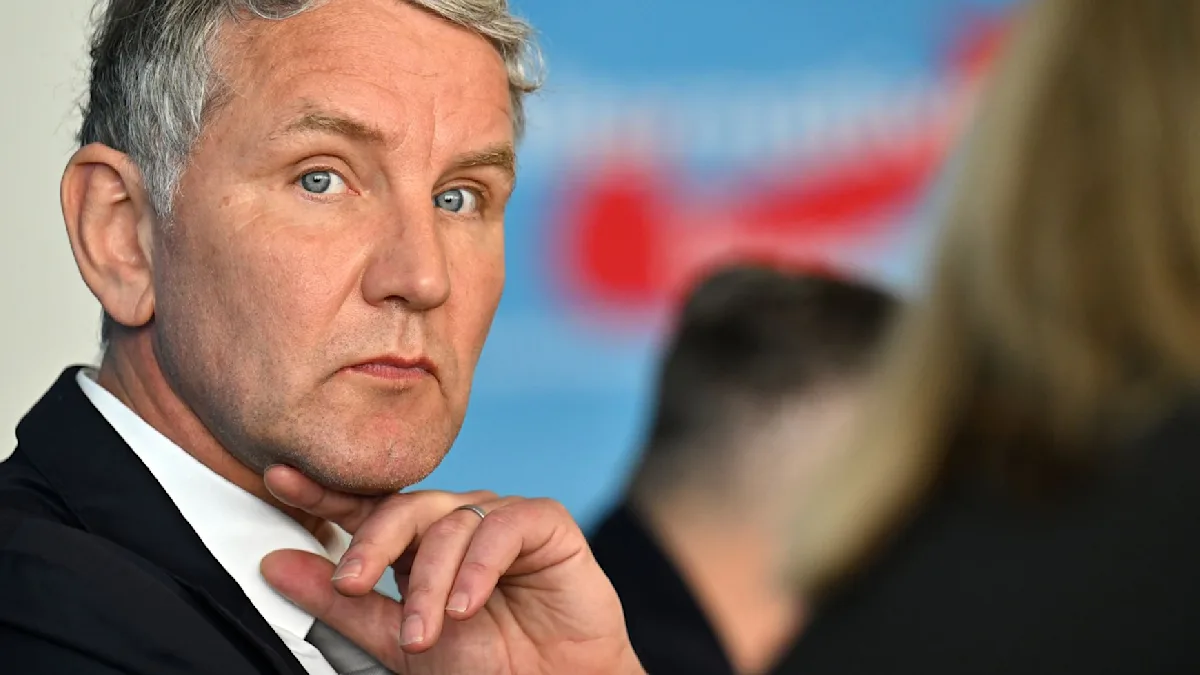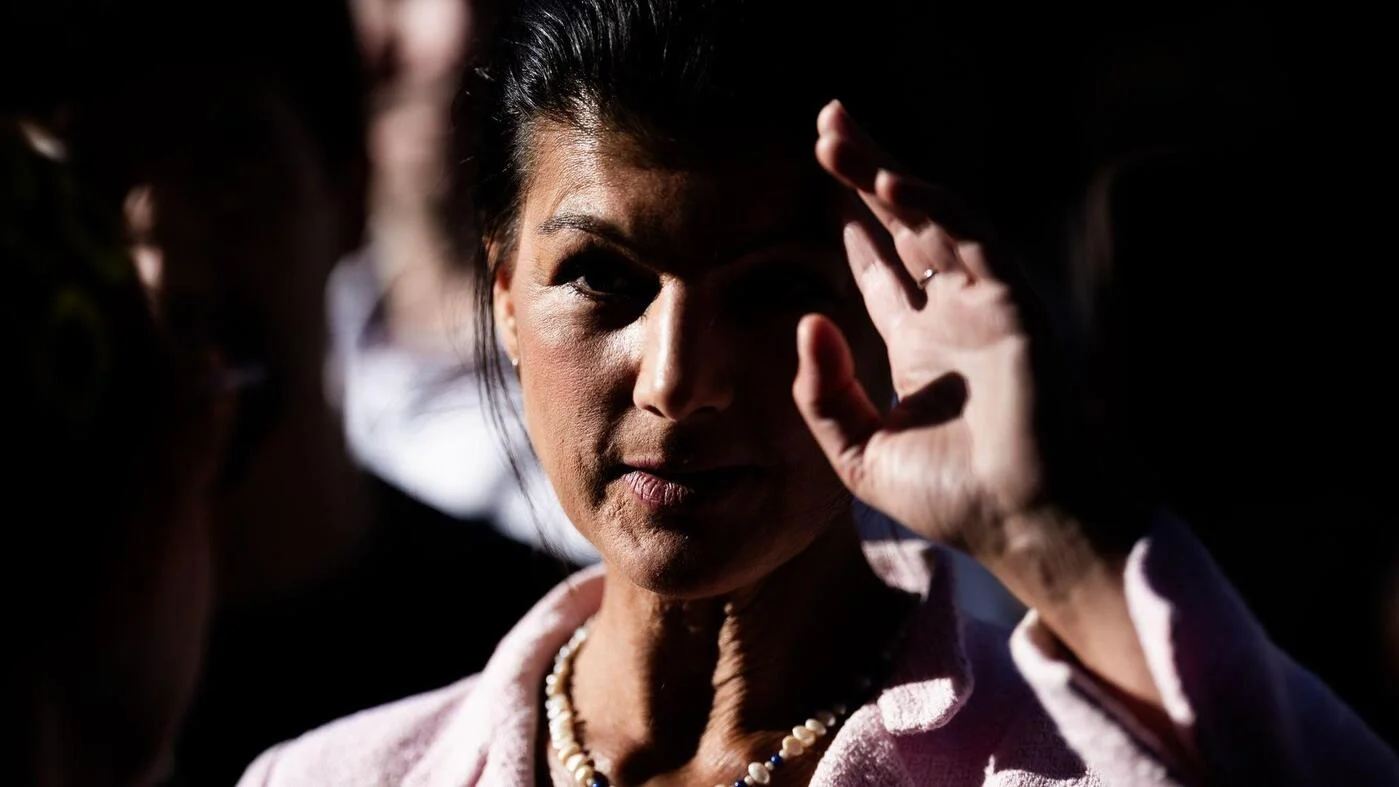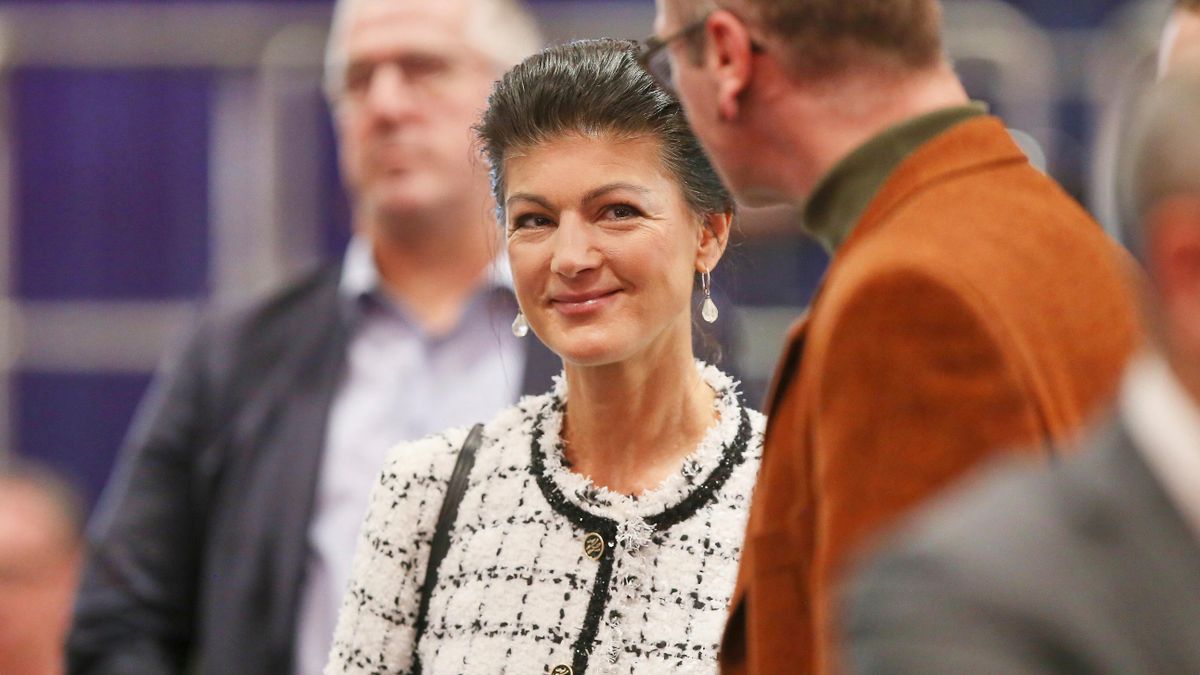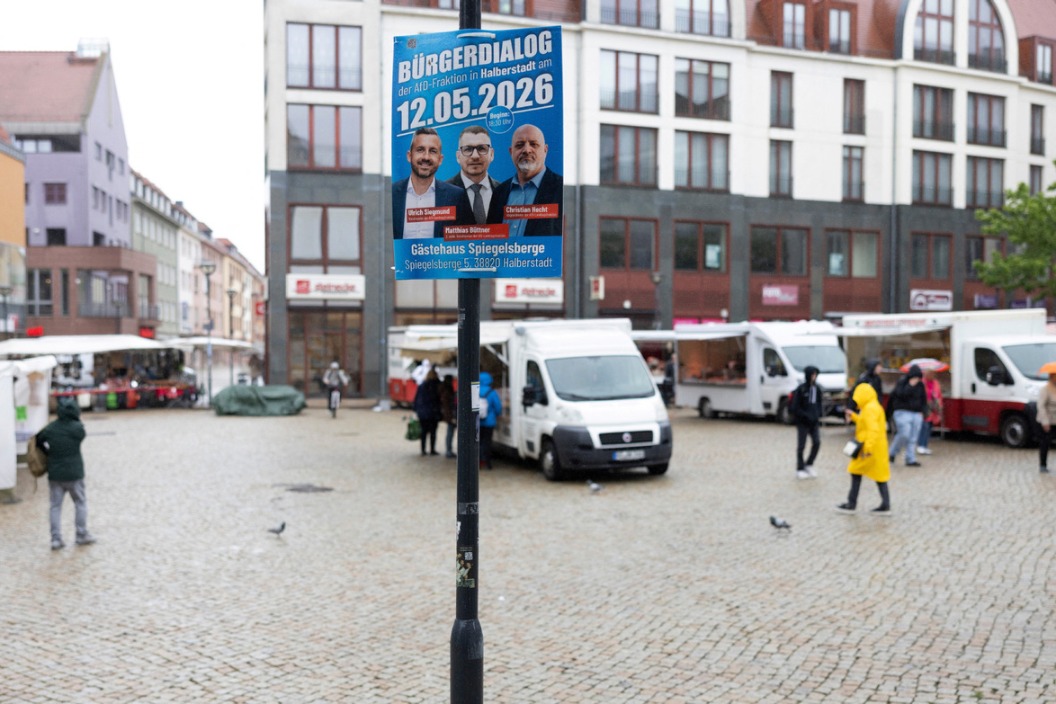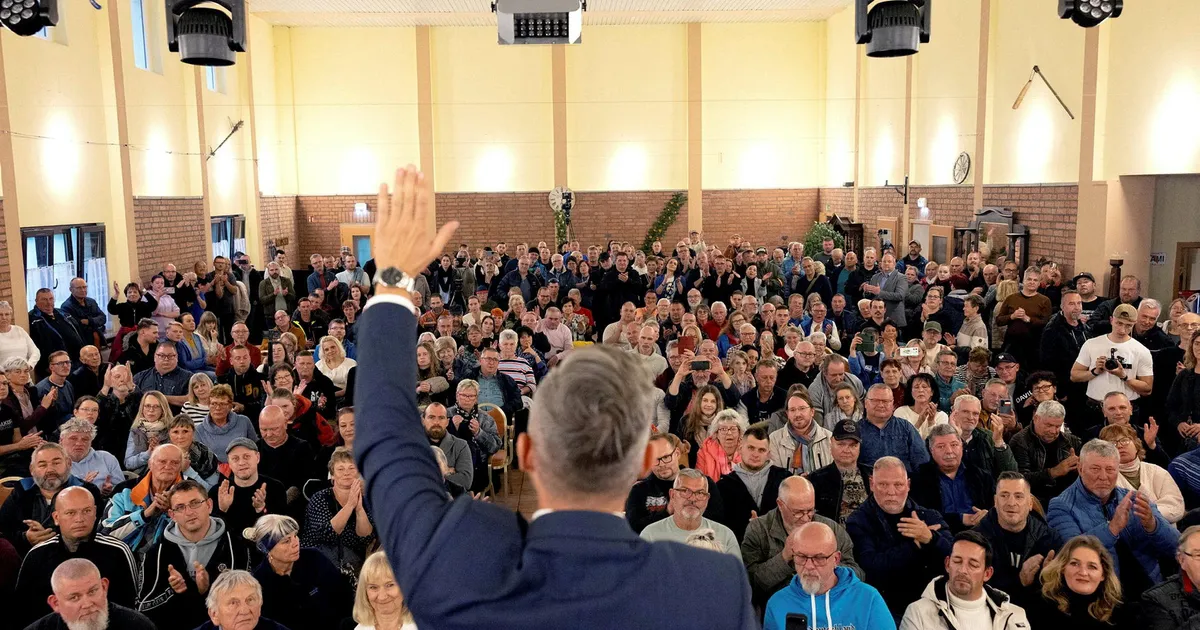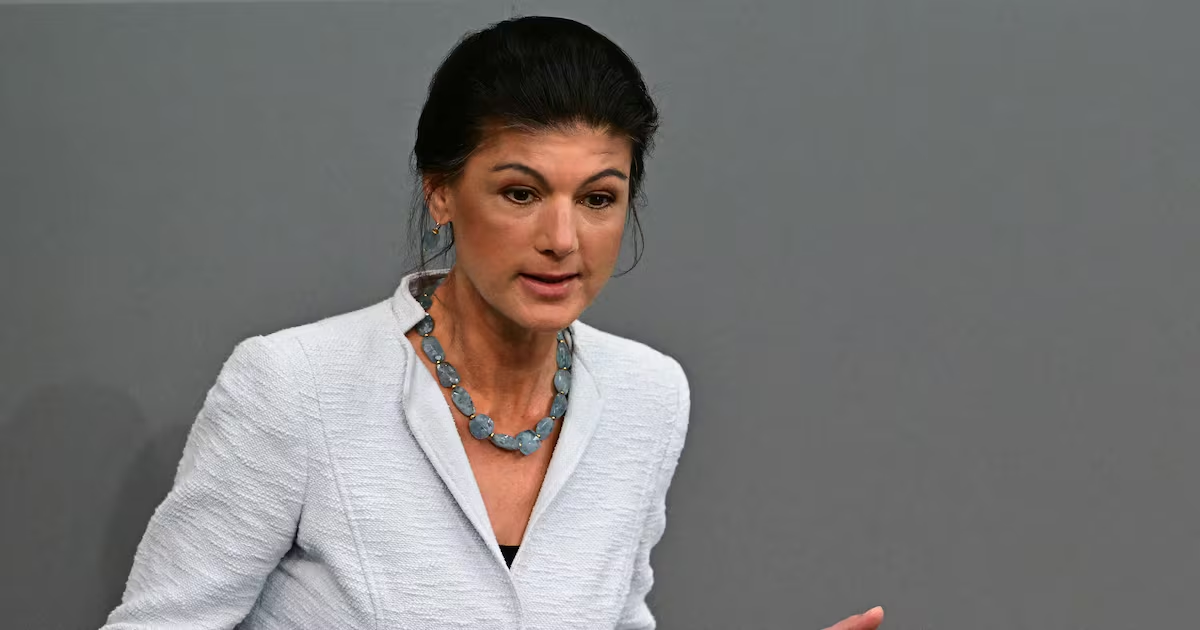
Horseshoes may bring luck in life, but rarely in politics. At least not in 1930s Germany, where the “horseshoe theory” was coined to explain how extreme right- and left-wingers often have more in common with each other than with the political centre.A century on, the horseshoe theory is back like a boomerang with speculation that a hard-left party could open the door to power for the far-right Alternative for Germany (AfD).Sahra Wagenknecht, front woman of the hard-left Sahra Wagenknecht Alliance (BSW) alliance, has signalled that her party could be convinced to back the AfD after elections in eastern federal states in September.Three years ago Wagenknecht founded the BSW as a breakaway from the Left Party, claiming her previous political home was more interested in identity politics and pronouns than tackling real-world problems of working class Germans.BSW performed well in two regional elections in 2024, even taking office in the state of Thuringia, but fell just short of entering the Bundestag last year.In advance of the next regional elections in September, the BSW is struggling in or around the five per cent hurdle for entering parliament, meaning its votes could be crucial.Above all in aiding – or preventing – the AfD taking power in the eastern state of Saxony-Anhalt. In an interview, Wagenknecht has suggested her party’s support could be used in Saxony-Anhalt to “vote out the firewall”, a term used to describe a self-imposed ban of all other parties to work with the AfD.[ Irish far-right figures join gathering in Portugal to push idea of ‘remigration’Opens in new window ]Given the AfD is polling 42 per cent in Saxony-Anhalt, on the cusp of an absolute majority, BSW support – or even MP abstentions – could swing the vote in the far right’s favour when the new parliament chooses a minister president.Wagenknecht said her party wanted a state leader who “governs with shifting majorities, without excluding parties”.Such smoke signals have caught the attention of the AfD, with a spokesman saying the party would “not rule out any option that could lead to a stable government”.Given similar pro-Russian and anti-immigration policies, analysts are not entirely surprised by the Wagenknecht pitch – particularly given her declining political fortunes.“It’s a rescue strategy for Wagenknecht,” said Prof Klaus Schubert, political scientist at the University of Münster, “before the last BSW system-spurners jump ship to the right-wing alternative nearby via the horseshoe.”Still, any AfD-BSW co-operation or strategic pact, if it comes about, would be a spectacular twist in postwar German politics.In a televised debate in 2024 with AfD co-leader Alice Weidel, Wagenknecht insisted the far right’s more extreme migration policies “make me sick”.Weidel told Wagenknecht: “The people in this country want political change but no political change will be possible with you.”For all their sideswipes and differences – the AfD backs neoliberal economics, the BSW conservative left – the debate exposed considerable common ground, in particular contempt for climate politics and progressive culture war positions.When Wagenknecht insisted Germany stop its weapons deliveries to Ukraine, Weidel said this was “a bit cheap [as] these are AfD positions that we have been putting forward from the very beginning”.The prospect of an AfD-BSW pact caused alarm in Berlin on Tuesday, with chancellor Friedrich Merz warning that helping the AfD into power would cause a political “big bang”.As he struggles with flat growth and a difficult reform agenda, Merz warned that the AfD wanted to “return to the [pre-war] period before Adenauer”, also known as the Nazi era.Asked if he could be tempted into an alliance with the AfD, as some in his centre-right party argue, Merz insisted: “I say no: I will not do it.”
Germany’s far-right and hard-left politics boomerang back to the horseshoe theory
BSW alliance, struggling around margins to enter Bundestag, may be able to find common ground with Alternative for Germany
606 words~3 min read