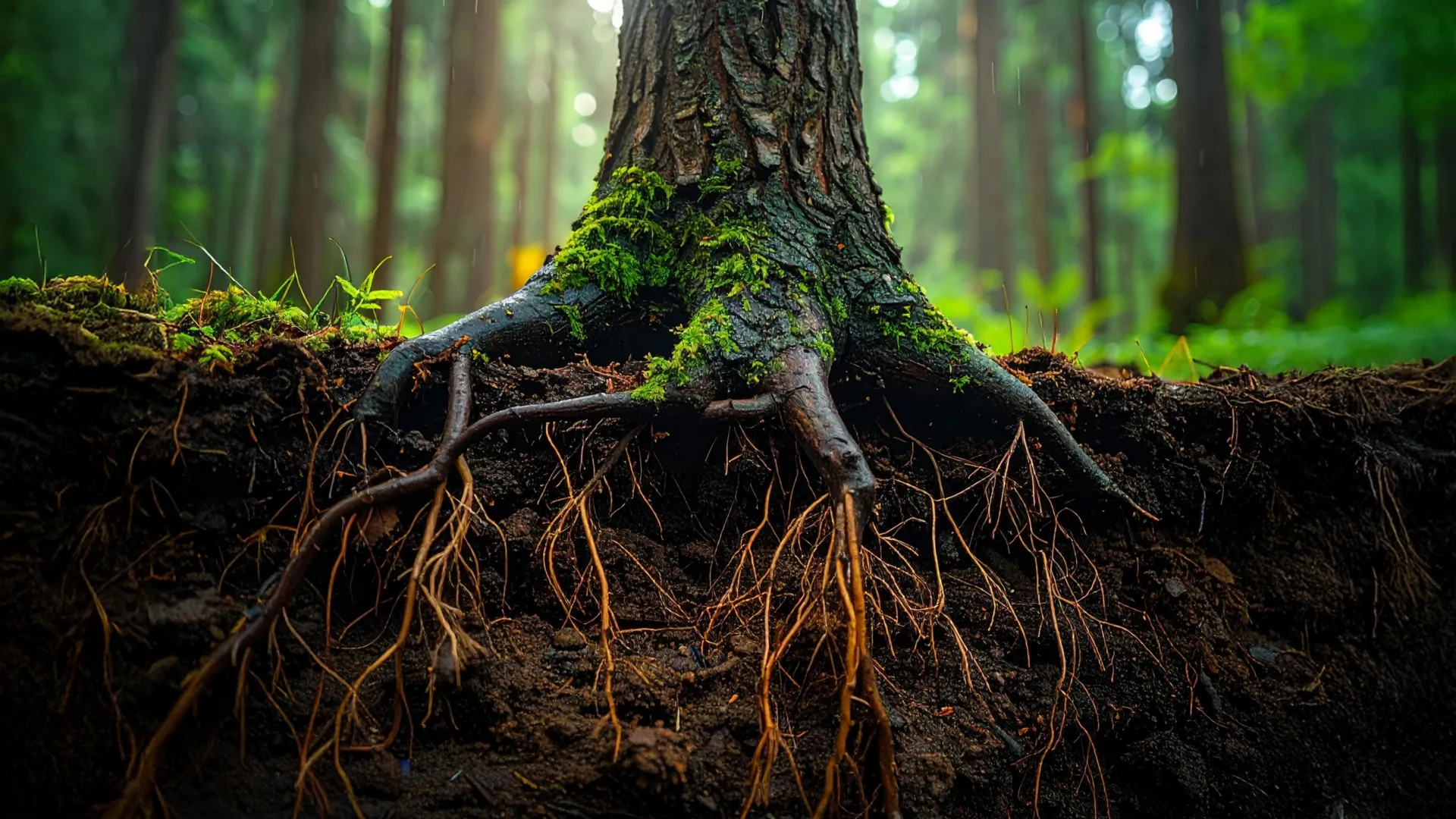
For centuries, forests have followed a remarkably consistent rhythm. Beneath the trees, roots and microscopic organisms steadily release carbon dioxide into the atmosphere as they break down organic material and fuel plant growth.
Scientists call this process soil respiration, and it represents one of the largest carbon flows on Earth.
New research suggests that this natural rhythm is being disrupted by a growing and often overlooked form of pollution: excess nitrogen.
Nitrogen Pollution Is Reaching Forests Worldwide
On a cool spring morning, a forest floor may seem calm and still. Yet beneath the surface, billions of microbes are hard at work decomposing leaves, wood, and other organic matter. At the same time, tiny roots release carbon dioxide as they grow and function.