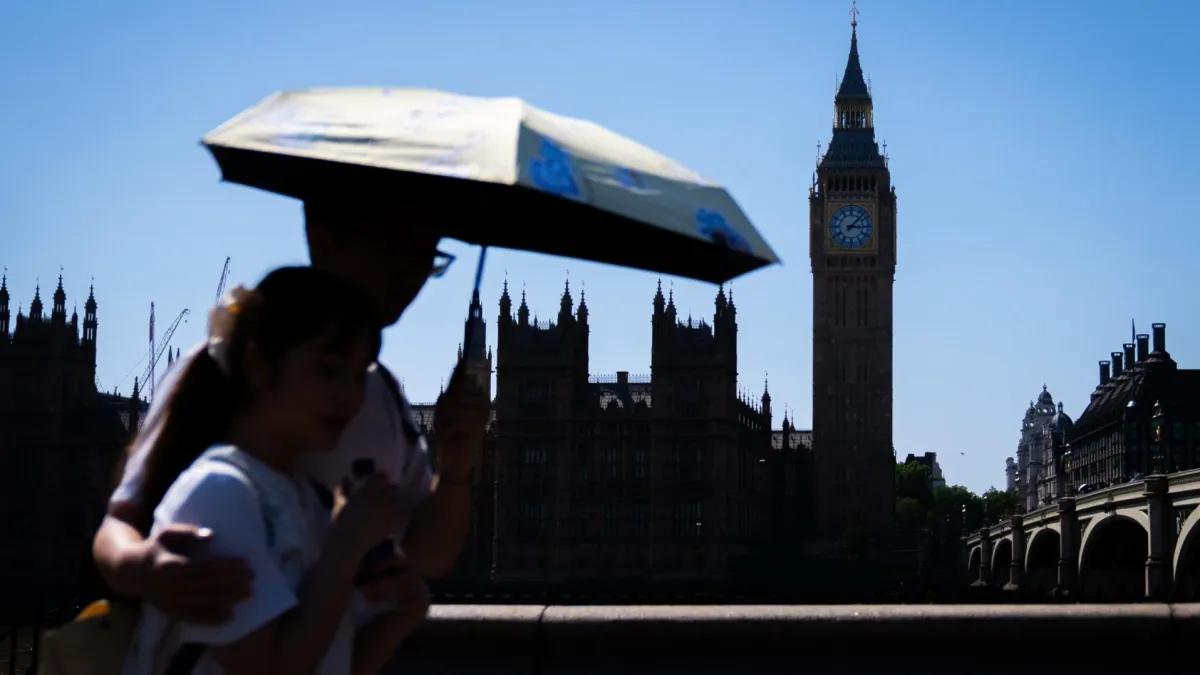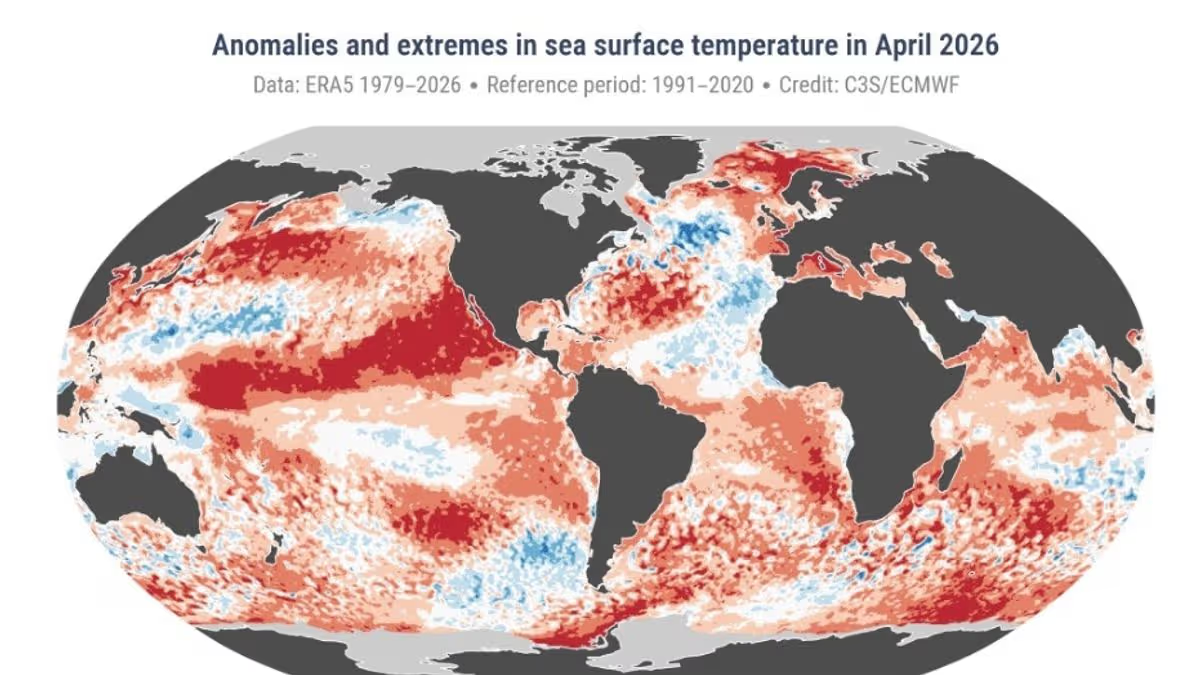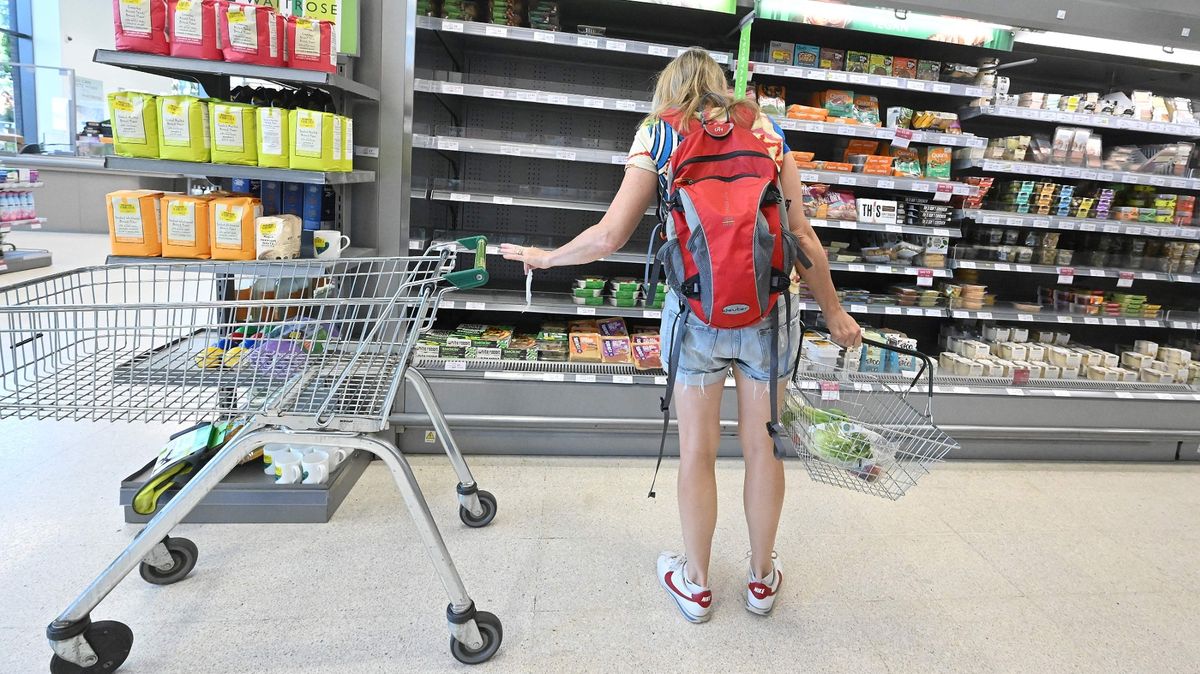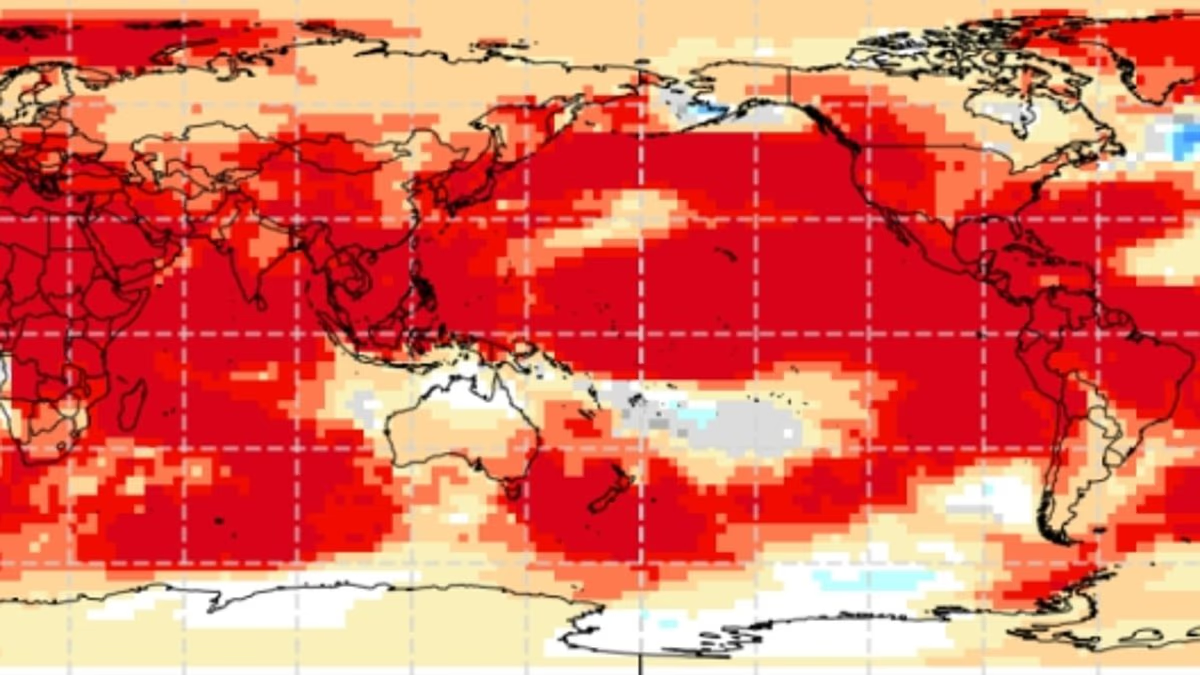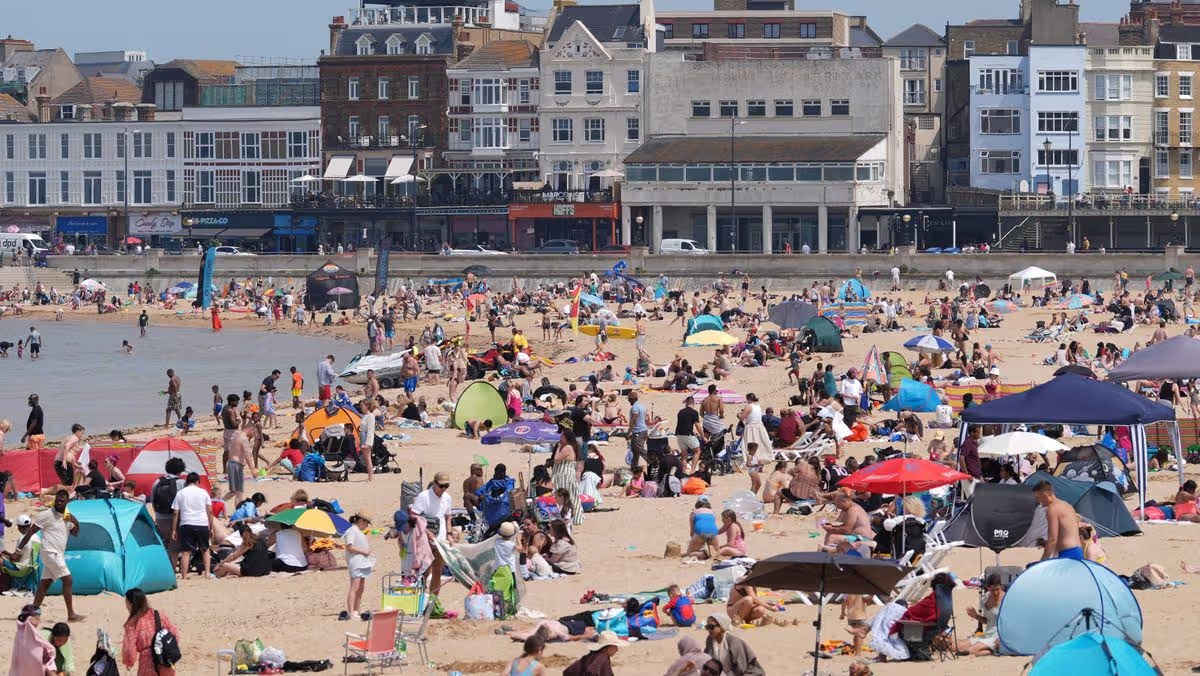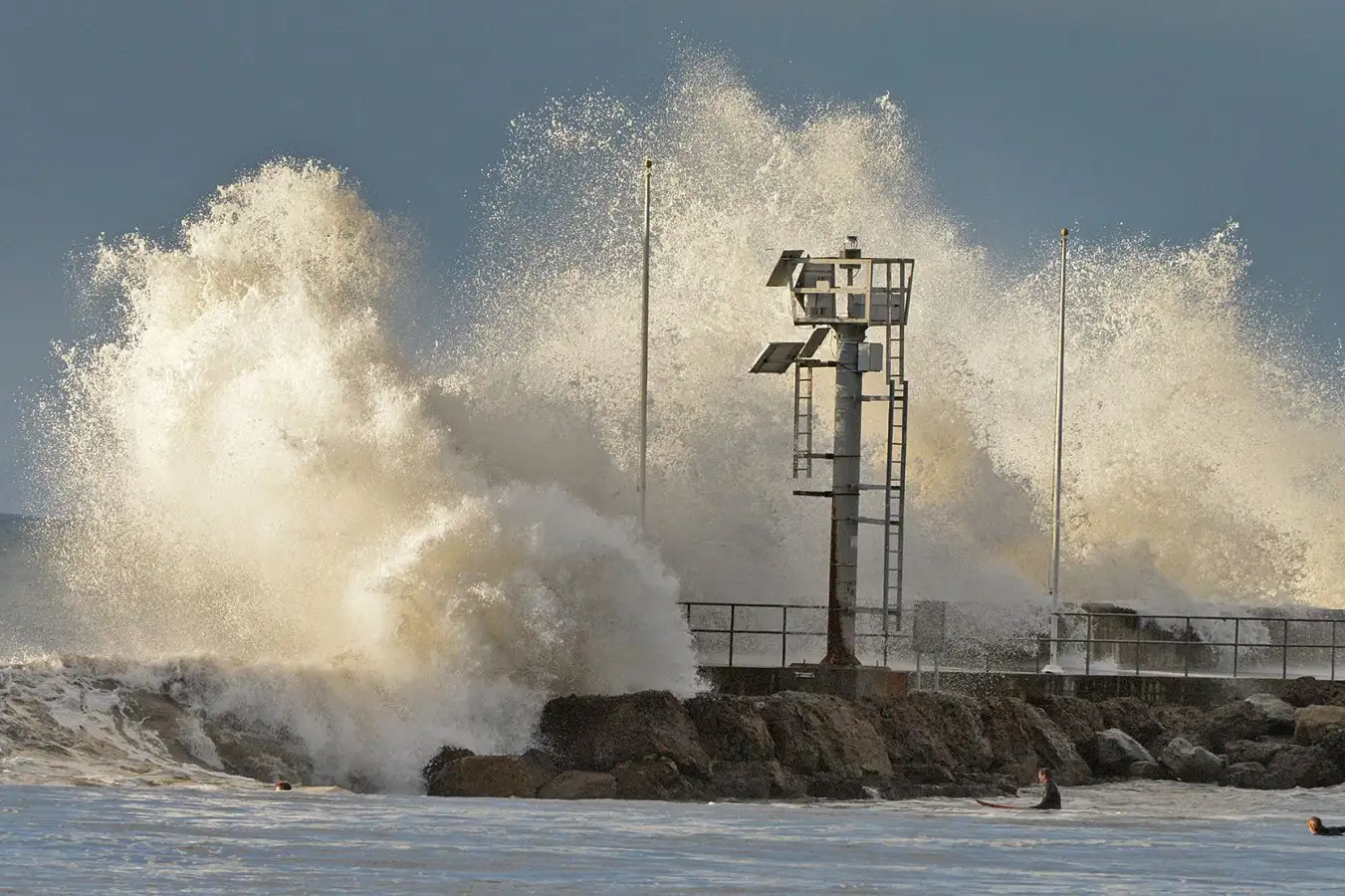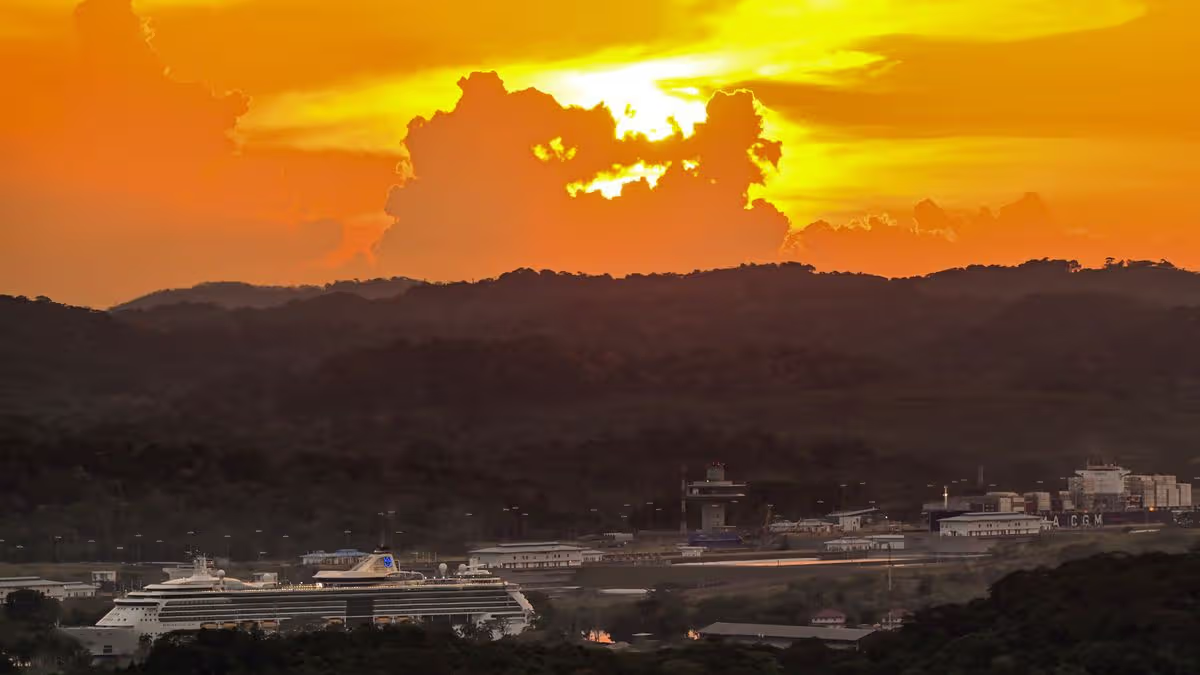
The incoming 'Godzilla' or 'Super Duper' El Niño is expected to be one of the worst in human history, and will set weather around the world off kilter into 2027, scientists have warned14:42, 02 Jun 2026Heatwave conditions could return with a new intensity next year thanks to a 'Godzilla' El Niño, experts have warned, which could have a significant knock-on effect on the UK.Brits are still reeling from the record-breaking May heatwave, which produced sky-high temperatures of 34C in the hottest parts of the country last week. The extraordinary highs were produced by a "heat dome", forecasters believe, that trapped warm air coming from northern Africa in a high-pressure system over western Europe.Scientists have now warned another round of warm weather powered by the El Nino climate phenomenon could result in a Godzilla-sized ecological catastrophe. The chances of an El Nino event, during which temperatures are boosted by unnaturally warm seas, have now hit 80 percent.What is a 'Godzilla' El Niño?El Niño, which translates to "little boy" in Spanish, refers to a climate pattern, one of two alongside La Niña, in the Pacific Ocean that break trade wind patterns responsible for cycling water between North America and Asia. The two conditions, which make up the El Niño-Southern Oscillation (ENSO) cycle, both have global impacts on the world's weather, its ecosystems, and wildfires - but in very different ways.During an El Niño event, warm water is pushed back towards the East, and instead of progressing towards Asia as it should, it creeps around the US East coast. That movement disrupts the Pacific jet stream, causing it to move south from its typically neutral position and causing dryer, warmer weather over Canada. Activity taking place over such a vast area, scientists note, means that El Niño disruption has global consequences.Patrick Barnard, Research Director of UC Santa Cruz’s Center for Coastal Climate Resilience, told The Inertia : "El Niño affects atmospheric circulation across the entire Pacific and the world. The net effect of that is warm water along the equatorial Pacific gets pushed by winds to the eastern part of the basin, so you basically have all this warmer water pooled up, which affects convection, circulation, storm tracks, water levels, and everything else."El Niño conditions usually arrive in December once or twice a decade, but environmental scientists have recently detected rising water temperatures conditions with its onset. The 'Godzilla' moniker for the coming El Niño is descriptive of how severe the coming disruption is expected to be, with some onlookers warning it could be "stupendously intense", even more so than defining disruption experienced in 1877, and in 2016-17.What does the 'Godzilla' El Niño mean for UK weather?El Niño tends to push global weather generally off kilter, powering a mixture of wet, dry and hot conditions around the world. Experts have noted that this tends to cause a knock on effect across southwest Europe, the southern US and East Africa, where there is more rain, while dryness is more common across northern South America, southern Africa and Australia.Professor Richard Allan, Professor of Climate Science at the University of Reading, said today that the coming El Niño is "stirring the oceans" and is expected to change conditions "across the globe" when it peaks this year. The event will likely last until February 2027.He said: “The coming El Niño is already stirring as the oceans rearrange their vast heat stores and this will nudge atmospheric wind patterns out of kilter, causing unusually wet, dry and hot conditions across the globe. Some dry regions tend to receive more rainfall than usual, such as south west Europe, southern United States and East Africa.""Increased dryness is also commonly associated with El Niño over large parts of northern South America, southern Africa and Australia. The exact effects on drought and deluge also depend on the fickle nature of our weather but the warmer climate we experience today due to our emissions of greenhouse gases means that when and where unusually wet or dry conditions occur, the severity of these conditions will be more intense as atmospheric moisture cycles more frantically from region to region."Article continues belowProfessor Allan added that El Niño doesn't have a "noticable influence" on the British climate, but the country will still feel its global impact. He said: “Although El Niño does not have a noticeable influence on the British climate, because it disrupts weather patterns globally, the damage from heatwave, drought and deluge across the world will affect the UK through economic and humanitarian factors."Where it does land the worst, cautioned WFLA-TV chief meteorologist Jeff Berardelli last week, it could produce "weather events that we've never seen in modern history before".
Godzilla El Niño could spark even more intense heatwaves - what it means for UK
The incoming 'Godzilla' or 'Super Duper' El Niño is expected to be one of the worst in human history, and will set weather around the world off kilter into 2027, scientists have warned
TL;DRAI
An 80%-probable 'Godzilla' El Niño peaks late 2026–2027, history's most severe, with extreme heatwaves and droughts globally. IT operations face infrastructure cooling strain and supply chain disruption; disaster recovery planning must accommodate unprecedented global weather intensity.
775 words~4 min read