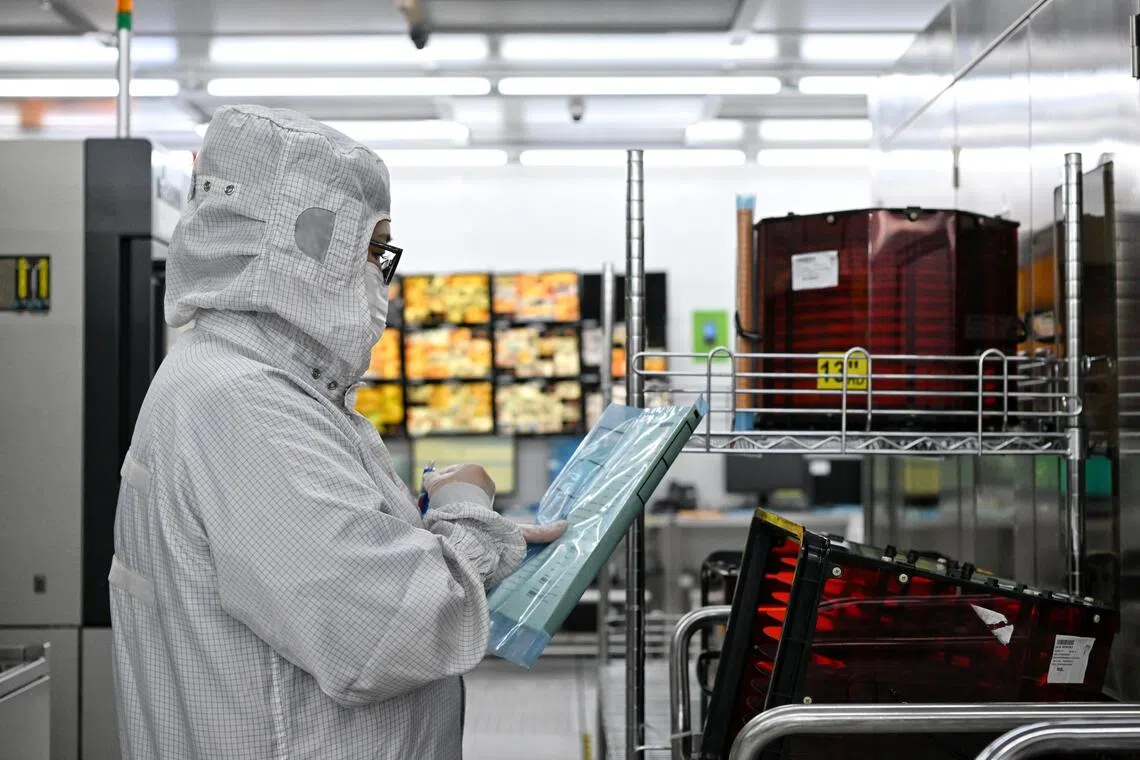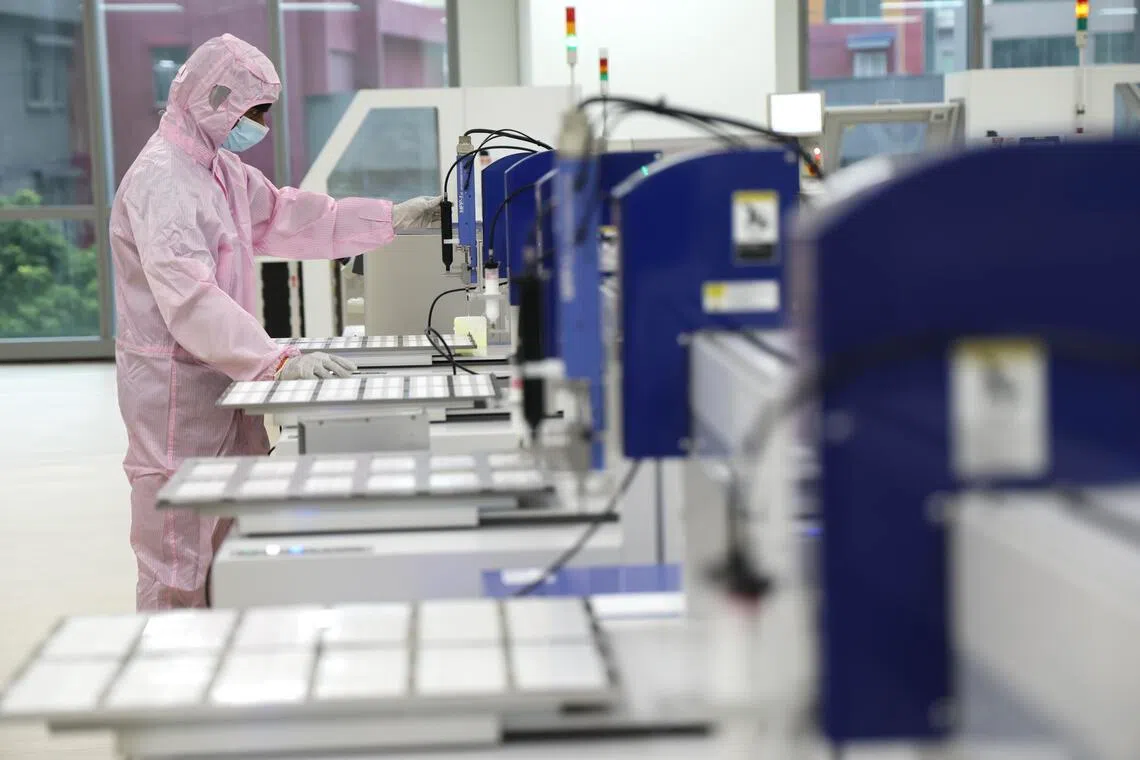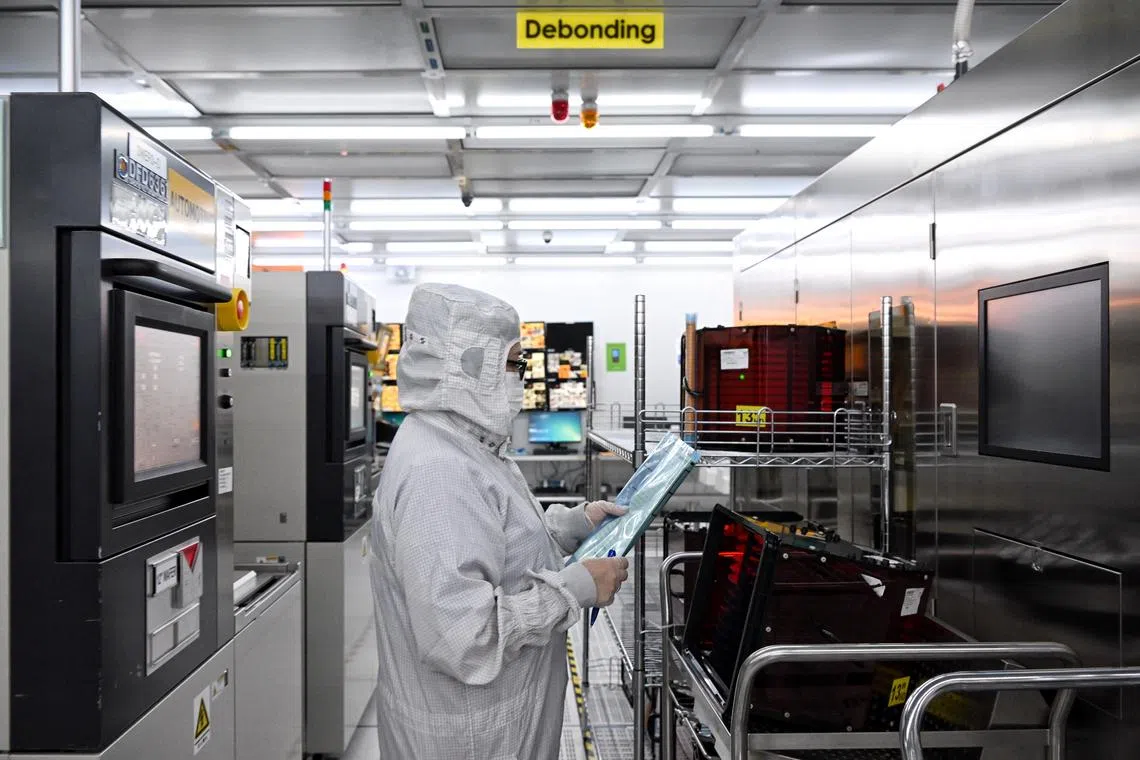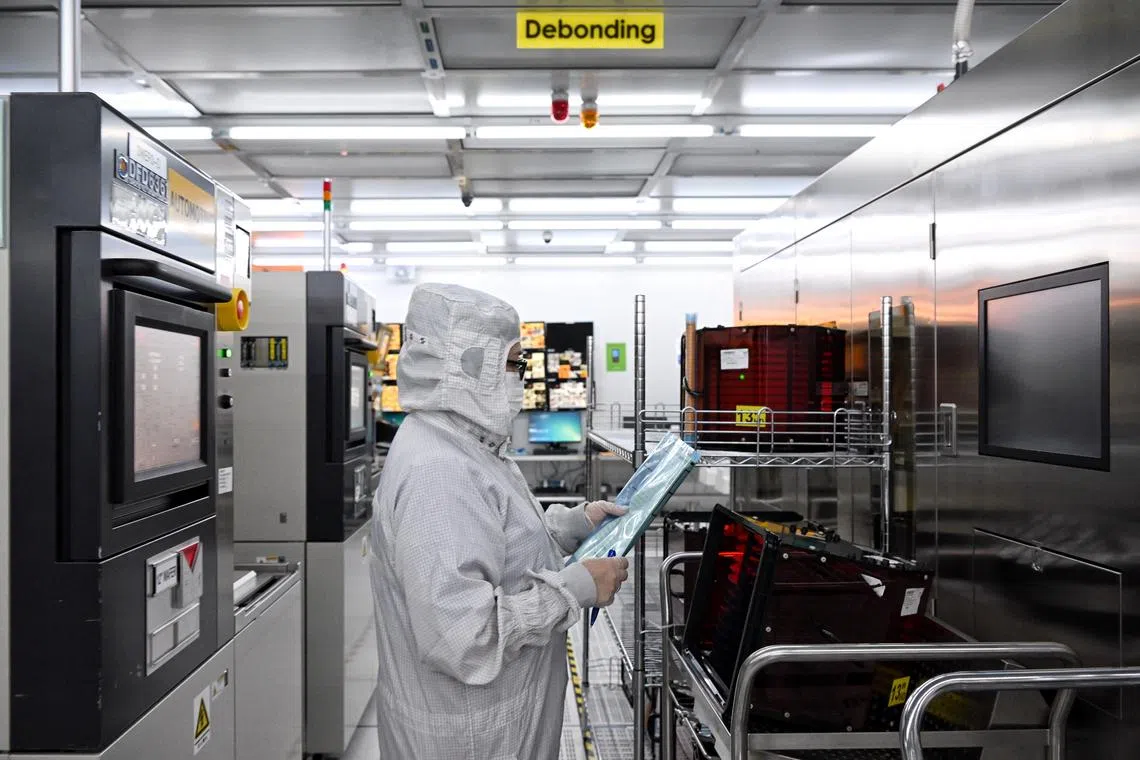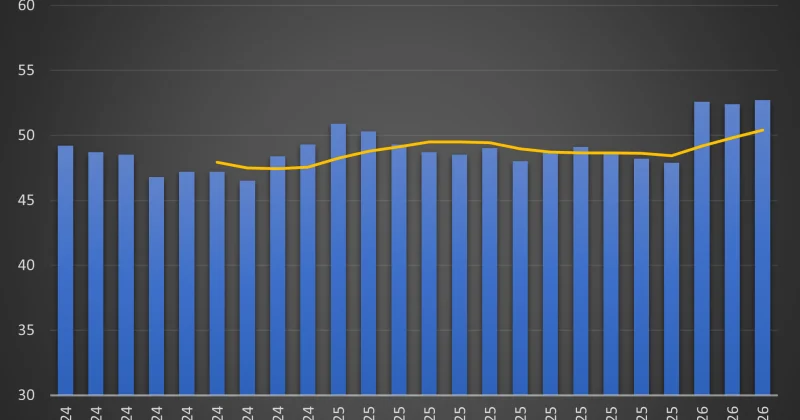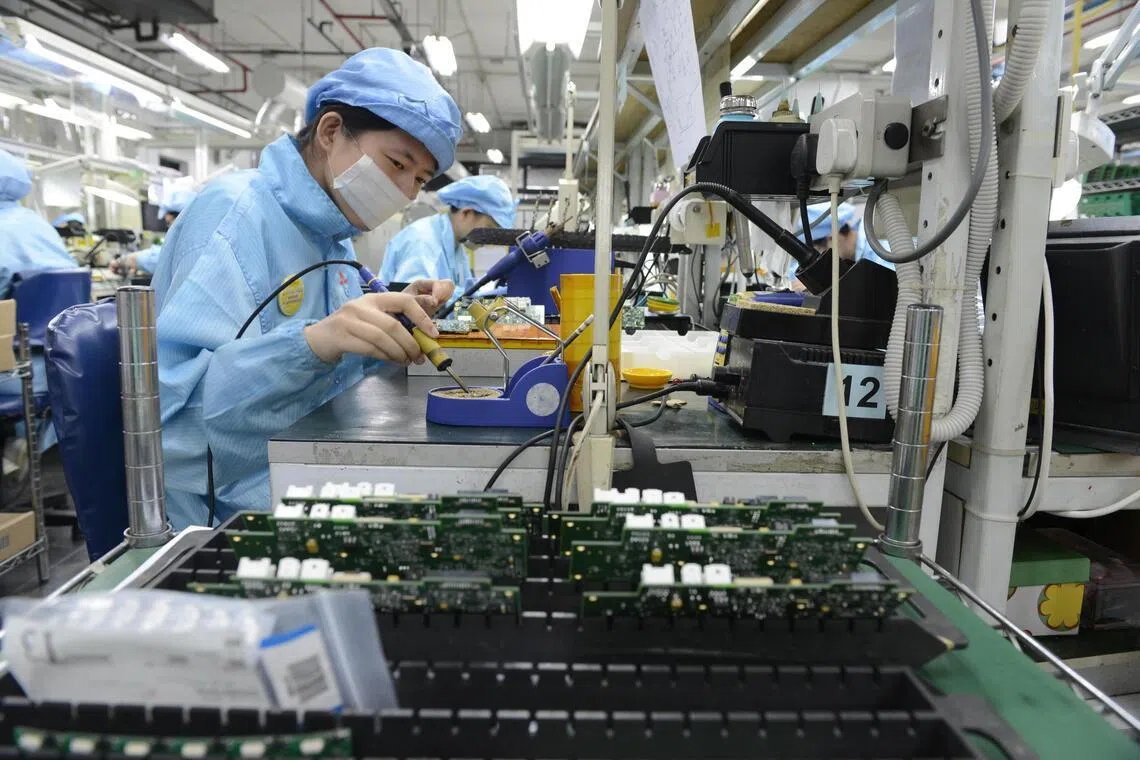
SINGAPORE – Boosted by artificial intelligence demand, Singapore’s factory activity expanded for the 10th straight month in May, even as manufacturers continued to be challenged by slower supplier deliveries.Analysts said the Iran war, which has entered its fourth month, has added to uncertainty and caused a growing strain on supply chains.The Republic’s purchasing managers’ index (PMI) – a barometer of the industry’s overall health – rose to 51 points in May, from 50.7 points in April. This was its highest reading since December 2024.A PMI reading above 50 indicates growth, while one below that signals contraction.The electronics sector, which accounts for 40 per cent of Singapore’s manufacturing output, recorded a PMI of 51.9 points in its 12th consecutive month of expansion.“The latest PMI readings point to a continued positive outlook for the overall manufacturing sector, supported by robust demand from the AI-driven technology upcycle,” said Stephen Poh, executive director at the Singapore Institute of Purchasing and Materials Management, which compiles the monthly survey.“While rising input costs and slower supplier deliveries continue to pose challenges to margins and operational efficiency, the build-up of order backlogs and improving business sentiment suggest that manufacturers remain cautiously optimistic about near-term growth prospects,” he added.May’s PMI reading was driven by a stronger expansion in the sub-indexes of new orders, new exports, factory output, input purchases and employment.The future business sub-index remained in expansion for the seventh consecutive month, despite the ongoing Middle East conflict that began on Feb 28.DBS senior economist Chua Han Teng said the contraction in the sub-index of finished goods for the first time since February “should be viewed positively, as it reflected a robust and sustained external demand for made-in-Singapore electronics goods”.The electronics finished goods sub-index eased from 50.2 points in April to 49.9 points in May.“Global AI-related tailwinds, underpinned by strong capital expenditure intentions, are supporting external demand for Singapore’s memory chips and server-related products, which we expect to sustain the near-term outperformance of the electronics cluster,” Chua added.UOB associate economist Jester Koh noted that with electronics production lagging behind demand, “the greater scope to enhance capacity utilisation should bode well for electronics manufacturing in the months ahead, with firms likely continuing to draw down inventories”.Earlier this week, US President Donald Trump said talks with Iran were moving at a “rapid pace”, although Tehran has threatened to keep the Strait of Hormuz blocked and activate other fronts to “punish” Israel and its supporters.The strait is typically used to transport around one-fifth of the world’s oil and gas, and its closure has driven up energy costs and limited the supply of critical industrial materials.The PMI’s supplier deliveries sub-index contracted at a faster pace for a fifth straight month, reflecting longer lead times and supply chain constraints.Koh said the increase in the sub-index of input prices could also reflect the surge in energy- and fuel-related costs, including electricity, and freight and logistics charges.NUS associate professor of analytics and operations Goh Puay Guan said: “The continued decline in supplier delivery index, taken together with the increase in backlog orders, and the decrease in finished goods inventory, could indicate that supply chain disruptions are causing bottlenecks for final goods delivery.”Challenges stemming from the Iran war were also evident in regional PMI data.An official survey showed that China’s factory activity stalled in May as new export orders contracted and input costs continued rising.Meanwhile, Japan’s manufacturing sector expanded in the same month at a slightly slower pace. This came as surging costs driven by factors such as the Iran war offset a record growth in export orders.Annabelle Liang is a business correspondent at The Straits Times, where she specialises in trade and macroeconomics.
Singapore factory activity grows at fastest pace since December 2024 on AI demand
The purchasing managers’ index rose to 51 points in May, from 50.7 points in April. Read more at straitstimes.com. Read more at straitstimes.com.
TL;DRAI
Singapore's manufacturing PMI hit 51 in May, highest since December 2024, with electronics at 51.9 driven by AI demand for chips and servers. High backlog orders and capacity gaps signal strong near-term AI semiconductor growth despite supply chain disruptions from the Iran conflict.
607 words~3 min read