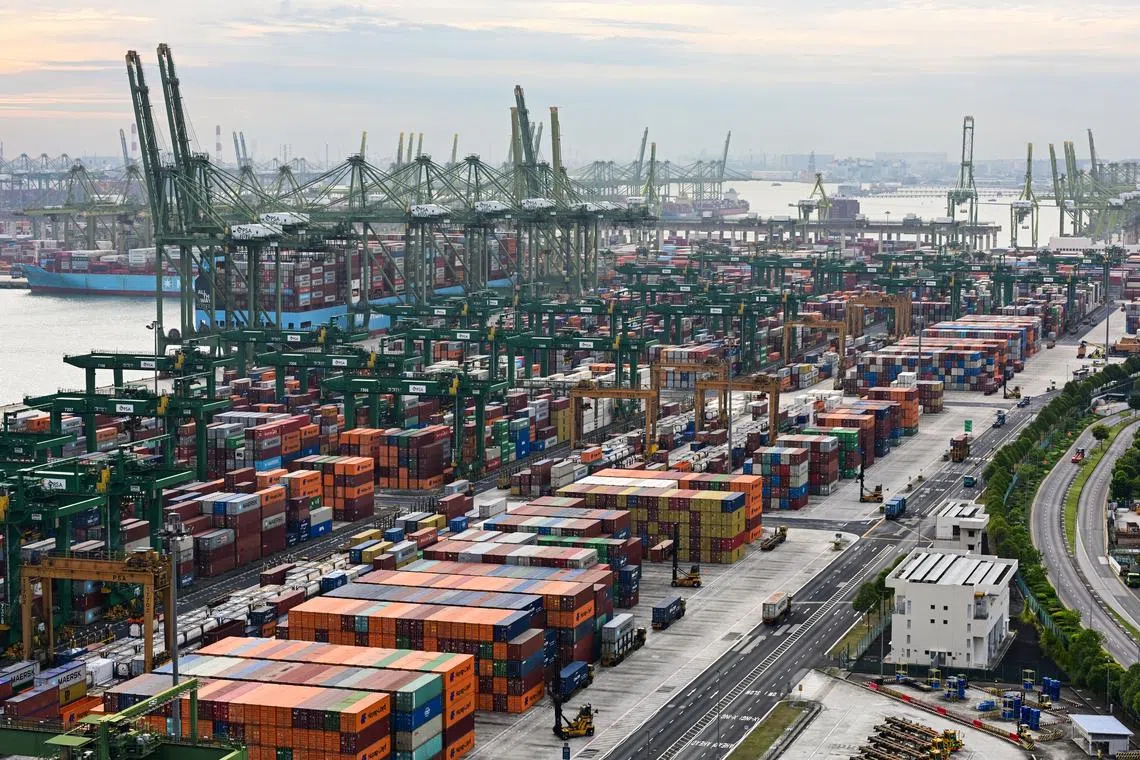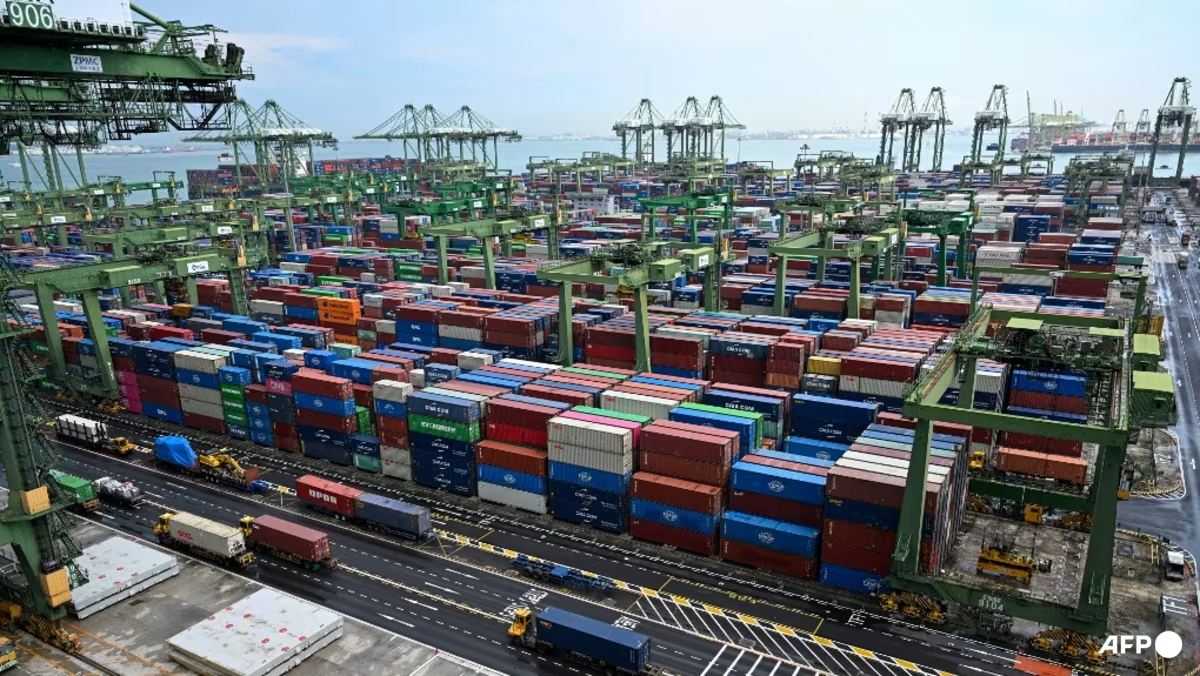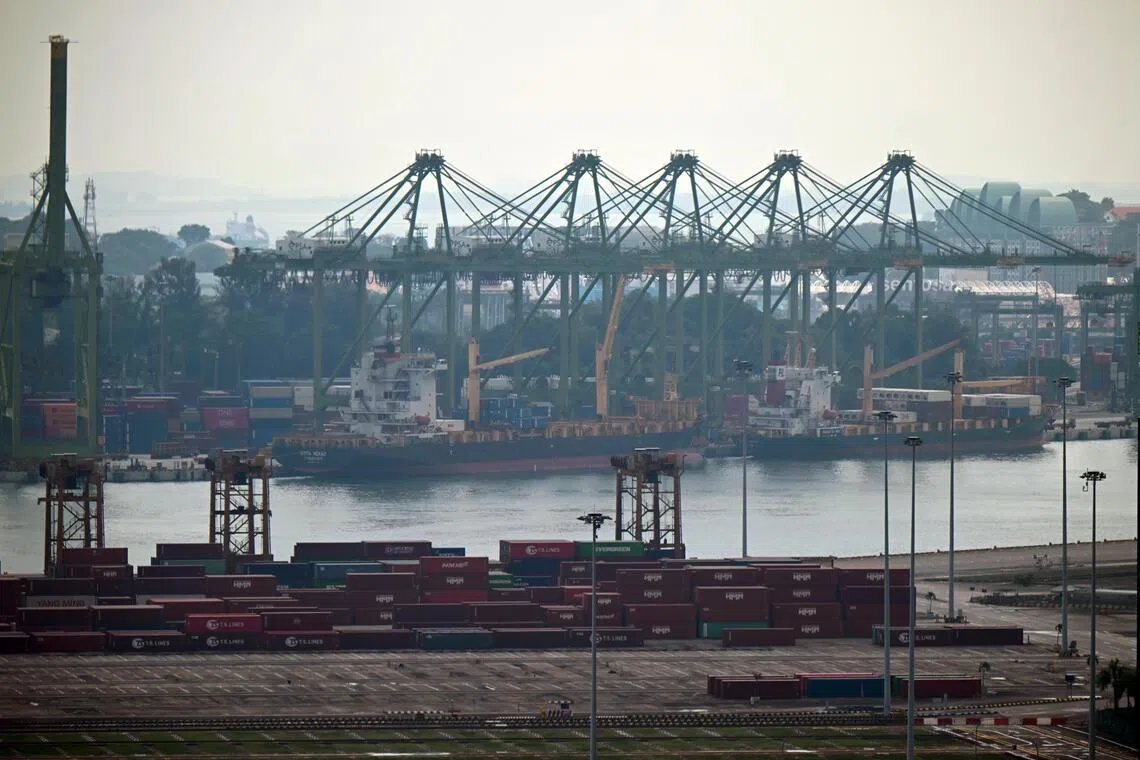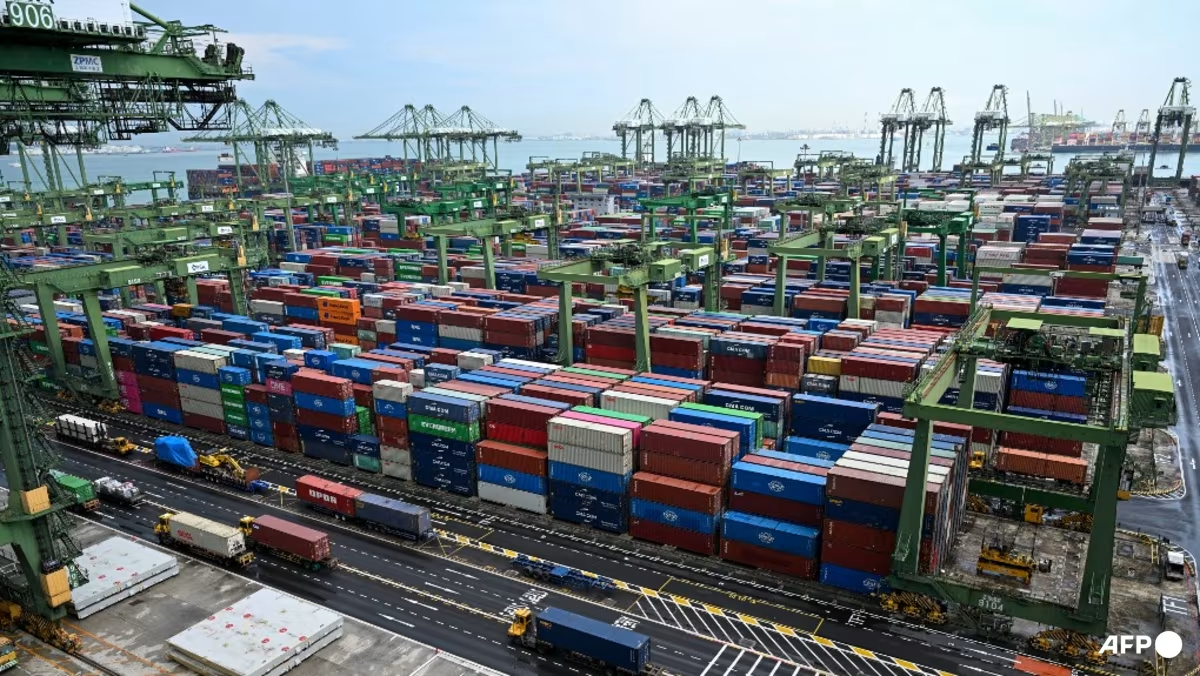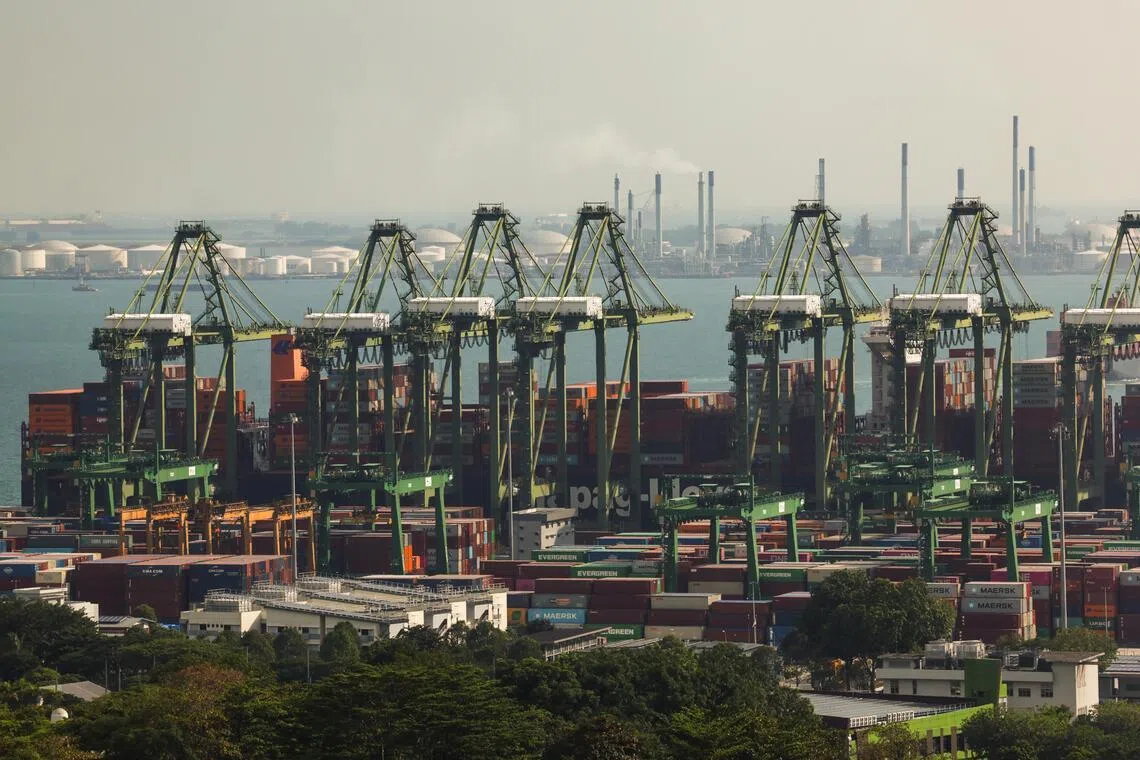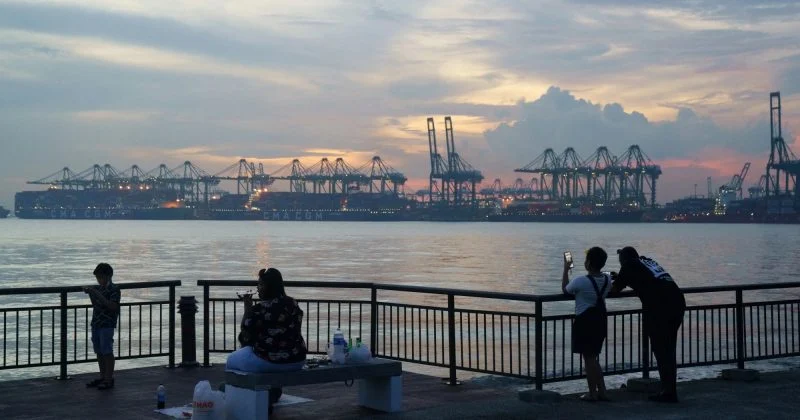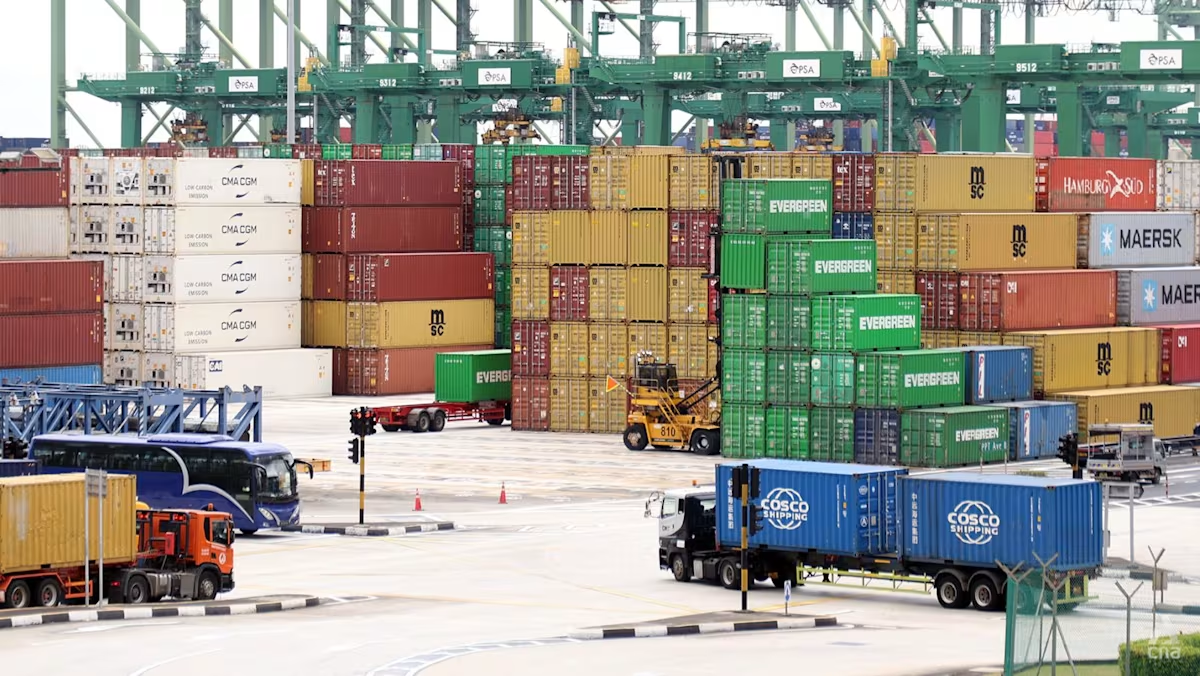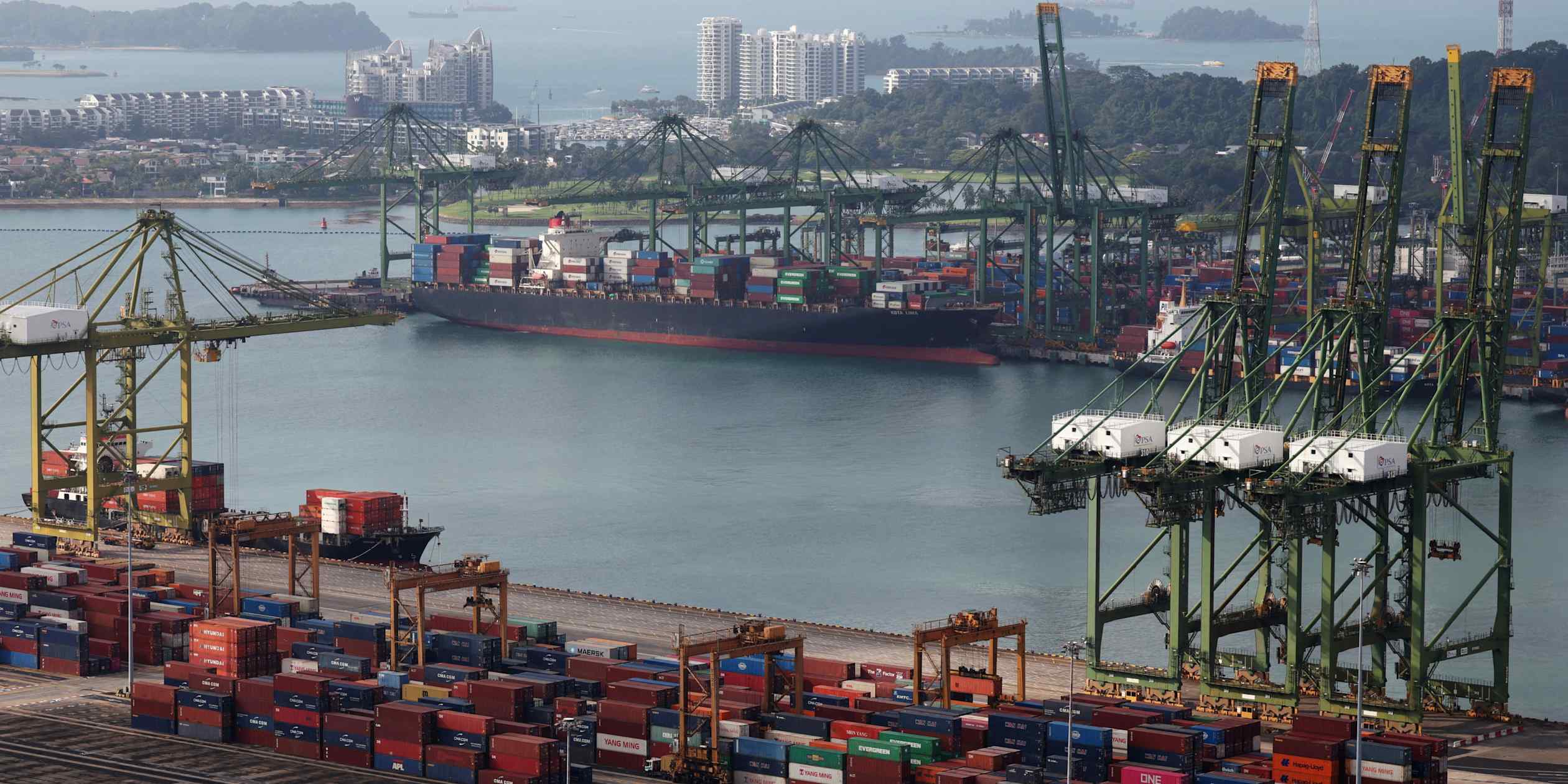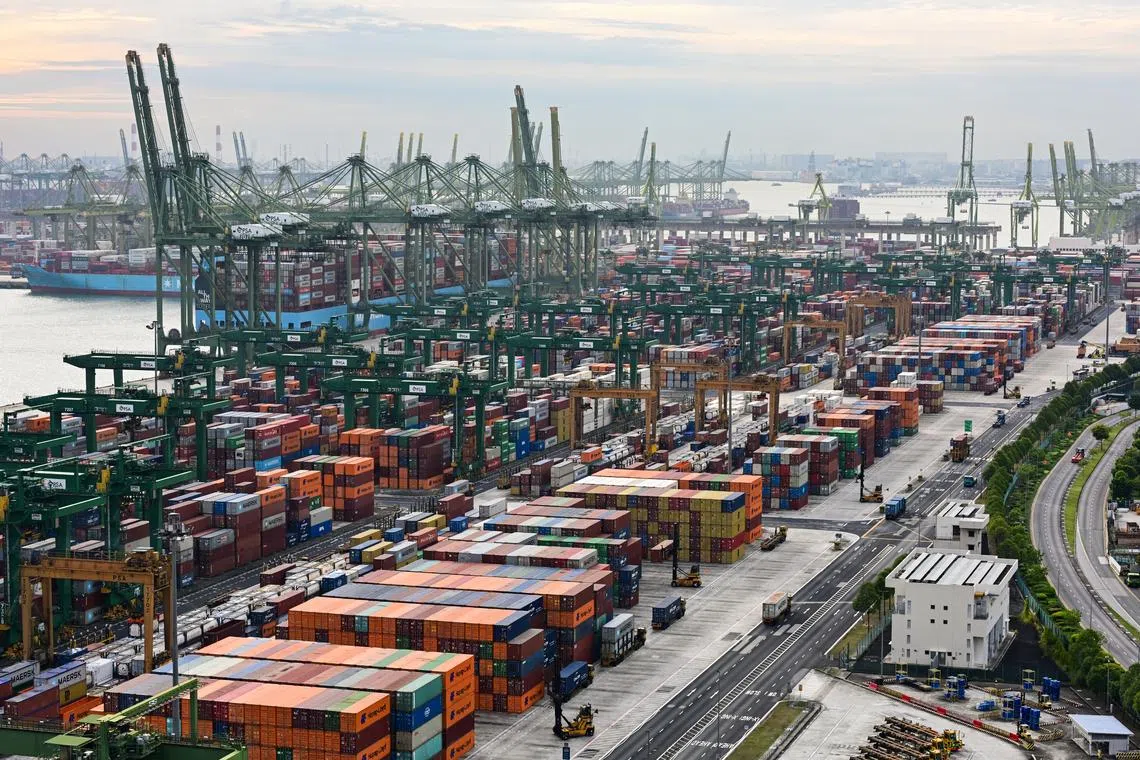
SINGAPORE – Singapore’s exports held firm in May, showing resilience even as the Middle East conflict entered its third month and weighed on global trade sentiment, prompting some economists to sharply raise their full-year forecasts for non-oil domestic exports (NODX).NODX expanded by 38.4 per cent in May compared with a year earlier, extending April’s 24.4 per cent rise as strong artificial intelligence-related demand continued to drive trade momentum.A Reuters poll had a median growth forecast of 31.1 per cent for the May NODX. For the first five months of 2026, NODX grew by 18.1 per cent, data from Enterprise Singapore (EnterpriseSG) on June 17 showed.DBS economist Chua Han Teng said the May increase marked the highest jump since December 2003.Maybank economists Chua Hak Bin and Brian Lee reiterated their forecast for strong gross domestic product (GDP) growth of 4.2 per cent in 2026, above the official forecast of 2 per cent to 4 per cent growth. They also noted potential upside risks, including AI-driven manufacturing momentum and the US-Iran peace deal. Given that key exports have defied the Gulf War shocks, they upgraded their 2026 NODX growth forecast to 15 per cent from 4.5 per cent previously, a significantly higher estimate than EnterpriseSG’s 3 per cent to 5 per cent growth. Electronics NODX surged by 94.8 per cent year on year in May, accelerating from April’s 66.7 per cent year-on-year jump. Growth was driven by integrated circuits, disk media products and personal computers.Zavier Wong, a market analyst at eToro, attributed the strength in electronics NODX to demand from Microsoft, Alphabet, Meta and Amazon, which collectively lifted their 2026 capital expenditure plans to more than US$700 billion (S$898 billion) in late April, up 77 per cent from 2025’s record levels. “That spending is flowing directly into chips, servers and data centre hardware. Singapore sits upstream in that supply chain, shipping integrated circuits, disk media products and PCs to manufacturers in Taiwan, who ultimately fulfil those orders,” said Wong, noting that Singapore’s NODX to Taiwan surged 135.2 per cent in May. Non-electronics NODX jumped by 17.7 per cent in May, extending April’s 10.9 per cent expansion.This was driven by pharmaceuticals, specialised machinery and non-monetary gold. All grew from a low base a year ago.By major markets, NODX to Taiwan, the United States and China expanded in May, while key exports to Indonesia contracted.Wong said pharmaceutical exports, which rose 102.6 per cent, were largely driven by a timing effect. In April, the US announced a 100 per cent tariff on patented drugs and active pharmaceutical ingredients, set to take effect on July 31 for large companies, with Singapore subject to the full rate. As Singapore exports around $4 billion worth of pharmaceuticals to the US annually and hosts manufacturing plants for eight of the world’s top 10 drugmakers, companies have a strong incentive to front-load shipments ahead of the deadline. This likely explains the 80.9 per cent surge in exports to the US in May, Wong added.DBS’ Chua noted that Singapore’s exports cycle has become increasingly interconnected with those of key upstream AI players like Taiwan and South Korea, with electronics NODX to these destinations continuing to expand by triple digits in May. He expects Singapore’s NODX to continue to grow in the near term, supported by continued expansion in new export orders as reflected in the manufacturing purchasing managers’ index. The electronics segment will remain the key outperformer. Global tailwinds from AI – underpinned by strong capital expenditure linked to the shift towards agentic AI – are driving external demand for Singapore’s memory chips and server-related products, Chua said.He added that flows of critical inputs from the Middle East, including oil and gas, may take several months to normalise as confidence in transit through the Strait of Hormuz gradually returns.A reopening of the waterway following the potential US-Iran interim peace deal, reportedly expected on June 19, could help reduce tail risks of rising input costs, prolonged supply chain disruptions and weaker external demand, Chua said.Total merchandise trade rose 39.7 per cent in May, with imports increasing 43.6 per cent.Wong noted that faster import growth points to Singapore’s re-export engine running at pace, with goods being brought in for onward shipment to the rest of the region.
Singapore's key exports surge on AI demand
Singapore's non-oil domestic exports saw a significant 38.4% jump in May, driven by strong artificial intelligence-related demand. Read more at straitstimes.com. Read more at straitstimes.com.
704 words~3 min read