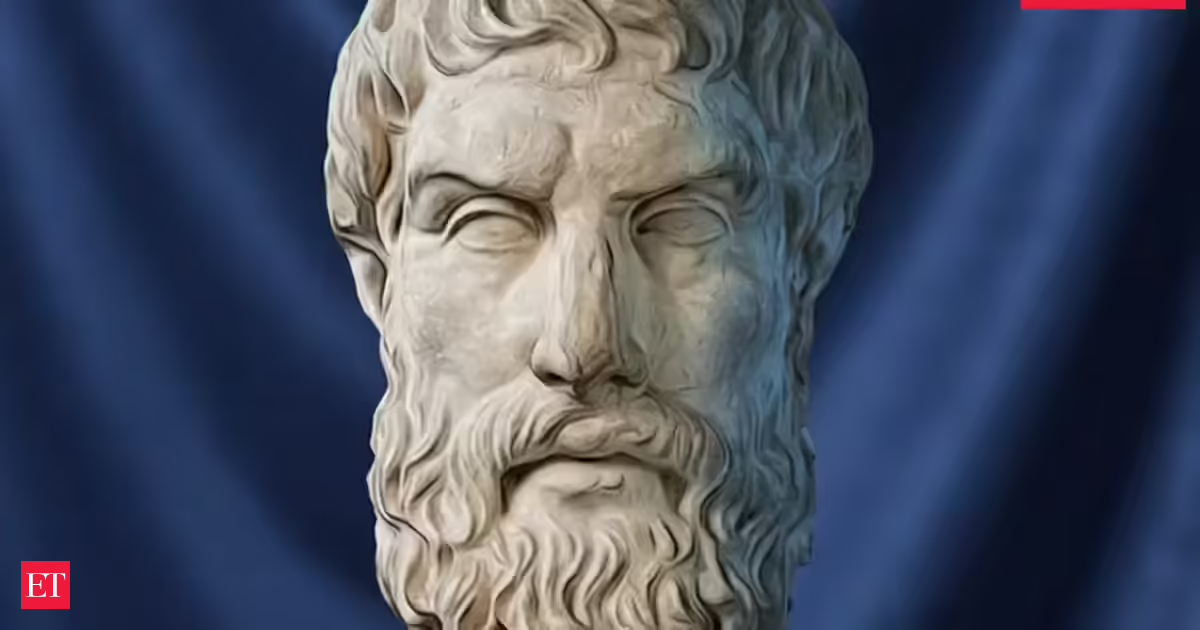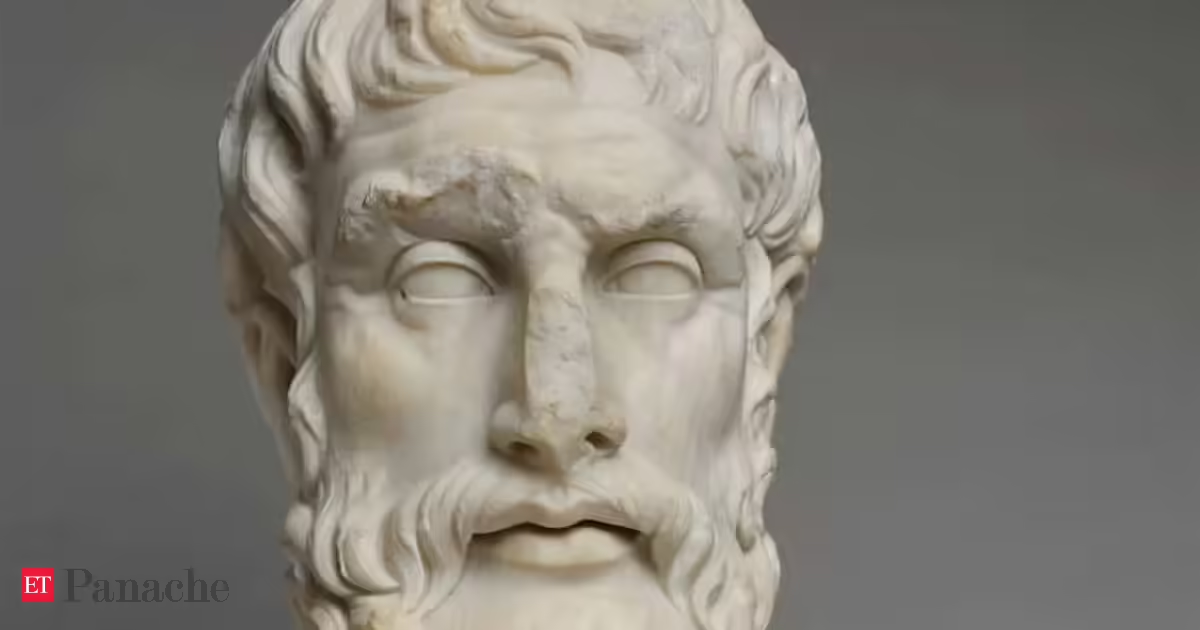
Quote of the day by Epicurus: ‘Pain is neither everlasting nor unendurable, if you remember its limitations and not add to it in thought’; what the Greek philosopher teaches us about sufferingSynopsisAncient philosopher Epicurus offered a profound insight into pain, stating it is neither unendurable nor everlasting if we acknowledge its limitations and avoid amplifying it through thought. His philosophy emphasizes that while external suffering may be temporary, our mental interpretations can significantly extend its duration. This perspective remains highly relevant today for managing stress and achieving emotional balance.In the quote of the day, Epicurus is pointing out two important ideas. (Istock)There are moments when pain feels endless, as if it will stretch far beyond what we can handle. Yet ancient philosophers often challenged this exact feeling, arguing that much of our suffering is shaped not just by events, but by how we interpret them. Among the most striking reflections comes from Epicurus, whose idea about pain continues to resonate in modern conversations about mental well-being, resilience, and emotional balance in everyday life. Epicurus once said, “Pain is neither unendurable nor everlasting, if you remember its limitations and do not add to it in thought.” The quote is mainly attributed to him.Meaning of the quote At its core, the quote is a reminder that pain has boundaries, even when it does not feel that way in the moment. Epicurus is pointing out two important ideas. First, physical or emotional pain is not permanent; it changes, weakens, or eventually passes with time. Second, and more importantly, the intensity of suffering often grows when the mind repeatedly replays it, magnifies it, or attaches fear about its future continuation. In simple terms, the pain itself may be limited, but our thoughts can stretch it far beyond its natural duration. The meaning becomes clearer when viewed through everyday experiences. A failure, a breakup, financial stress, or even a difficult phase at work can feel overwhelming when it is happening. But over time, most people realise that what once felt unbearable eventually softens. The situation may not have changed immediately, but the emotional weight reduced as perspective returned. Epicurus is essentially encouraging a mental shift, where suffering is not inflated by anxiety, rumination, or catastrophic thinking.You Might Also Like:Relevance of the quote The relevance of this idea is especially strong in today’s fast-moving, high-pressure world. People often experience stress not only from problems themselves but from constantly thinking about them. A delayed career goal, a loss, or even uncertainty about the future can spiral into prolonged mental distress when the mind refuses to release it. Epicurus’ insight suggests that while we may not always control external circumstances, we can control how much mental weight we add to them.About Epicurus and EpicurismEpicurus was an ancient Greek philosopher who lived between 341 and 270 BC and founded the school of thought known as Epicureanism. His philosophy focused on a simple but powerful idea: a good life comes from managing desires, letting go of unnecessary fears, valuing friendship, and living with virtue. For Epicurus, happiness was not about excess or luxury, but about peace of mind and freedom from distress. He believed the best way to understand life was to live simply, surrounded by close friends, in a community that encouraged discussion and reflection. He himself taught in a place known as “The Garden” in Athens, where followers shared simple meals and explored deep philosophical ideas together. Interestingly, Epicurus also argued that while gods may exist, they do not interfere in human life, which made his ideas stand apart from many beliefs of his time. His thinking was deeply influenced by atomism, the idea that everything in the universe is made of tiny particles moving through empty space. But he added a unique twist called atomic “swerve,” suggesting that atoms sometimes deviate from their path, which he used to explain the possibility of free will. Much of his original writing is lost today, so his philosophy is mainly known through later thinkers and fragments of his work.You Might Also Like:Read More News on...morelessRead More News on...moreless
Quote of the day by Epicurus: ‘Pain is neither everlasting nor unendurable, if you remember its limitations and not add to it in thought’; what the Greek philosopher teaches us about suffering
Ancient philosopher Epicurus offered a profound insight into pain, stating it is neither unendurable nor everlasting if we acknowledge its limitations and avoid amplifying it through thought. His philosophy emphasizes that while external suffering may be temporary, our mental interpretations can significantly extend its duration. This perspective remains highly relevant today for managing stress and achieving emotional balance.
TL;DRAI
Epicurus taught that pain becomes unbearable only when amplified by our thoughts, not from the pain itself. In today's high-pressure world, this principle proves critical: external stress multiplies through mental rumination, but can be limited by controlling our narrative.
678 words~3 min read