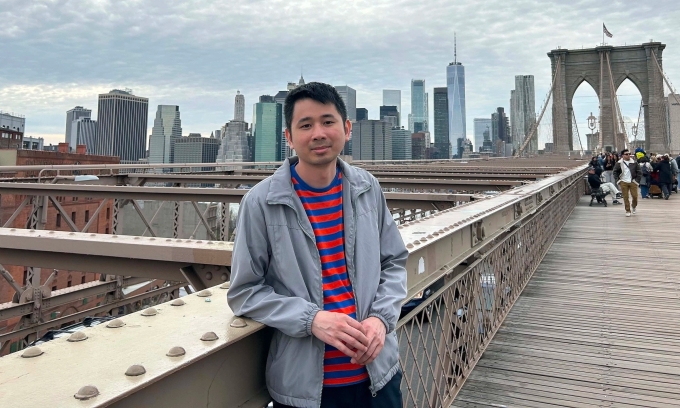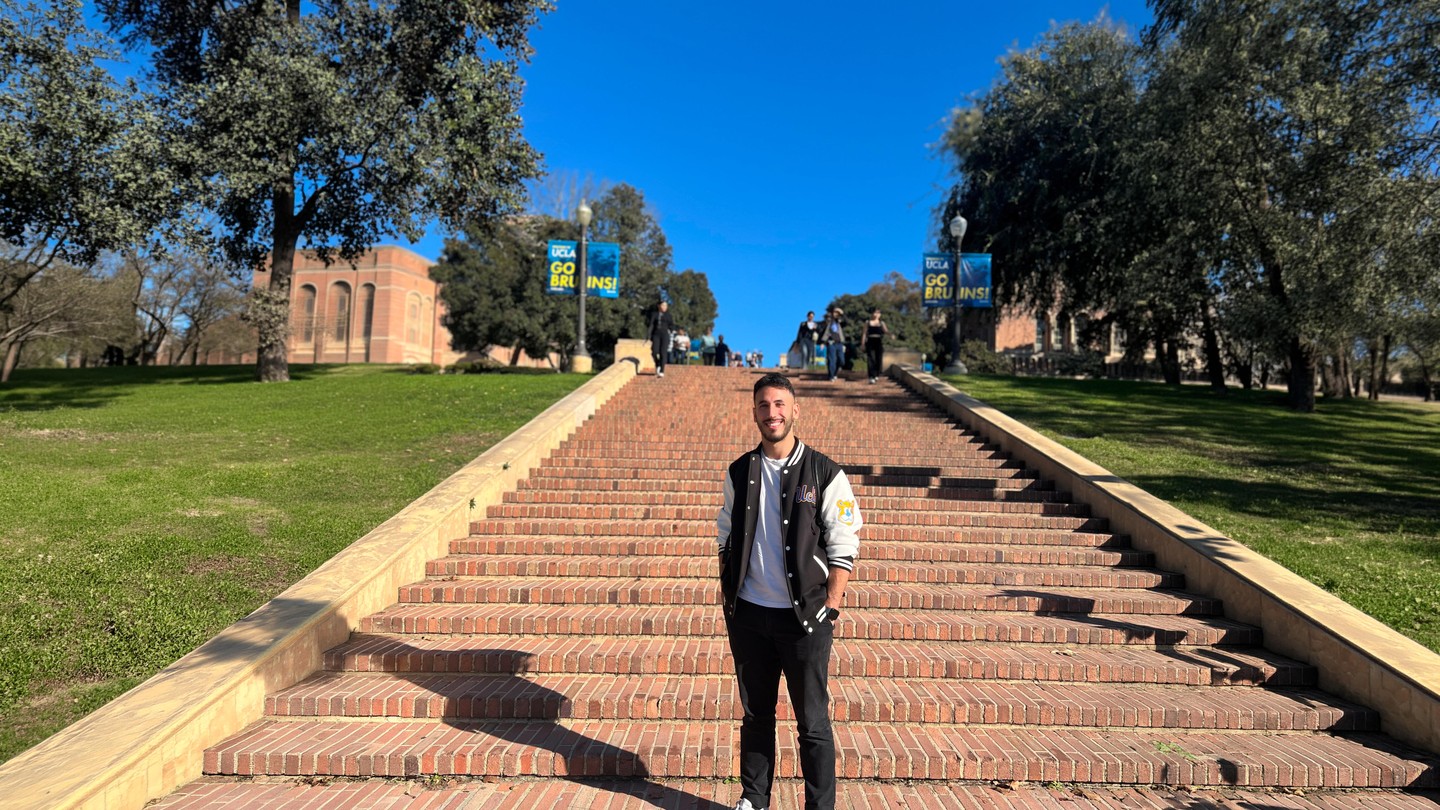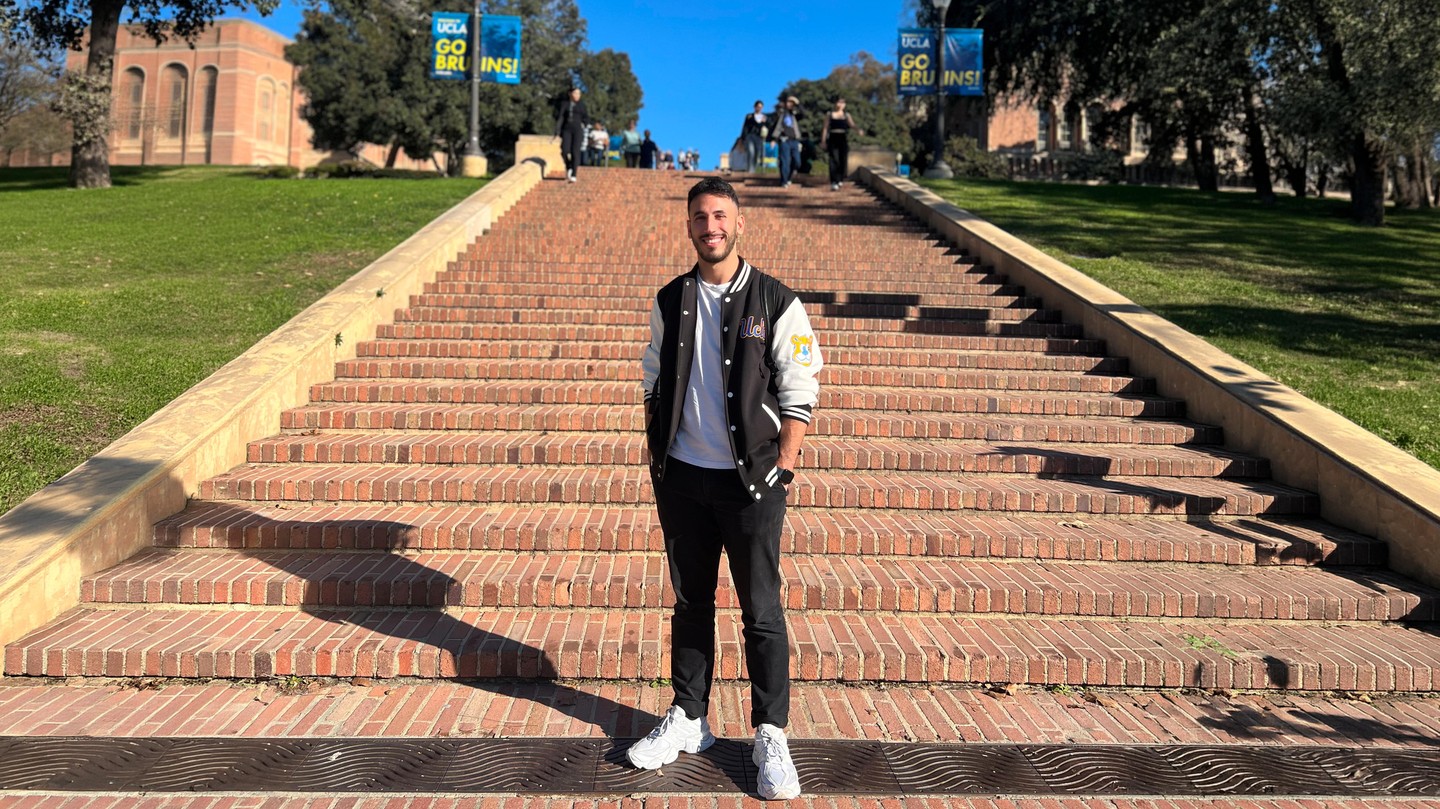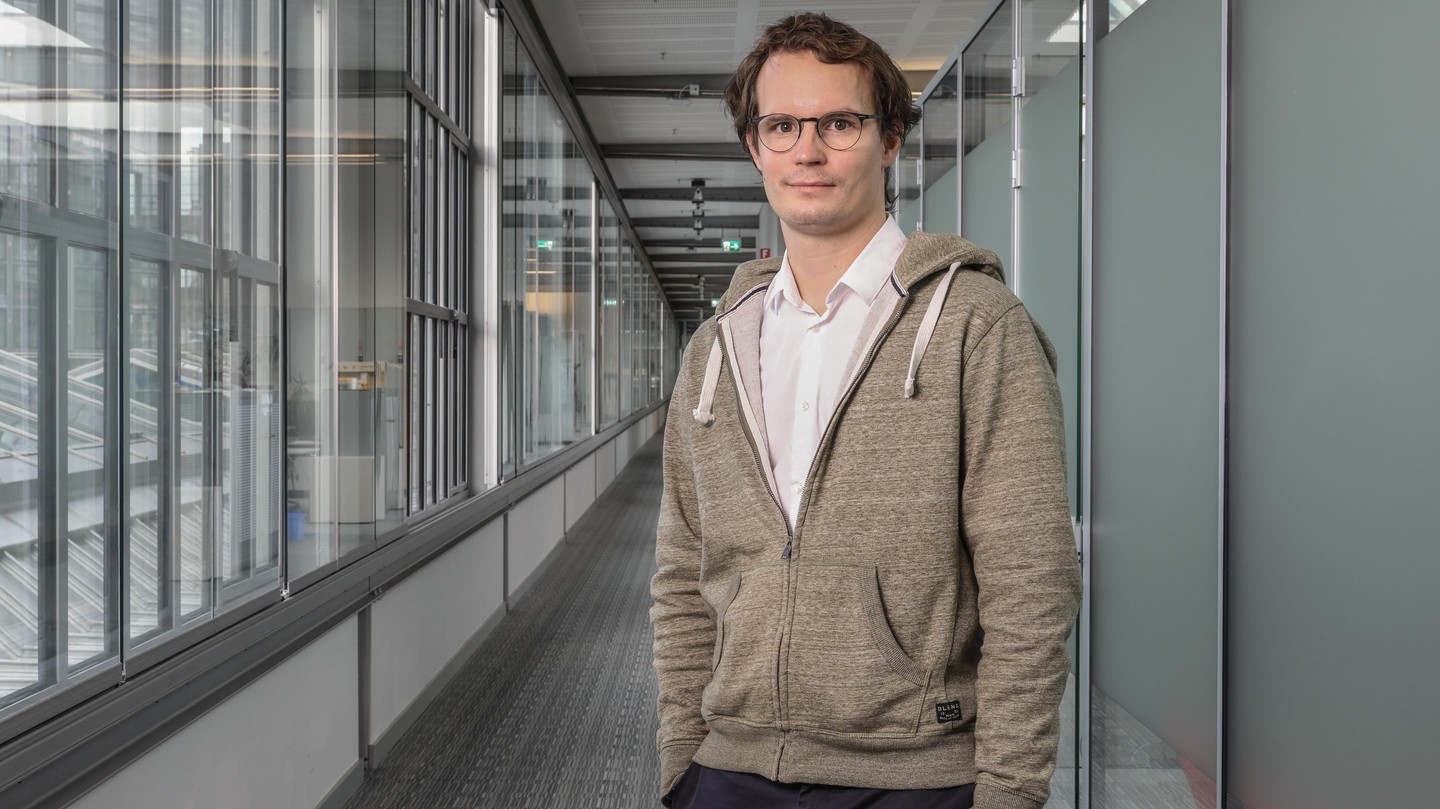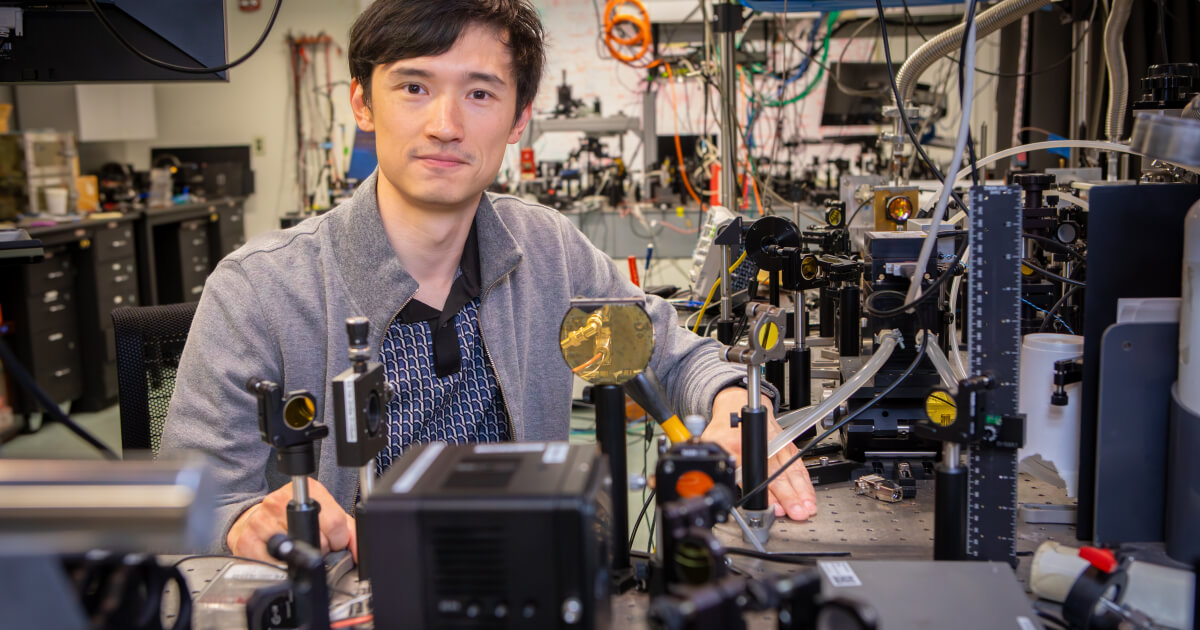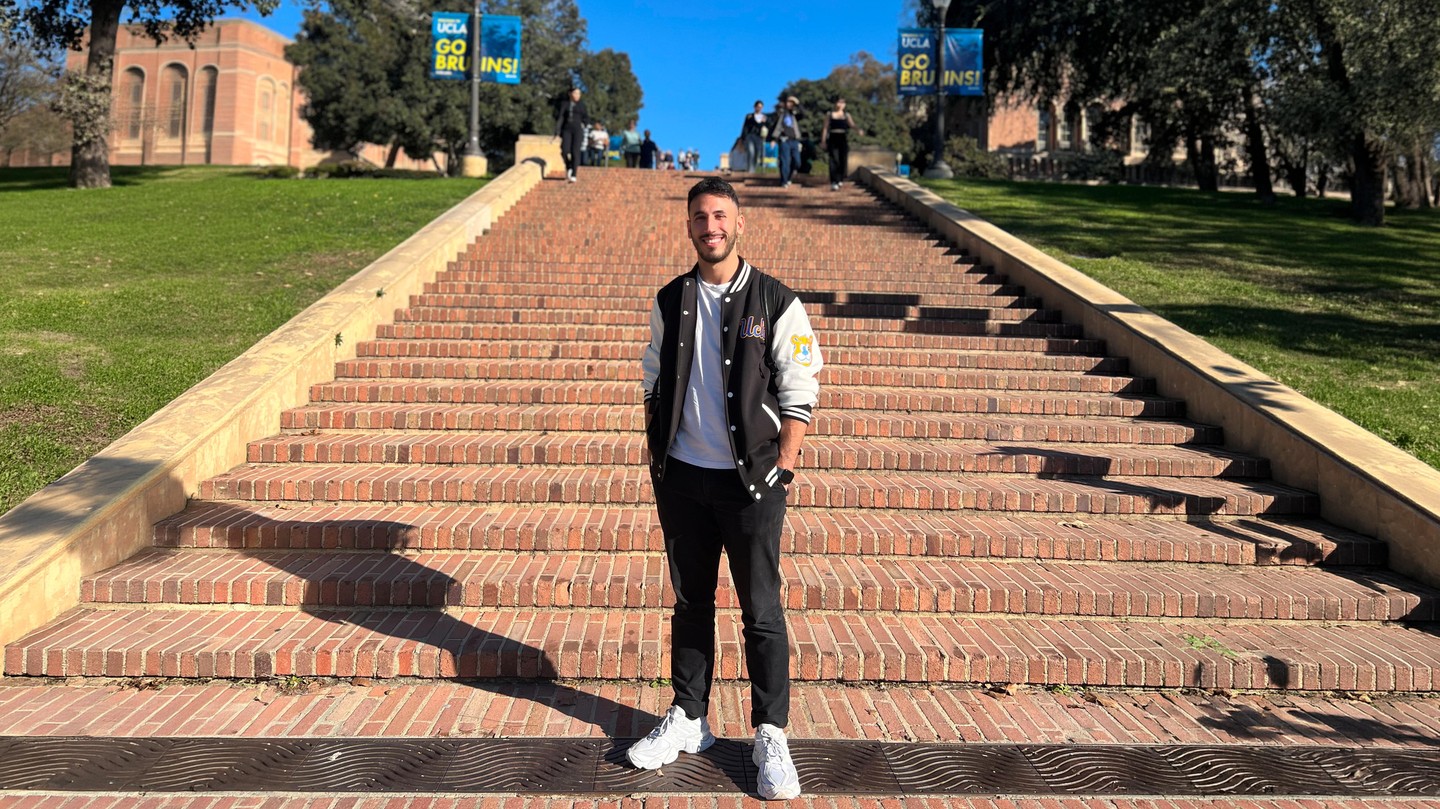
Darius Nik Nejad is currently a PhD candidate in Finance at EPFL’s College of Management of Technology. He spent nearly six months at UCLA’s finance department to experience American academic life and test a possible future in the United States. The stay pushed him to connect his theoretical models more closely to empirical data — and showed him just how high the bar can be.Darius would leave his off-campus housing in the pale haze of a Los Angeles morning and take the bus across a city that seemed to have no real center. Sidewalks appeared and disappeared. The distances stretched. UCLA was only a few miles away, but in Los Angeles, a few miles could still mean a forty-five-minute commute.“LA is like one big, sprawling suburb,” he says.For a Geneva-born EPFL student used to the compact order of Swiss cities, the rhythm was disorienting at first. But it also gave his days a strange clarity. He would arrive on campus around 8 a.m., walk through UCLA to the finance department, sit down in the PhD open space, and often stay until the clock came back around to 8 p.m.Afterwards, if he did not feel like cooking, he would go to Cava, his favorite nearby restaurant — “a Middle Eastern Chipotle,” as he puts it. Or he could simply order in any type of food he wanted. In a city built on car convenience, even dinner became part of the work rhythm.The young theoretical finance scholar spent just under six months at UCLA. Long enough to experience American academic life, long enough to test whether the United States might become part of his future, and long enough to understand that the world he hopes to enter is even more demanding than he had imagined.At EPFL, Darius works in a finance department with a strong theoretical culture. His own research sits firmly in that tradition. He builds mathematical models to understand how financial markets behave when investors do not share the same beliefs, when information is incomplete, or when markets are shaped by frictions.“I tend to approach finance like a physicist,” he says. “I look for patterns and try to come up with theories to explain them.”The comparison is more than a metaphor. Before turning to financial engineering, Darius studied physics at EPFL. He loved its theoretical rigor, but eventually wanted to apply that way of thinking to systems closer to human behavior. Financial markets, unlike physical systems, are shaped by assumptions, incentives, expectations and uncertainty.In the United States, researchers often place greater emphasis on practical relevance, data and application. For Darius, this was one of the most valuable aspects of the stay. His UCLA host encouraged him to think more concretely about how his theoretical work could connect to empirical evidence. That influence is now visible in his latest paper — the solo article that will play a central role when he enters the academic job market.“I was motivated like never before to take deep dives into both known and unknown areas of financial theory,” he says. “My stay at UCLA impressed upon me the importance of integrating empirical data into my theoretical frameworks.”The distance from Switzerland helped. Separated from friends, family and familiar routines by a nine-hour time difference, Darius found himself in what he describes as a bubble. Without the usual distractions, he was able to give himself fully to the rhythm of the department. The long days were not limited to Monday to Friday: he attended conferences, exchanged with other researchers, and often worked on campus during the weekend alongside other PhD candidates.The experience did not simply make him more confident. If anything, it made the next stage of his career feel more real, more competitive and more demanding.One moment captured that feeling better than any other. During a UCLA conference celebrating finance professor Tyler Muir’s Fischer Black Prize — one of the major distinctions in the field — Darius found himself in a room with many of the theorists whose papers he had read for years.“It was kind of like a child having all his football superstars around him,” he saysThe moment was intimidating, but not discouraging. It made the academic world he hopes to join feel closer, sharper and more demanding.Will the invisible hand of the academic job market guide him back to the United States, or somewhere else in the world?“My time abroad confirmed that the US academic world is a serious option,” he says. “But it also showed me how high the bar can be.”
“I tend to approach finance like a physicist.”
Darius Nik Nejad is currently a PhD candidate in Finance at EPFL’s College of Management of Technology. He spent nearly six months at UCLA’s finance department to experience American academic life and test a possible future in the United States. The stay pushed him to connect his theoretical models more closely to empirical data — and showed him just how high the bar can be.
751 words~3 min read