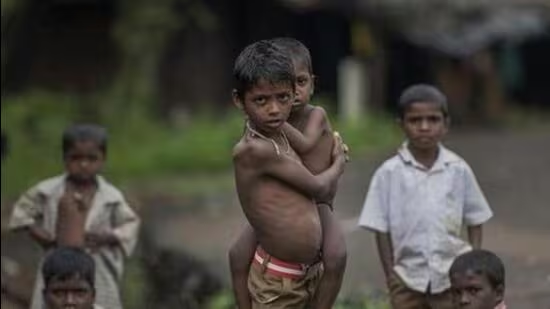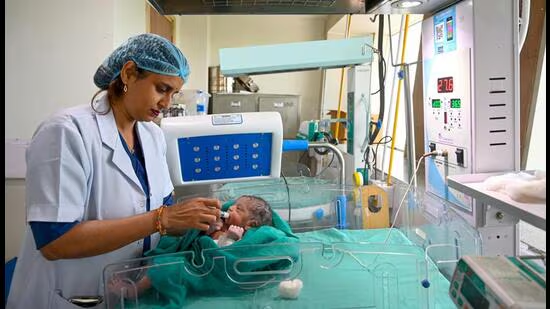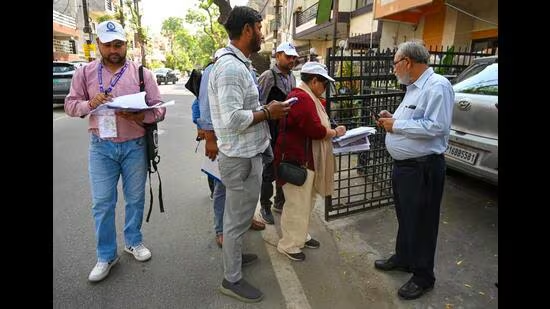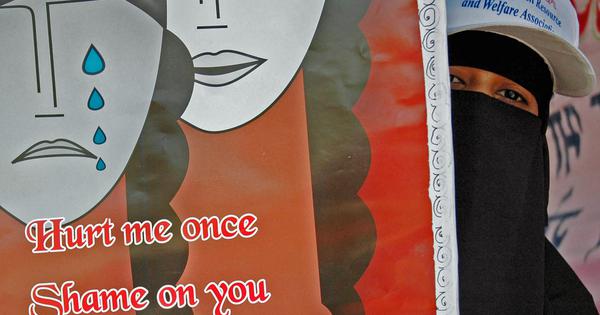
At least one in every five women (18-49 years) in Odisha suffered domestic violence from their partners, revealed the findings of the National Family Health Survey (NFHS-6) by the Union Ministry of Family and Health Welfare (MoHFW).The prevalence was higher in rural Odisha, where 19.6% women faced domestic violence, compared to 15.2% in urban region.The survey also points to a decline in women’s participation in household decision-making. While 87.2% of women in Odisha were actively involved in three key household decisions, the figure remained lower than the national average of 89%. The numbers had dipped from 90% in NFHS-5 (2019-21), reflecting the worsening autonomy of women in the state.The report found just 26 out of every 100 women in Odisha were paid in cash in exchange for labour in the past year. Of them, rural Odisha recorded a paid labour workforce of 27.6%, surpassing their urban counterparts at 22.5%. This fell below the national average at 30.8%, with urban and rural regions recording 29.8% and 31.2% paid workforce, respectively.The State witnessed an upward rise of 4% in women possessing a bank account for personal use. With 90.6%, Odisha recorded an improvement from 86.5% of women with a bank account in NFHS-5 survey.Maternal health: Rising C-sections raise concernThe survey underlines an 8% staggering rise in caesarean birth delivery from last time, recording 29.4% of total births. In a stark urban-rural divide, women in urban regions had 46.4% C-section birth deliveries against nearly 27% in rural Odisha. Private hospitals saw a major concentration of C-section births at 76.8%, reflecting an increasing reliance of families when it comes to child birth deliveries. The government hospitals, in contrast, contributed nearly 20% child births in C-section surgeries.Significantly, the urban-rural divide was further in government hospitals in opting for C-section birth deliveries. While the urban Odisha recorded 31.2%, women in rural Odisha had just 18.5% C-section deliveries.According to the World Health Organisation (WHO), the ideal rate for C-section birth is considered between 10-15% of total population. “When caesarean section rates move towards 10% across a population, the number of maternal and newborn deaths decreases. When the rate goes above 10%, there is no evidence that mortality rates improve,” the global health body said.Despite much awareness for improved maternal health, Odisha demonstrated a little improvement in safeguarding the health of mothers during pregnancy. The state had 74.5% women who consumed iron folic acid for 100 days during pregnancy.When compared with top performers, Kerala and Tamil Nadu had 92% and 82.1% women respectively who consumed iron folic acid during pregnancy.According to medical experts, a woman’s blood volume increases significantly to support the growing fetus and placenta. A lack of iron can lead to anemia, which is associated with complications such as premature delivery and poor fetal growth. Thus iron folic acid helps in preventing anemia and building the baby’s spinal chord.Additionally, the state recorded almost 94% institutional births, up from 92.2% in 2020-21. Though the figures highlight a scope for improvement, Odisha fared better than national average of 90.6%.Child health: Immunisation gaps remain, malnutrition persistsThe State still has 4% children (12-23 months) who have not received any vaccine, exposing vulnerabilities to contract airborne diseases. Further, 8% children in the state are yet to undertake polio vaccines, highlighting a gap in Odisha’s future of a polio-free state.While almost 94% children in the state are secured with first dose of measles vaccine, the state showed a little stagnancy at 86% in second dose of measles vaccine. Moreover, Odisha had 89.6% children vaccinated for Hepatitis-B, reflecting the state’s commitment to combat the liver disease.Meanwhile, Odisha recorded 26.8% children (under 5-years) of stunting cases, while 22.1% of wasting cases were received.A child is considered stunted when they are too short for their age due to long-term malnutrition, repeated infections, or poor health and nutrition over months or years. In contrast, a child is considered wasted when they are too thin for their height, usually because of recent and severe weight loss or inadequate food intake.Women lead in obesity, men in hypertension and diabetesAs per the health survey, Odisha’s population comprise more obese women than men, with 29.7% against the latter’ share of 27.8%. This marks a sharp rise from NFHS-5 survey which reported 23% obese women and 22.2% obese men. The urban Odisha reported almost twice the rate of obese individuals in rural Odisha.While 46.3% women in urban Odisha is learnt to be obese, the obese women in rural Odisha stood at 26.7%. Likewise, 43.9% men in urban Odisha is obese against their rural counterpart, making 24.9%.
In Odisha, one in five women face domestic violence; one in four children stunted: NFHS-6
NFHS-6 reveals alarming rates of domestic violence and child stunting in Odisha, highlighting women's economic challenges and maternal health concerns.
905 words~4 min read