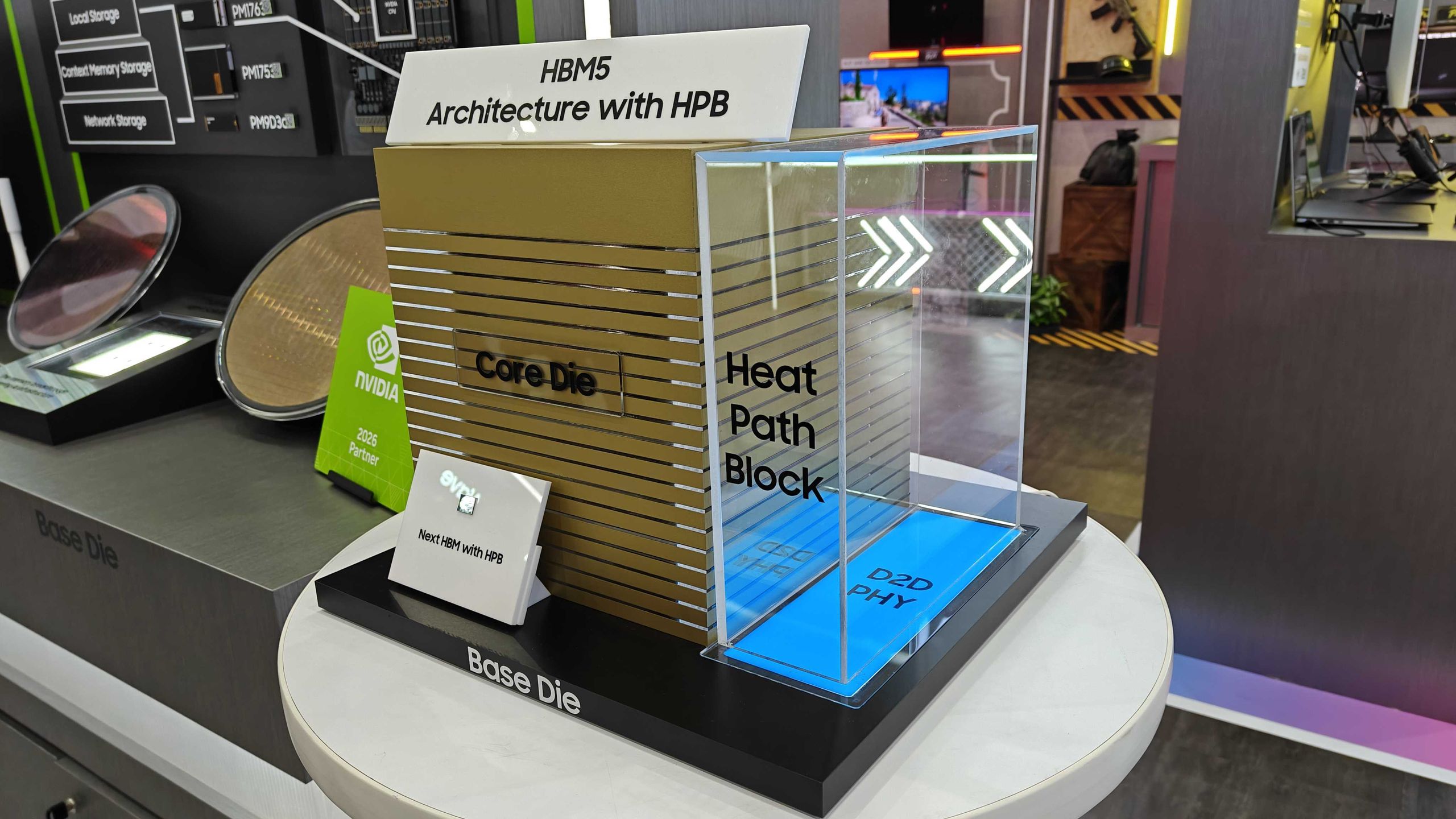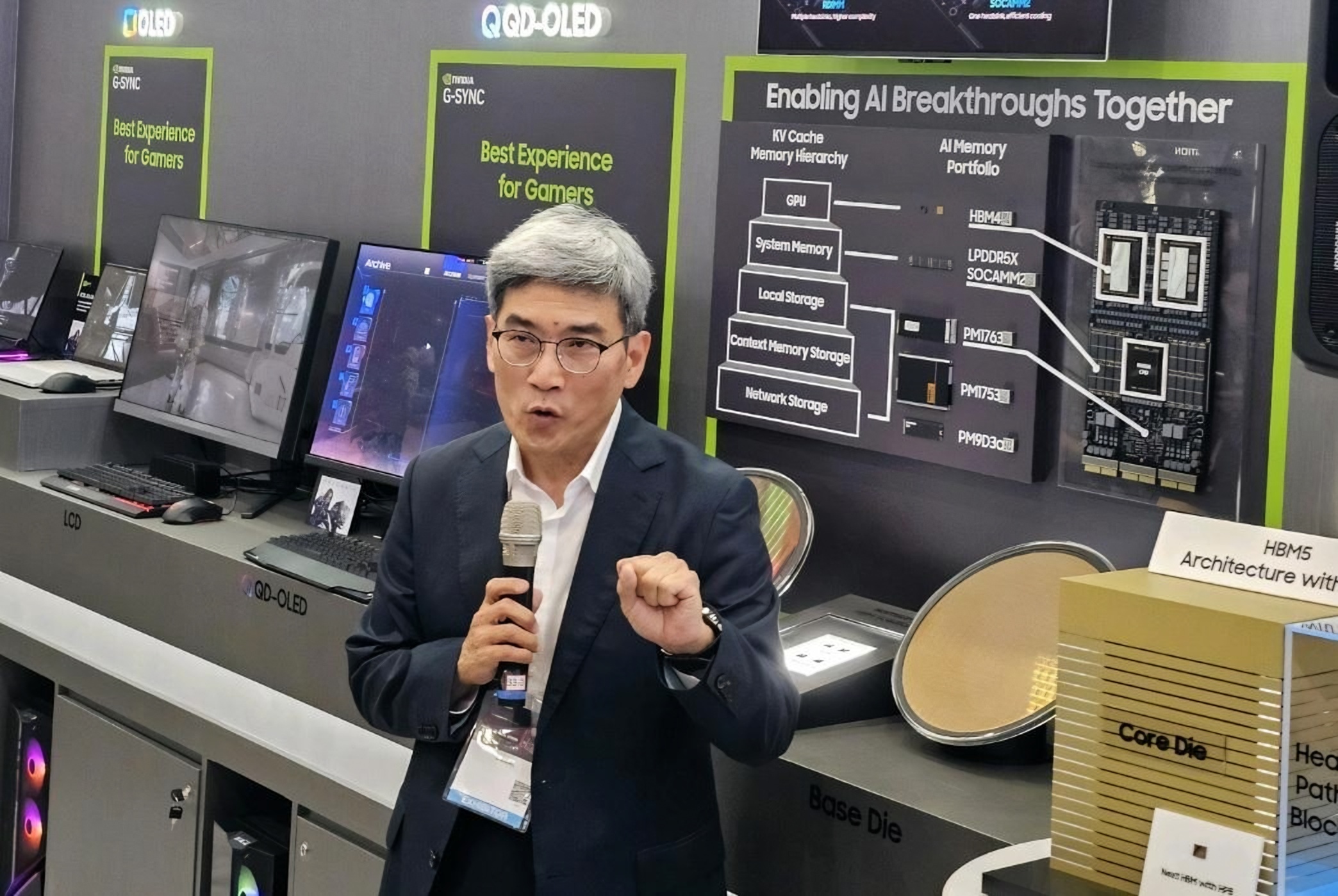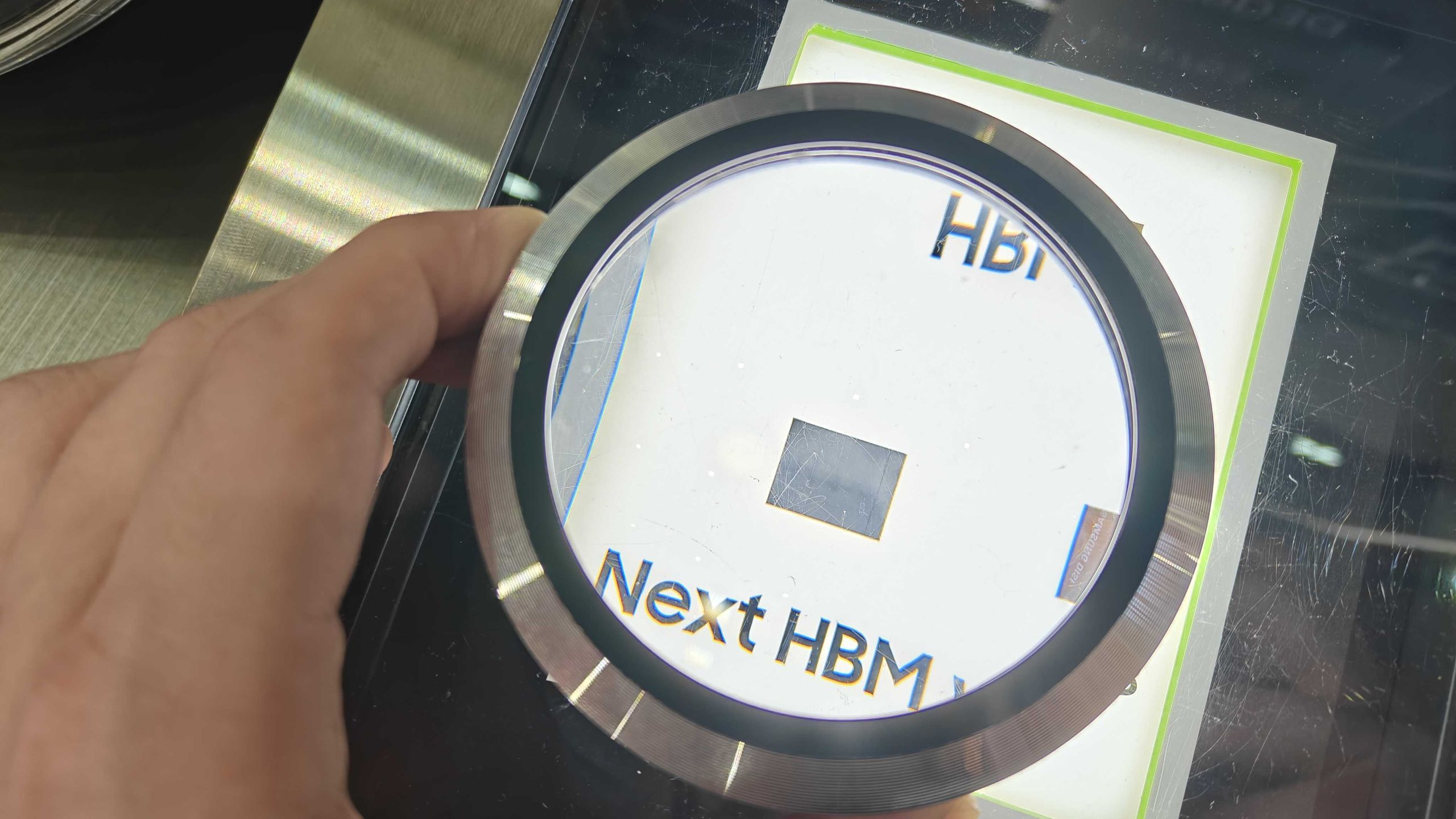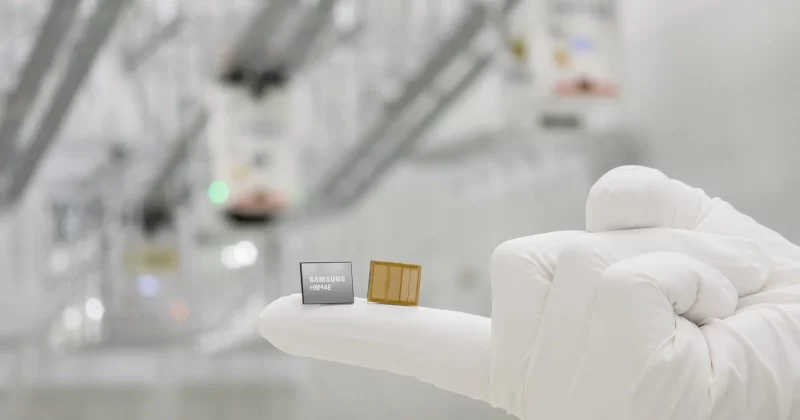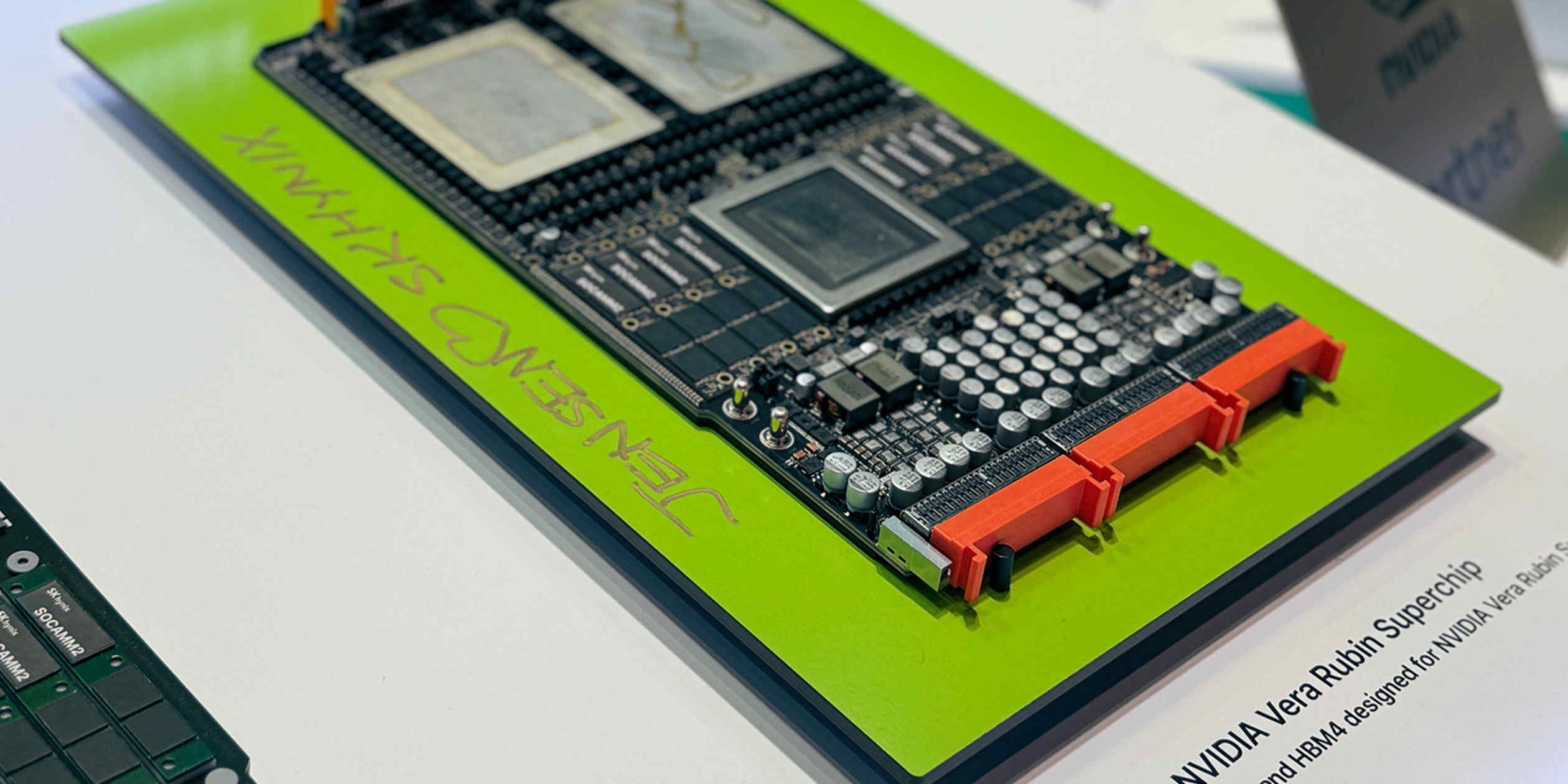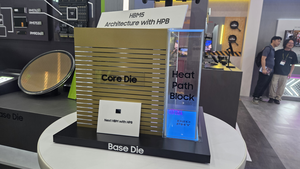
Samsung Electronics President and Chief Technology Officer Song Jai-hyuk introduces HBM5 mockup at Computex 2026 in Taipei, Taiwan, Tuesday. (Samsung Electronics) Samsung Electronics unveiled a mockup of its HBM5 memory and a new heat-management technology at Computex 2026, signaling its ambition to regain momentum in the artificial intelligence memory race as competition with SK hynix intensifies.At the annual technology exhibition in Taiwan on Tuesday, Samsung showcased the planned architecture of its seventh-generation high-bandwidth memory, or HBM5, featuring a new thermal solution called Heat Path Block designed to improve heat dissipation in increasingly powerful AI systems. Samsung Electronic's HBM5 mockup unveiled at Computex 2026 in Taipei, Taiwan, on Tuesday (Park Ji-young/Herald Business) The unveiling comes as Samsung seeks to narrow the gap with SK hynix, which has taken the lead in supplying HBM chips to Nvidia during the current AI boom. By laying out its HBM5 roadmap, Samsung is signaling an early push into the next phase of AI memory competition beyond the current HBM3E and HBM4 generations."AI systems are becoming more powerful and densely integrated, making heat management, data-processing efficiency and packaging stability just as important as memory performance itself," said Song Jai-hyuk, president and chief technology officer of Samsung's Device Solutions division.Samsung said HPB creates an additional pathway for heat transfer, reducing thermal resistance and improving operational stability as memory stacks become taller and data speeds increase.The company has already incorporated the technology into its HBM4E product and completed reliability and packaging tests. Samsung plans to expand its use of HBM5 to improve both performance and power efficiency.The chipmaker has also disclosed plans to use a 2-nanometer base die for HBM5, a move aimed at boosting processing efficiency and strengthening its competitiveness in AI memory."Based on cooperation with global companies including Nvidia, Samsung will continue strengthening its competitiveness in next-generation memory technologies," Song said.At the exhibition, Samsung also displayed HBM4E wafers and chipsets. The product combines Samsung's latest 1c DRAM with an in-house 4-nanometer foundry base die.The company said HBM4E, samples of which began shipping last week, operates at 14 gigabits per second per pin and can support up to 16 gigabits per second, delivering a maximum bandwidth of 4 terabytes per second.Samsung also highlighted Nvidia's Vera Rubin platform at its booth, showcasing a system incorporating Samsung products. The company said it is the only supplier offering a full memory portfolio for the platform, including HBM4, SOCAMM2 and PM1763.According to market researcher Omdia, the global HBM market is projected to more than triple from $58.9 billion in 2026 to $198.3 billion in 2029 as demand for AI servers and data centers continues to surge.
Samsung reveals HBM5 mockup in bid to regain AI memory lead
Samsung Electronics unveiled a mockup of its HBM5 memory and a new heat-management technology at Computex 2026, signaling its ambition to regain momentum in the
TL;DRAI
Samsung unveiled HBM5 with Heat Path Block at Computex to challenge SK hynix in the $198B AI memory market by 2029. For IT teams, HBM5 thermal efficiency enables denser AI systems at lower power, driving infrastructure procurement and supplier strategy changes.
436 words~2 min read