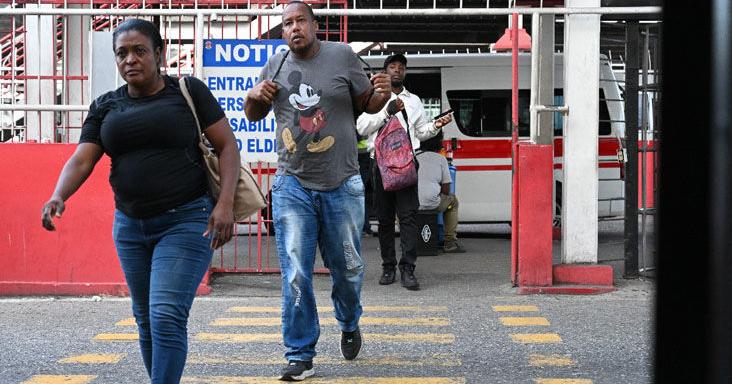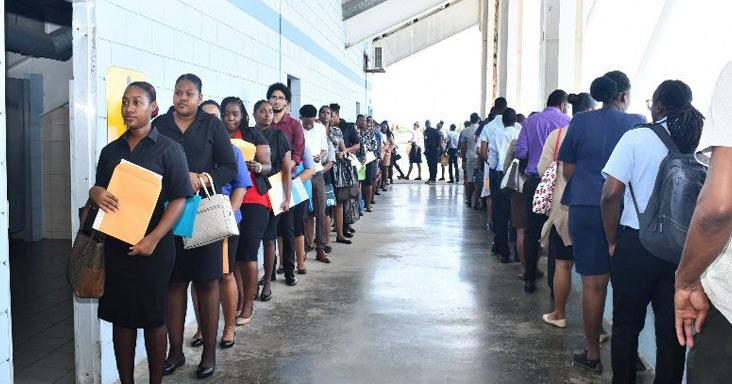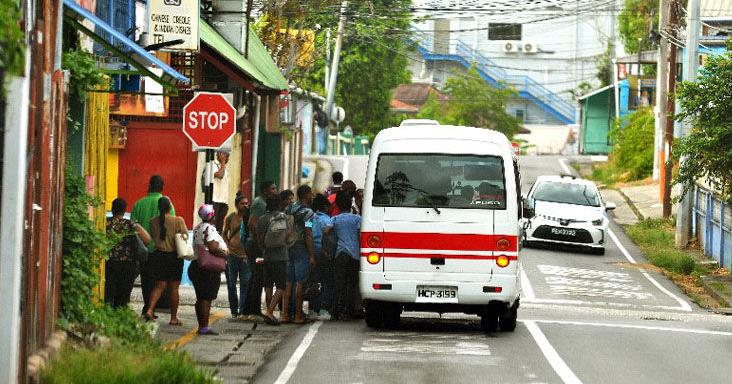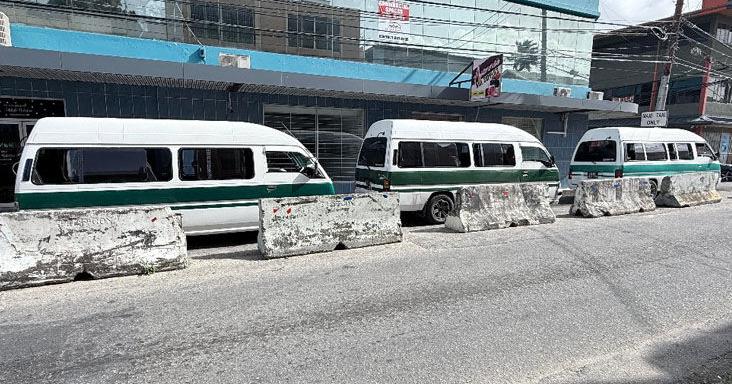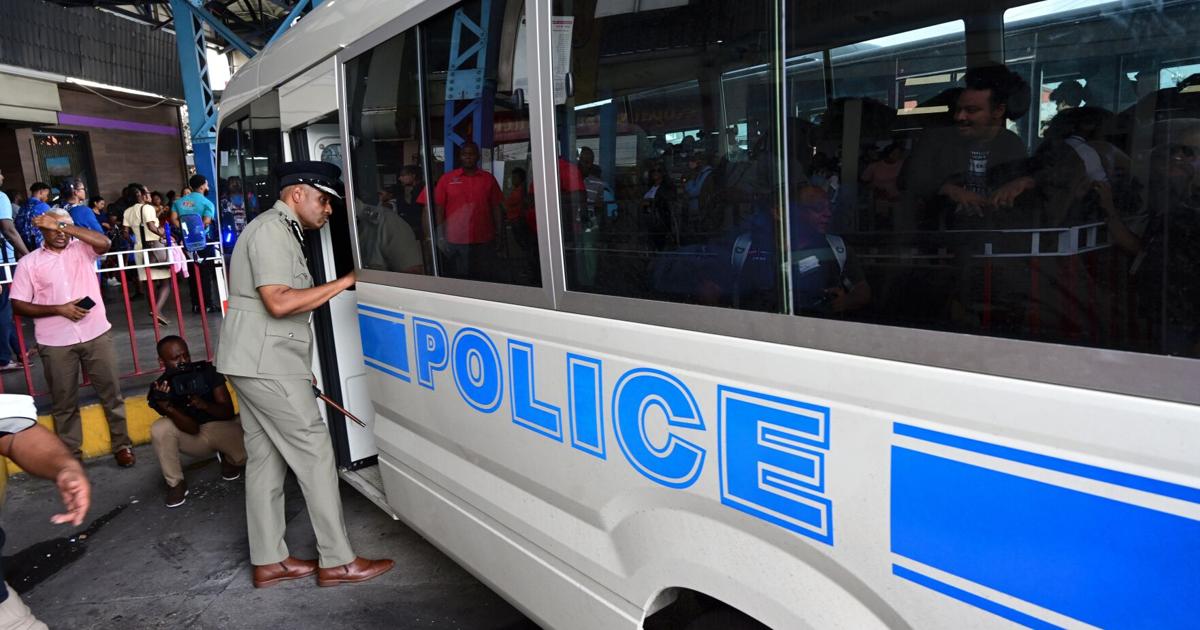
The Trinidad and Tobago Police Service (TTPS) stepped in yesterday afternoon to transport stranded commuters from Port of Spain after protesting maxi-taxi operators left several thousand people seeking alternative ways to get home.Police buses began departing City Gate in Port of Spain shortly after 2.30 p.m., transporting “vulnerable passengers”, including school children, the elderly, and disabled persons, to destinations along the East-West Corridor, including Arima, with plans for multiple trips throughout the afternoon and evening.
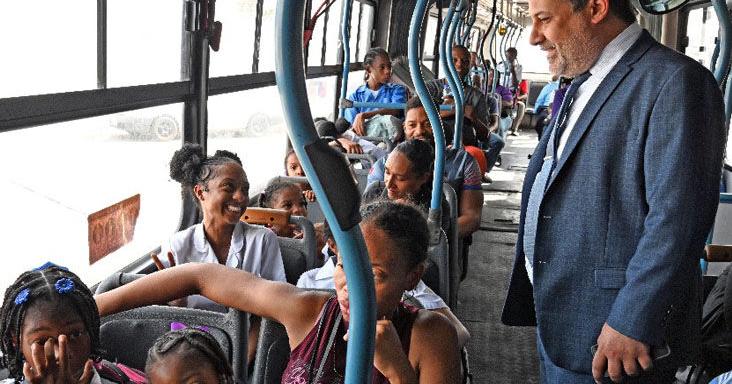
Guevarro TALKS: Police Commissioner Allister Guevarro speaks to commuters on board one of the TTPS buses at the City Gate Transit Hub yesterday. See Page 4. —Photo: JERMAINE CRUICKSHANK
JERM777
Commissioner of Police Allister Guevarro, who visited City Gate along with Assistant Commissioner of Police (Specialised Support) Brian Soodeen, said they did this after assessing the potential impact of stranded commuters.Guevarro said he had spoken with Soodeen earlier yesterday morning and arrangements were made to mobilise buses:“...I spoke with ACP Brian Soodeen and we mobilised all the police buses that were readily available to assist in transporting persons to their homes...At this point we have five buses on the road, but I wish we had 50.”The Commissioner shared:“Our first target were the vulnerable school children and the elderly, in getting them safely home, and that’s why we chose to begin at this time at 2.30 p.m. when school had just finished, to get them out of Port of Spain as fast as possible,” he said.Police planned for the buses to complete at least two trips between Port of Spain and Arima, transporting passengers, before returning to collect additional commuters.Guevarro said the TTPS would monitor the situation and provide help as long as it was necessary: “Once there is a need for it, the TTPS will be here to assist.”Guevarro described the circumstances as unusual and said police believed intervention was necessary after considering the possible consequences of leaving large numbers of people in the capital city into the evening.He said a risk assessment was conducted before resources were deployed.“Before embarking on this, we conducted a risk assessment,” he said. “That told us that leaving these people here tonight vulnerable and stranded would far outweigh what we are doing in terms of positivity.”He said the TTPS considered the transportation exercise a practical response to a developing situation.“So we are taking them out of harm’s way and to their homes rather than leaving them here to be stranded tonight,” Guevarro said.He noted that police retained sufficient resources to respond to any incidents elsewhere in the country while the transportation exercise was under way.Guevarro also rejected any suggestion that the TTPS was exceeding its role by transporting commuters, saying the exercise reflected the service’s commitment to public assistance.“The most important message I would like the public of Trinidad and Tobago to hear from the TTPS is that we stand ready to assist in any way possible,” he said. “By this gesture here today, I want to show that we are not just enforcers of the law but also assisting the public in any way that is possible.”Guevarro stressed that the service was being provided free of charge and said the decision was guided by what police believed was in the best interest of public safety.“The end justifies the means,” he said.Soodeen said the operation had been planned from early yesterday after discussions with the Commissioner, who anticipated transportation difficulties later in the day.“The Commissioner called me early this morning in anticipation of what could be happening here this afternoon and persons left stranded,” Soodeen said. “So it is his initiative and I operationalised it.”Soodeen said police personnel assigned to the operation had been briefed on safety procedures before buses were dispatched.“Our drivers are fully briefed on all safety protocols to ensure that the travelling public reaches their destinations safely,” he said.He added that police would continue providing transportation support if the need persisted.‘I was worried about howI was going to get home’ The initiative was welcomed by members of the travelling public yesterday who commended the police.Sandra Maharaj, 68, of Sangre Grande, said she was relieved she did not have to “figure out” how she was going home.“I have to commend the police for what they did today. When I heard about the protest, I was worried about how I was going to get home. A lot of us in this country don’t have access to cars and don’t have relatives who can just come and pick us up. The officers saw a problem and they did something about it. That meant a lot to people like me.”Maharaj said the situation could have become much worse if commuters had been left in Port of Spain.She said her son was expected to pick her up in Arima to take her home.Russel Thomas, 74, of Arima, described the TTPS initiative as a practical response to an unprecedented situation.“There were people who came to Port of Spain to conduct business, attend appointments or simply go to work and they suddenly found themselves without a means home. And then with the crime reports we see every day, I was worried that (City Gate) might see some robberies and pickpockets. So the police stepped in at the right time.”Thomas said he was impressed that officers focused on schoolchildren and senior citizens.“I know that it would frustrate the regular man, but it showed that they had a plan. Children and elderly first. It wasn’t just about moving people; it was about making sure those who needed help the most got assistance. I think the Commissioner and his officers deserve credit for that.”One man, who only gave his name as Jeremy, from St Augustine, said the deployment of police buses demonstrated a commitment to public service beyond normal policing duties.“We normally see the police when there is a crime or an accident, and you seeing them in the news these days when citizens are protesting. So it’s not always for good. But today, whether you like them or not, you have to commend them. They recognised there was a national problem developing and they acted before it got out of hand.”