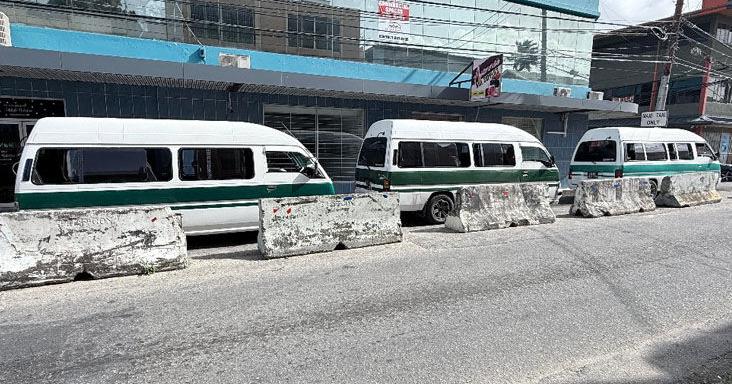
Day two of a planned strike by the Association of Maxi-Taxis Trinidad and Tobago was less impactful in Central Trinidad yesterday, as some 40% of Route 3 maxi-taxi operators returned to work.Chaguanas and environs did not see crowds of anxious commuters as on Monday morning, when the association began an intended three-day shutdown to protest a lack of progress with the Government on matters affecting the sector.The announcement by the association yesterday afternoon that the rest of the protest had been cancelled was welcomed by Route 3 operators who were on the road.A number of them said they could not impose more suffering on their passengers, which included pregnant women, children, the elderly, and patients of various public health clinics.Route 3 services Chaguanas to Curepe, San Fernando, Port of Spain, and Arima/Talparo.A number of drivers said they supported a one-day protest, but could not financially sustain a three-day loss of income.“It’s month-end and busy time, a lot of drivers can’t afford three days off the road,” driver Clint Adams said.They called for a faster resolution to the issues facing the sector, but said the protest was not being taken seriously by the relevant authorities.Some drivers said they will support future protest action by the association, but also felt it was unfair for commuters to pay for inaction by the State. They agreed with the cancellation of the protest.President of the Route 3 Maxi-Taxi Association Vickash Kissoondath told the Express that unlike the 5% who came out on Monday, about 40% of green-band maxi operators turned out yesterday. He said some 300 buses worked, servicing thousands of commuters.He said even more are expected out today, as he noted the effects on the travelling public. “At the end of the day, our commuters are the ones who are suffering.”He said the protest action was “not worth it”, as the Government and Transport Minister Eli Zakour maintained particular views with regard to the maxis.Kissoondath said the State was “not taking our plight seriously”, citing numerous challenges including increasing robberies of drivers and commuters, and bad roads.He said the cost of acquiring a new, 25-seater maxi-taxi was now around $900,000, while a 12-seater was around $500,000.Kissoondath said this did not include the cost of security apparatus and other amenities, while road conditions also caused frequent repairs.He said the overall cost of operating a maxi-taxi was rising.Kissoondath said while another meeting has not yet been scheduled with Zakour, an advisory meeting is to be held with the permanent secretary at the end of the month.When the Express spoke with some commuters in Central Trinidad yesterday, many said they were “relieved” and had been “stressed” at the thought of another day of hardship for transport.Some expressed that people working and attending schools within communities in Central and environs were not as badly affected; while many of those working in Port of Spain as well as South and East Trinidad, and who had difficulty accessing transport on Monday, had made private arrangements for yesterday.
...Strike loses steam in Central
Day two of a planned strike by the Association of Maxi-Taxis Trinidad and Tobago was less impactful in Central Trinidad yesterday, as some 40% of Route 3 maxi-taxi operators returned
TL;DRAI
Strike cancelled after 40% of Route 3 operators return on day two; drivers cite month-end income loss and inability to sustain three-day shutdown. Government inaction on rising vehicle costs ($500k-$900k), driver robberies, and road infrastructure—issues the State dismisses—leaves commuters bearing the burden.
497 words~2 min read