Dark energy has been a mysterious element of cosmological equation since it was proposed three decades ago, but new research says we can make the math of the universe’s expansion work without relying on it at all. The standard cosmological model has a problem. We know that the universe is expanding, but rather than eventually slowing down due to gravity, this expansion seems to be speeding up. This implies the theoretical ‘dark energy’ as fuel for this acceleration. In a new paper published last week in Proceedings of the Royal Society A, though, a team of researchers demonstrate how the problem of accelerated expansion might be more a matter of current cosmological models being based on instabilities that do not translate very well into observable reality. “Unstable solutions in physics and science are considered not physical,” Blake Temple, the study’s co-author and a mathematician at University of California, Davis (UC Davis), said in a statement. “You’ll never observe them in nature.”
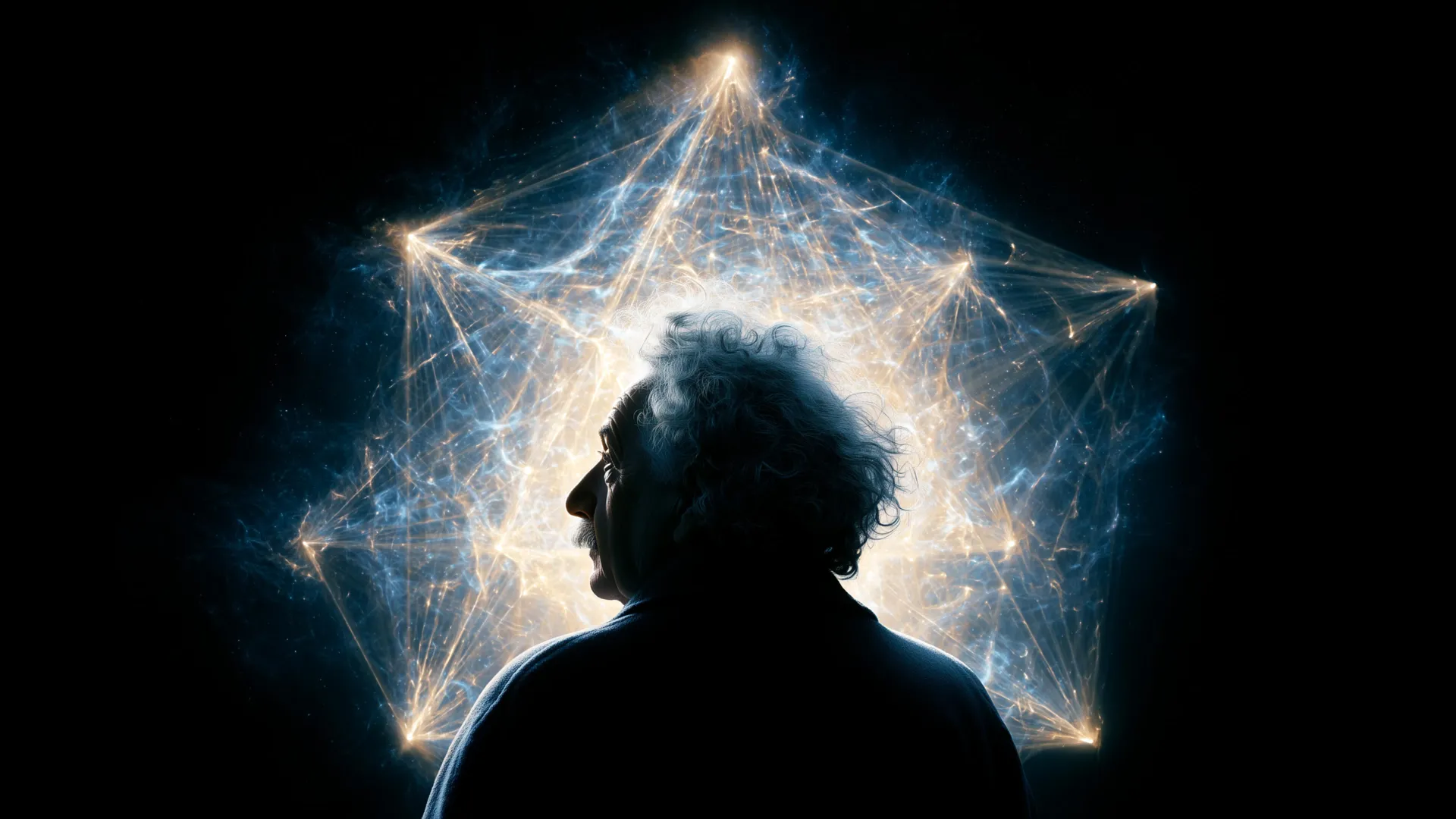
Temple and the UC Davis team instead explore an alternative model of expansion that is reportedly simpler and “based entirely within the framework of Einstein’s original theory” of general relativity. Some cosmic lore Credit: Ferdinand Schmutzer/Historiches Museum Bern When Albert Einstein first introduced the cosmological constant lambda (Λ), he did so with the assumption that the universe was static, an idea he later discarded when Edwin Hubble showed that it was actually expanding. Then in 1998, a Nobel-winning discovery found that the universe’s expansion rate was accelerating.