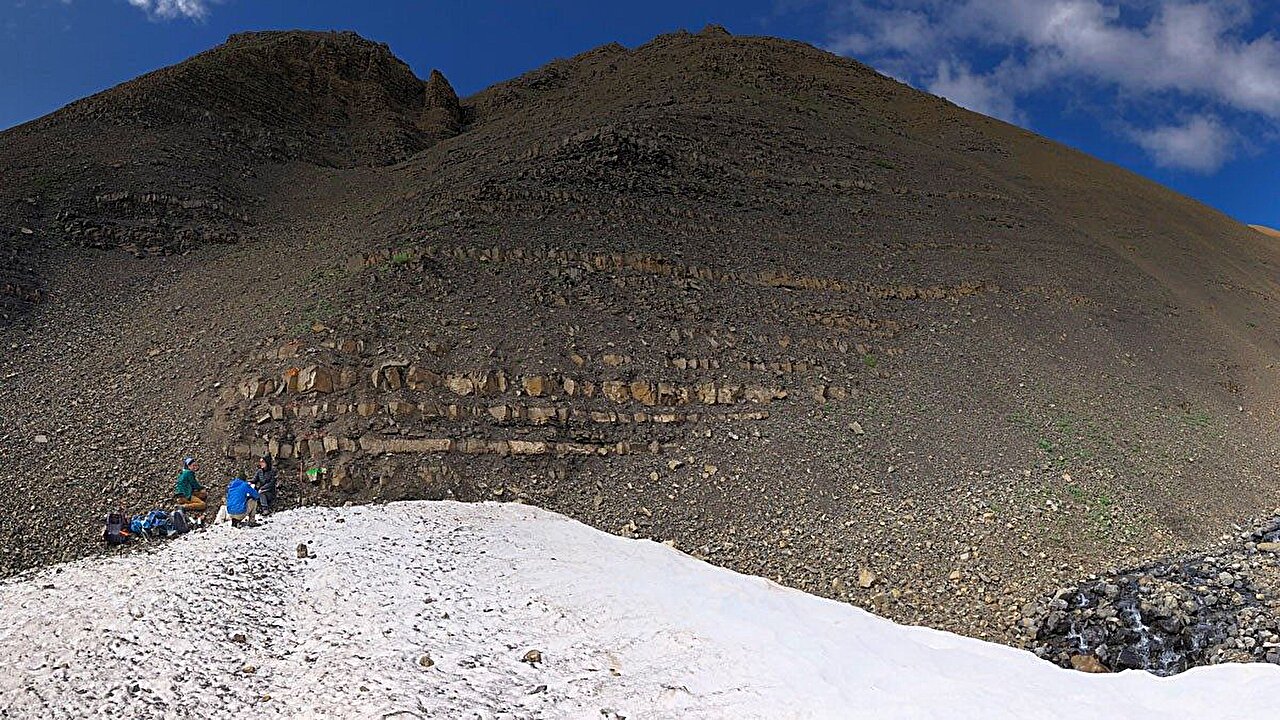
Members of a field team examine an outcrop of rock layers in Grotto Creek in Alaska's Wrangell–St. Elias National Park in 2019. Credit: Ben Gill.
One of the most devastating extinctions in Earth's history is best known for what didn't die—dinosaurs. But the end-Triassic extinction 201 million years ago wiped out roughly 60% of Earth's species, and scientists are still piecing together how it unfolded.
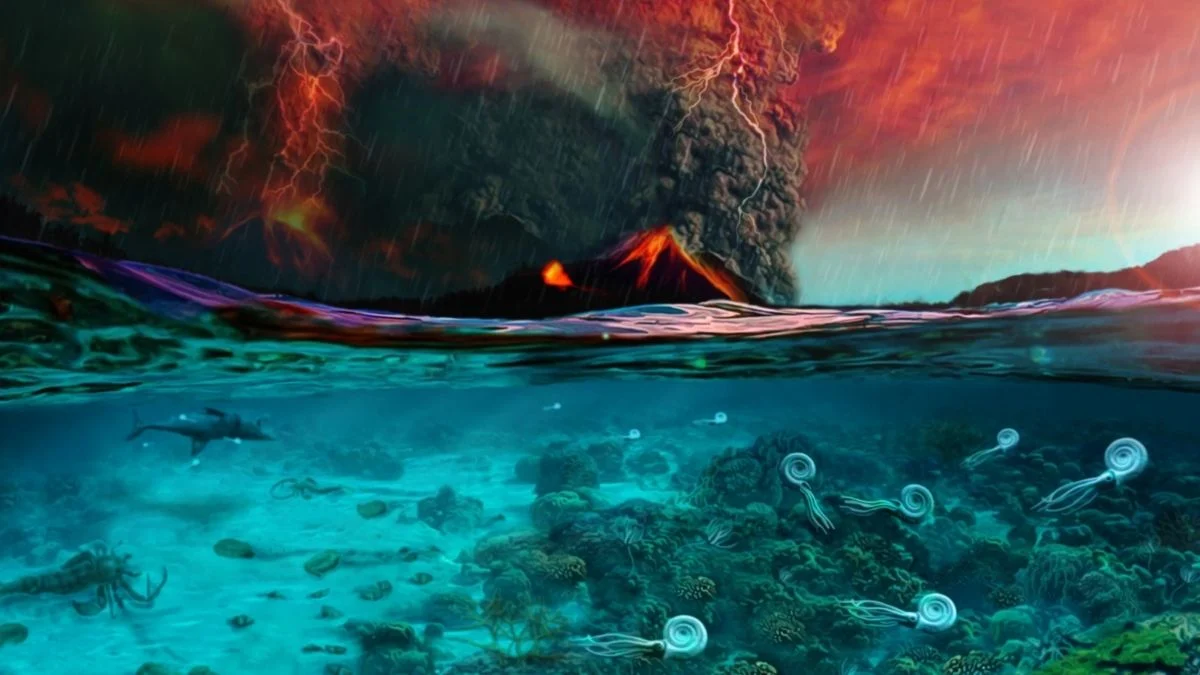
New evidence from Virginia Tech geologists shows that the volcanic eruptions that ripped apart the land and acidified the oceans also stripped the oxygen out of their waters. And, in an unexpected finding, the research team discovered that oxygen starvation began nearly 8 million years before the mass extinction.
Their study was published in Nature Communications Earth & Environment.
Hot planet, cold case