Chang Se-jeong
The author is an editorial writer at the JoongAng Ilbo.
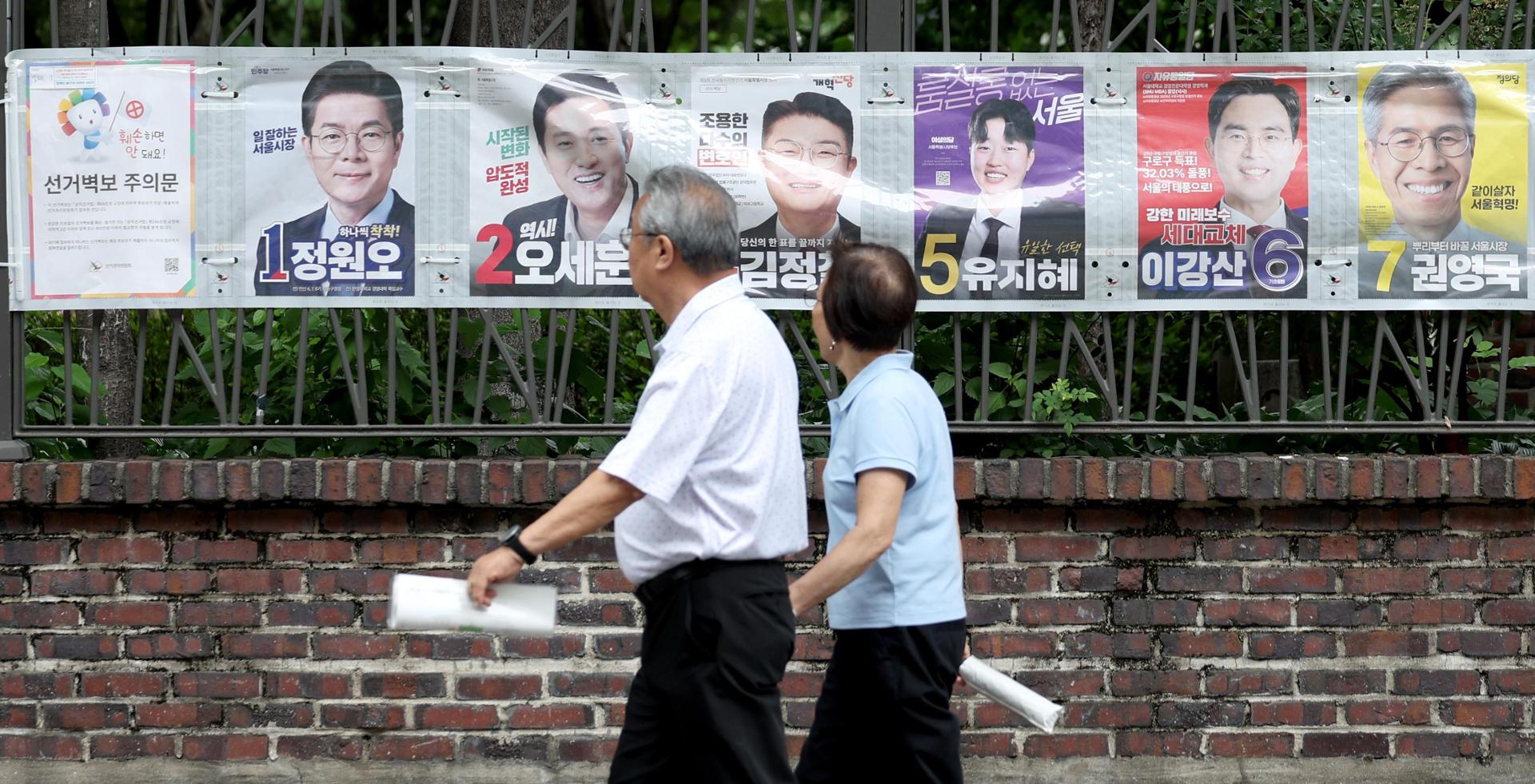
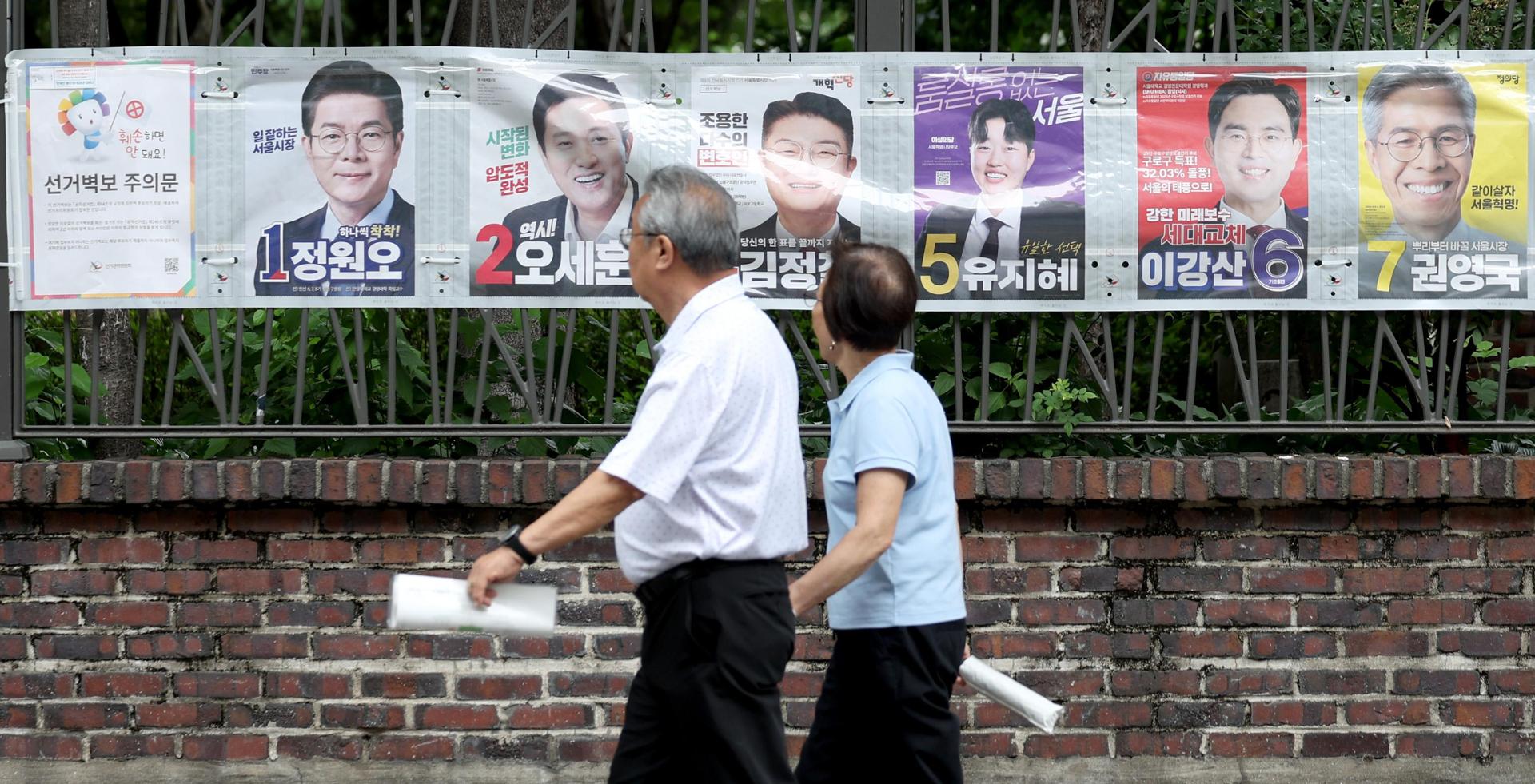
Opinion polls forecasting the outcome of the June 3 local elections have only deepened voter confusion. Approval ratings vary so widely among polling firms that many voters struggle to trust the results. Political parties selectively interpret surveys to favor their own candidates, further muddying public opinion. Korea’s election law, which prohibits the publication of polls beginning six days before voting day, repeatedly creates the side effects of “blind elections.” Controversies over possible distortions caused by the gap between early voting and Election Day voting add to the problem. Reform of these outdated election rules should come first.
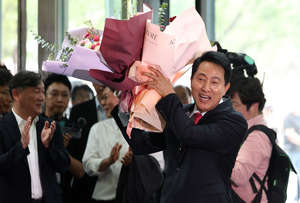
Two days before the ninth nationwide local elections on June 3, Democratic Party Seoul mayoral candidate Chong Won-o (left) and People Power Party candidate and incumbent Seoul Mayor Oh Se-hoon carry out campaign events on June 1. Jung visited a community facility for residents of jjokbang (subdivided flat) neighborhoods in Jongno District, while Oh campaigned in Nowon District. [NEWS1]
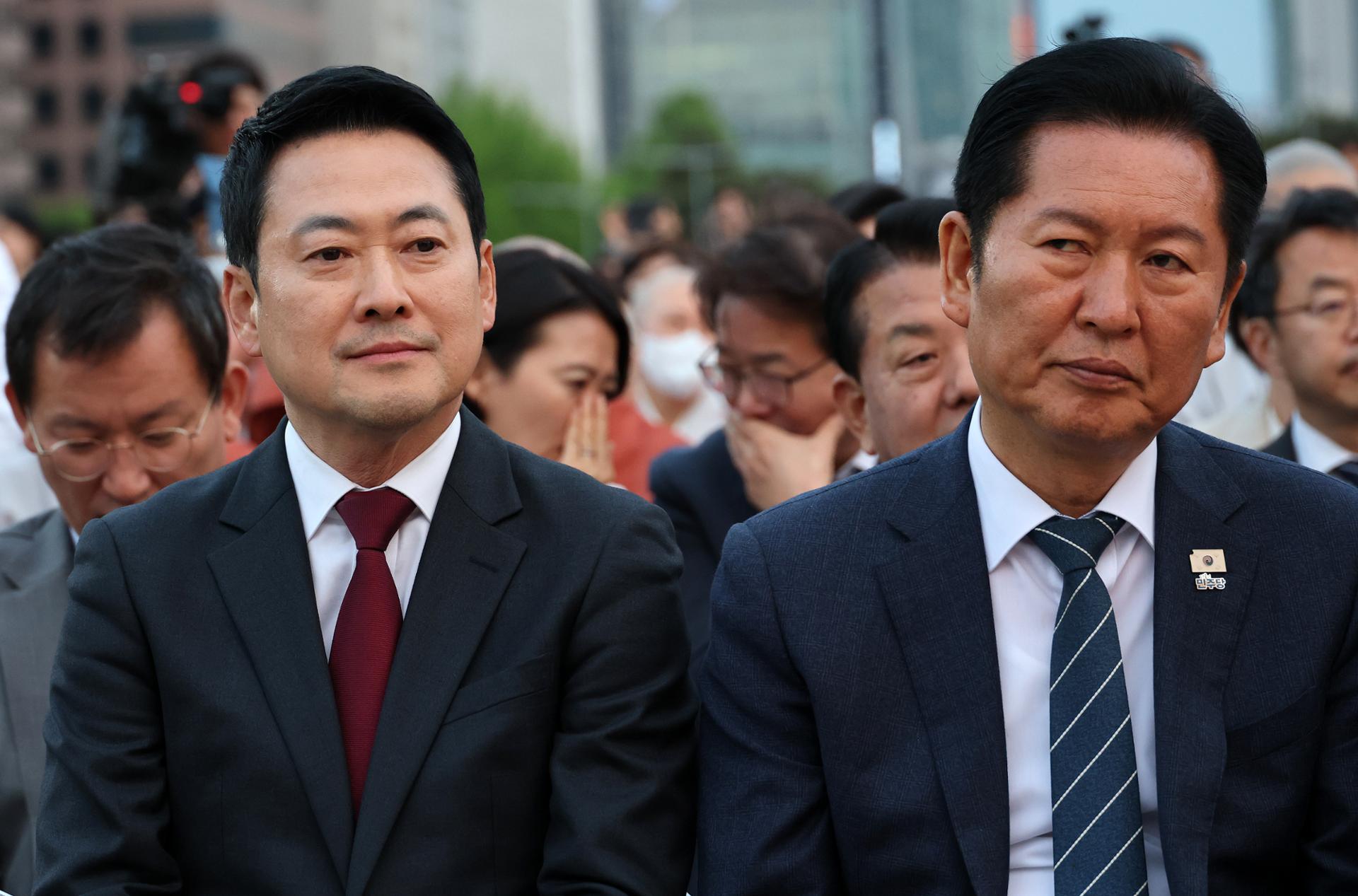
In Yeouido, political insiders are closely watching independent races that could determine the political futures of Democratic Party leader Jung Chung-rae and People Power Party leader Jang Dong-hyeok. The outcomes involving Kim Kwan-young, the independent candidate for North Jeolla governor, and Han Dong-hoon, the independent candidate in Busan’s Buk-gap district, have attracted particular attention.