Jung Min-kyung
Since 2017, I have covered South Korea’s political and economic landscape as a reporter, with a focus on foreign affairs, inter-Korean relations and security.As a foreign affairs reporter, I closely follow developments from the Ministry of Unification, the Foreign Ministry and the Defense Ministry, tracking shifts in diplomacy, military policy and North Korea’s evolving posture. My work focuses on the intersection of geopolitics, security and policy decisions shaping the Korean Peninsula.Earlier in my career, I also reported on South Korea’s financial sector, covering banking, markets and regulatory developments—experience that continues to inform my understanding of how economic policy intersects with national strategy.
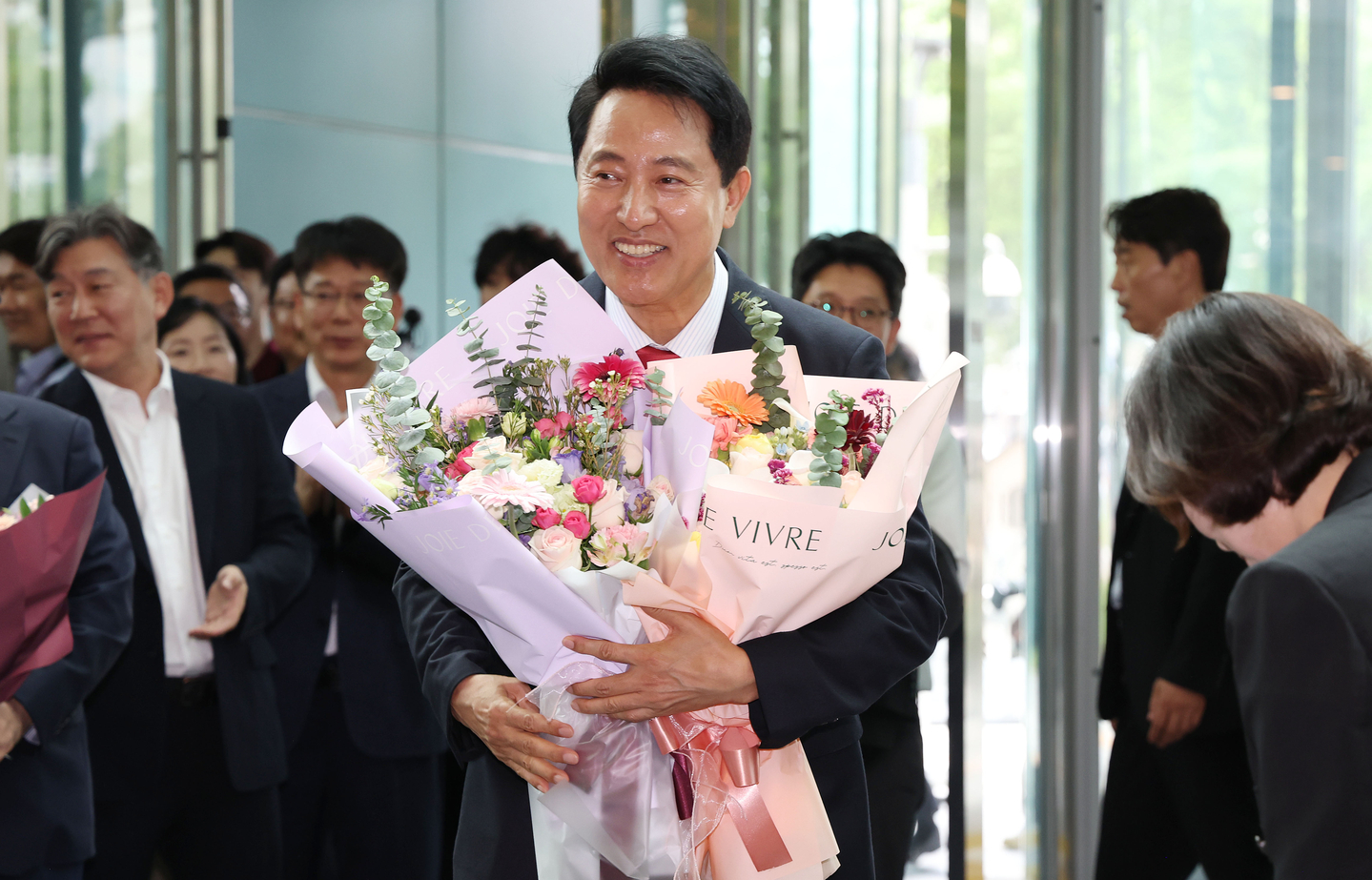
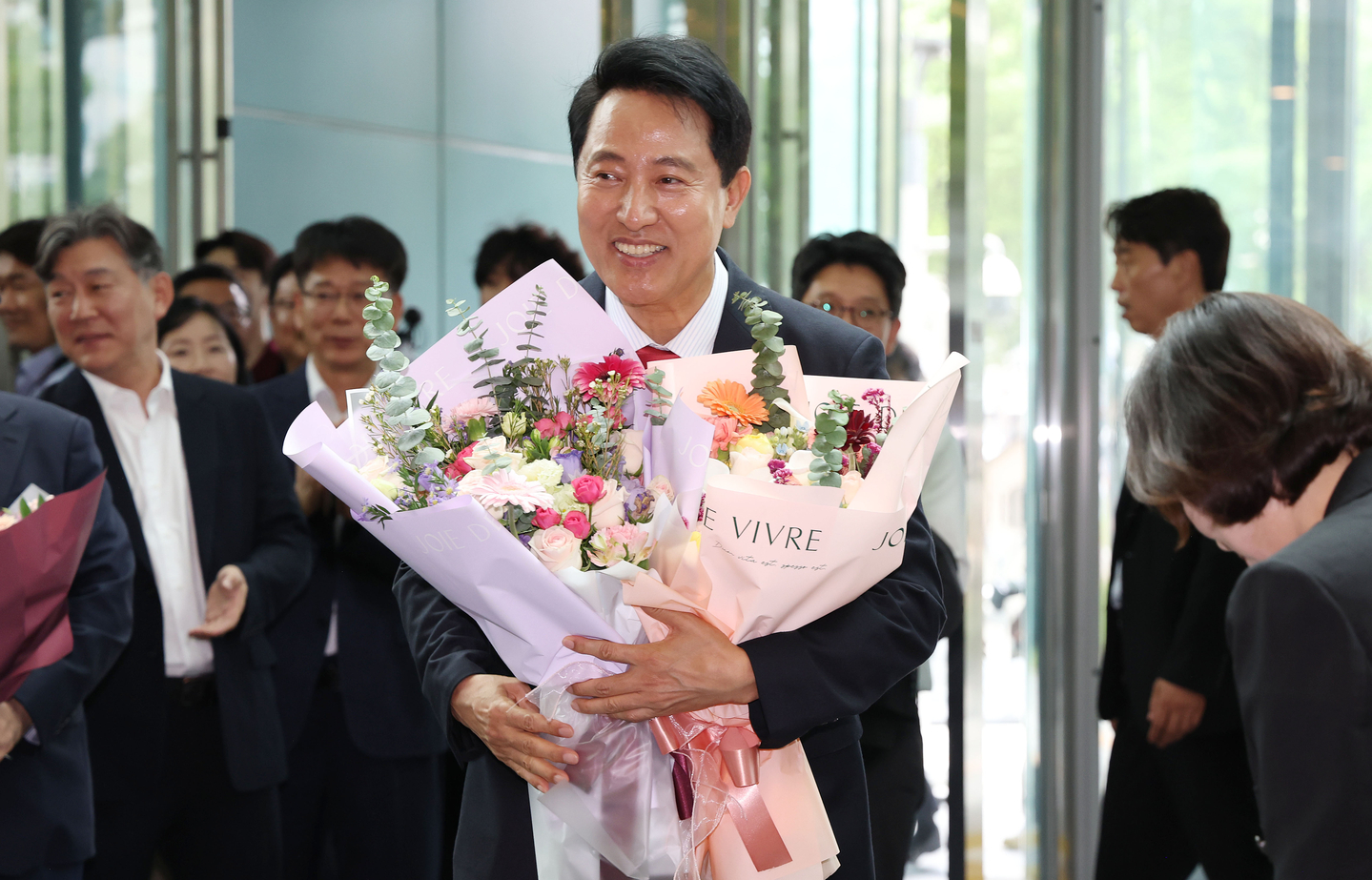
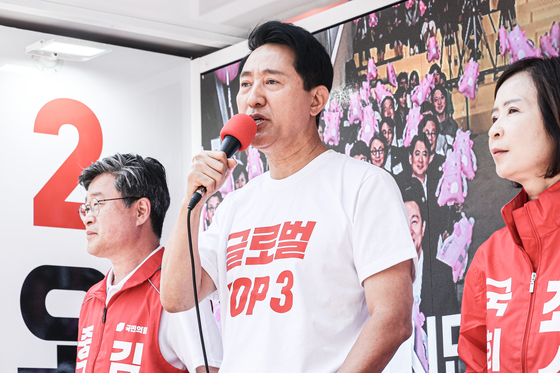
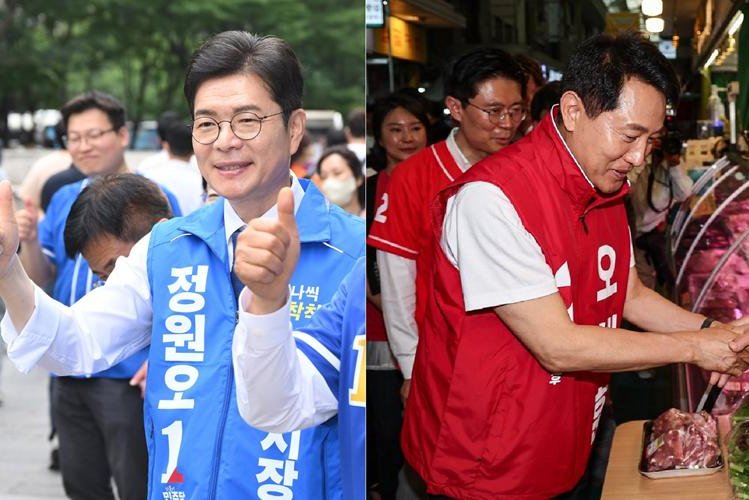
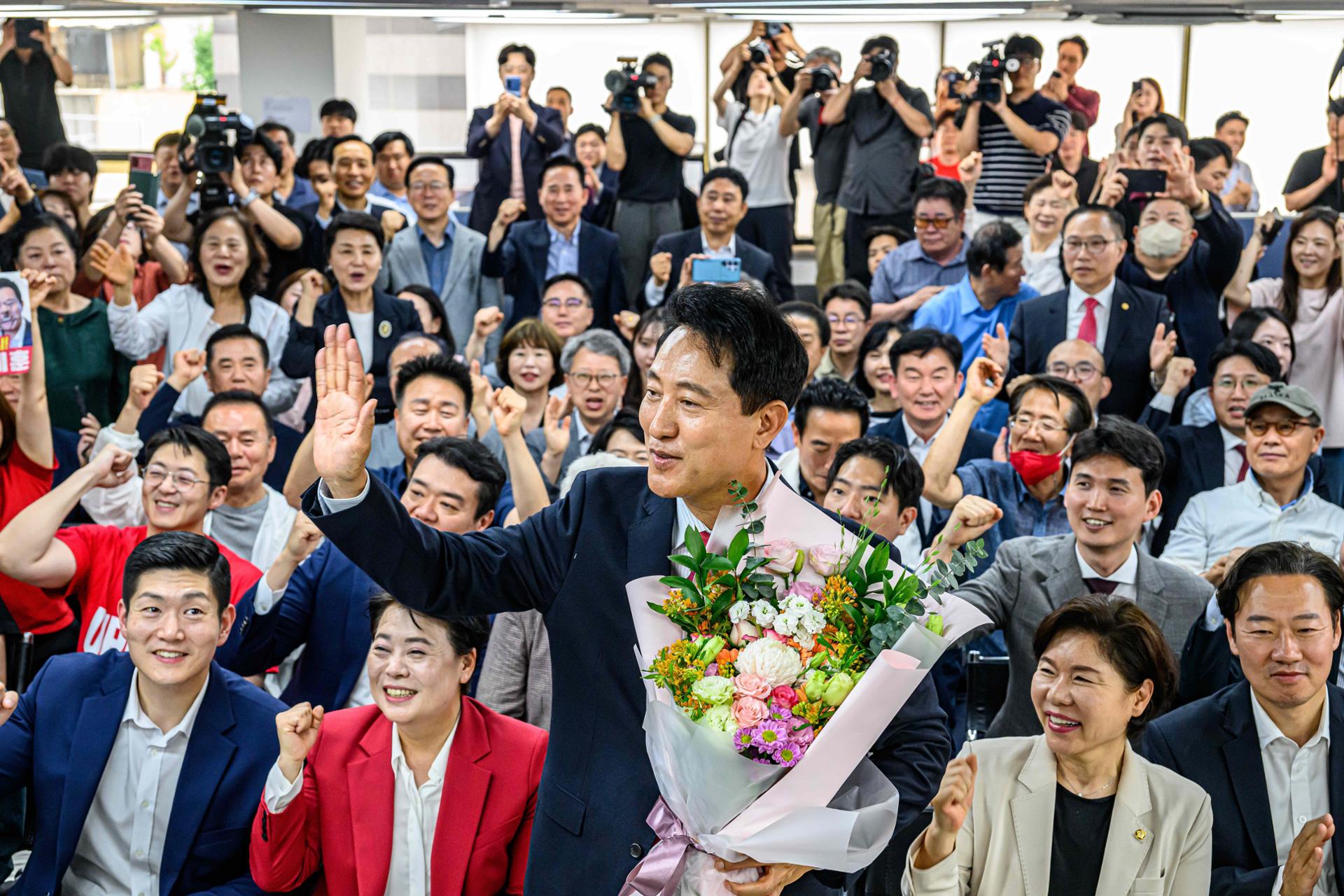
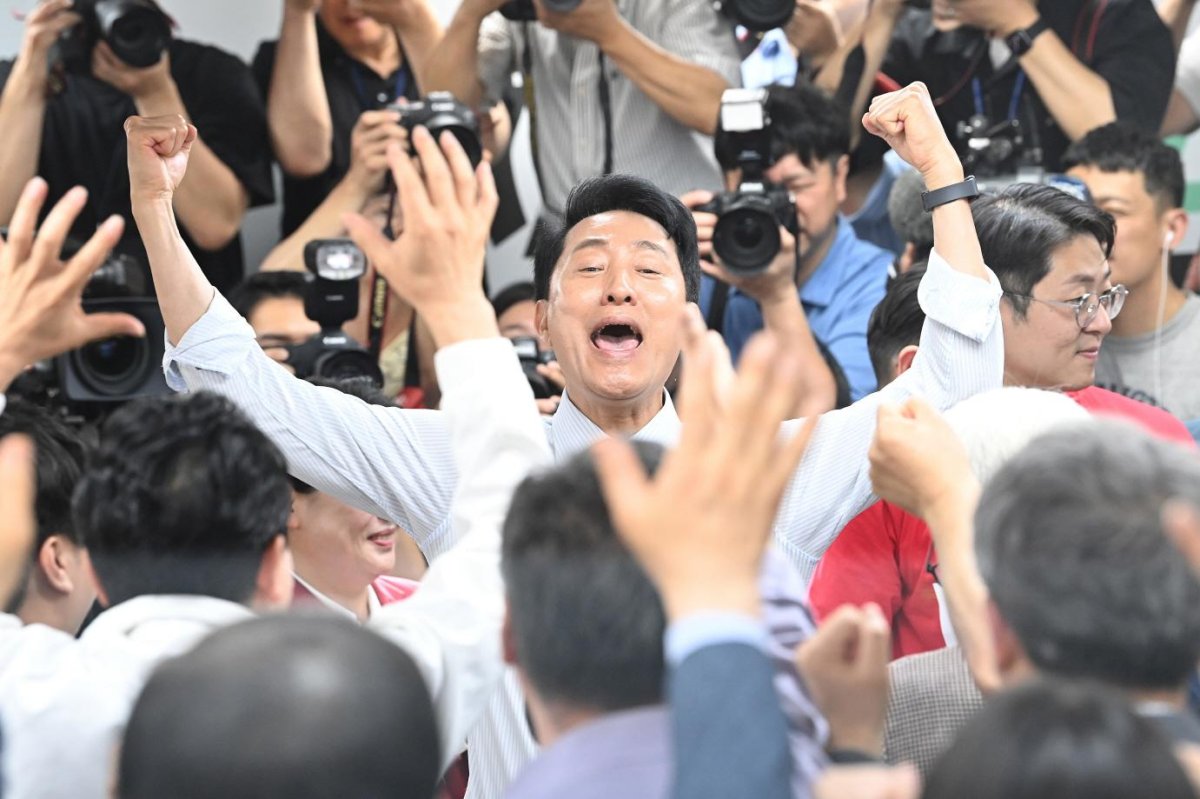
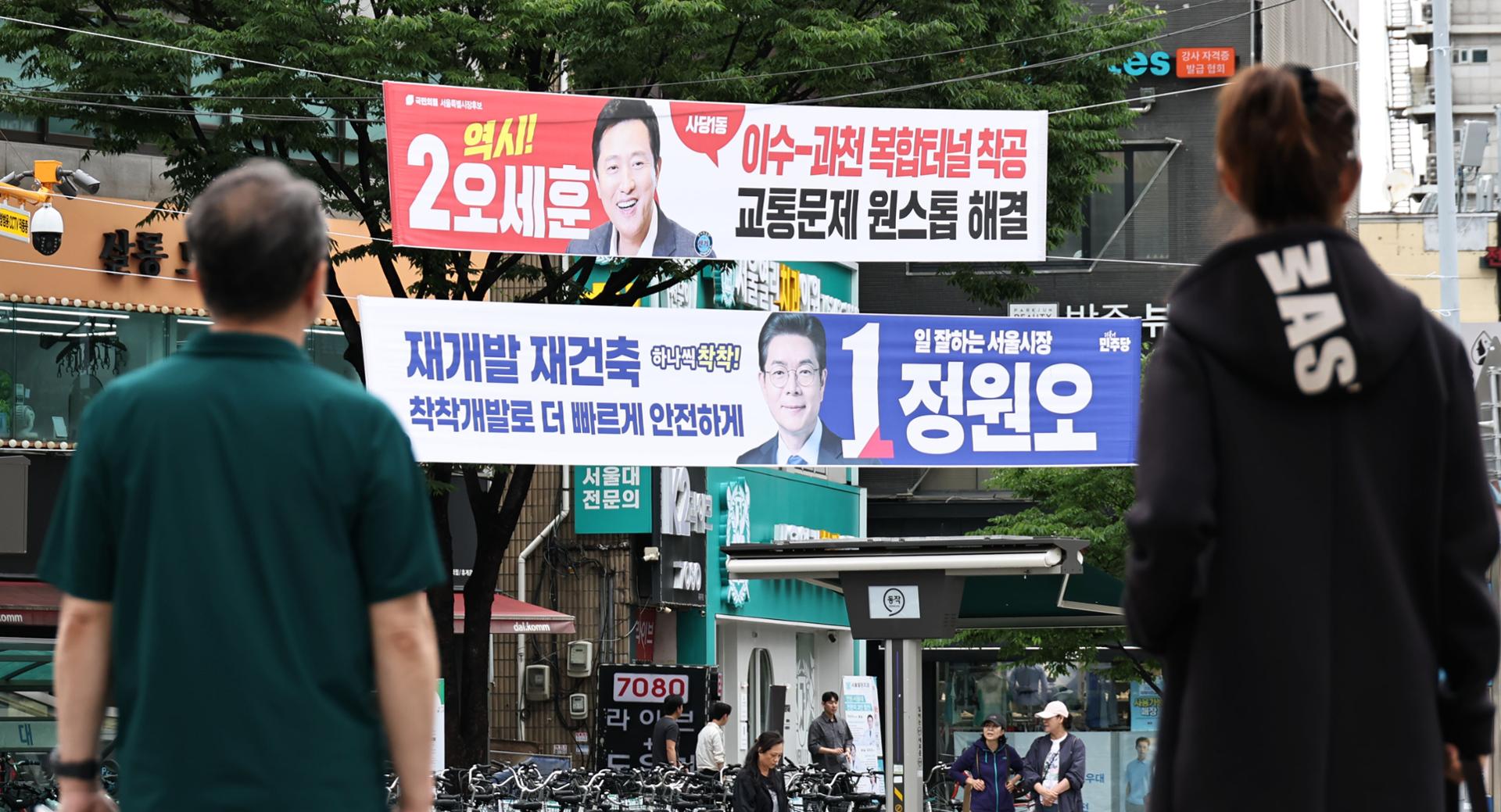
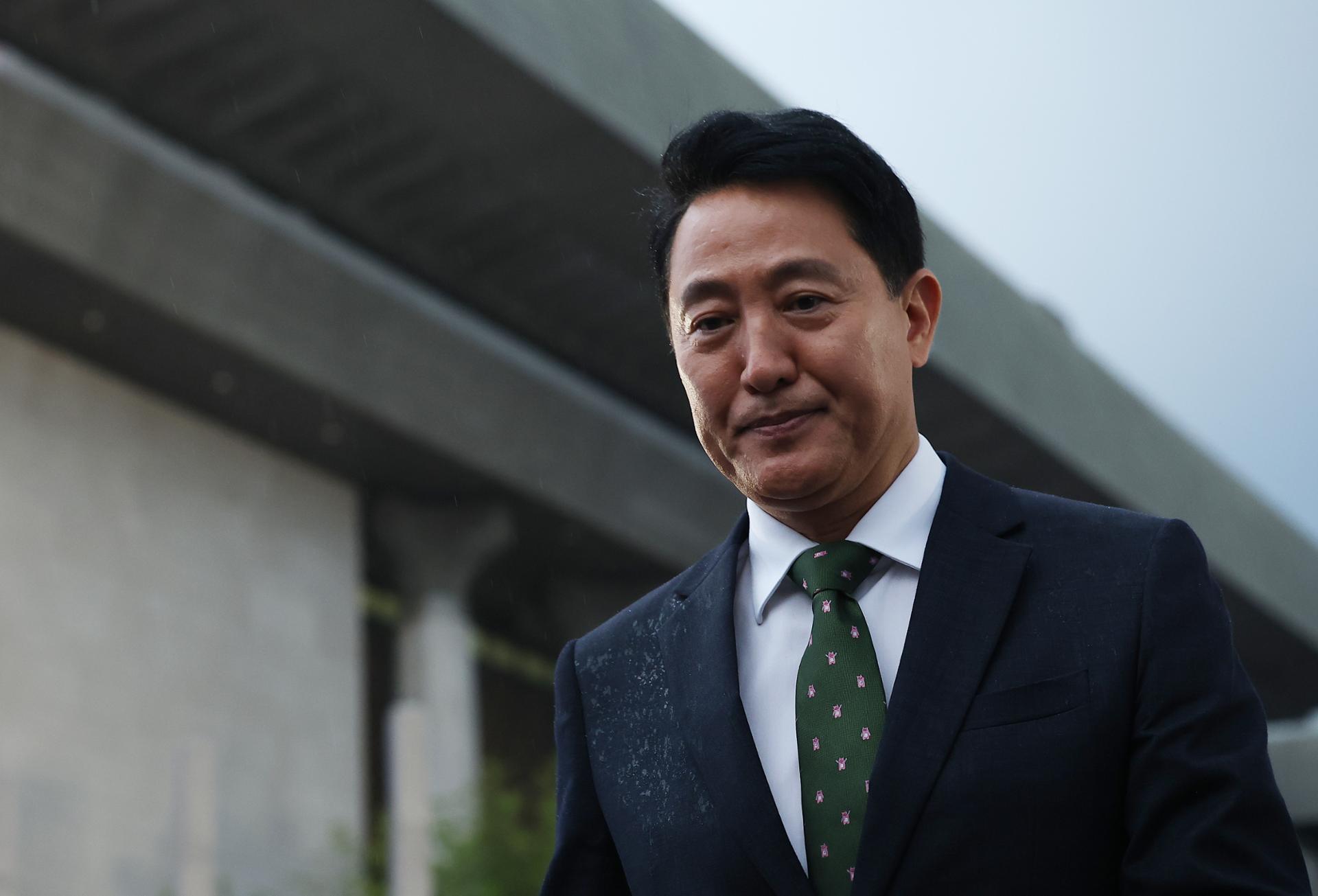
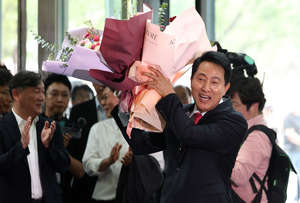
Seoul Mayor Oh Se-hoon arrives at Seoul City Hall carrying a bouquet of flowers presented by employees on Thursday, after winning reelection to a record fifth term in the previous day's local elections. (Yonhap) Seoul Mayor Oh Se-hoon secured a historic fifth term Wednesday in one of the closest and most-watched races of South Korea's local elections, with some analysts pointing to housing concerns and property values as decisive factors behind his narrow victory.The conservative People Power Party candidate won 49.15 percent of the vote, edging out Democratic Party of Korea challenger Chong Won-o, who garnered 48.13 percent. The result defied preelection surveys and exit polls that had largely suggested a victory for Chong.Oh's reelection makes him the first five-term mayor in Seoul's history and positions him to advance his agenda centered on housing supply, urban redevelopment and transportation infrastructure in the capital.According to political commentator Lee Jong-keun, concerns over property values and redevelopment projects may have been a critical factor, particularly for voters who may not have openly expressed their preferences in polls."Many voters may have wanted to punish the People Power Party, but when they entered the voting booth, they ultimately asked themselves who would protect the value of their assets," Lee said.Lee pointed to what political scientists call "patrimonial voting" — voting based on personal economic interests, particularly housing assets."There is academic research showing a clear relationship between rising apartment prices and voting behavior, especially in Seoul and the greater capital region," he said. "This election appears to have reflected concerns that government housing policies could hurt property values or undermine redevelopment expectations."Lee argued that voters in Seoul's so-called Han River Belt — where apartment prices have surged, and major reconstruction projects are underway — were particularly sensitive to such issues."The Democratic Party failed to present a convincing strategy for addressing sentiment in the Han River Belt," he said. "In districts where redevelopment and reconstruction are major concerns, voters were focused on protecting their assets and preserving future gains from those projects."Election data appears to support that argument.Although Oh carried only 10 of Seoul's 25 districts, many of them experienced the steepest increases in apartment prices since President Lee Jae Myung took office. Eight of the 10 districts Oh won ranked among Seoul's top 10 districts for housing price growth during that period.The list includes Songpa, Gwangjin, Yangcheon, Yeongdeungpo, Gangdong, Dongjak, Yongsan and Jung-gu — districts where homeowners have been especially sensitive to regulations affecting redevelopment and property values."The election appears to have reflected growing dissatisfaction with housing policies," said Seo Jin-hyung, a professor of real estate law at Kwangwoon University."Homebuyers increasingly feel that if they do not buy now, they may never be able to buy a home in Seoul, while property owners have grown fatigued by continued regulations. That backlash appears to have had a significant impact on the election."Housing was at the center of Oh's campaign from the start.He has argued that increasing private-sector housing supply is the most effective way to stabilize prices and has pledged to deliver 310,000 new homes by 2031 through his "Rapid Integrated Planning 2.0" initiative, which seeks to accelerate redevelopment and reconstruction projects.Since returning to office in 2021, Oh has pushed to ease development restrictions, including removing Seoul's longstanding 35-story height limit for apartment buildings. He has also opposed proposals to eliminate tax deductions for long-term homeowners, arguing that higher tax burdens would discourage housing supply.In his victory speech, Oh framed the result as a public demand for political balance and a rejection of housing policies that many voters view as ineffective."I believe this is a victory for ordinary citizens waiting for this hellish rent crisis to end, for working parents looking for reliable childcare and for residents waiting for reconstruction projects to move forward," Oh said.He also vowed to raise concerns about the Lee administration's housing policies at his first Cabinet meeting after beginning his new term on July 1."I am convinced that the sharp decline in jeonse supply and soaring monthly rents are side effects of housing policies designed with elections in mind," Oh said. "If the government does not change course, the housing market could face even greater difficulties in the years ahead."Not all analysts, however, agree that housing concerns were the decisive factor.Political commentator Lee Jong-hoon argued that Oh's victory was driven more by campaign strategy than by real estate issues."If you want to put it bluntly, Oh was very good at walking a political tightrope," Lee said. "More positively, he ran a very effective campaign."Lee pointed to Oh's efforts to distance himself from hard-line conservatives within his own party, including his repeated calls for then-People Power Party leader Jang Dong-hyuk to step down and his outspoken criticism of what he described as pro-Yoon Suk Yeol forces."He clearly differentiated himself from Jang Dong-hyuk and from the pro-Yoon camp," Lee said. "At the same time, he worked to expand his appeal among centrist voters."Lee also cited Oh's attempts to build bridges beyond the conservative base, including policy cooperation with Reform Party candidate Kim Jung-chul and outreach to former lawmaker Yoo Seong-min, a prominent moderate conservative."His strategy of broadening his support among centrist voters was the more important factor," Lee said. "The key to his victory was successful differentiation from both Jang Dong-hyuk and the pro-Yoon faction, rather than any particular housing policy."