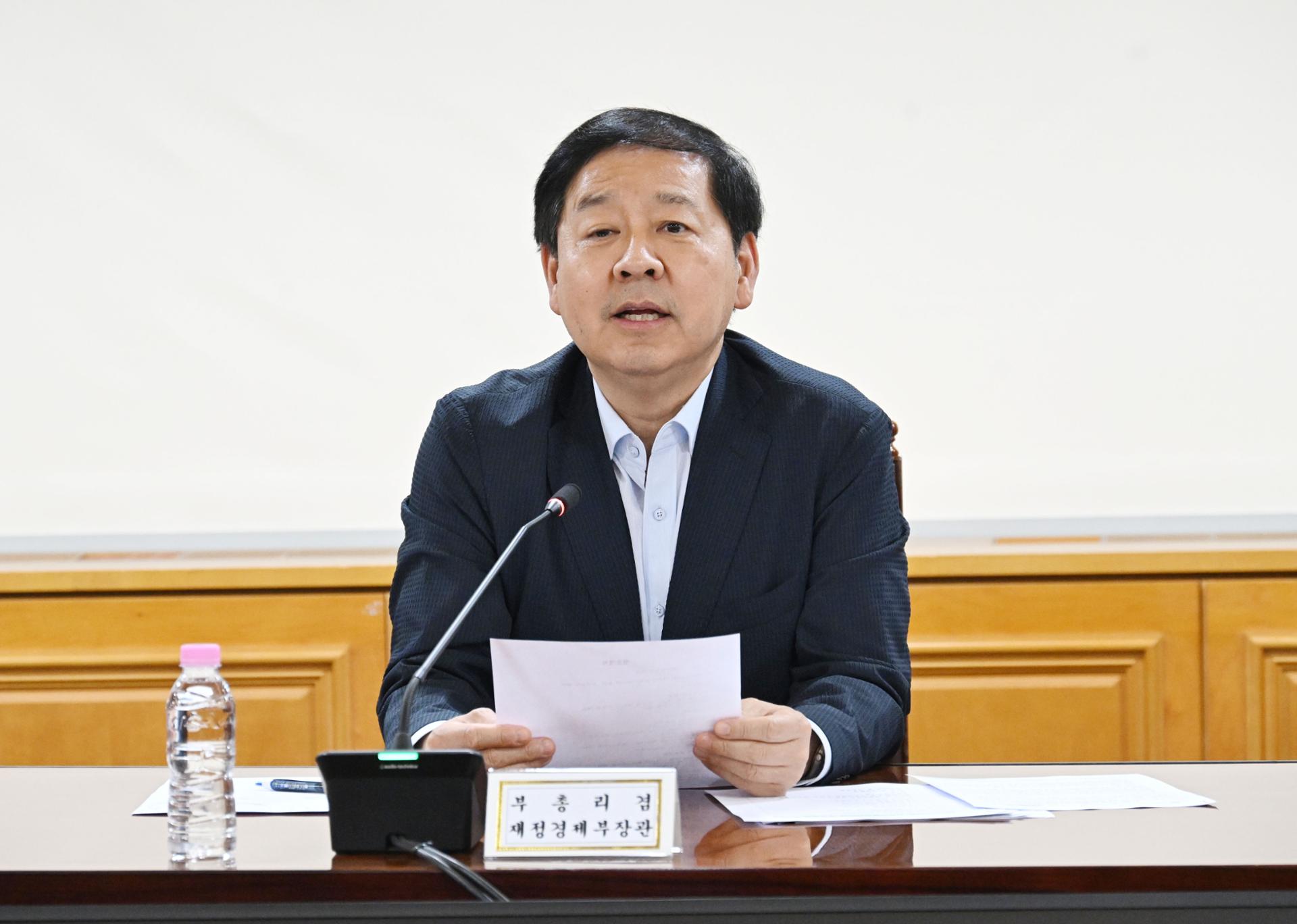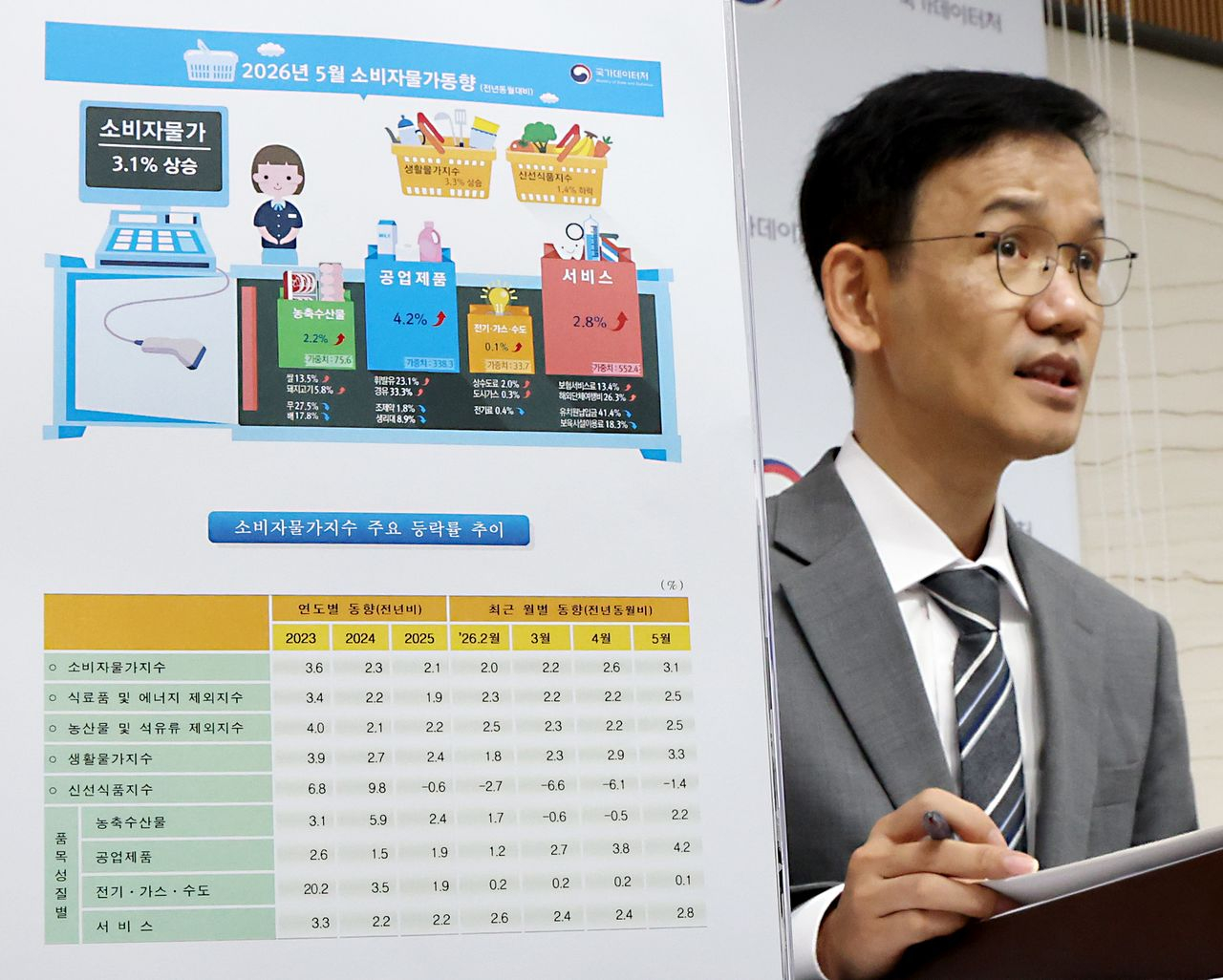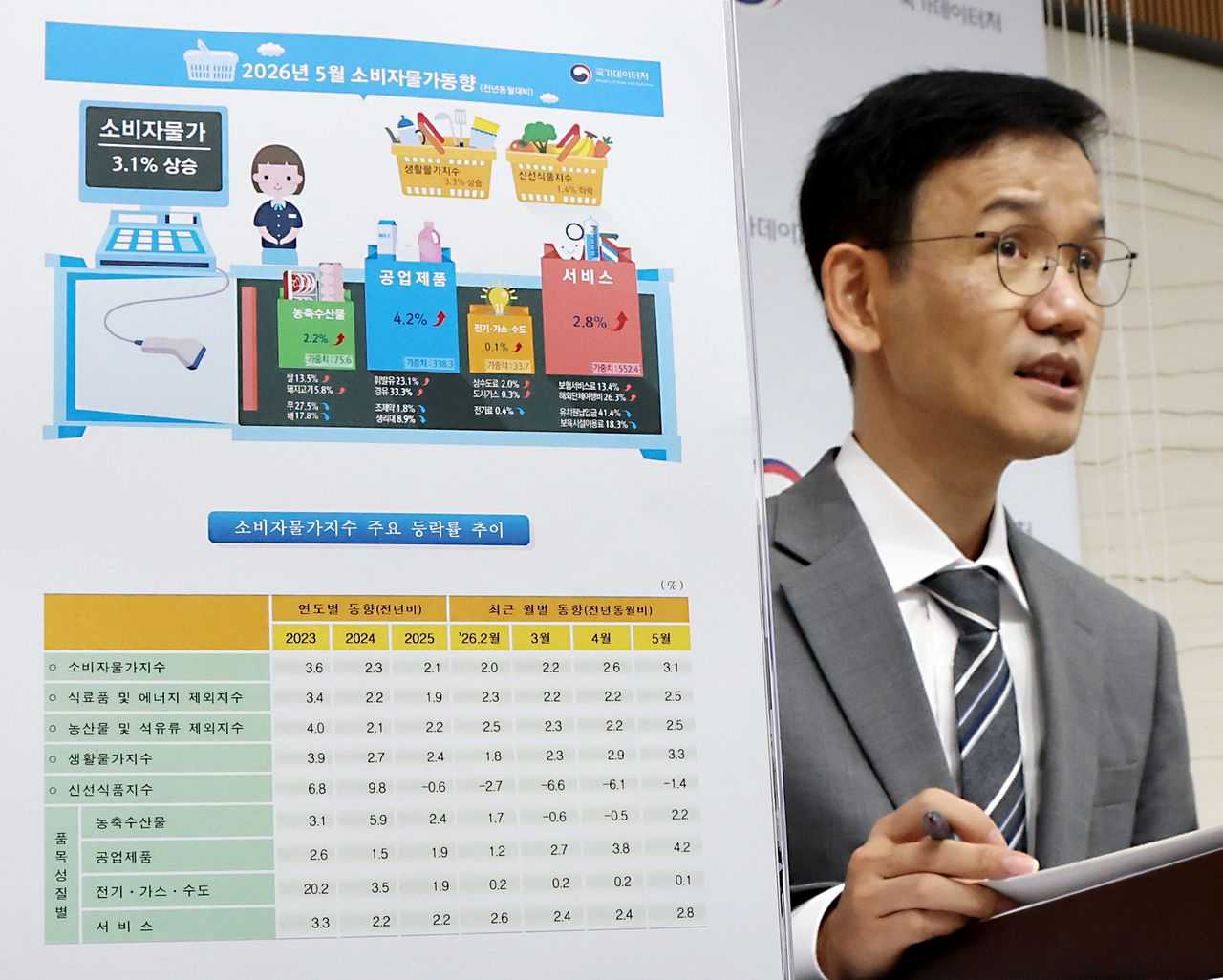
Lee Doo-won, a senior official at the Data Ministry, announces consumer price index data for May during a press conference on June 2. [NEWS1]
The local government leaders elected Wednesday face difficult challenges. The same is true for the central government, which postponed tough decisions until after the vote. Korea faces the “three highs” of inflation, exchange rates and interest rates, while stock market volatility and housing market risks are also growing. None of these issues can be resolved easily.
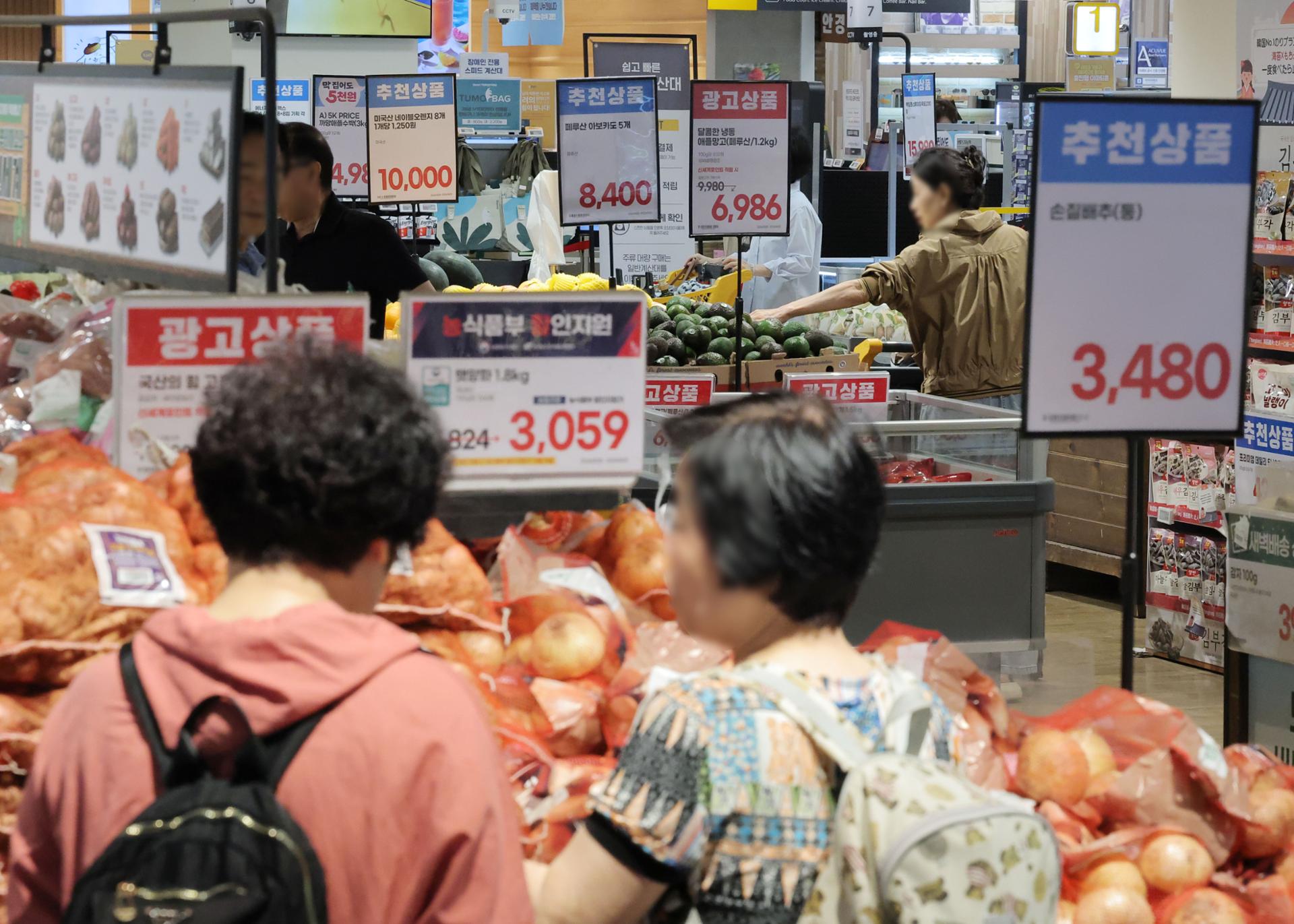
Inflation remains a major concern. Consumer prices rose 3.1 percent last month, the fastest increase in two years and two months. The government has spent heavily to suppress fuel prices through a petroleum price cap policy. Without that measure, inflation likely would have been even higher.
The policy’s side effects are becoming clearer. Overseas package tour prices rose 26.3 percent last month, reflecting broader increases in travel-related costs. This suggests the policy weakened consumers’ sensitivity to high oil prices and encouraged greater fuel consumption, a consequence critics had warned about.
The won remains in the 1,500-per-dollar range. A weak currency does not necessarily signal a crisis, but it reflects the broader condition of the economy. It also raises import costs, increasing production expenses for companies that rely on foreign raw materials and adding pressure to domestic prices.