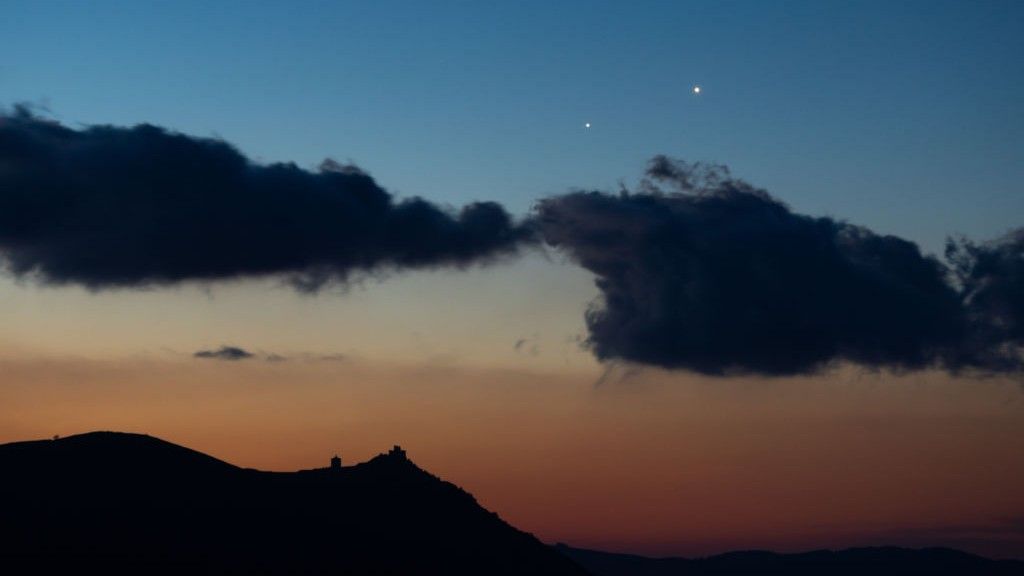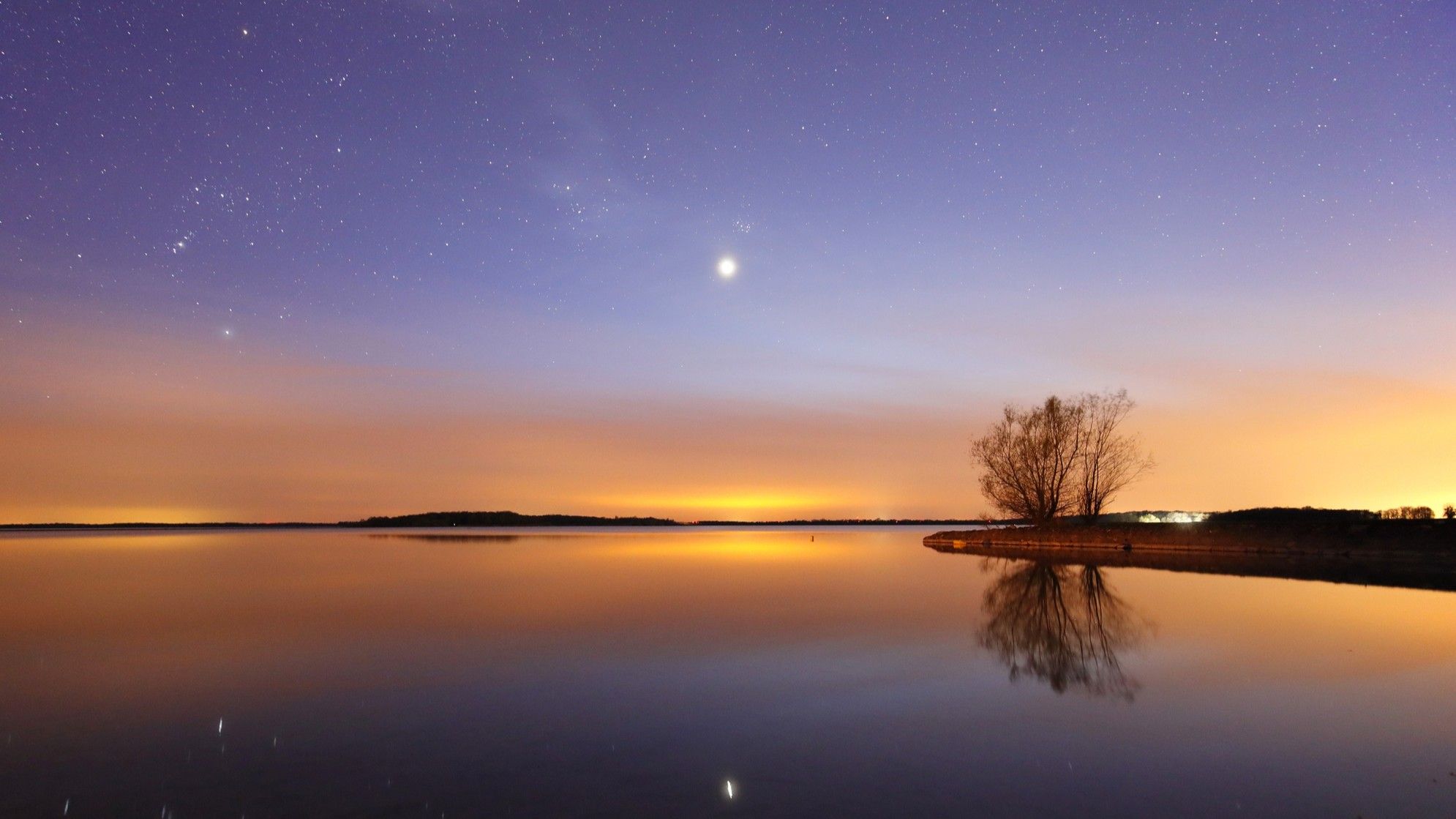
Venus shining bright in the early evening sky above Lac du Der-Chantecoq, France.
(Image credit: Christophe Lehenaff via Getty Images)
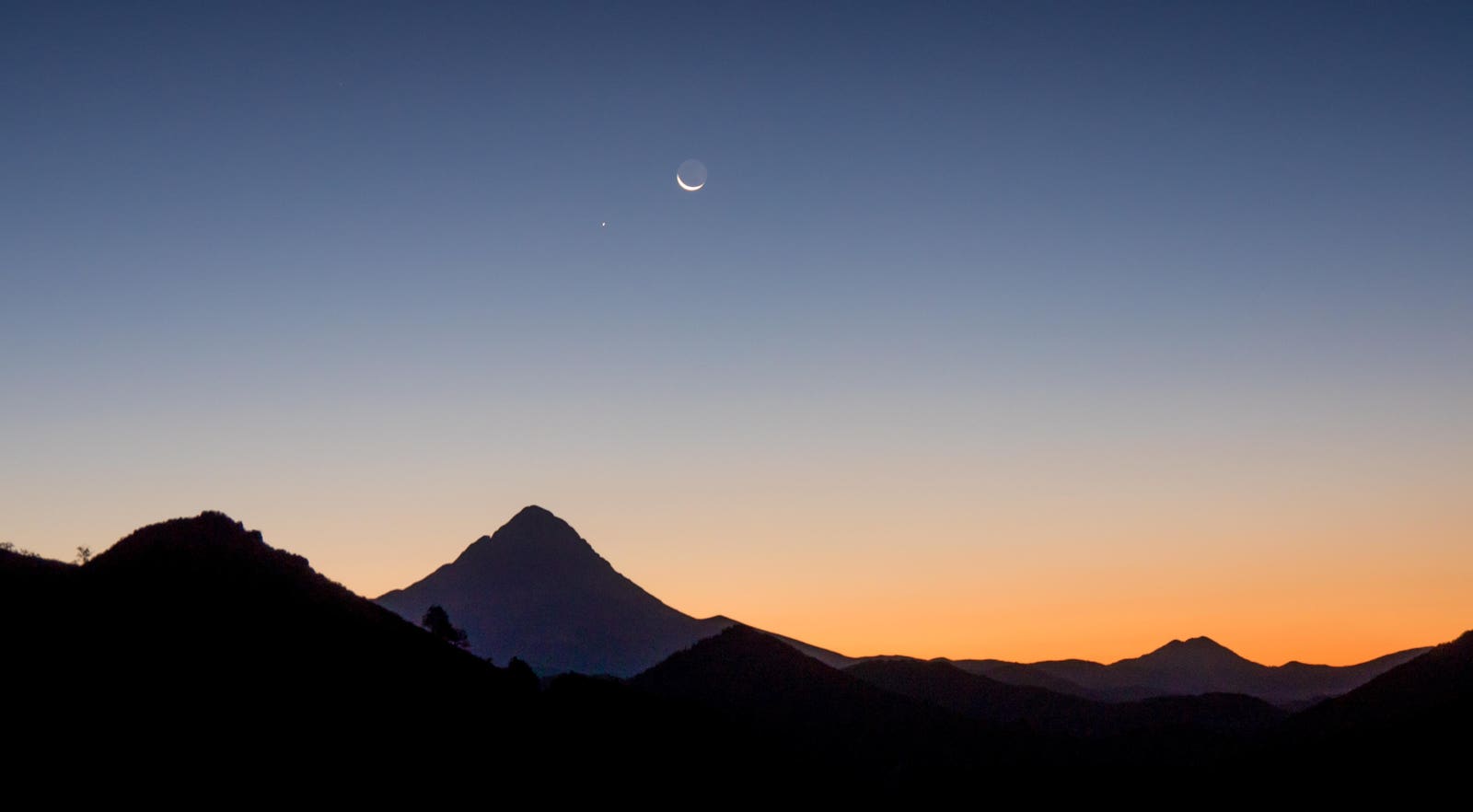
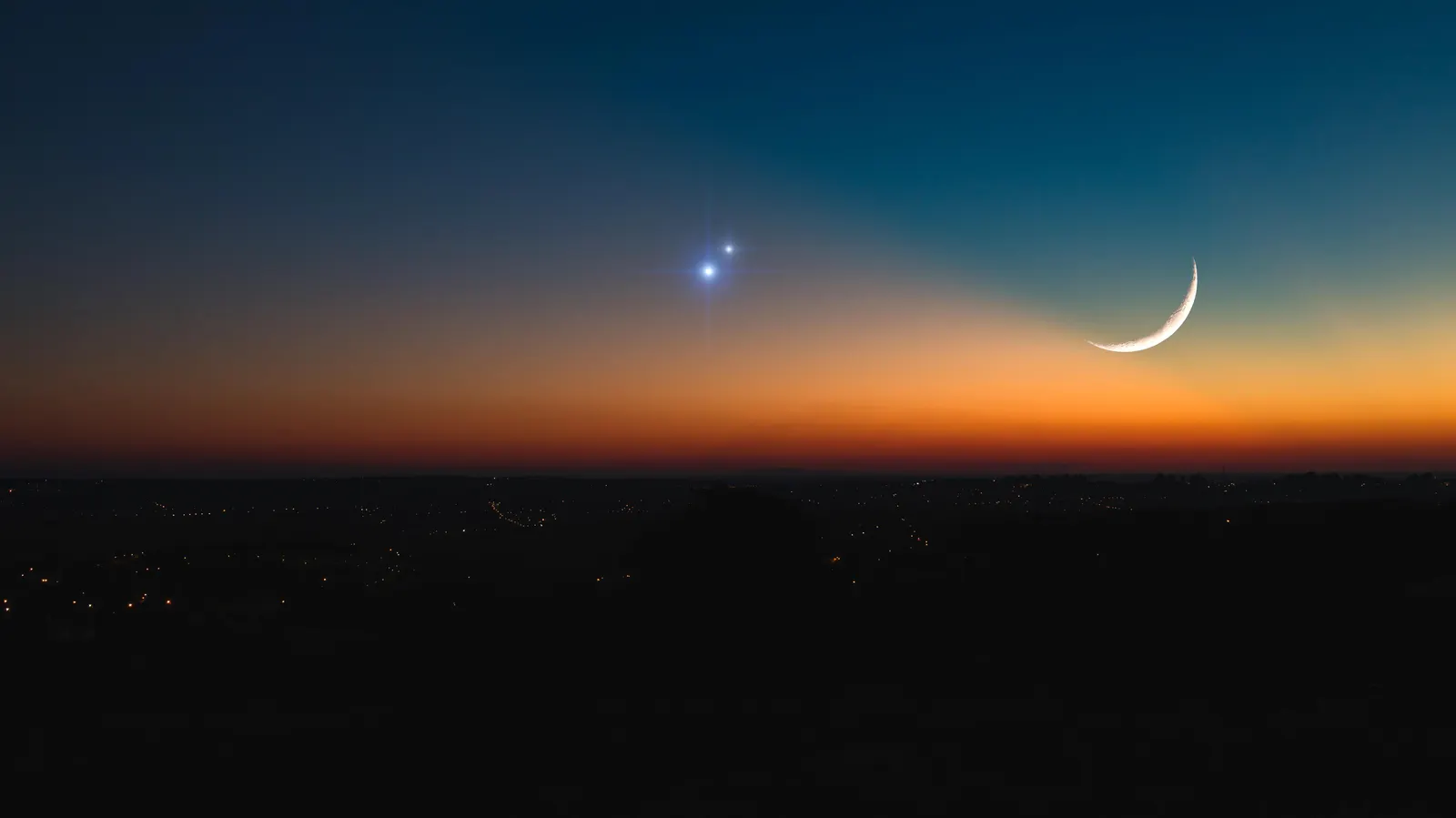
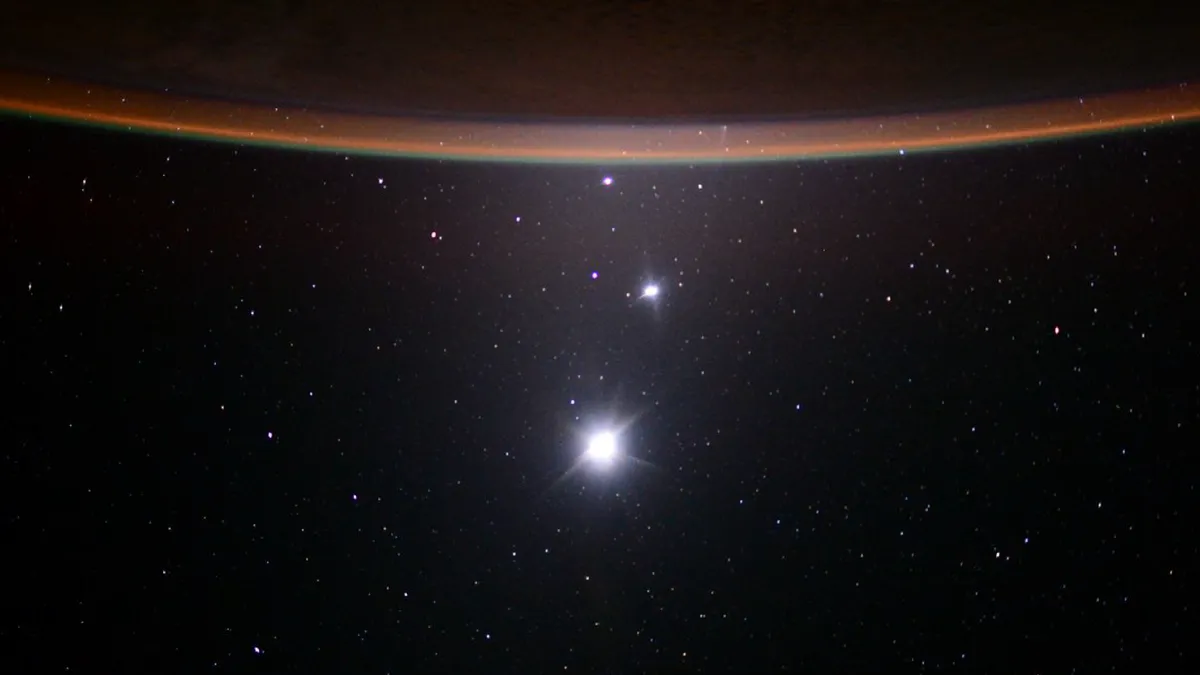
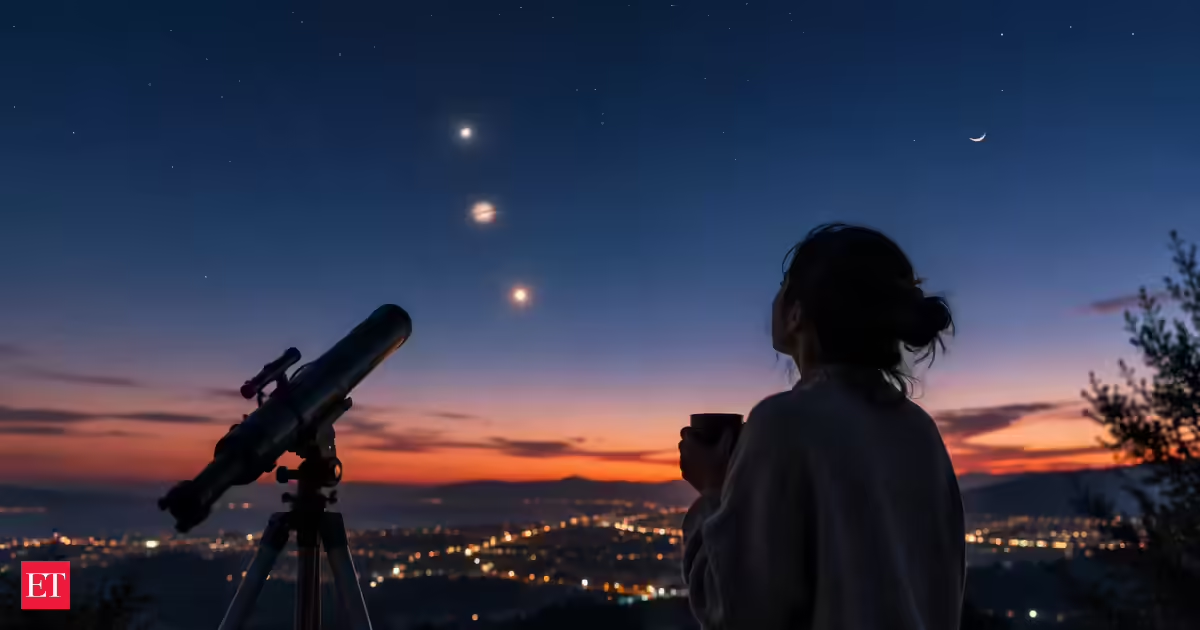
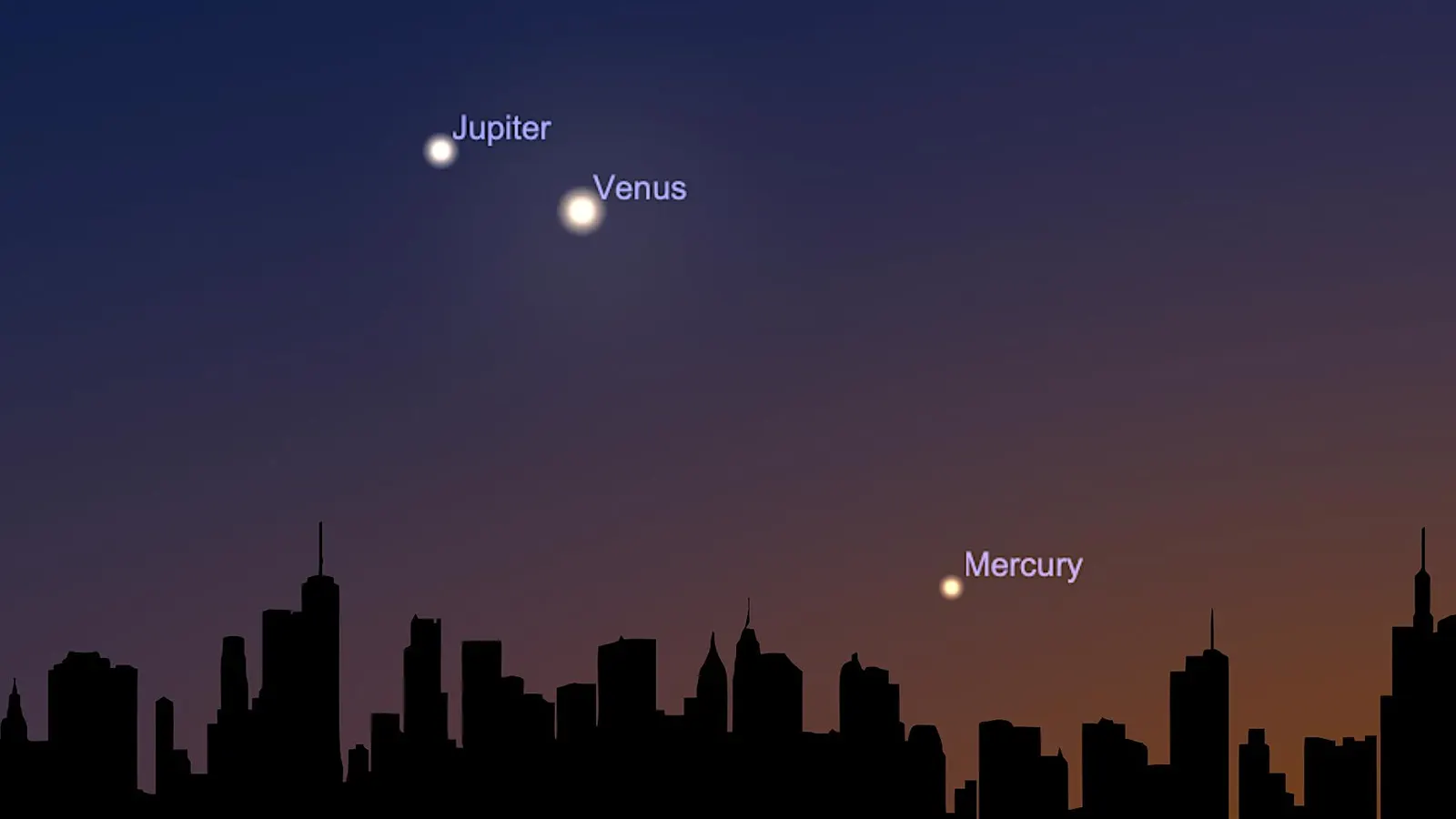
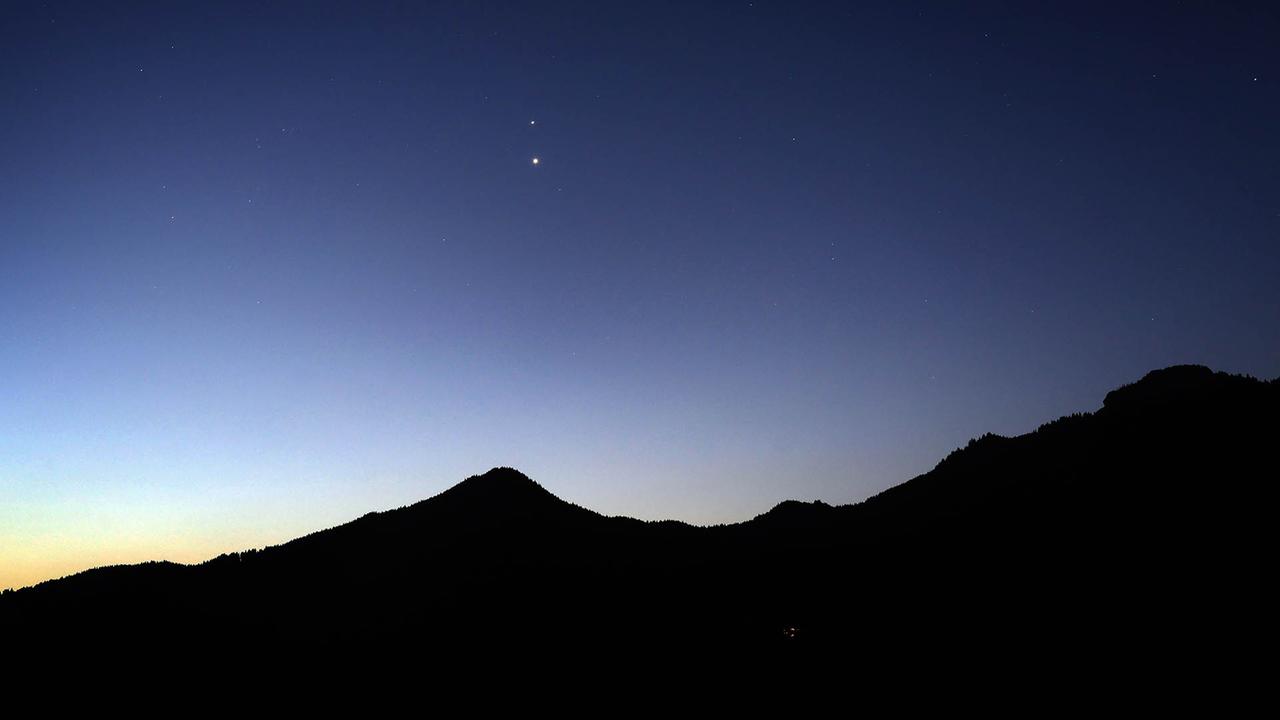
Your hands held out at arm's length can be a useful tool for measuring the night sky. (Image credit: Created in Canva Pro)This is the month of the "Great Celestial Summit Meeting" between a crescent moon, three bright planets and two bright stars. The stars (Pollux and Castor) and planets (Venus, Jupiter and Mercury) will be arrayed across the west-northwest sky during the first half of the month, with the moon moving in to join them during the evenings of June 16 and June 17. The most amazing sight will be provided by Venus and Jupiter as they approach each other on a nightly basis, before finally arriving at a close conjunction, less than two degrees apart, on the evening of June 9.Meanwhile, the early hours of the morning belong to Saturn and Mars. Saturn rises well after midnight most of this month, but is well placed in the southeast sky at the break of dawn. Using a telescope magnifying 30x or more will bring out its beautiful ring system, a big improvement compared to a year ago, when they appeared virtually edgewise to our line of sight. Meanwhile, Mars is becoming easier to sight, after being enmeshed in the bright twilight glow for nearly a year. It becomes evident, low in the east-southeast, a couple of hours before sunup. Shining now at first magnitude, it will brighten, but very slowly, during the second half of this year.In our schedule, remember that when measuring the angular separation between two celestial objects, your clenched fist held at arm's length measures roughly 10 degrees. Here, we present a schedule below which provides some of the best planet viewing times, as well as directing you as to where to look to see themThe sunThe sun at 4:25 a.m. EDT on June 21, arrives at that point where it is farthest north of the celestial equator (the solstice). Summer officially begins in the Northern Hemisphere, and winter begins in the Southern Hemisphere.MercuryMercury during the first three weeks of June makes its highest vault into twilight for mid-northern observers this year. Each night, this shy planet comes into view at almost the same time and place in the west-northwest sky. During the first half of this month Mercury is about 18 degrees up at sunset (as seen from latitude 40 degrees north) and perhaps 12 degrees high when the sky has darkened enough for us to spot it.On the evening of June 15, it's positioned about 7 degrees to the lower right of Jupiter and for the next few evenings, we'll have a "planet trifecta" with Venus, Jupiter and Mercury aligned diagonally from upper left to lower right.On June 16, a thin waxing crescent moon joins the evening planet trio and sits about 3 degrees above and slightly to the left of Mercury and about 5 degrees to the right and slightly below Jupiter. By June 22 Mercury is still 23 degrees from the sun, 2 degrees less than at greatest elongation, but even fainter at magnitude +1.2. It will be lost from view soon after.