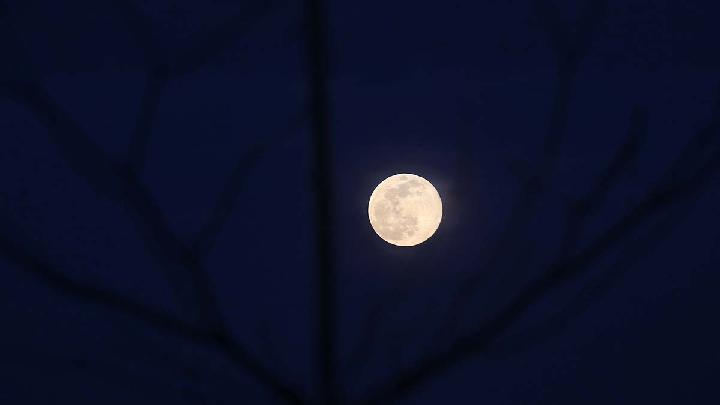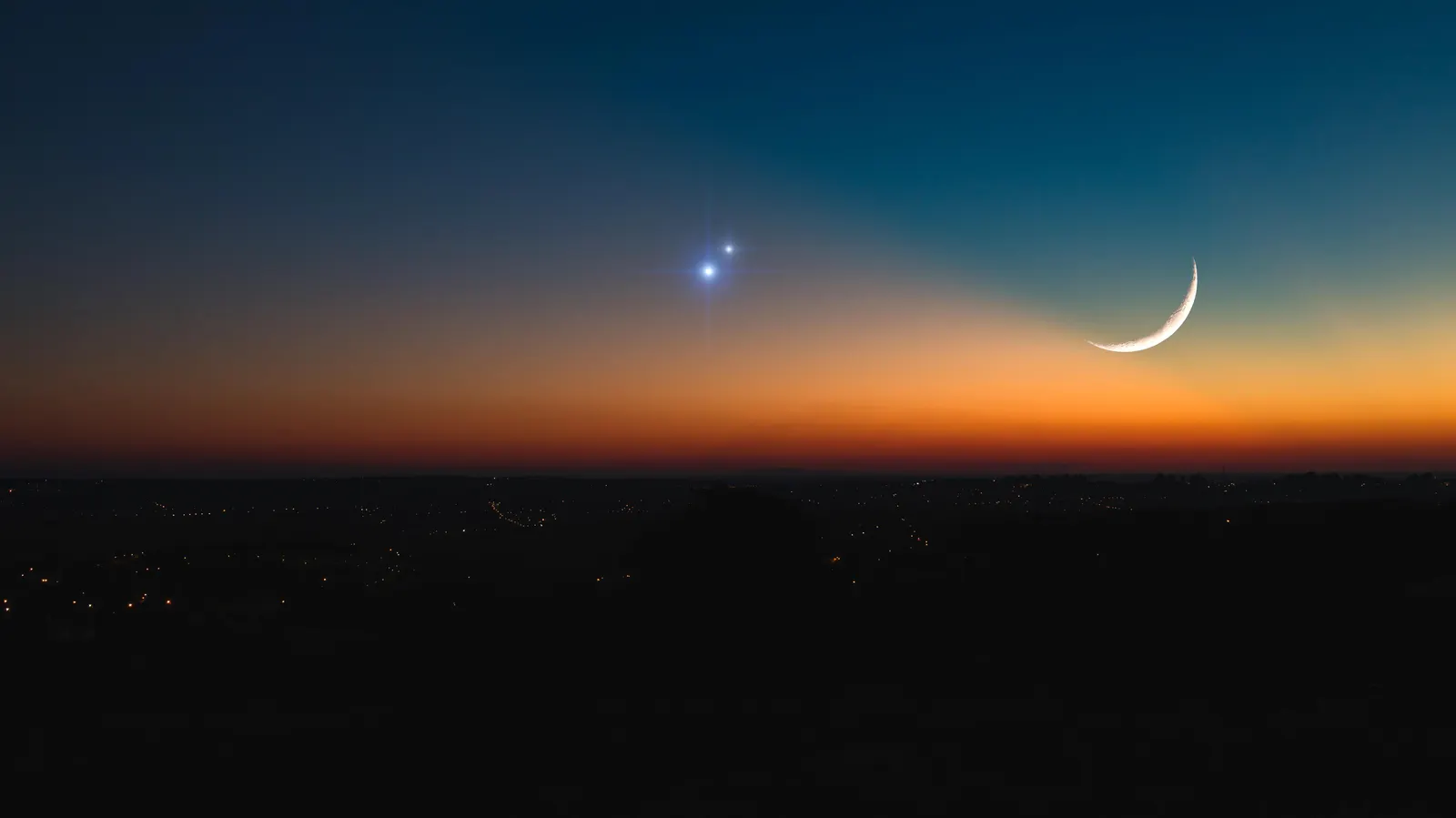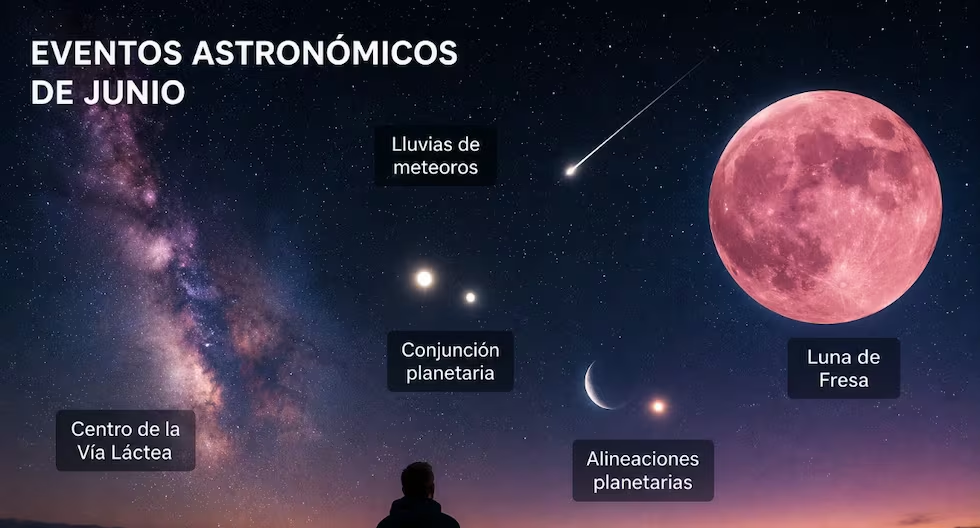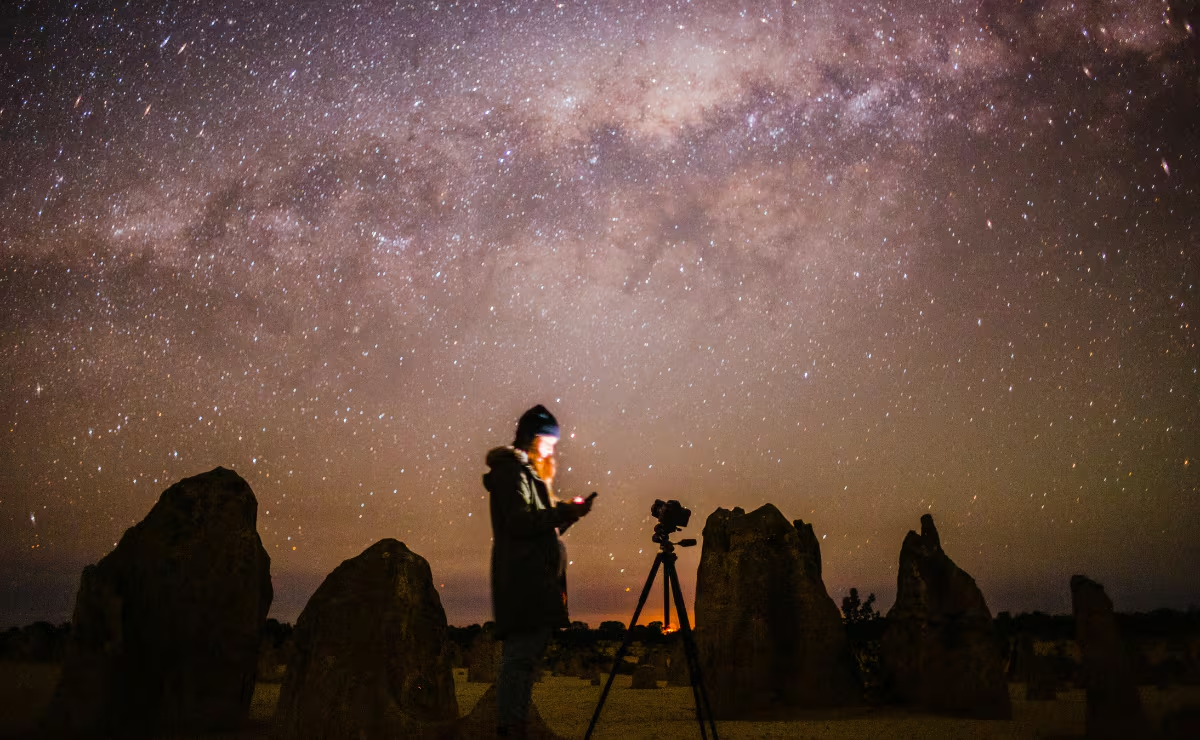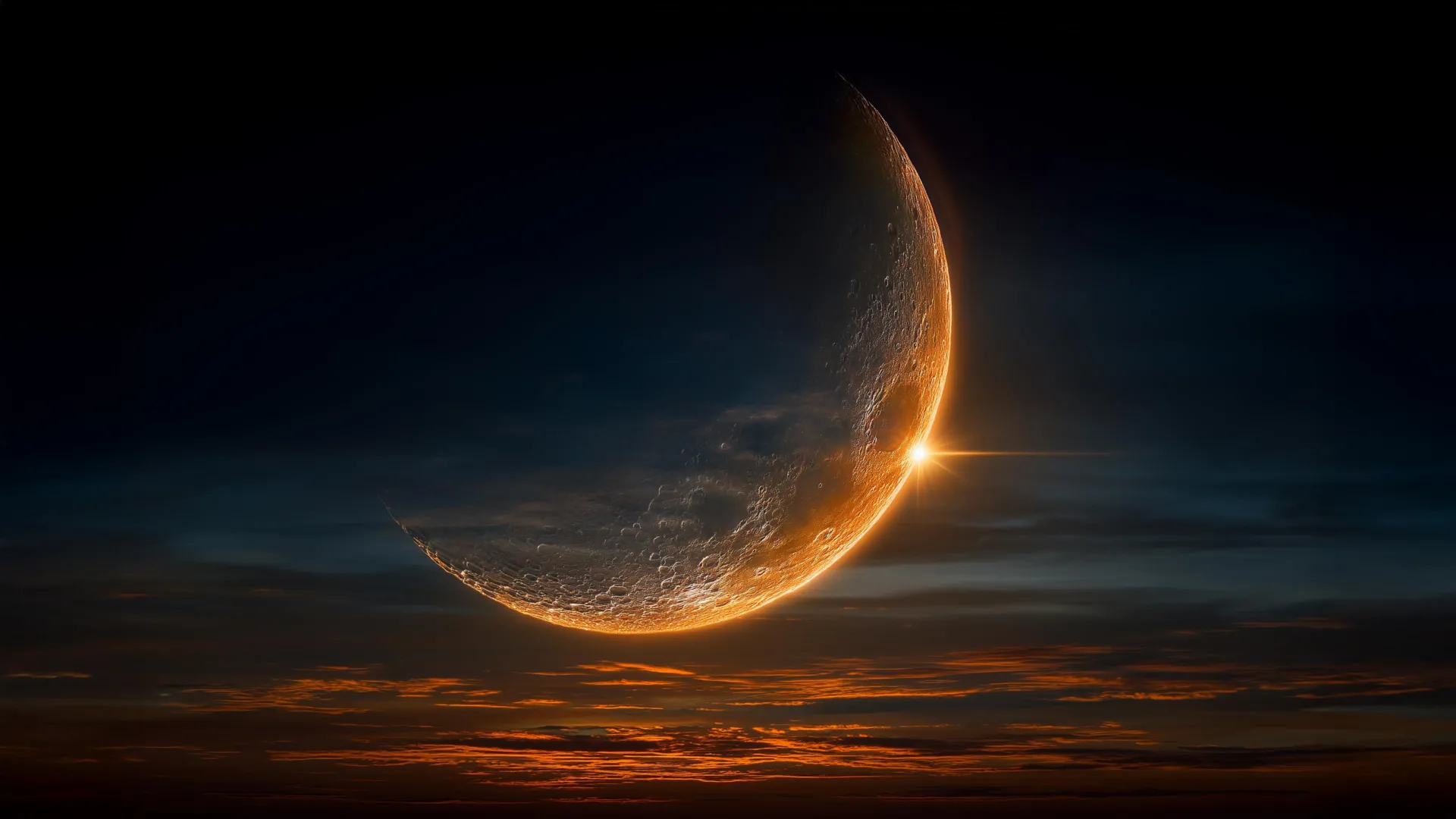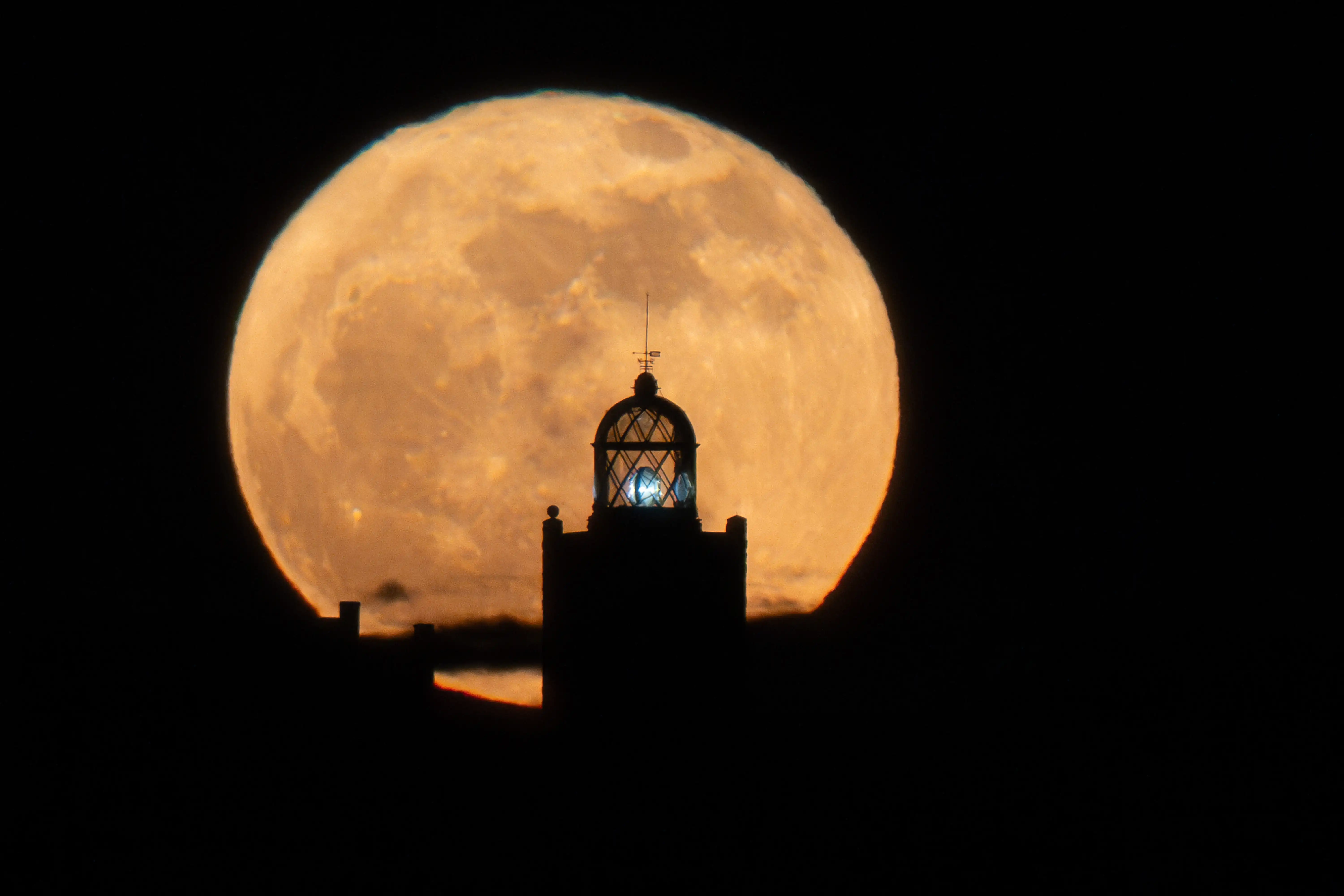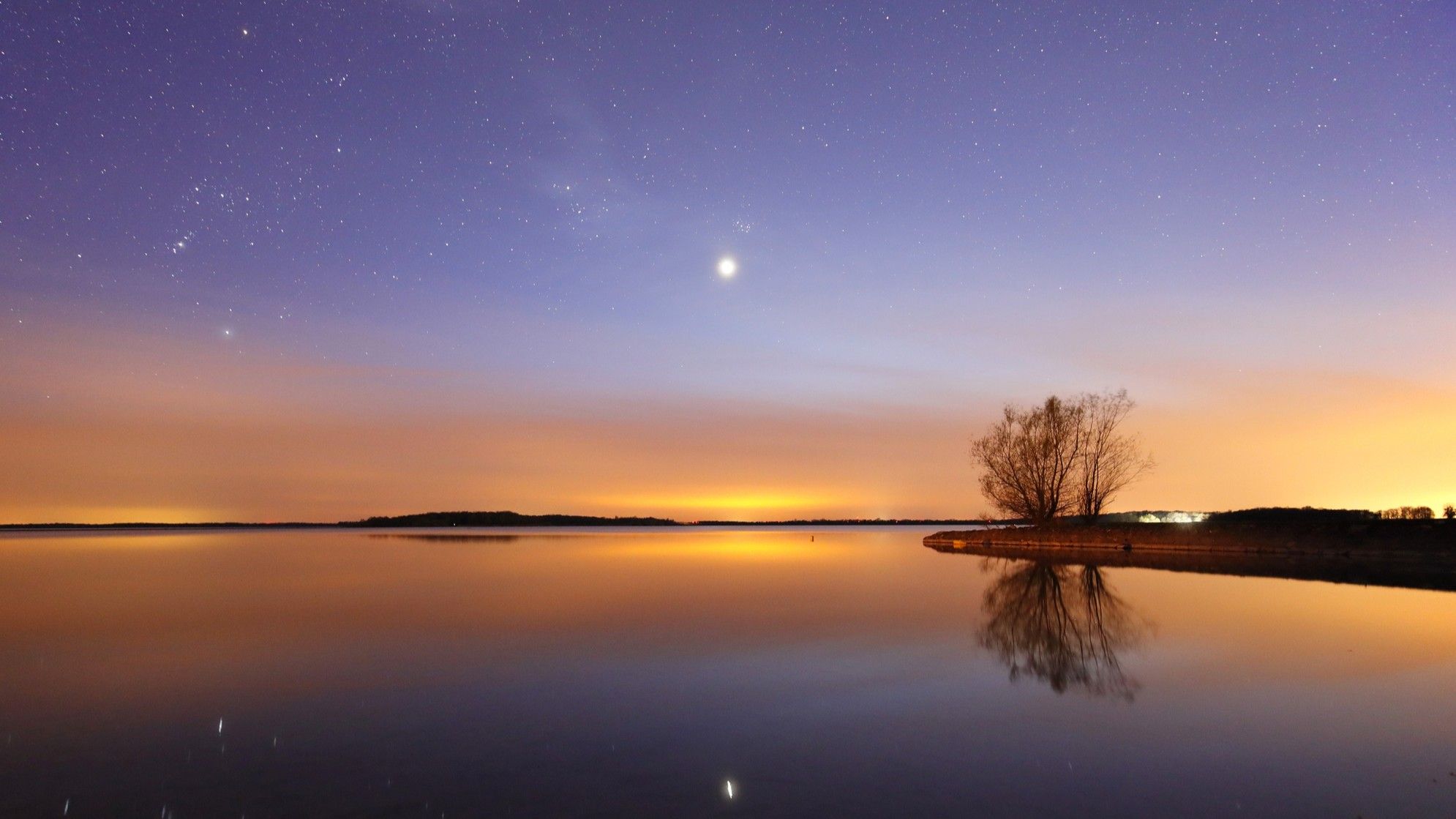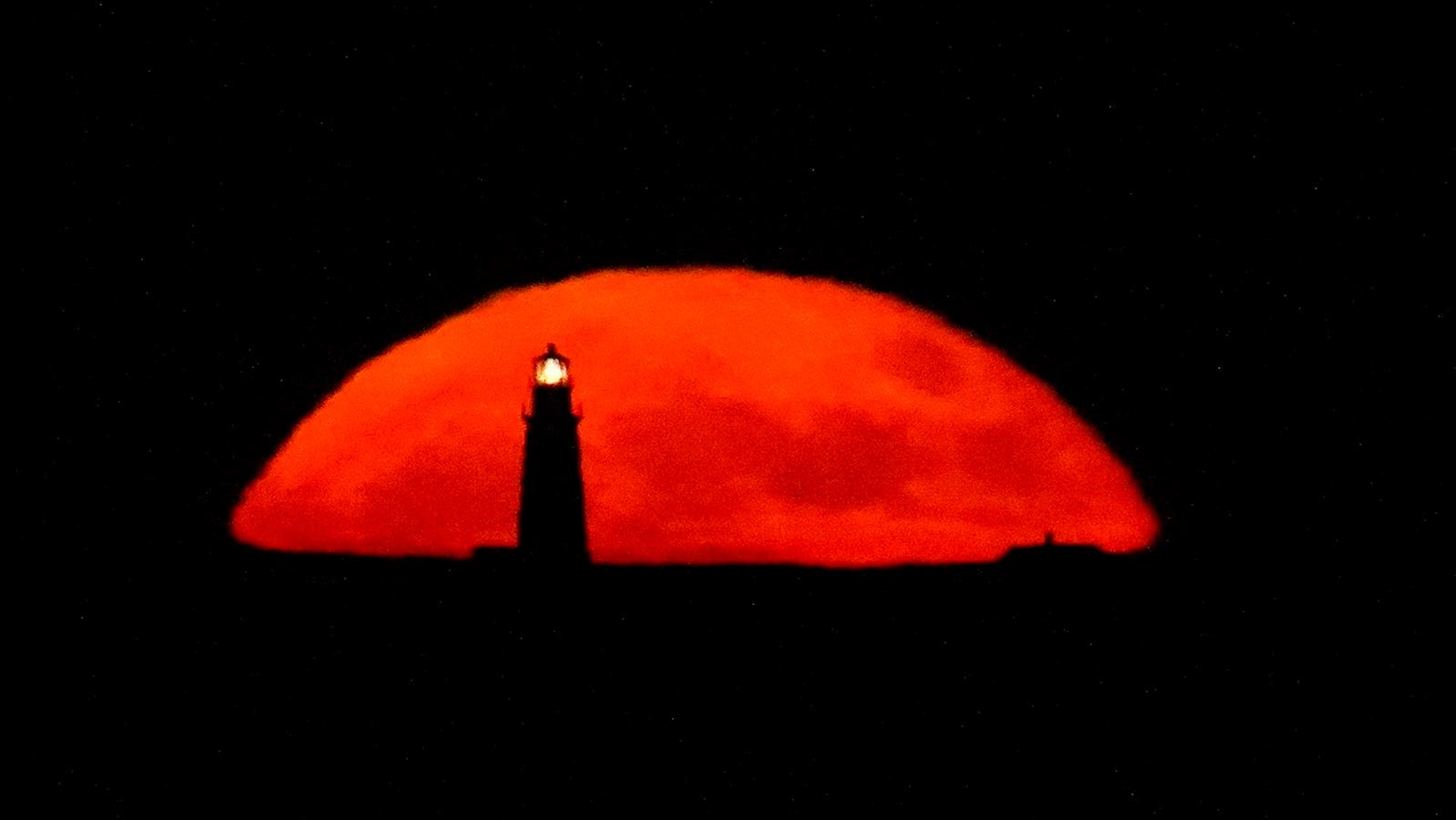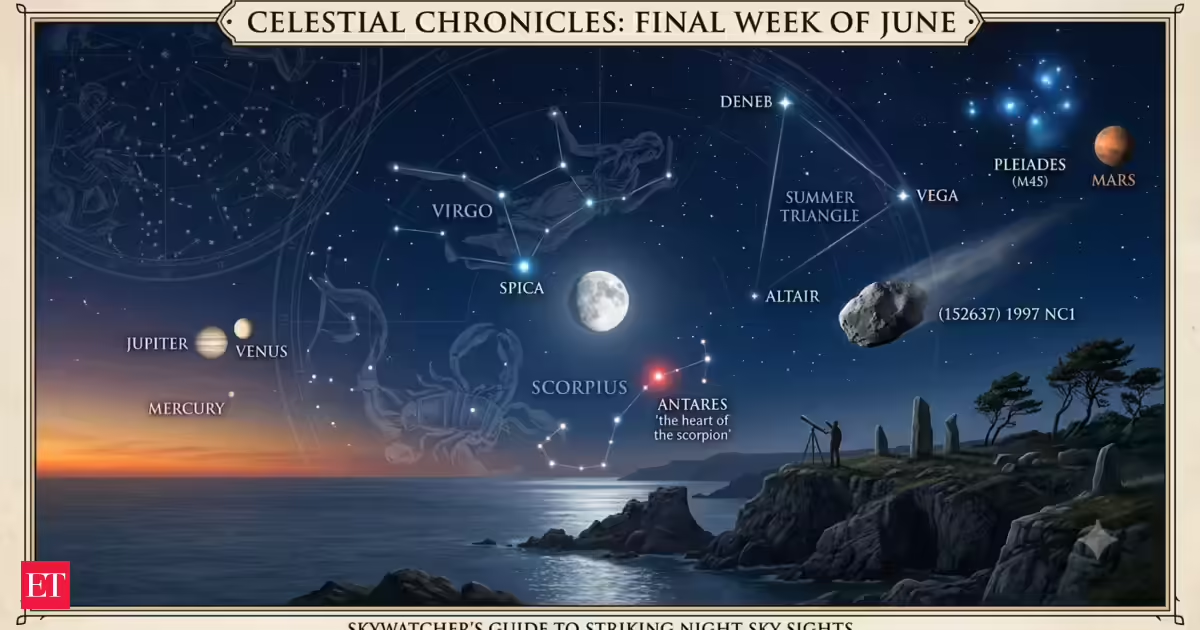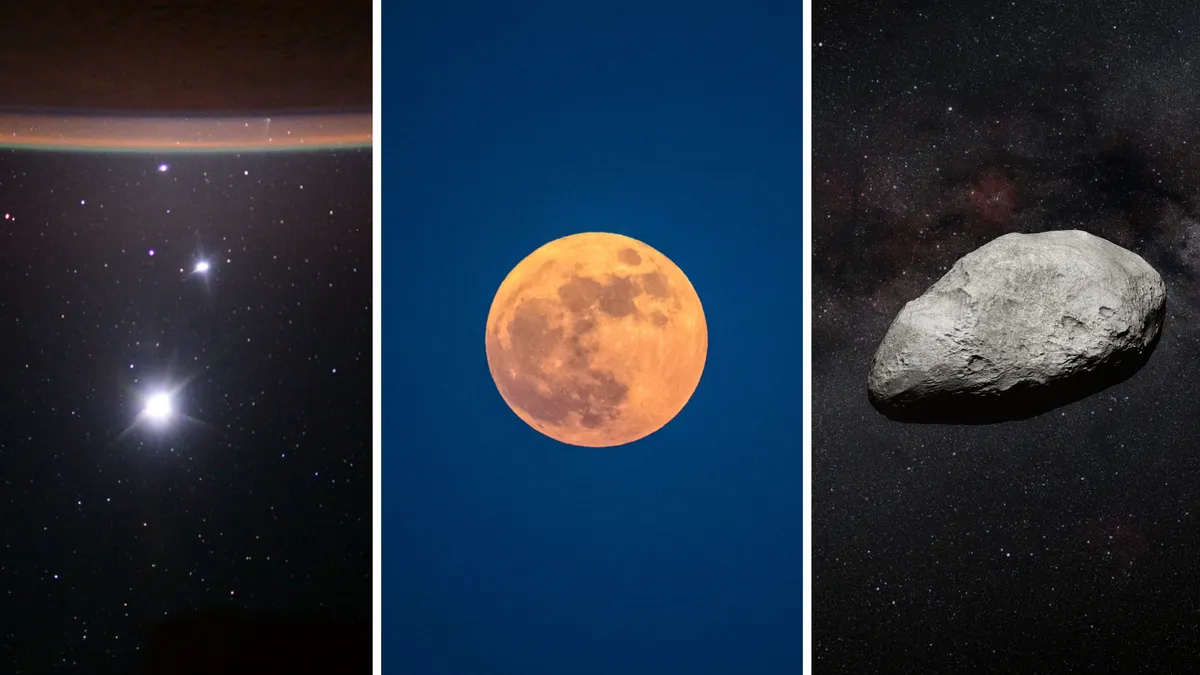
June is prime time for stargazing, as warmer weather makes it easier to stay out and enjoy the night sky.There will be plenty of celestial events this June, from planetary conjunctions and the summer solstice to a micro full Strawberry Moon.It will be a month where both casual observers and dedicated stargazers can find something beautiful in the night sky, whether it’s a quick glance at two bright planets after dinner or watching the full Moon rise into a warm summer sky.June 1 to June 9: Venus and Jupiter conjunctionVenus and Jupiter will form a planetary conjunction to kick off the month.Between June 1 and 9, you’ll be able to spot the two brightest planets, Jupiter and Venus, with the naked eye for about 45 minutes after sunset each night. Mercury will be nearby as well. The Jupiter and Venus will be closest on June 9 at 9:35 p.m. ET, according to EarthSky. They will trace the ecliptic plane, an imaginary line in the sky that marks the sun’s path. The moon and planets follow this same path.Unable to view our graphics? Click here to see them.June 15: Mercury and a super new moonA double celestial event will take place on June 15 at 6:40 p.m. ET, featuring a super new moon and Mercury at its greatest eastern elongation.This is the best time to spot Mercury in the sky. Because it's the smallest planet and orbits closest to the sun, it can be difficult to see. But there's an added bonus – Jupiter and Venus will also be nearby.At greatest eastern elongation, Mercury appears farthest from the sun in the evening sky, making it easier to view. In the periods before and after, its rapid orbit carries it to a position nearly directly behind the sun from our perspective on Earth, according to the National Space Centre.A super new moon will also occur, which happens when a new moon coincides with the moon’s closest point to Earth in its orbit, known as perigee. Because the moon is in shadow during this phase, it isn't visible, so you won’t see a large moon in the sky. This will make for ideal to view the other planets.June 21: Summer solsticeThe summer solstice, the exact moment when the sun hits its highest point in the sky each year, falls on Sunday, June 21, at 4:25 a.m. ET. It's already been feeling like summer for weeks in parts of the U.S., and for meteorologists, summer simply means the three hottest months of the year: June, July and August.Astronomical summer begins on the solstice In the Northern Hemisphere. It’s called the "longest day" because it has the most daylight hours of the year.There’s typically about a one-month delay between the solstice and the hottest summer temperatures, according to the National Weather Service, that’s why July is almost always the warmest month in most locations.June 29: A full micro Strawberry MoonToward the end of the month, skywatchers will a see a full micro Strawberry Moon. It will happen on Monday, June 29 at 7:56 p.m. ET, according to TimeandDate.This full moon will appear somewhat smaller and dimmer than usual. It’s known as a micromoon because it occurs when the Moon is at apogee, or its farthest point – about 252,360 miles – from Earth, according to EarthSky. And sorry to disappoint, but it won’t be a vibrant shade of red; instead, it will glow a soft gold.Why is it called the Strawberry Moon? According to the Almanac, the name "Strawberry Moon" was given its name by the Native American Algonquian tribes who lived in the northeastern U.S. The Ojibwe, Dakota and Lakota tribes also used the name to mark the full moon to the harvesting of wild strawberries in June.When are the full moons of 2026?Here are the four full moons of 2026, according to Space.com:Buck Moon – July 29 – 10:36 a.m. ETSturgeon Moon – Aug. 28 – 12:18 p.m. ETHarvest Moon – Sept. 26 – 12:49 p.m. ETHunter's Moon – Oct. 25 – 11:12 a.m. ETBeaver Moon – Nov. 24 – 9:53 p.m. ET (supermoon)Cold Moon – Dec. 23 – 8:28 p.m. ET (supermoon)June 30: Asteroid DayTo end the month, June 30 marks International Asteroid Day.Asteroid Day is a global awareness campaign that informs people about the risks associated with asteroid impacts. It was officially recognized by the United Nations in 2016, and thousands of independent organizers worldwide host events.More than 36,000 near-Earth asteroids have been discovered, according to NASA’s Center for Near-Earth Object Studies. The largest asteroid impact in recorded history occurred on June 30, 1908, during the Tunguska event in Siberia, Russia. The date of Asteroid Day was chosen to commemorate this event.
Planets, solstice and asteroids: 5 stargazing events for June 2026
June's night sky lineup: Five celestial highlights, including planet meetups and a full micro Strawberry Moon.
784 words~4 min read