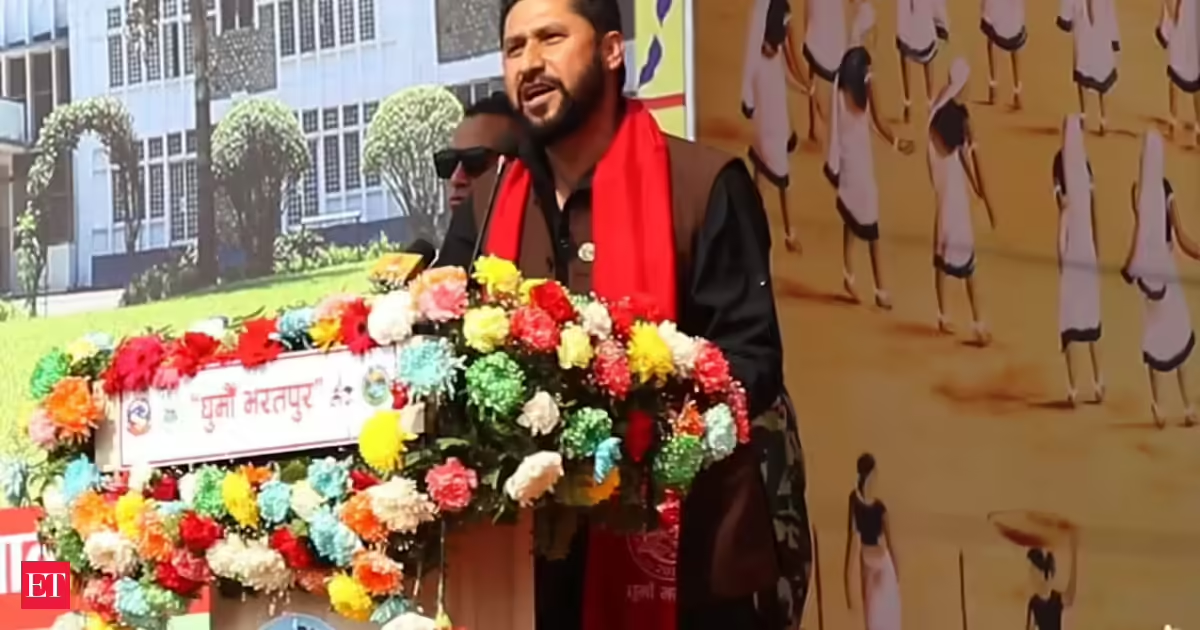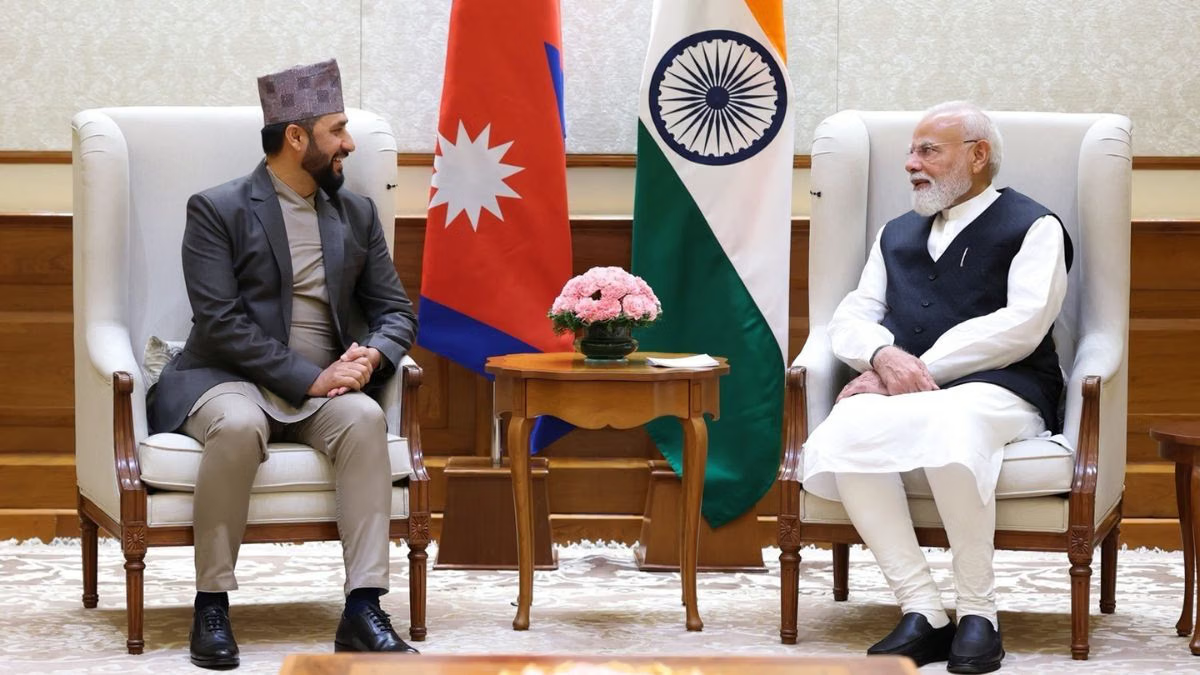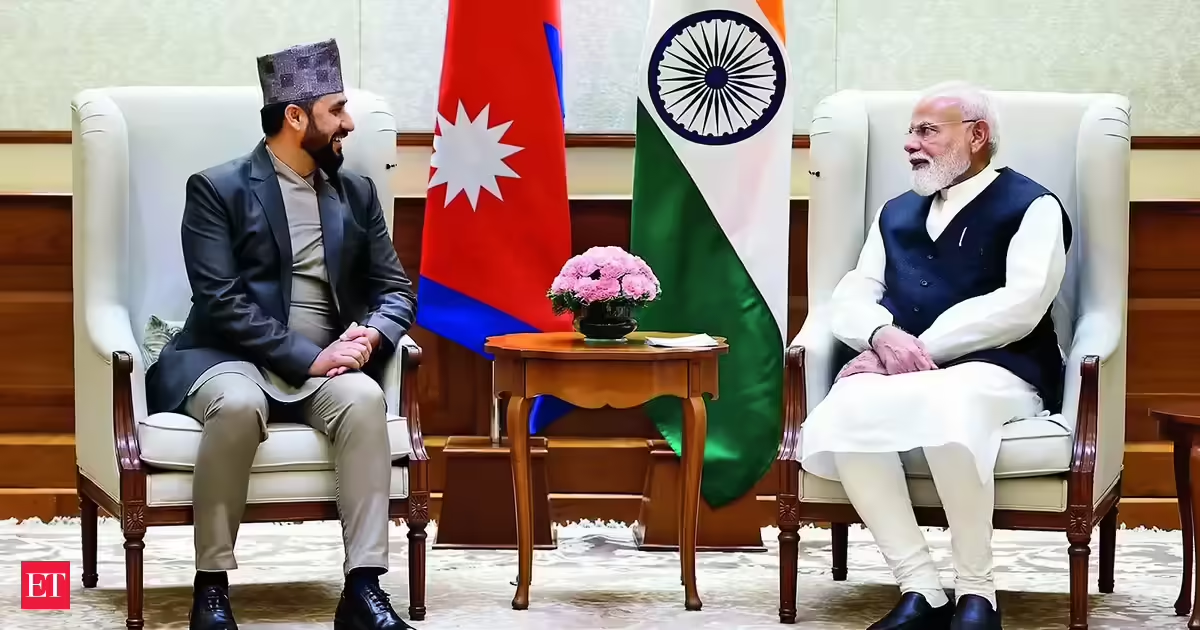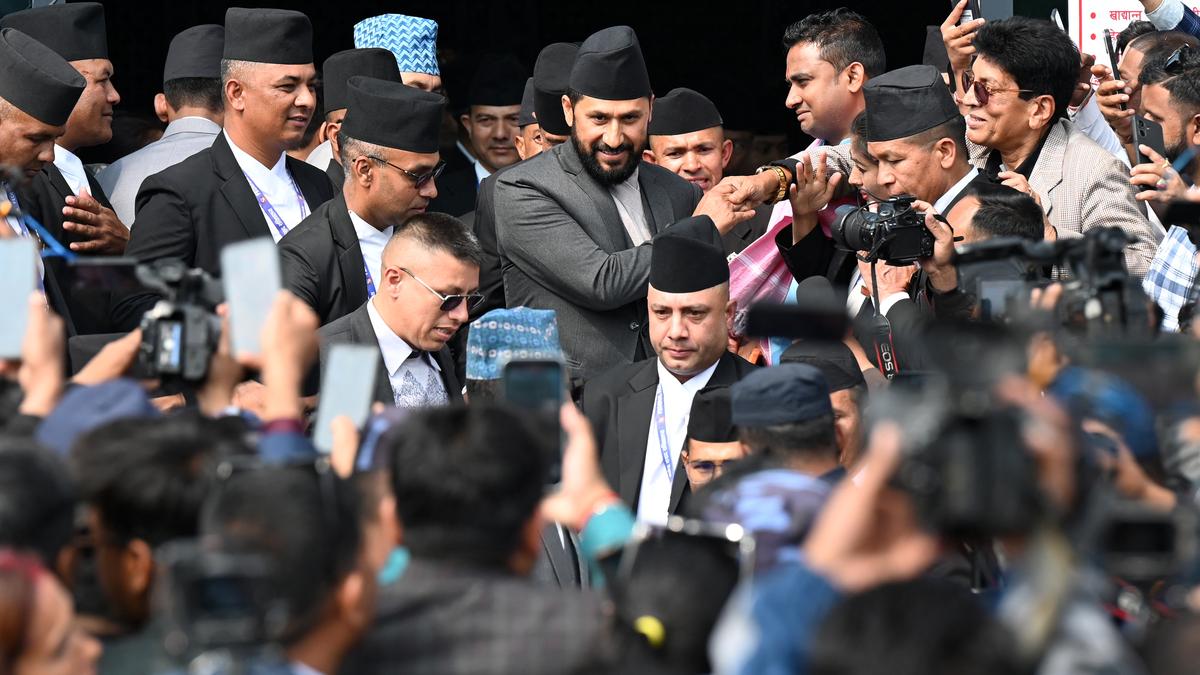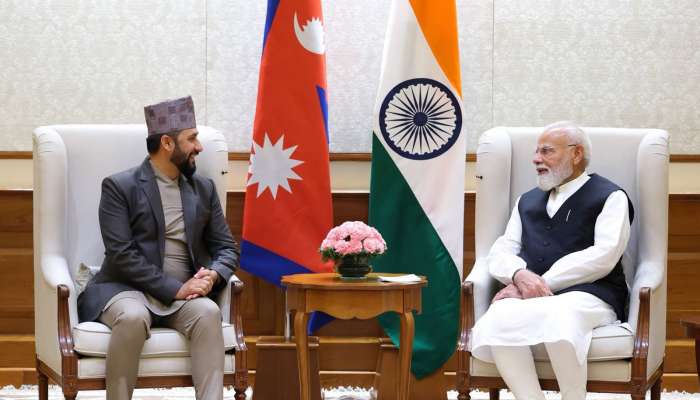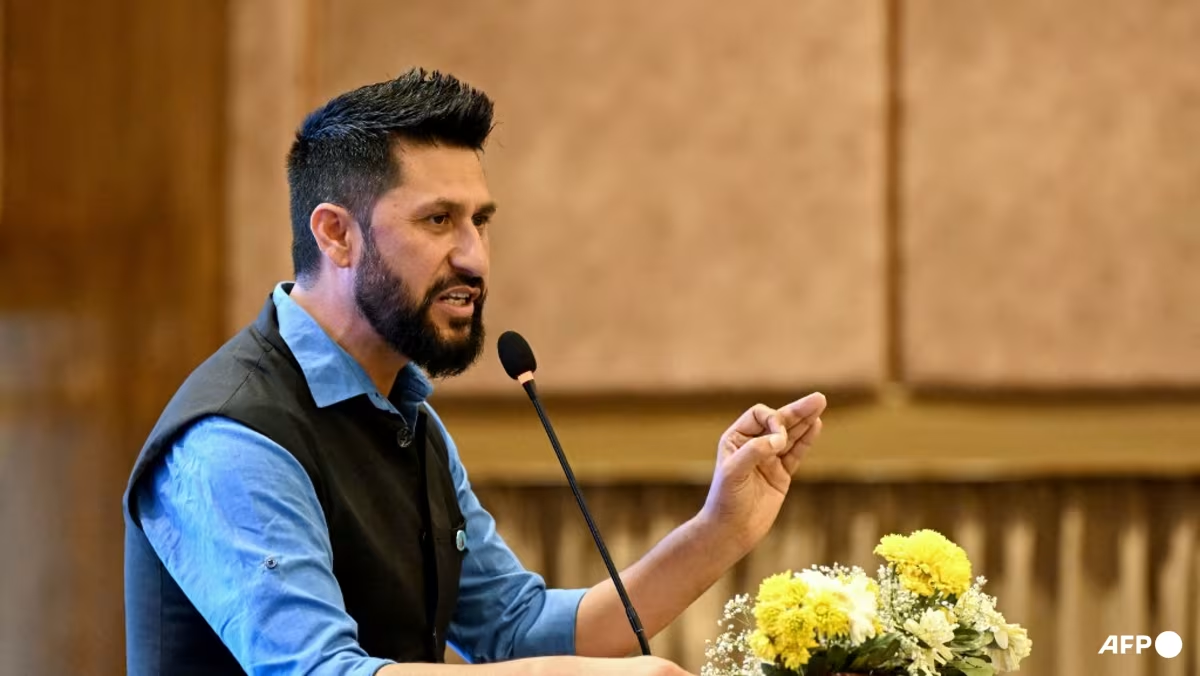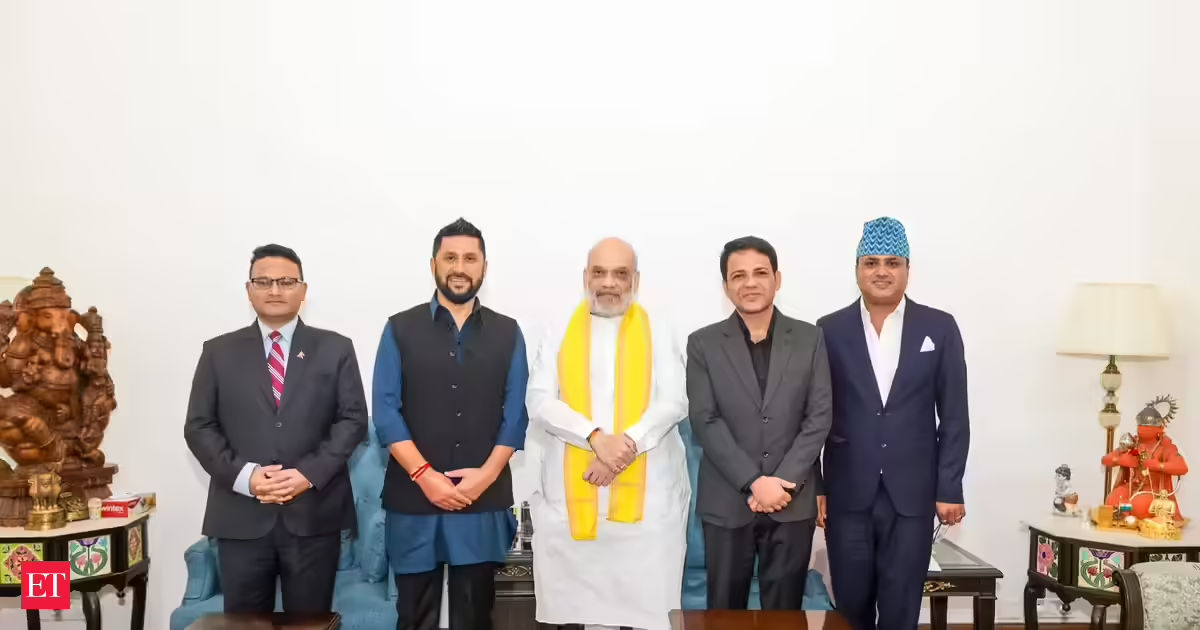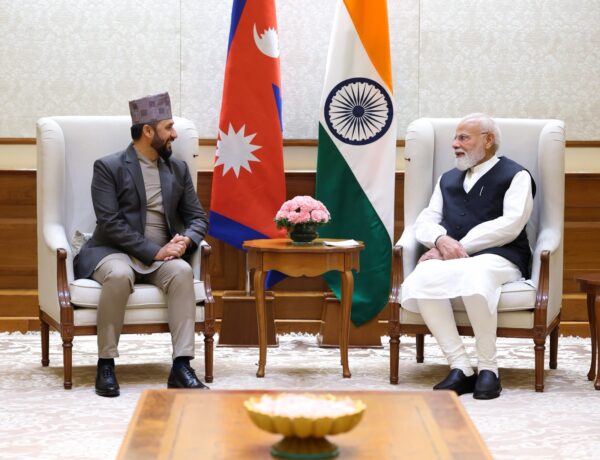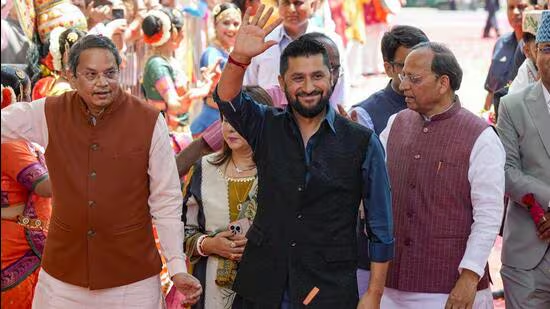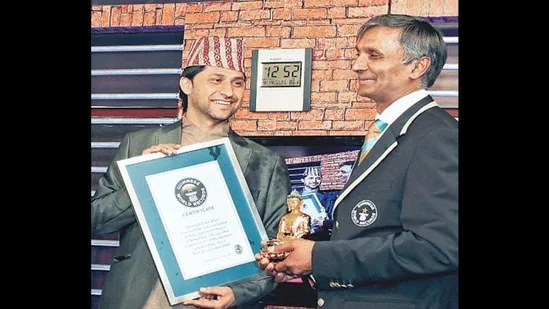
Nepal’s ruling RSP (Rastriya Swatantra Party) chief Rabi Lamichhane begins his maiden visit today after his party won a landslide victory in the March polls. Arriving at the invitation of the BJP president, high-level talks are planned with Prime Minister (PM) Narendra Modi, external affair minister S Jaishankar, national security advisor Ajit Doval and foreign secretary Vikram Misri, among others. He will lead a three-member party delegation for the five-day visit and will also address the Nepali diaspora during his stay. Rabi LamichhaneIt is significant mainly because Nepal’s PM Balendra Shah’s visit to India has not been confirmed despite an invitation from PM Modi and there are uncertainties regarding high-level visits from India to Nepal as well. PM Shah has indicated that he will not undertake any foreign visit for at least a year. It is usually not the case. When a new government takes over in Kathmandu, it is a general practice that the new executive head travels to India first. But this ‘India first’ approach of the past governments is being redefined with a young and assertive leader at the helm of things in Nepal. Except for Maoist chief Prachanda, who went to China to attend Olympic Games in 2008 before coming to India on an official visit, all new PMs of Nepal have visited New Delhi in line with traditional practice since long. It is precisely this breaking from traditional style that things seem to look different with PM Balen. By breaking from tradition, he conducted a joint meeting with all the sitting envoys in Nepal once he took office and recently with EU member delegates, sending the loud message that his government wants to a balanced foreign policy approach. He has said that the focus will be on economic diplomacy, soft power and promoting Nepal as a bridge rather than a buffer State. Although the concept of ‘buffer State’ has not been specifically mentioned in Nepal’s foreign policy dispensation earlier, the bridge State concept was first propagated by former PM Baburam Bhattarai. Shah has focused on governance, especially speedy service delivery and removal of political appointees from government institutions, fighting corruption with many politicians and businessmen arrested and investigations in to alleged illegal amassing of property. Fighting corruption was the key demand of the Gen Z protest of September last year too. The government’s priorities have been laid out through its policies and programs brought earlier in May followed by the budget proclamation that indicates the government’s ambitious plans. But Shah is also facing criticism over some of his government actions like bulldozing the squatter settlements in Kathmandu, appointment of a junior judge as Chief Justice of the Supreme Court, and implementation of customs duty at Indo-Nepal border on goods worth merely Nepali ₹100. Recently, the PM landed created a controversy when he remarked that there are certain encroachments of Indian land from the Nepal side as well while addressing a question on Limpiyadhura trio. What he was referring to was related to some encroachment in the no-man’s land and cross-border occupation (meaning cross-holding). Nepal’s foreign ministry issued a clarification immediately stating, “Since the fixed boundary principal was adopted while determining the Nepal-India boundary in riverine border areas, situations of cross border occupation have arisen, whereby citizens of one country are cultivating or residing on land that falls within the territory of the other country.”There are anxieties and even confusion regarding the direction of the government’s foreign policy, especially vis-à-vis the two big neighbours – India and China. China has already asked the new government to clarify its priorities and a visiting Chinese delegation earlier this month requested Nepal to strictly abide by the One China Policy, thereby requesting Kathmandu not to aid any Tibetan activities and not allow naming of successor to the Dalai Lama from Nepali soil. India too seems eager to talk to Shah. It can be recalled that PM Modi had rung up both the leaders after their election victory. Unfortunately, Vikram Misri’s planned visit to Kathmandu was put off because, as per media reports, his meeting with Shah could not be confirmed. It is in this background that the RSP president is reaching Delhi. This gives a good opportunity for both sides to engage in meaningful dialogue given the political change in Kathmandu. The RSP chief can influence the government and provide valuable opinion that can help the bilateral relation. The visit has also come on the heels of the Kalapani, Lipulekh and Limpiyadhura dispute. The opening of Lipulekh Pass for trade and pilgrimage route for Mansarovar yatra is contested by Nepal, which has repeatedly sent diplomatic notes to both India and China as it claims this region as its own. India and Nepal can use this visit to agree to open up time-bound diplomatic boundary talks in the near future although there is bound to be reluctance to touch upon controversial issues. The visit can certainly strengthen party-to-party relationship, mainly as RSP is a relatively new party in Nepal. A centrist party formed only in 2022, it emerged as the fourth largest party after the 2022 general election in which it secured only 20 seats. But the March 2026 polls saw a resounding support for RSP which won 182 out of 275 seats in the Lower House. Rabi Lamichhane, who shrewdly brought Shah in to the party in a pre-poll understanding, is, however, not entirely a new face. He has served two terms as deputy PM in the previous government. While RSP chief’s visit can be an opportunity for India to understand the priorities of the new Nepali party and leadership, Nepal can convey its own concerns and expectations. It will be a good start which can pave the way for the PM’s visit ultimately. Bilateral issues mainly on power trade, business and transit, connectivity and the impact of the climate crisis, cultural diplomacy can figure in the talks to improve the ties and give momentum to the bilateral mechanisms. The visit can certainly set bilateral talks in motion and both sides should capitalise on it. Although bilateral discussions come under the purview of the government-to-government level understandings, and this Lamichanne’s visit cannot be seen as coming in lieu of the PM’s visit, it can open up the much-needed space for talks. It is also prudent to understand that the current politics in Nepal is directly dependent on the large-scale understanding between the RSP president and Shah. The right balance between the two seems utterly necessary to drive the party and the country ahead. (The views expressed are personal)This article is authored by Akanshya Shah, Nepali journalist and author, New Delhi.
Can RSP chief’s visit renew Indo-Nepal dialogue?
This article is authored by Akanshya Shah, Nepali journalist and author, New Delhi.
1,101 words~5 min read