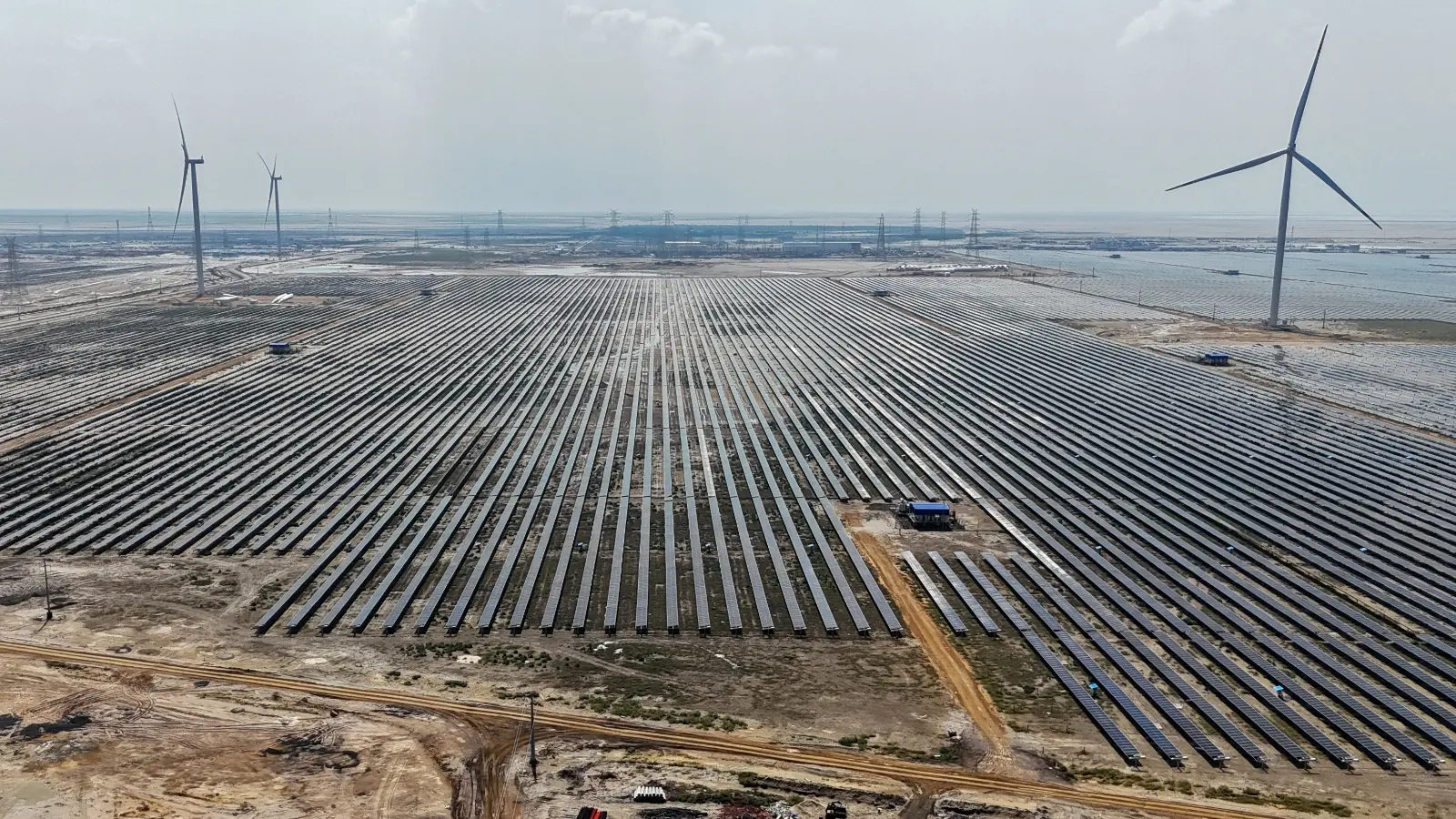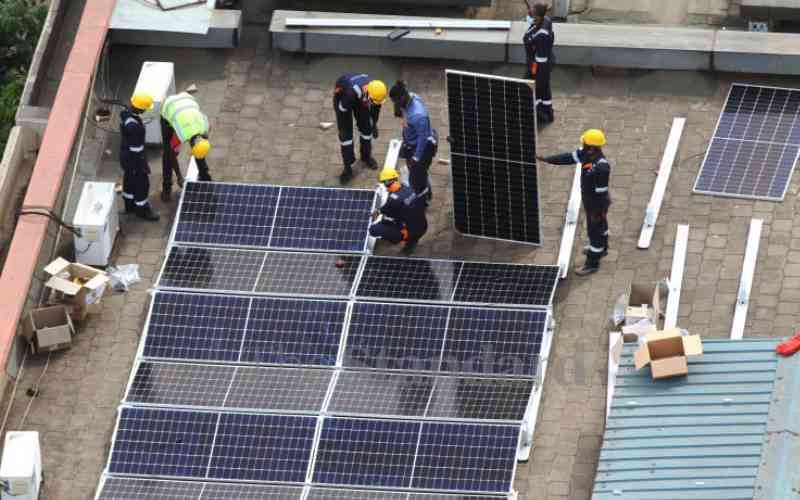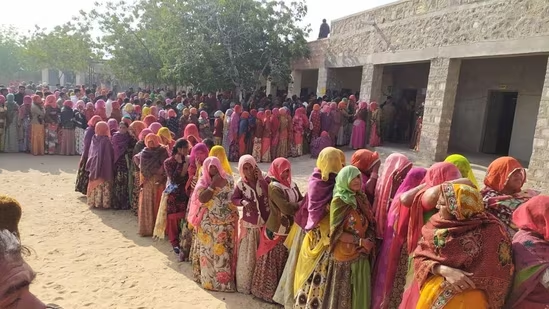
India’s energy transition is often discussed through the language of gigawatts, investment pipelines, and decarbonisation targets. As country positions itself as a major player, solar parks, green hydrogen corridors, and renewable energy capacity dominate the policy conversations. Yet within this transition, women continue to occupy an uneasy position--sometimes as victims of the climate crisis, sometimes as beneficiaries of schemes, or at best as participants at the margins. This framing misses an important reality emerging across India’s renewable energy landscape – women are increasingly becoming central actors in the country’s energy transition. And nowhere is this shift more visible than in Rajasthan. Rajasthan (HT Photo)At first glance, Rajasthan should have been among the least likely candidates to lead such a transformation, but the irony is striking. Rajasthan, long associated with entrenched pitrasatta (patriarchy), developmental deficits, and unfavourable environmental conditions, is quietly emerging as one of India’s most important laboratories for a gender-just energy transition. Large parts of the state face desertification, groundwater depletion continues to intensify, and climate stress has deepened rural distress. Climate pressures accelerated male migration from rural areas, leaving women to manage households and livelihoods as de facto heads of families. Energy poverty has compounded these vulnerabilities. Simultaneously, Rajasthan has historically struggled with poor gender indicators, low female literacy, and deeply conservative social norms. Yet Rajasthan’s story reveals an unexpected paradox: the very crises that symbolised backwardness created the conditions for institutional experimentation. The same desert conditions that intensified vulnerability also provided Rajasthan with one of the world’s richest solar endowments. With over 325 sunny days annually, Rajasthan now leads the country with over 46 GW of installed renewable capacity in FY26, up from 17 GW in FY22. Rajasthan’s renewable energy transition succeeded not despite the desert, but because of it. And, the real transformation lies beyond solar capacity figures. It created a politically acceptable pathway for women to enter spaces historically denied to them. Institutions such as Barefoot College in Tilonia, Ajmer recognised this possibility early. By training rural women, including many with little or no formal education as solar engineers, Barefoot College challenged one of India’s deepest assumptions that technical expertise belongs primarily to educated urban men. Women who had rarely travelled beyond their villages returned as solar sahelis, installing and maintaining photovoltaic systems in remote communities. This symbolism is profound; women historically excluded from technical jobs, property ownership, and decision-making suddenly became visible participants in the energy economy. In many villages, renewable energy did more than electrify homes; it altered local perceptions of authority itself.Importantly, Rajasthan’s transition did not emerge from isolated civil society initiatives alone; it was enabled by an increasingly supportive policy ecosystem at both the national and state levels. The launch of the Jawaharlal Nehru National Solar Mission (JNNSM) in 2010 created the broader market architecture for decentralised renewable energy, and more recently, initiatives such as PM Surya Ghar, PM-KUSUM and the Suryamitra Skill Development Programme have expanded opportunities for community-led solar adoption and women’s participation in the renewable economy.Rajasthan moved a step further by embedding women directly within this transition. State-level schemes such as the Mukhya Mantri Nari Shakti Kaushal Samarthya Yojana (MNSKSY) and Rajasthan Grameen Aajeevika Vikas Parishad’s “Solar Didi” initiative linked renewable energy expansion with women’s skilling and self-help group networks. Parallel measures, including women-focused MSME incentives under the Indira Mahila Shakti Udyam Protsahan Yojana (IMSUPY), strengthened women’s financial inclusion and entrepreneurship pathways for women entering the renewable sector. In effect, Rajasthan is pursuing two goals simultaneously – expanding renewable energy while reshaping women’s economic participation. States that lag behind often possess something more that advanced systems do not: Institutional room for experimentation. Rajasthan’s vulnerabilities forced the state to search for unconventional solutions, and renewable energy emerged as both an economic opportunity and a social intervention. Rajasthan’s story, in many ways, could have been just a story of a water-energy-gender trilemma. But the very same developmental deficits became the very reason it could innovate differently. In many villages, women became de facto heads of households not because policy deliberately empowered them, but because ground realities demanded it. The convergence of samaj, bazar, and sarkar became Rajasthan’s defining strength. Civil society organisations demonstrated proof of concept, expanding renewable markets created demand, and government policy amplified participation through training, incentives, and visibility.Rajasthan’s women-led solar story also served another important function – political signalling. In a state long criticised for poor gender indicators, women solar engineers offered compelling public imagery of modernity, aspiration, and global resonance. Symbolism alone does not guarantee structural change, but in Rajasthan’s case, symbolic politics translated into fiscal support, institutional investment, and expanded skilling pipelines. This is why Rajasthan matters to India’s broader just transition debate. Too often, renewable energy discussions focus narrowly on emissions reduction and infrastructure deployment. Yet Rajasthan’s story is not uncomplicated, and it should not be romanticised. Access to renewable opportunities remains uneven across caste and class lines. Male anxieties around changing gender roles often remain unspoken within celebratory narratives of empowerment. And while solar entrepreneurship creates visibility, it does not automatically dismantle entrenched social hierarchies around land, mobility, and financial control. Still, something important is changing. And profoundly, it is quietly rewriting gender through energy.(The views expressed are personal)This article is authored by Sandra V Kurian, programme & research associate, Chintan Research Foundation, New Delhi.
How Rajasthan is rewriting gender through energy
This article is authored by Sandra V Kurian, programme & research associate, Chintan Research Foundation, New Delhi.
882 words~4 min read