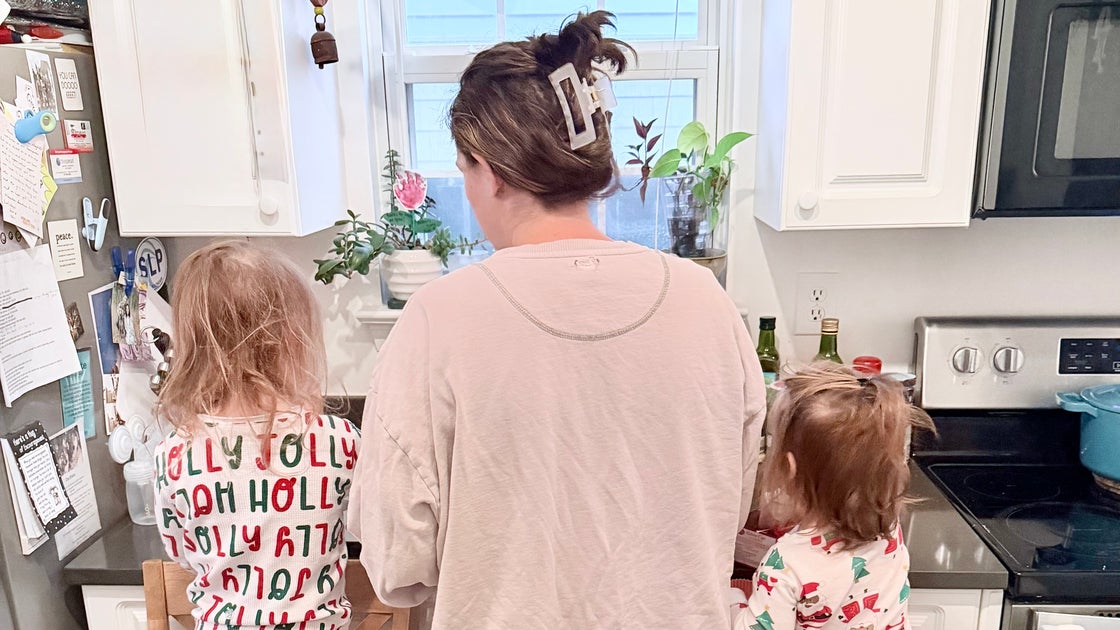
QuestionMy 2½ toddler is a clever, loving and happy little girl who recently became a big sister.Since her little sister came, she constantly touches her head – sometimes soft and sometimes rough. She will be in the middle of a task and redirect her path to graze her sister’s head without even knowing she is doing it.My husband and I are at our wits’ end asking her to stop. We understand that it is definitely a sensory issue, but no matter what we say or do to redirect and change the behaviour, it is falling on deaf ears. Our extended family has begun to notice as she is touching her younger cousin’s heads now too. I can see people begin to get frustrated with her and admit that I can, too.How can we support her to change this habit while waiting for OT support? She also has an issue with pinching her neck that we are worried about.AnswerThere could be a number of different overlapping reasons that explain your daughter’s behaviour. You are right that there is probably a strong sensory component whereby she likes the physical sensation of touching her sister’s head and this has become her habitual way of connecting and reaching out. There could also be an emotional component. The birth of a new baby sibling is a big deal for any toddler and she may be struggling to find her place in the family. She has to move from being the centre of her parents’ attention to sharing that attention with the new baby. It is understandable that she might be feeling a bit jealous or left out at times.Touching her sister’s head might also be a way of getting your attention – you have to interrupt your attention on the baby to redirect and attend to her. Even if you react negatively by criticising, this is still giving her attention and on an emotional level preferable to no attention at all. There are a number of different ways to respond that might help.Avoid saying ‘don’t’ or ‘stop’Be careful of repeatedly saying ‘don’t’ or ‘stop’ when you see your daughter touch the baby’s head as this can reinforce the behaviour. Saying what you don’t want does not show your daughter what you want her to do instead. Also “don’t” is usually delivered in an emotionally negative tone, which can make your daughter feel bad. It is better instead to use a “do” and guide your daughter to positive alternatives – “let me show you how to hold baby’s hand” or “let’s go over and play with dolly”.[ ‘I think my eight-year-old son is becoming scared of his older autistic brother’Opens in new window ]Get in early to redirect The key is to get in early to redirect your daughter before she touches the baby’s head. You might spot her about to reach out and then gently take her hand saying “let’s play with your toys” using a positive, warm tone of voice. Try to give her a little bit of time and positive attention before you return to what you were doing. You can address her potential sensory needs by caressing or squeezing her hand, or setting up a movement or pushing game depending on what sensory input she needs at that time. Guide your daughter in how to touch the babySet aside some time to show her how she can touch the baby safely and in a way that helps her feel connected. Create a nice comfy spot on the couch where you can hold the baby in one arm and with your daughter on your lap. Take her hand and show her how to gently stroke the baby’s arm, saying nice, soothing things – “Your sister loves when you touch her so gently”. Make sure to give your daughter lots of praise – “That is really lovely ... You are such a kind, gentle sister.” Taking time and giving positive attention like this will help her feel more bonded to the baby and to you, as well as helping her learn how she can get involved and be a good sister.[ It's not enough to love your kids equallyOpens in new window ]Show her other ways to get involvedYou can also guide your daughter how she can get involved in other ways such as handing clothes while you dress baby or keeping her sister company when you change the nappy – “your sister loves it when you sing as she gets her nappy changed” or “thanks for the socks – you are such a great help”. The key is increase your praise and positive attention towards your daughter – look for any time she does something well and praise her for this. This will boost her self-esteem and reassure her that you love her as much as her sister.Make sure she has one-to-one time with youMake sure to ringfence one-to-one playtime with your daughter. You may be tempted to do some chores when the baby is sleeping but maybe this is a time to do 15 minutes of play or singing and dancing with your daughter. Make sure to keep daily one to one routines with your daughter such as bath time or story time before sleep. This is of course easier if you are co-parenting – one parent can mind the baby and the other can do play time or story time with your daughter. Make sure to alternate roles as parents so your daughter gets daily one-to-one time with you both.Finally, be patient as you support your daughter. Many sensory habits such as touching or squeezing heads peak when children are two years old but can fade over time as children become more regulated and understand boundaries. Seek further assessment and support. It is great that you are on the waiting list for an occupational therapist who will be able to provide a more thorough assessment and specific support.John Sharry is clinical director of the Parents Plus Charity and an adjunct professor at the UCD School of Psychology. solutiontalk.ie
‘My toddler constantly touches her baby sister’s head, sometimes roughly’
Ask the Expert: ‘How can we support her to change this habit while waiting for support from an occupational therapist?’
1,007 words~5 min read