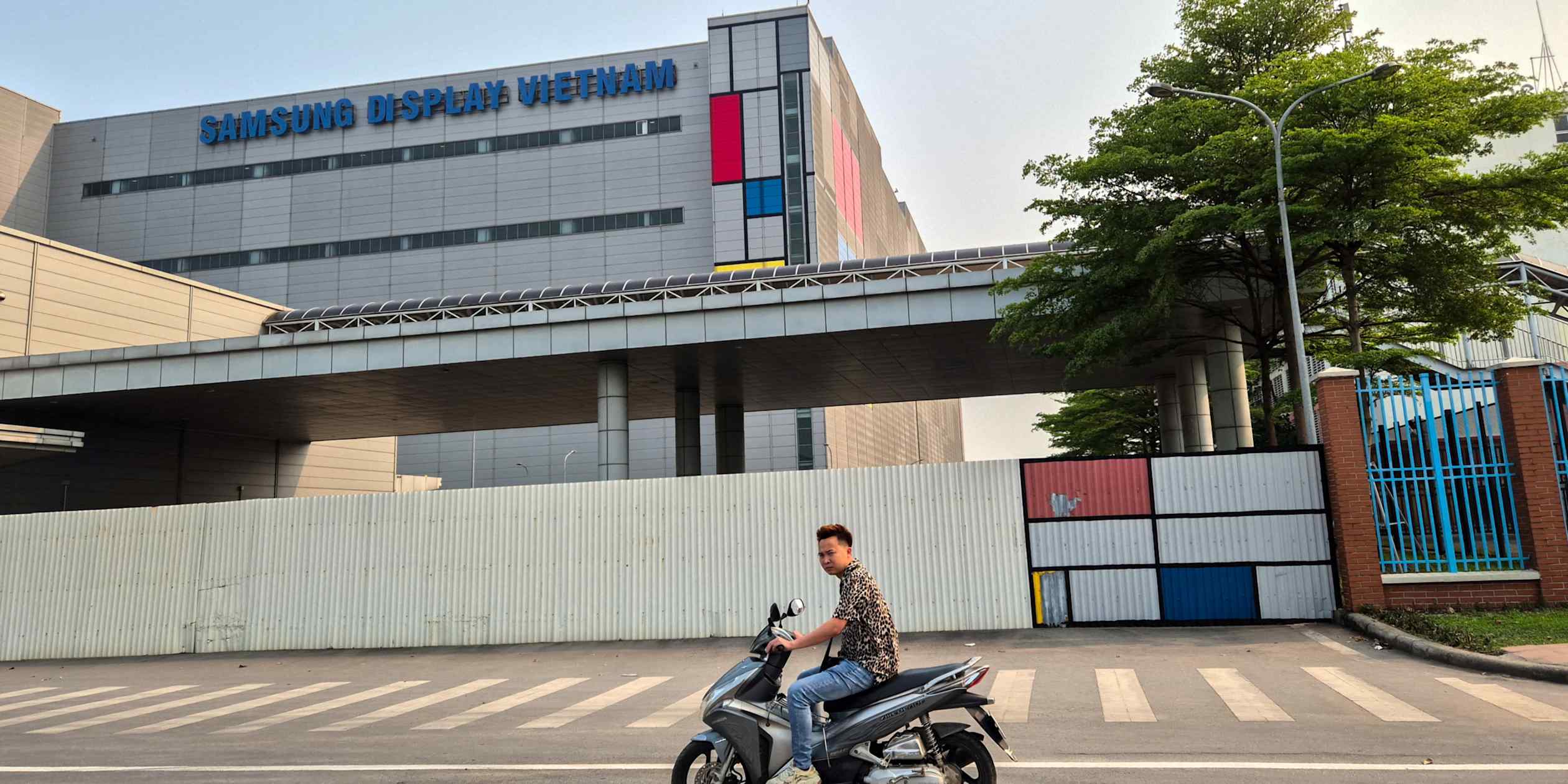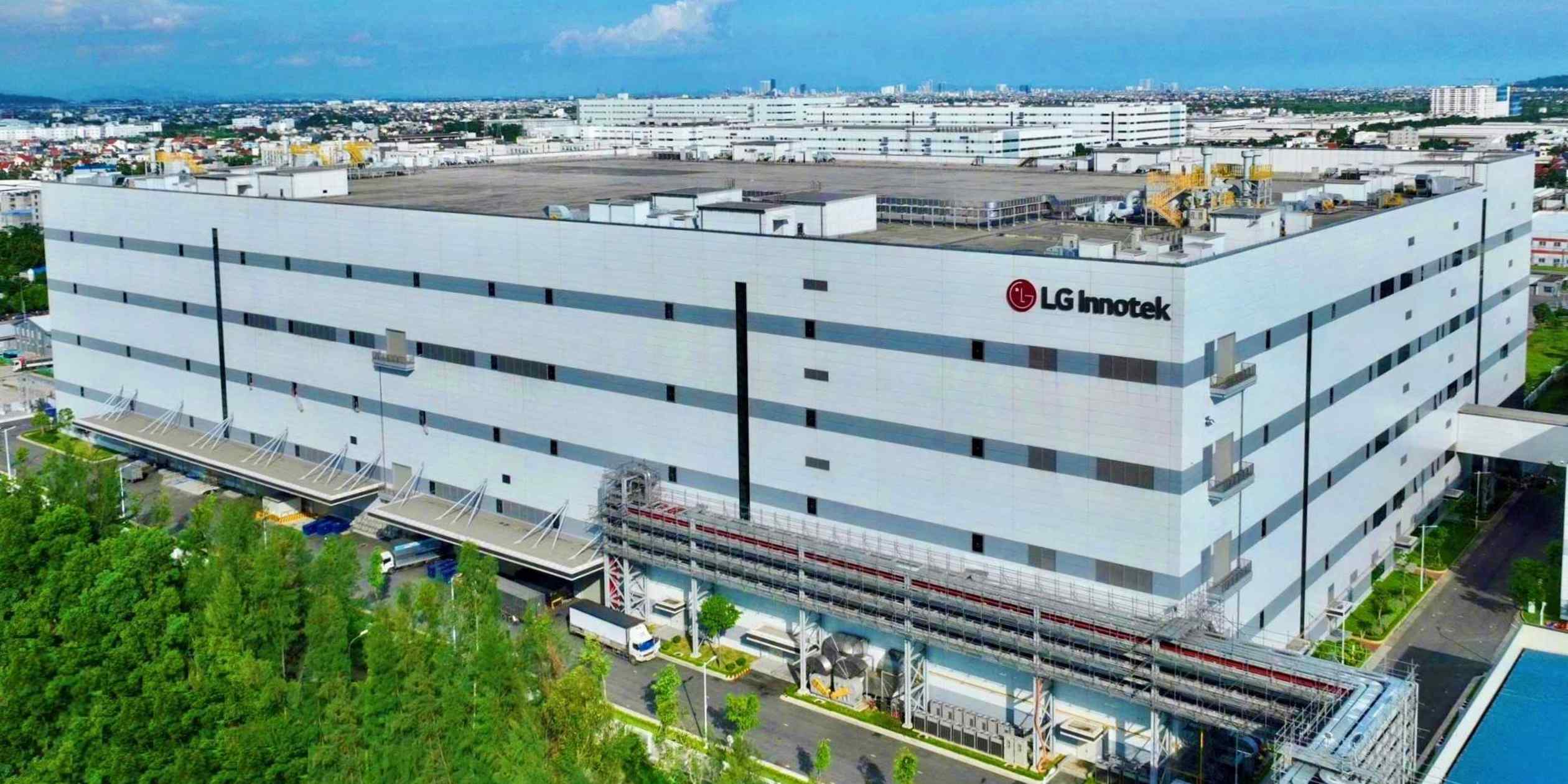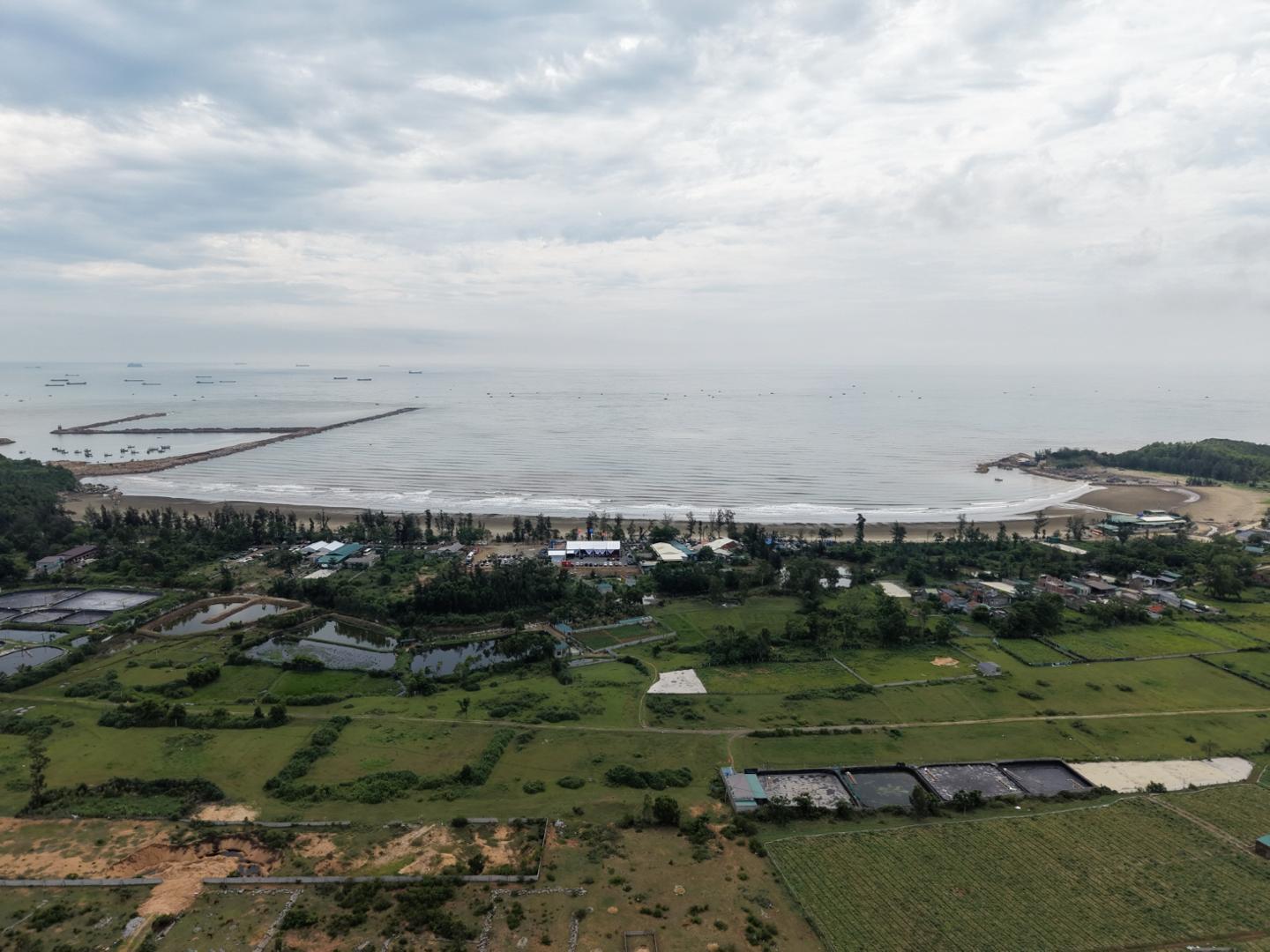
Dong Hoi Beach in Quynh Lap, Nghe An Province, central Vietnam / Courtesy of SK InnovationQUYNH LAP — Driving four hours south from Hanoi, the Vietnamese capital, the giant logos of SK Innovation, PV Power and NASU begin to appear in the distance.On a stretch of white sand in Quynh Lap, Nghe An province, a stage has been set up for a groundbreaking ceremony — the first visible sign that a $2.3 billion liquefied natural gas (LNG) power project has commenced.“A 1,500-megawatt LNG power plant, a terminal and a dedicated port will be built here,” SK Innovation official said of how the site spanning 1.6 million square meters, roughly equivalent to 220 soccer fields, will look like. He added the plant’s capacity would be equivalent to about 1.5 nuclear reactors.Beyond power generation, the project is expected to create some 100,000 jobs and draw $30 billion in direct and indirect investment. After the plant is completed and begins commercial operations in 2030, the Vietnamese government is expected to purchase its electricity for the next 20 years. High-level gov't presence signals supportThe level of attention from Vietnamese authorities was clear throughout the groundbreaking ceremony. A car parade in front of the site entrance featured senior officials and business leaders, including Deputy Prime Minister Le Tien Chau; Doan Minh Huan, president of the Ho Chi Minh National Academy of Politics and a Politburo member; and Nguyen Khac Than, secretary of Nghe An province.“Today marks a historic first step toward the successful development of the Quynh Lap LNG power project and a cornerstone for addressing Vietnam’s electricity shortages and building an ecosystem for high-tech industries,” SK Innovation CEO Choo Hyung-wook said in a speech that was met with an eager applause from some 300 participants, among them PV Power Chairman Hoang Van Quang and TH Group Chairwoman Thai Thi Huong.In an interview with Hankook Ilbo after the ceremony, Phung Thanh Binh, vice chairman of the Nghe An Provincial People’s Committee, said the project is critical to the province’s broader development plans.“Nghe An province is working to develop high-tech industries, next-generation agriculture and infrastructure, all of which depend on a stable power supply,” he said. “The province will provide all necessary support to ensure the project is completed successfully.”Background for the enthusiasm is a dilemma facing Vietnamese authorities. Vietnam has recognized the need to develop high-tech industries, but that ambition requires vast amounts of electricity at a time when the country is already struggling with power shortages.SK Innovation stepped in with a package offer that addressed those needs, ultimately helping the company secure its role as a partner in the Quynh Lap LNG power project. Map and artist’s rendering show the planned location and design of the Quynh Lap liquefied natural gas power plant and terminal in Nghe An Province, Vietnam. Courtesy of SK InnovationPower shortages loom as Vietnam’s demand surgesVietnam has enjoyed strong economic growth in recent years. Less visible from the outside, however, is the chronic power shortage that has continued to weigh on the country.The problem became clear in the summer of 2023, when a heat wave caused massive blackouts in the northern provinces of Bac Ninh and Bac Giang, an area where global manufacturers such as Samsung Electronics and Foxconn have major operations. The outages forced large-scale shutdowns which the World Bank estimated the damage up to $1.4 billion, equivalent to 0.3 percent of Vietnam’s annual gross domestic product.The power challenge is likely to grow more urgent as Vietnam seeks to move beyond a low-wage, manufacturing-driven economy by investing in semiconductors, artificial intelligence (AI) and data centers, all of which require heavy electricity use.Vietnamese authorities have so far relied on electricity imports from neighboring countries such as China and Laos to make up for the shortfall. But that remains a stopgap measure, especially as energy demand is forecast to surge from 307 terawatt-hours in 2024 to 558 terawatt-hours by 2030. Industrial cluster proposal proves decisiveAs it entered the bidding process for the Quynh Lap LNG power project, SK Innovation was quick to determine Vietnam’s needs. While competitors focused on refining the design of the power plant, SK Innovation proposed something broader: a Specialized Energy and Industrial Cluster that would link energy supply directly to industrial growth.The idea was to build an advanced industrial complex near the Quynh Lap LNG power plant, attract AI data centers and supply them directly with electricity generated by the plant. SK Innovation was well placed to make such a proposal because of its global energy supply network, already operating LNG power plants in Paju and Gwangyang in Korea and holding stakes in gas fields in areas including Texas and Australia’s Barossa project.“The idea is to maximize synergy by having SK Innovation provide energy solutions and SK Telecom build and operate data centers,” an SK Innovation official described.Behind the project win was also the top-level sales diplomacy of SK Group Chairman Choi Tae-won. Choi met several times with To Lam, Vietnam’s Communist Party chief and the country’s most powerful political figure, helping draw government-level support for the project.SK had also laid the groundwork through major investments in Vietnam. In 2019, the group provided $30 million to the National Innovation Center under the Ministry of Finance and Economy, an agency tasked with fostering high-tech industries. The SK Innovation CEO also made frequent trips to Vietnam to coordinate details of the project. SK looks beyond Quynh Lap to advanced energy sectorsSK Innovation sees the Quynh Lap project as more than a power plant. With Korea’s domestic electricity market already nearing saturation, the company is looking to Vietnam, where electricity demand is surging, as its next growth market.“Starting with the Quynh Lap project, the company plans to expand its LNG business in Vietnam and eventually move into advanced energy sectors such as battery energy storage systems, renewable energy and small modular reactors,” an SK Innovation official said.In 2020, the company invested in a 131-megawatt solar power project in Ninh Thuan Province in southern Vietnam. Two years later, it built a 150-megawatt offshore wind farm in Tien Giang Province, also in southern Vietnam. The facility is now in operation.Challenges remain, however. They include securing detailed construction permits, signing a power purchase agreement with the state-run utility and relocating local residents from the project site.“The committee has set up a task force to address hurdles that could affect the progress of the project,” said the vice chairman of the Nghe An Provincial People’s Committee.“For issues that go beyond the provincial level, we will work with the central government, partners and investors to address them,” he said. This article from the Hankook Ilbo, the sister publication of The Korea Times, is translated by a generative AI system and edited by The Korea Times.
Vietnam's AI ambitions need power: Korean investment aims to fill the gap - The Korea Times
QUYNH LAP — Driving four hours south from Hanoi, the Vietnamese capital, the giant logos of SK Innovation, PV Power and NASU begin to appear in the...
1,120 words~5 min read