Ahn Sung-mi
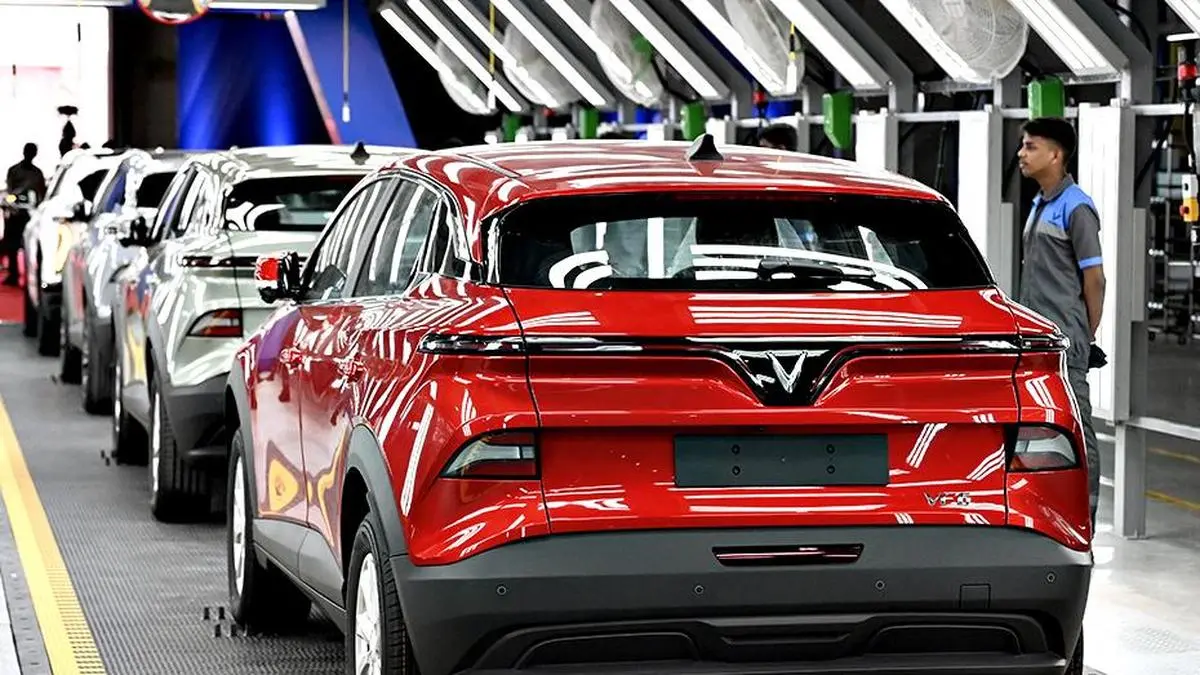
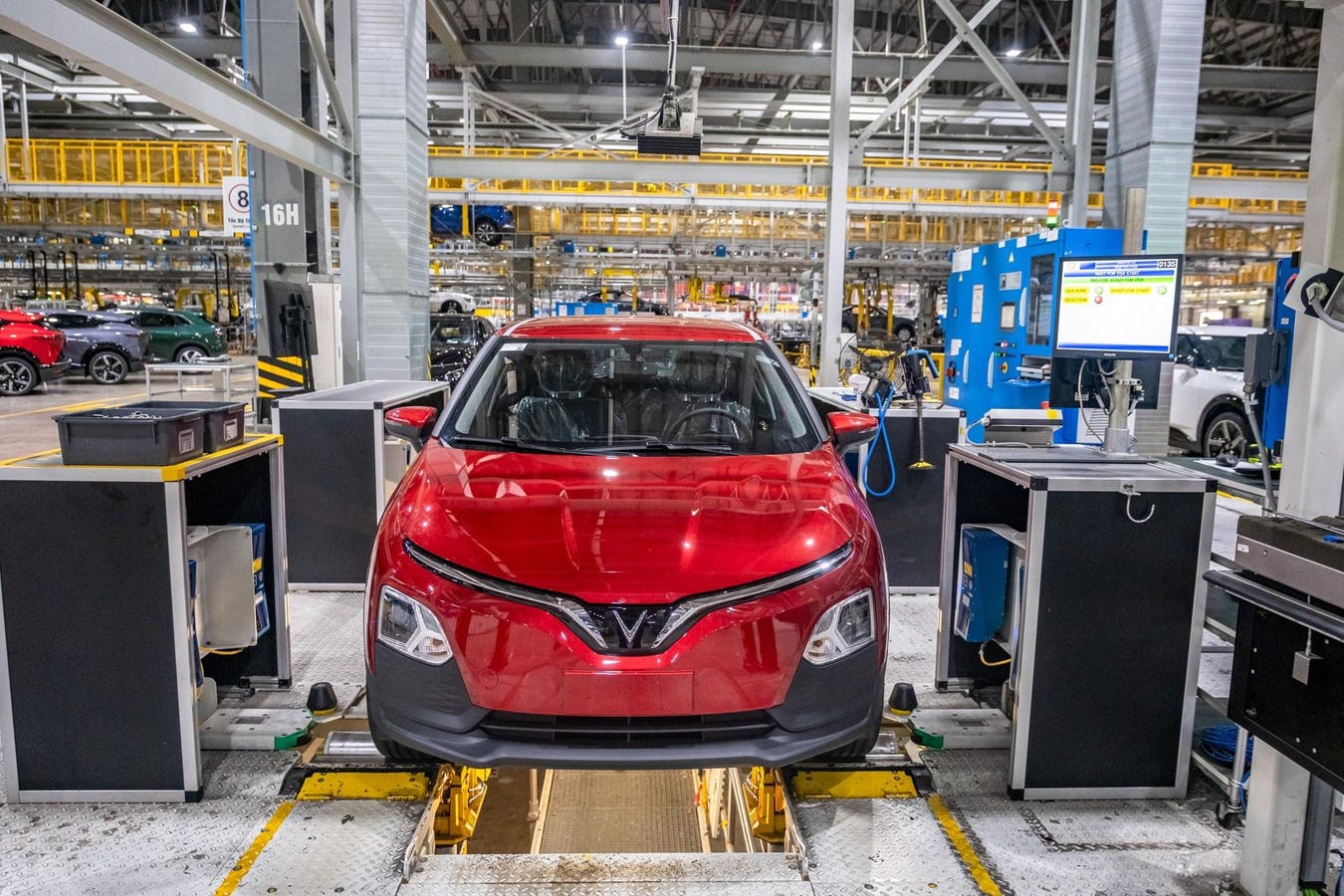
Vietnamese EV maker eyes deeper cooperation with Korea in batteries and components A vehicle moves along the assembly line at VinFast's general assembly plant in Hai Phong, Vietnam, where workers and automated systems carry out the final steps. (KOTRA) HAI PHONG, Vietnam — Inside VinFast’s sprawling factory complex in northern Vietnam, sparks fly from robotic welding arms behind safety fences as workers inspect panels and assemble vehicles moving overhead along the line.The scene captures both the industrial ambition and manufacturing drive of a young automaker trying to turn Vietnam’s homegrown electric vehicle brand into a global contender.The Hai Phong factory, about two hours from Hanoi, sits at the center of VinFast’s effort to make its “V” logo recognizable far beyond Vietnam. Founded in 2017 by Vingroup, Vietnam’s largest conglomerate, the company has moved quickly from gasoline-powered cars to a fully electric lineup, built production bases in India and Indonesia, and started work on a plant in North Carolina.VinFast first entered the auto market with internal combustion engine vehicles before shifting fully to electric cars. It began producing EVs in 2021 and stopped making gasoline-powered cars altogether by 2022, transforming itself into an all-electric automaker within just a few years.Last year, VinFast recorded the largest vehicle sales in Vietnam, with 175,099 units sold, cementing its position as the country’s leading auto brand by capturing over 30 percent of the market share. Now the company is trying to turn that domestic dominance into manufacturing scale.That rapid transition is visible across the Hai Phong campus, where the company produces electric cars, buses, motorcycles and vehicle components. According to the company, the plant has an annual production capacity of about 300,000 electric cars, 1 million electric motorcycles and 2,500 electric buses. Company officials also said the factory serves as a supply base for VinFast’s broader manufacturing network.“We supply parts from this factory to our global factories,” Himanshu Soni, director of press and body operations at VinFast, said during a factory tour, referring to the company’s Ha Tinh facility in central Vietnam as well as its plants in India and Indonesia.A visit to the Hai Phong plant on Thursday showed the scale of VinFast’s plans, as well as the work still ahead.In the press shop, large steel coils are cut, welded and stamped into vehicle panels, including doors, frames and other body parts. Workers load the parts onto racks, while quality inspectors check them one by one before they are transported to the body shop. A worker at the press shop inspects vehicle panels one by one before they are transported to the body shop at VinFast's facility in Hai Phong, Vietnam. (KOTRA) Soni said the press shop can produce 14 to 15 parts per minute, depending on the size of the component. The factory produces nine EV models, including the VF 3, VF 5, VF 6, VF 7, VF 8 and VF 9, with output adjusted flexibly according to production schedules.The body shop presents a more automated picture.Behind protective fencing, robotic arms move in sequence, welding stamped sheet metal into a vehicle’s structural skeleton, known as the body-in-white, as sparks fly from the joining process.“We have a total of 850 robots inside the body shop,” Soni said. “They perform various operations, including spot welding, sealer application, visual camera checks and different inspection processes.”The operation shows a mix of automation and hands-on work. Robotic arms handle much of the welding in the body shop, while workers remain highly visible in parts handling, assembly and inspection. A robotic arm carries out welding work at the body shop of VinFast's factory in Hai Phong, Vietnam, on Thursday. (Ahn Sung-mi/The Korea Herald) After being painted, vehicles move to general assembly, where more workers join the process. As car bodies travel overhead, teams install bumpers, dashboards and other interior and exterior parts. Batteries are assembled at the final chassis stage. Completed vehicles then go through water leak testing, advanced driver assistance system calibration and final inspection before moving to the shipping yard.The Hai Phong factory produced around 200,000 vehicles last year and is aiming to reach 400,000 units this year, as VinFast expands production and divides roles between its two Vietnamese manufacturing bases.“Hai Phong serves as the headquarters for VinFast’s automobile production, and under the current plan, it will mainly produce midsize and large vehicles,” said Trinh Van Ngan, vice president of VinFast. “Small cars are currently also being produced in Hai Phong, but those production lines will gradually move to the Ha Tinh factory.”The Ha Tinh plant in central Vietnam will focus on small vehicles and minivans while becoming a broader EV cluster, with facilities for vehicle production, battery packs, metal and steel operations, and other battery, energy and component-related manufacturing.VinFast is also expanding overseas while seeking deeper ties with Korean suppliers. Ngan said the company built factories in India and Indonesia because of their growth potential and is also developing a production plant in North Carolina.“We plan to continue building additional factories in regions that can serve as strategic hubs," he said.Ngan said VinFast has no immediate plans to sell vehicles in South Korea, but views the country as an important partner because of its advanced auto industry and supplier base.“Korea is a very important country for VinFast,” he said. “We are working with many Korean companies, especially in batteries and various electric vehicle-related components.”He said VinFast is not currently importing batteries from Korea, but is pursuing technology cooperation with companies including LG and Samsung to support battery production in Vietnam. The company also imports a wide range of EV parts and electrical components from Korean suppliers.“VinFast is open to cooperation in all areas,” Ngan said. “If Korean companies can meet our requirements on quality and price, we are willing to work with them regardless of the field.”