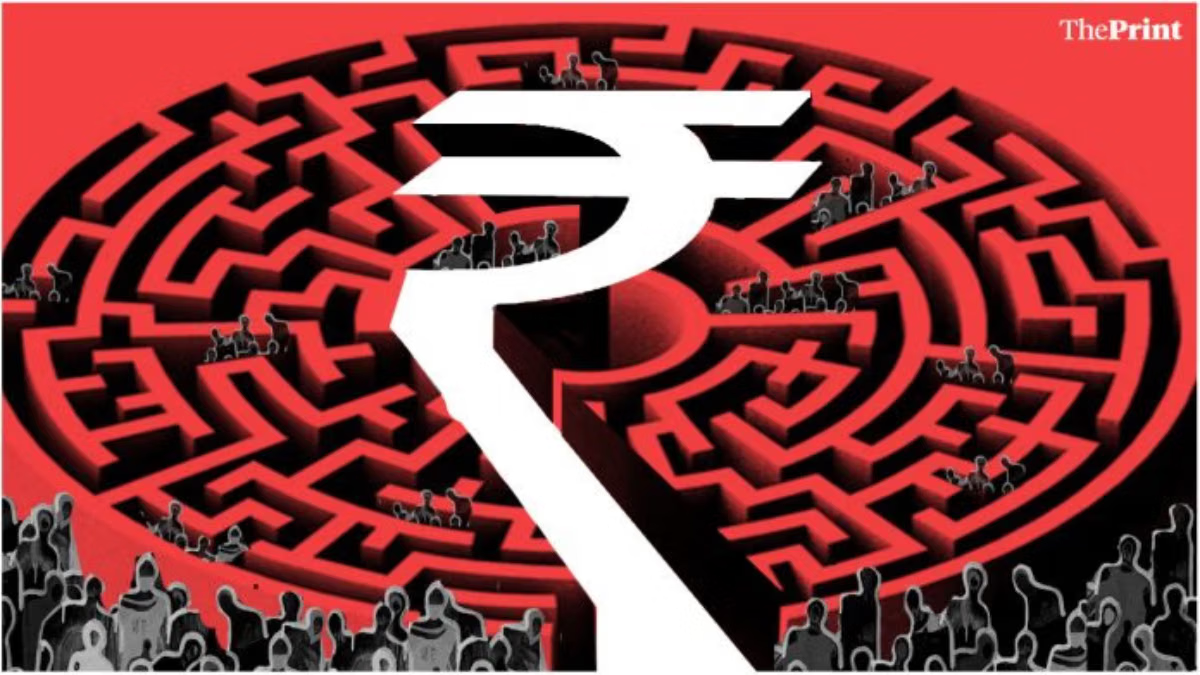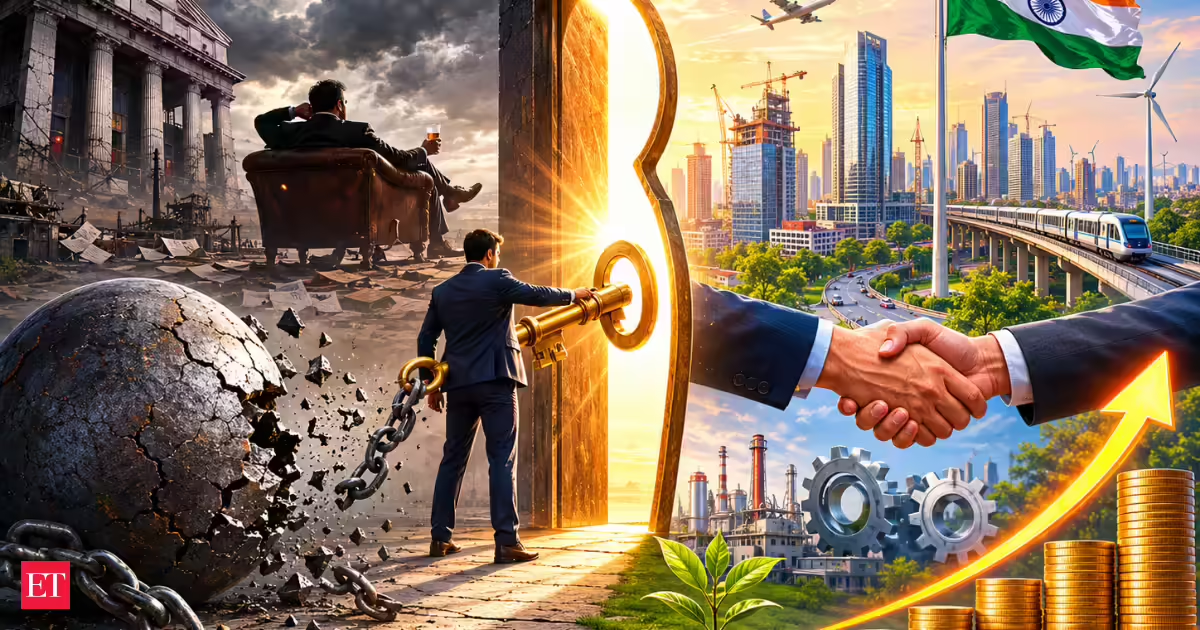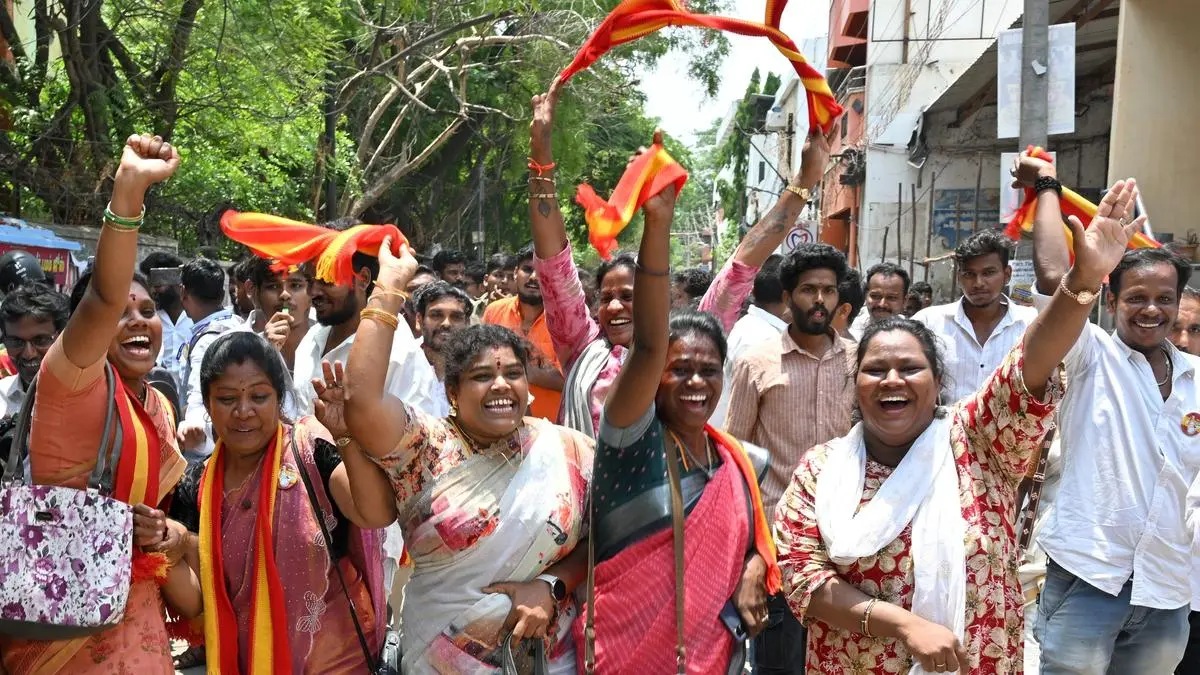
The fully democratic Indian political system sees a direct and negative connection between economic reforms and losing elections. The truth, however, is that this is a myth
| Photo Credit:
Once again, India’s economic non-performance, or rather industrial non-performance, has become a subject of intense debate. Specifically, people talk of the need for reform without saying which market they are talking about — labour, product or financial. Nor do they seem to know that much of what is regarded as reform has already been done since 1993. Slowly, yes but done.Truth be told, there is a great deal of ignorance in the public discourse on the economy. As Kaushik Basu once famously wrote, while no one says a word about aircraft design, everyone comments on economic policy design and implementation.So what’s the reason for our slow pace of industrialisation which has locked us out of the world economy and its supply chains? And what little there is, is so heavily dependent on imports.And this leads to a more uncomfortable question: Can a country have rapid industrialisation without an undemocratic supporting structure? A structure that allows high returns to capital via massive state sponsored financial support and low returns to labour via complicity in keeping wages down?We all know the answer and it’s a big no. It doesn’t matter whether it is the US and Europe in the 170 years from 1760 to 1930 or East Asia from 1960 to 1990 or China since 1980. The story is the same. Very little or no democracy and high growth rates.We all also know that the fully democratic Indian political system sees a direct and negative connection between economic reforms and losing elections. The truth, however, is that this is a myth fostered by the Left in the wake of the 1996 defeat of the Congress. The reform of removing industrial licensing went straight up the Left’s nostrils because it reduced the bargaining power of its trade unions.Reforms or inflationBut the fact is that the Narasimha Rao government didn’t actually do all that much reform in the real sector, certainly not enough to have lost an election. True, it abolished industrial licensing but that created more jobs and incomes. So why was it voted out?Few know this but nearly all of the reforms between 1992 and 2015 have been in the financial sector. These had no political impact. In fact, they brought down interest rates and helped generate a massive housing and insurance finance boom. So why were elections lost?The product markets had been in need of some regulatory tweaking especially on compliances. But, for completely unfathomable reasons, as many studies have shown, the governments of Rao, Vajpayee and Manmohan Singh kept dragging their feet. The Modi government has tried but not hard enough.Some say it was inflation that did that government in and this, too, is a widely held political belief. But the causation is weak. Look at the experience.In 1995 inflation was at about 10 per cent, which is high. But in 2009, too, it was at 10 per cent and, in spite of that, the Congress came back to power with 64 more seats than in 2004. In contrast, in 2013 the inflation rate was nearly 11 per cent and the Congress got decimated with just 44 seats. You can find a similar weak correlation or causation in the 1980s also.The simple fact is that we don’t know how people vote and whether they vote rationally. Chances are that people only vote for change when they are thoroughly bored with a government.Which is it then?So if it’s not reforms or inflation that lose governments elections, what’s the problem? Why are all political parties so scared of reforms when they don’t do any electoral damage or inflation which is rarely a reason for losing a general election?A former finance minister once told me that this is the power of successful myths. They become the received wisdom because they seem so very highly likely.In economics this is known as the ‘post hoc, ergo propter hoc’ problem or fallacy. It means “After this, therefore because of this”. Causation is attributed, not proved.This also happens to be the basis of all superstition where, for example, the movement and position of distant planets can affect outcomes of an individual human — but never an animal or a tree or a river.To a large extent, the political scrum is a combination of mythology and superstition that’s used to fool the electorate. The problem in India is that the political parties since 1996 have fooled themselves more than the electorate.Published on June 1, 2026