The research team found that millions of bacteria floating in tiny fog droplets are alive, growing and breaking down pollutants in the air.Show Caption
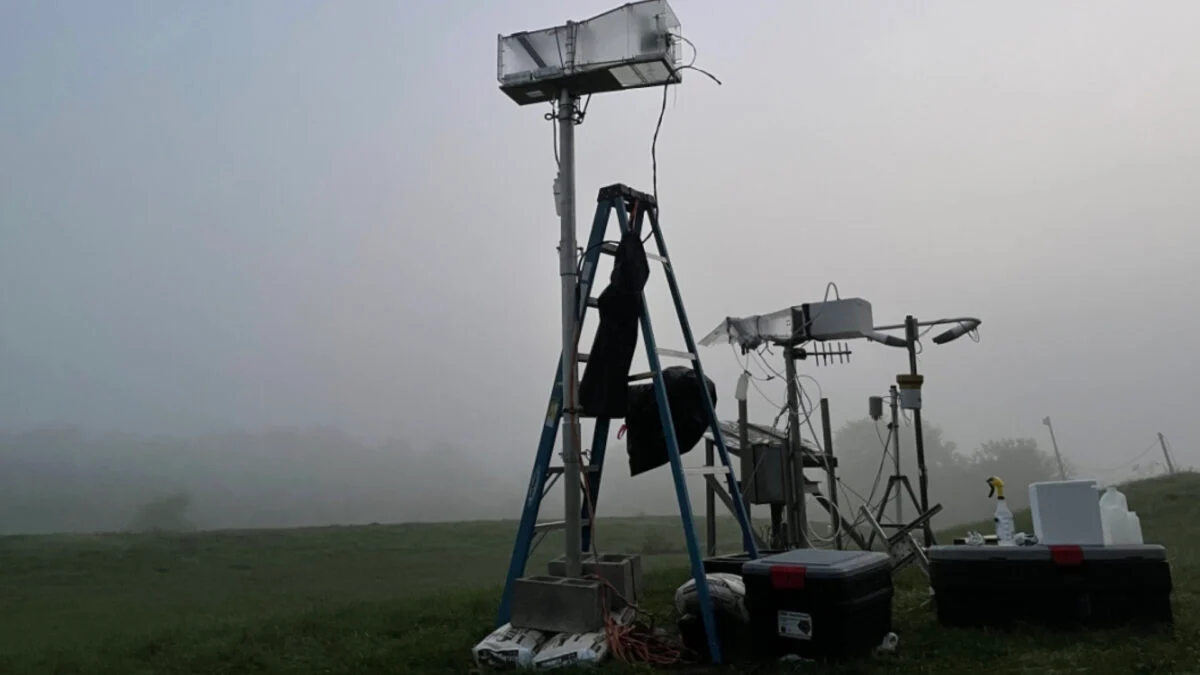
A new study is changing the way we think about fog.Turns out it's not just an amorphous blob of water droplets: "We found that millions of bacteria inhabit ... fog droplets," study co-author Ferran Garcia-Pichel of Arizona State University, said in an email to USA TODAY.In fact, the research team found that bacteria floating in tiny fog droplets are alive, growing and breaking down pollutants in the air."Not only are they there, they are actively consuming atmospheric pollutants, and likely also growing in them. Fog is a habitat," he said.Garcia-Pichel researches fog because "liquid water is a necessity for life," Garcia-Pichel said. "Of all sources of liquid water on Earth, fogs and clouds represent the only form of stable liquid water in the atmosphere. If there is active life in the atmosphere, it has to be there. And fogs are closer to us than clouds."Although scientists already knew that bacteria drift around in the air and clouds, what they do there remains somewhat of a mystery − especially in fog.“There's very limited knowledge about what kinds of bacteria are present in fogs, which are like clouds at the ground level,” cloud researcher Thi Thuong Thuong Cao, the paper’s lead researcher, said in a statement.Is fog 'alive'?"Fog is not alive, in the same way that the ocean is not alive, but like it, it contains active forms of life," Garcia-Pichel told USA TODAY.Why study fog?There are myriad reasons to do so, Garcia-Pichel explained:Fog is a widespread atmospheric phenomenon that impacts the land where it forms.It can reduce visibility for transportation or air traffic.It can become a source of water that drives entire ecosystems.It can be a source of drinking water for some communities.It can allow certain atmospheric chemical processes. In this study, a research team from Susquehanna University in Pennsylvania and Arizona State University sampled fog droplets that came from 32 weather events in Pennsylvania over the span of two years.One bacterial group stood outAccording to Arizona State, one group of bacteria stood out from the fog samples: methylobacteria. Methylobacteria consume simple carbon compounds, including chemicals such as formaldehyde. Formaldehyde is a common pollutant that adds to ozone smog and harms human health.'An astounding amount of life'According to a statement from Arizona State University, the team found that fewer than 1% of fog droplets contain bacteria. But averaged together, they represent an astounding amount of life.“When you take all of the droplets together, the concentration of bacteria is the same as in the ocean,” says Garcia-Pichel. A thimble’s worth of fog water has some 10 million bacteria.The researchers say more studies are needed to understand whether fog’s role in cleaning the air is more beneficial to people than its potential as a water source.“If we harvest fog, we are getting rid of our little friends in the air,” Garcia-Pichel said. “We don’t know if that’s going to make a big impact or not, but we should be considering that.”What's new and different about the study?"I think the most important part is that we chose to study radiation fog," Garcia-Pichel told USA TODAY. "This type of fog forms under stagnant air conditions, which allowed us to sample bacteria in them before, during and after its formation precisely."According to the National Weather Service, radiation fog is a very common type of fog throughout the United States. It is most prevalent during the fall and winter, and forms overnight as the air near the ground cools and stabilizes.Garcia-Pichel explained: "This was so far a big problem when studying other types of fogs or clouds. [Studying radiation fog] gave us an advantage to detect local microbial processes, without having to worry about them being 'gone with the wind.'" Doyle Rice is a national correspondent for USA TODAY, with a focus on weather and climate.