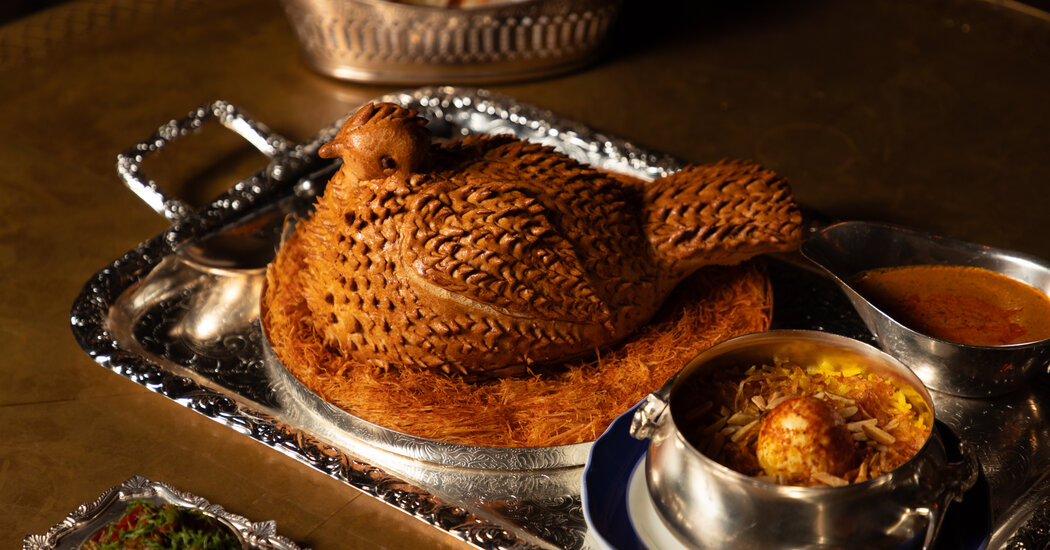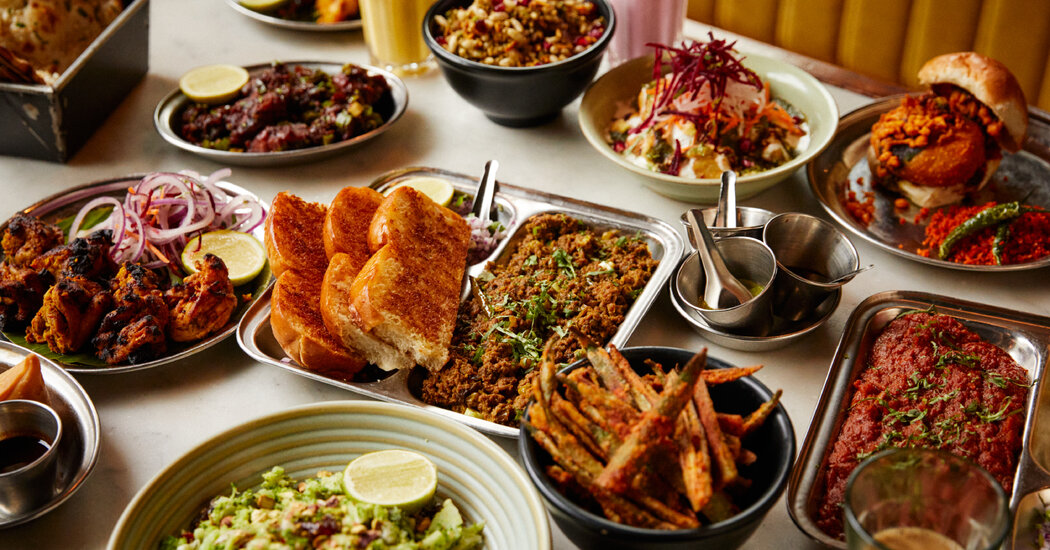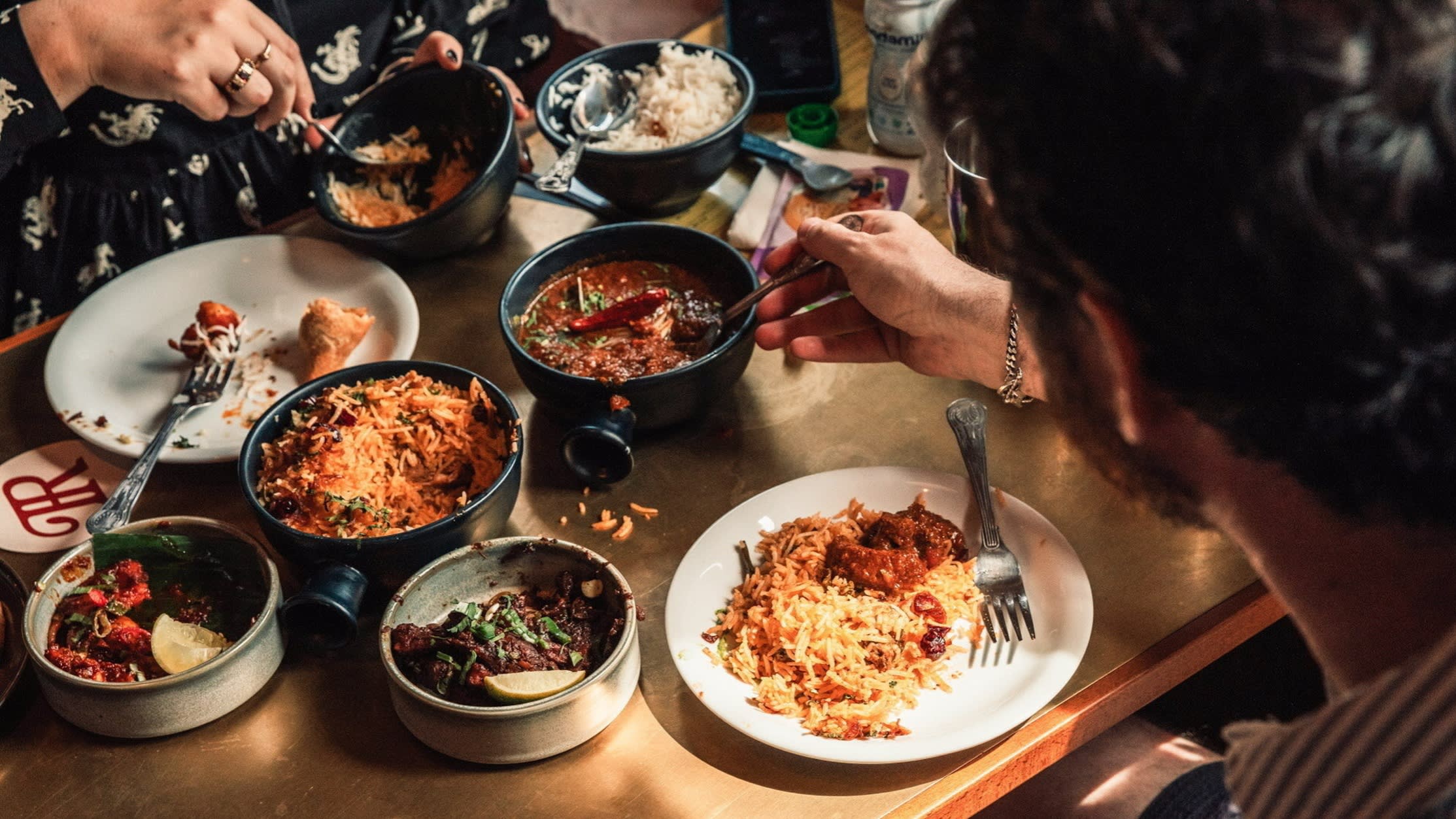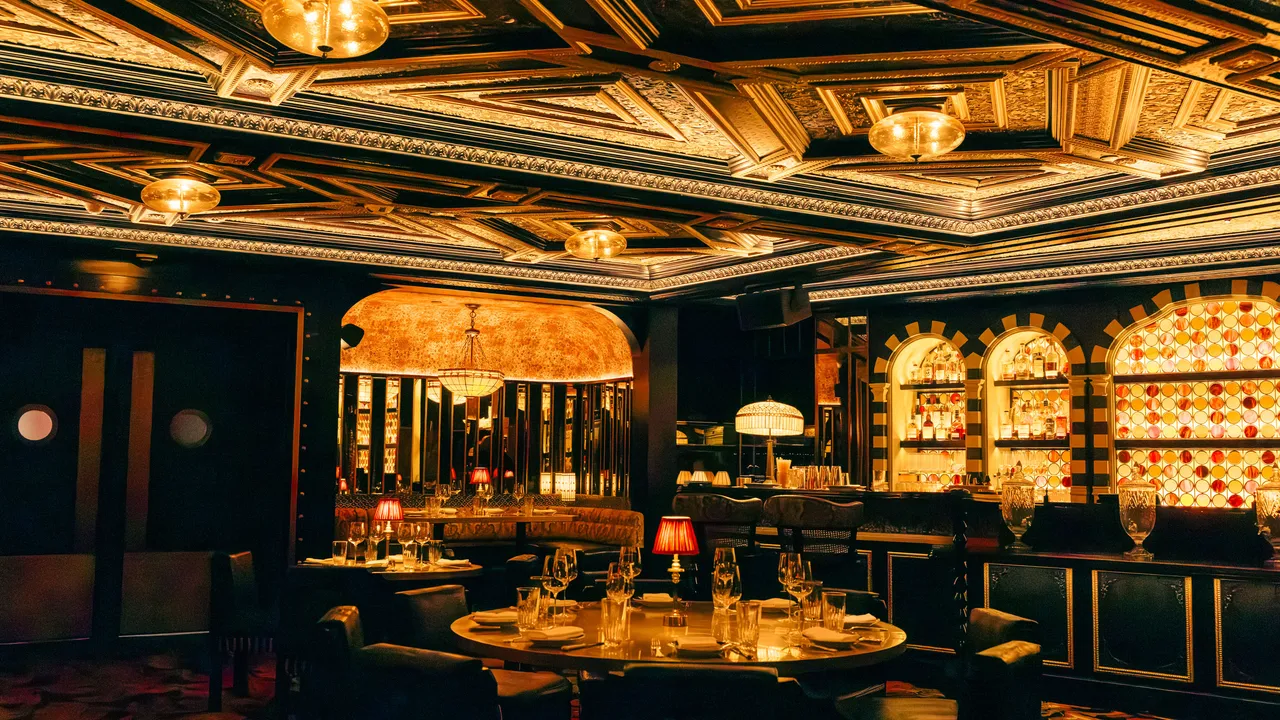
There is perhaps no restaurant in New York City right now more comprehensively opulent than Ambassadors Clubhouse, the ultra-luxurious Punjabi spot that occupies the ground and subterranean floors of the film company A24’s NoMad headquarters. The original restaurant, which was opened in Mayfair, in 2024, by the siblings Jyotin, Karam, and Sunaina Sethi, was declared “a maximalist sanctuary” by the Standard. It was a return to big swings and mega-production by the Sethis’ J.K.S. group, which operates some thirty-five venues internationally, including their crown jewel, Gymkhana, the first Indian restaurant in London to hold two Michelin stars. The New York opening of Ambassadors Clubhouse—talk about your big swings and your mega-productions—is the group’s third play in its ongoing, multipronged bid for America: an outpost of Gymkhana opened last year, at the Aria hotel in Las Vegas, and a line of shelf-stable Gymkhana-branded sauces recently appeared on Whole Foods shelves nationwide. Ambassadors Clubhouse, with its extravagance and its storytelling, seems to be where the ambition lives.The inspiration is the party mansions of northern India’s Punjab region, and more specifically the summer house of the Sethis’ grandfather: an ambassador, the ambassador, the restaurant’s namesake and patron saint. His portrait, stern and majestic, hangs broodingly over the stairs; elsewhere on the walls, the art ranges from the Baroque to the bro-tinged, with turbaned figures sharing space with Ryu from Street Fighter. The effect is dizzying, and certainly immersive: part colonialism reclaimed, part very good joke; a little bit garden party, a little bit sex party. Since its opening, a few months ago, the restaurant has been nearly impossible to book, though if you’re particularly lucky, and you nail the timing, you might be able to get a walk-in seat in the bar area. It’s at street level and, while still atmospheric as hell, slightly less dripping in ambience than the subterranean dining room. Downstairs is the sanctum: a dark-walled room of such operatic elaborateness—tiger-print curtains, Lincrusta ceilings, Tiffany chandeliers, paisley carpeting in profusion—that the eye struggles to alight. The governing logic is spectacle: the room, the menu, the entire experience.The menu is vast, and somewhat conceptual—dishes are divided, at times, by type (a section for papads and chaat), but then also by size (“bitings,” or finger foods), or by cooking method (baked in the tandoor, grilled over charcoal, crisped up in cast-iron tawa skillets, and so on)—and the food is specifically, celebratorily Punjabi. This restaurant, like so many recent high-profile openings, is part of the genuinely thrilling wave of South Asian restaurants arguing for regional precision, pushing back against decades of commodity Indian cuisine, the culture- and geography-flattening tikka masalas and garlic naans. Still, it was primarily immigrants from Punjab, and the restaurants they opened in neighborhoods like the East Village, or Richmond Hill, in Queens, who set the standard for what are now New York City’s Indian-restaurant clichés. The result is that much of the menu at Ambassadors Clubhouse is familiar in description, if not always in execution. The restaurant is particularly proud of its tandoor, a coal-burning oven that is, it turns out, the only one of its kind in the city (most tandoors ’round these parts run on gas). The oven lends an exquisite depth to everything that passes through it—a roundness and tang, a kiss of smolder. It’s there in the tiles of paneer, house-made from buffalo milk and springy-soft, bathed in a tomato-and-cashew sauce. It chars the shells of prawns, slightly husky with the scent of carom seeds and so spectacularly massive that, as they were set on the table, I briefly, disorientingly thought they were boneless chicken breasts.The kitchen extends the room’s theatricality to the plate: each dish, almost without exception, is presented as an event. A tangy kachori chaat, bright with beetroot yogurt, arrives inside a semolina puffball the size of a regulation slow-pitch softball, which cracks open at the lightest spoon whack; a deftly spiced paan patta chaat with fried betel leaves and tender black chickpeas is piled high as a haystack and glimmers with sauces. Even the breads—various naans and rotis, a flaky whole-wheat lachcha paratha—are gorgeous, chewy and yeasty, many of them slick with clarified butter, presented, almost sculpturally, in oval baskets. A “seafood tower” involves seafood, and is certainly a tower, but, unlike the chilled-shellfish subtlety of the American steak-house staple, here it’s more of a vertical sampler of dramatic, snacky appetizers: shrimp kofta pressed around soft-boiled quail eggs; a crab-and-egg scramble folded in a savory lentil pancake; gently cooked scallops served in their shells, under herbaceous lashings of parsnip chutney. None of your standard-issue tetrahedral samosas here: they’ve been reimagined as “seven layered” things—the layers are wings of crisp pastry, which radiate out from a pocket of spiced aloo-and-pea filling like sunbeams, or the ruffled pages of a book.But the samosa, for all its beauty, didn’t quite land for me as a samosa: it was so much wrapper, just a little bibble of filling. Nearly every dish was nice, and quite a few were wonderful, but it felt weighty—in a moral-of-the-story sort of way—to realize that the most marvellous, by a mile, was the relatively humble black-lentil dal, which simmers for hours with aromatics and is finished with oodles of butter and cream. It arrives in an unadorned bowl, ungarnished, without flourish or fanfare. Gold leaf appears often: a square of it floats atop the exquisite sauce of a veal-cheek korma, it gilds the whole-cooked lobster, it speckles the surface of the postprandial masala chai. And yet, the lighting in the room is so warm, the air itself so aureate, that the gold nearly vanishes into it—I only noticed the garnish, really, when reviewing my photographs afterward, my iPhone camera’s automatic color correction revealing all the luxury that the room swallowed whole.At one point, I asked a server about Patiala Chicken Pakode, a dish listed under “Bitings” and described as arriving with something called Punjabi ranch. His face brightened; this, he confided, leaning in, was one of the most underrated, most slept-on items of the entire menu, and he only wished more people would order it. What arrived was chicken nuggets with ranch dressing. Delicious, to be sure—the buckwheat-flour breading was complex and savory, and beautifully spiced; there was a bright chutney on the side, and a vivid-red tadka chili oil—but boneless bites of fried chicken with a dipping cup of ranch can really only ever be one thing. Spectacle, in the end, is both an invitation and a sort of armor. Our server had steered us, from the start, toward the reassuring and the familiar: butter-chicken “chops,” legs partially deboned and dramatically presented in a mild cashew cream sauce; a basket of garlic naan. Neither was anything less than good. But in a moment when New York’s South Asian restaurant scene has never been more interesting or more varied—including, but in no way limited to, Semma, by now practically old guard, or the newer Musaafer, recently arrived by way of Houston, which makes a comparably enormous investment in design—Ambassadors Clubhouse, which has staked its identity on the grandeur of regional conviction, seemed to guide me persistently toward its most generic gestures. Was our server having us on, with the chicken pakode? Was I, so fixated on ordering both correctly and adventurously, just not thinking critically? The fault, I suspect, belongs to all of us. ♦
All That Glimmers at Ambassadors Clubhouse
Theatricality goes only so far at the ambitious new restaurant from the group behind London’s Gymkhana.
1,225 words~6 min read