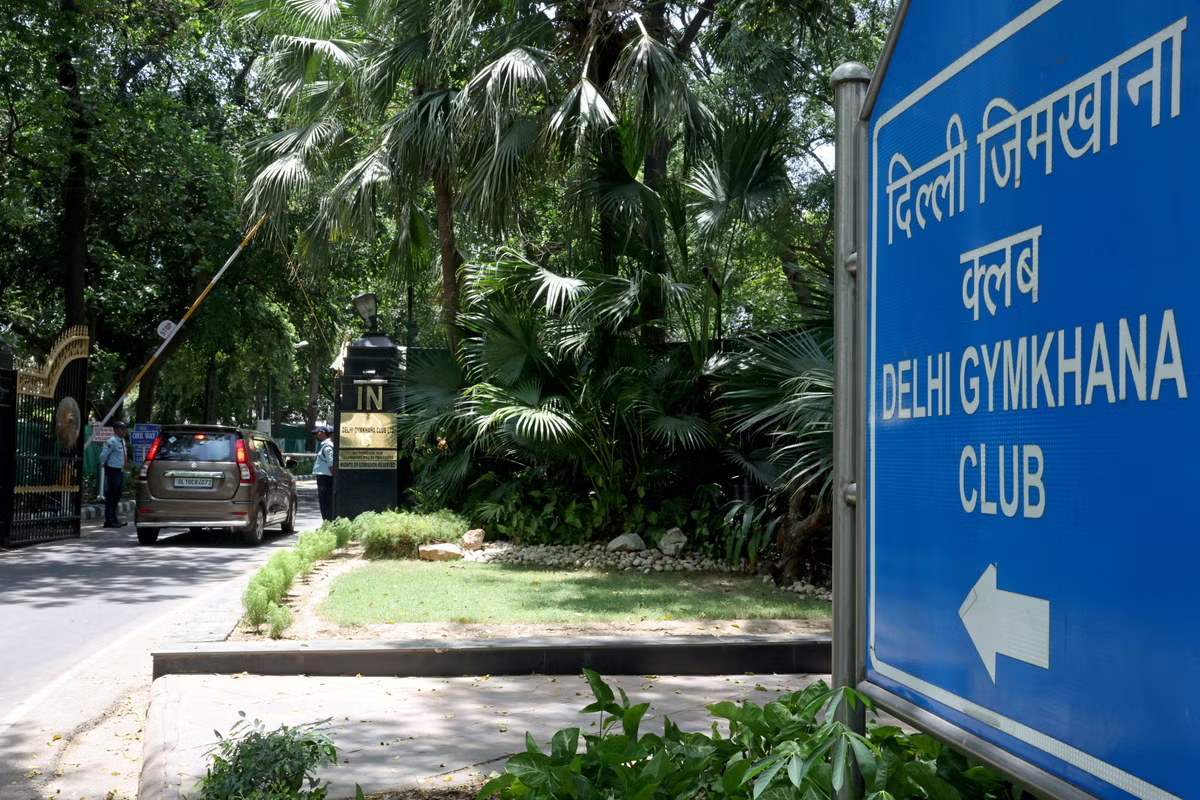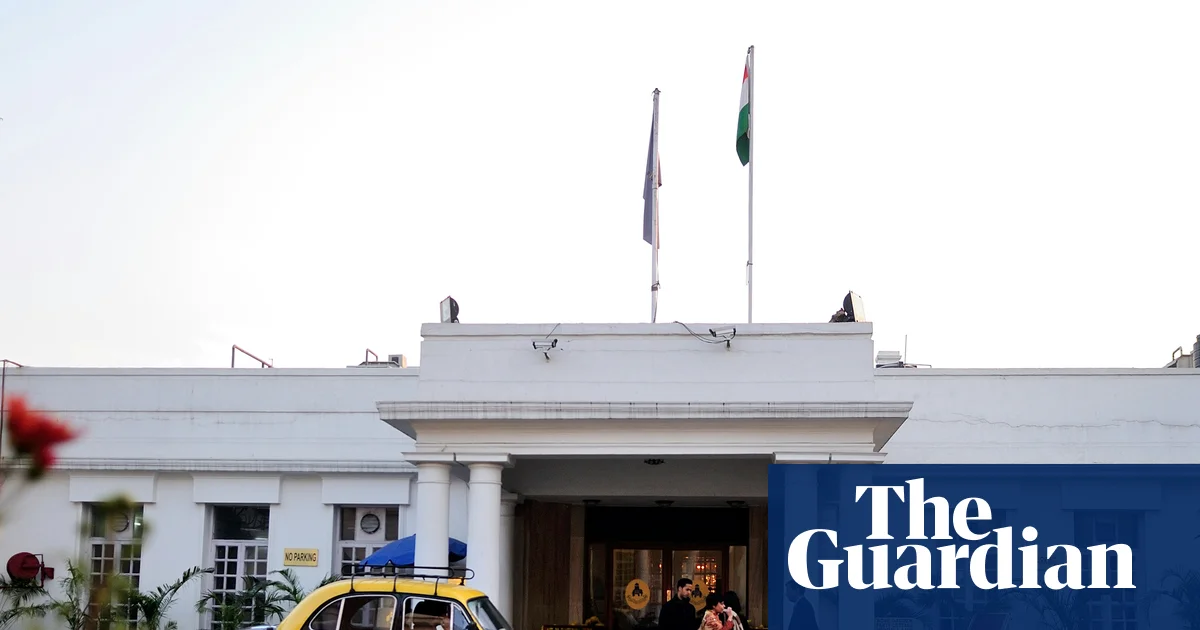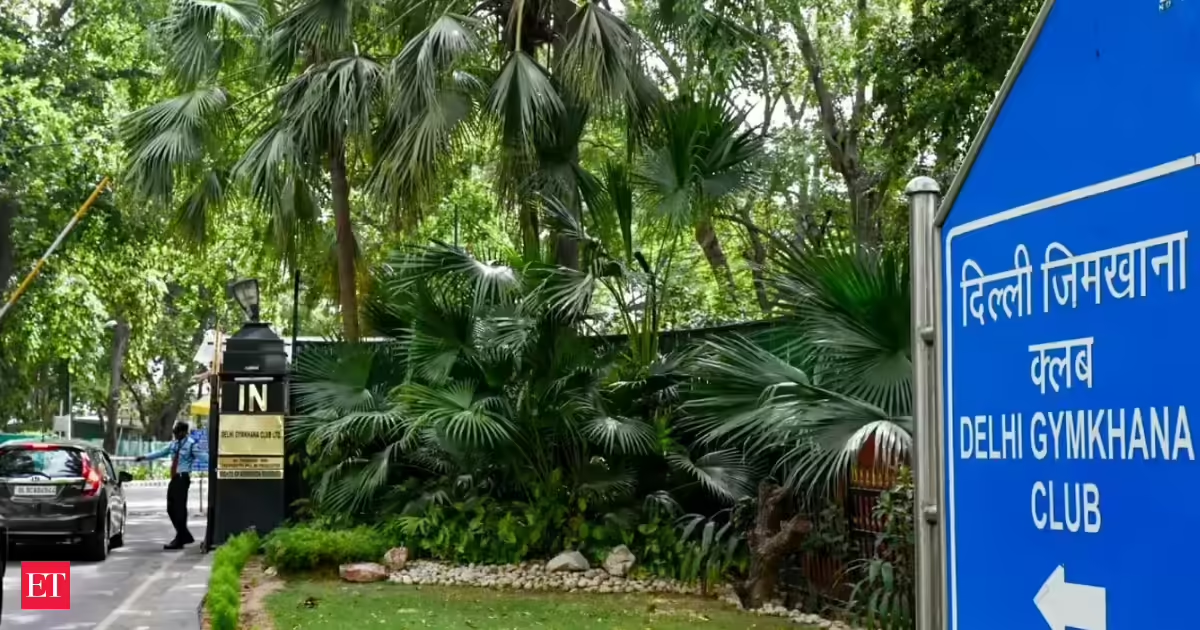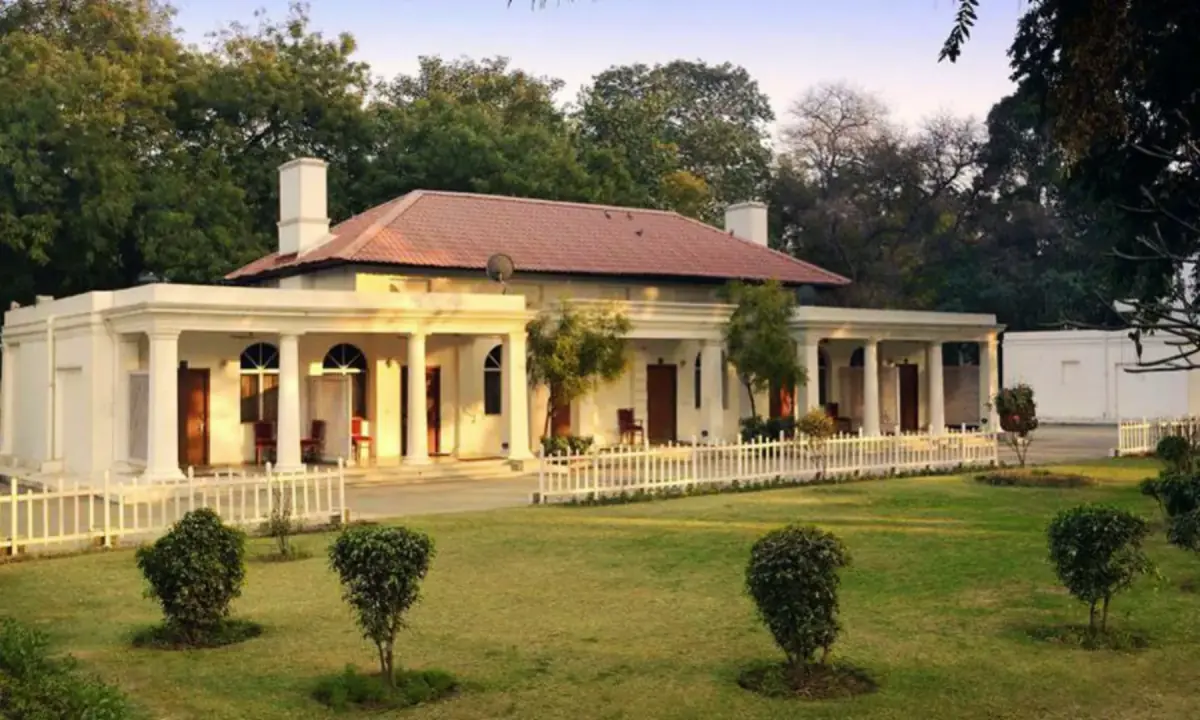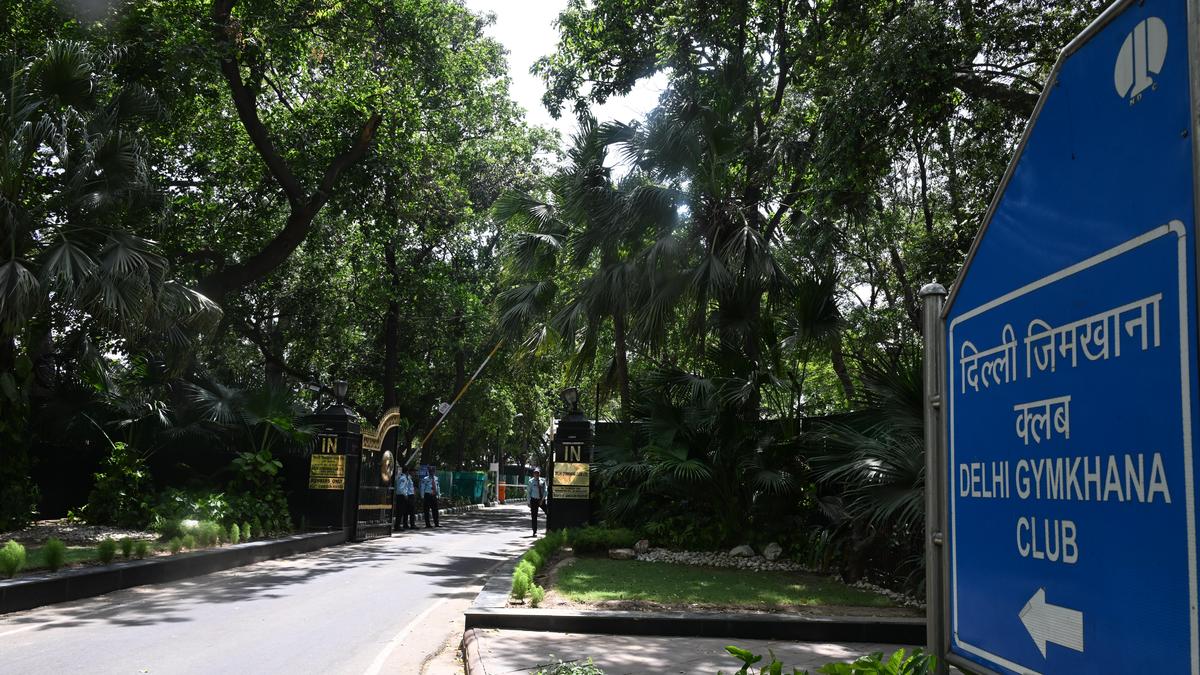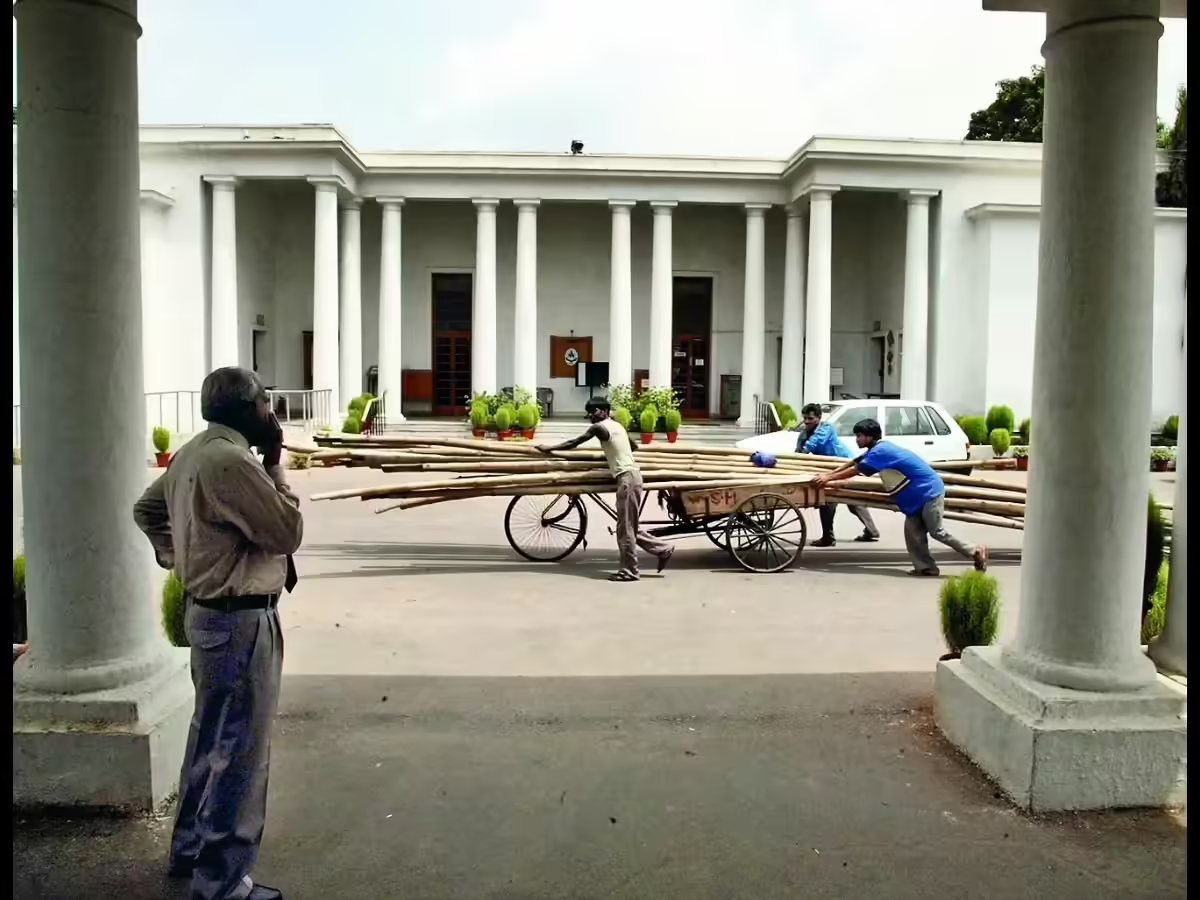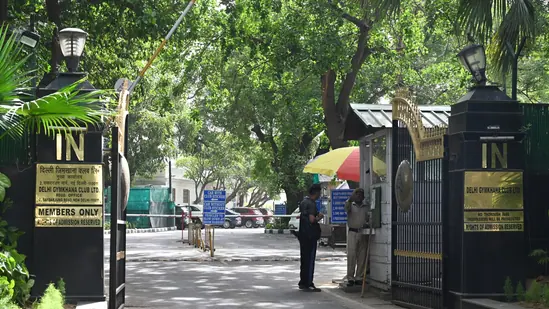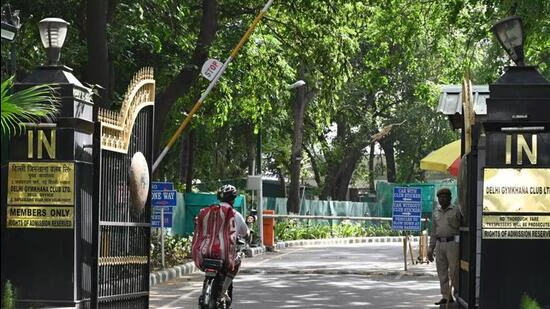
The proposed takeover of the iconic Gymkhana Club by the government raises questions about how a democratic state exercises its powers over leased land, defines “public good”, interprets “security”, and negotiates the complicated inheritance of India’s colonial past.The entire Lutyens’ zone occupies thousands of acres of some of the most valuable land in India. (HT picture)To begin with, there can be little doubt that the government, as the unquestionable landlord of leased land, possesses the legal authority to resume such land under certain conditions. On that count, the government’s right cannot be disputed.But while the right may exist, the reasons advanced for exercising it can be discussed. Governments in a democracy are not monarchs issuing decrees from the ramparts of certainty. They are accountable entities whose actions can be debated. In the case of the Gymkhana Club, the invocation of broad and undefined expressions such as “security” and “public good” could, in my view, benefit from greater transparency.Also Read: Just Like That: The all powerful role of coteriesState security is, of course, of paramount importance, but one can only hope that “security” is not a convenient omnibus phrase under which almost any executive action can be justified. As regards, “public good”, if the government genuinely believes that this requires the resumption and redevelopment of prime urban land occupied by elite institutions, then why should the Gymkhana Club alone become the target?The entire Lutyens’ zone occupies thousands of acres of some of the most valuable land in India. Ministers, Members of Parliament, judges, senior bureaucrats, and high-ranking armed forces personnel often reside in sprawling bungalows spread over three to five acres each. In a capital city officially designated as nearly 50 per cent slum, where millions live in cramped and unhygienic conditions, the question naturally arises: would not the public good be better served by redeveloping the entire Lutyens zone for low-income housing?Once this process begins, where will it stop? Will the government next take over the India International Centre, the Habitat Centre, the Delhi Golf Club, the Defence officers club at Dhaula Kuan, the Air Force Club, or even the Delhi Race Club? Each of these institutions occupies valuable urban land. Each caters, in one form or another, to a privileged segment of society. If exclusivity itself is the criterion for governmental intervention, then logically the principle must be applied consistently.Does the Gymkhana Club represent a lingering Macaulayan legacy of English-speaking elitism inherited from colonial rule? There is some truth in that criticism. For many decades after Independence, clubs established under British rule were run by an anglicised elite which was a creation of the Empire. The mental colonization of the erstwhile privileged ‘natives’ was visible. In the early 1990s, I was myself denied entry in Gymkhana for not being appropriately dressed even though by the yardstick of my own culture, I was formally dressed in a starched pyjama and silk kurta with closed Peshawari sandals, while others could walk in jeans and tee-shirts. I vociferously protested, and I am happy that the colonial dress rules of the Club were changed.Similarly, the Bengal Club in Kolkata—which ironically used to be the residence of Macaulay—opened its doors to Indians only in 1959, more than a decade after Independence, and an Indian did not become the president of the Club until seven years after that! In Mumbai, another leading club kept this notice outside its premises for many years after Independence: DOGS AND INDIANS NOT ALLOWED.There is much that is wrong with all this. There has been change, but perhaps it’s pace needs to be increased. This being said, it must be accepted that every club by its very nature is elitist. A club exists precisely because there are entry barriers. Whether those barriers are financial, professional, social, or institutional, the consequence is identical: inclusion for some and exclusion for others. The Constitution Club, for example, is among the most posh and exclusive clubs in Delhi, yet its membership is restricted primarily to MPs and former MPs. Access there is determined not by colonial pedigree but by political office. The question, therefore, is not whether clubs are elitist—they inevitably are—but whether they function within the law, whether they are responsibly managed, and whether they can evolve with changing social realities.Let us also accept that unseemly allegations of financial mismanagement and administrative opacity have often surfaced in the functioning of the Club. There are legitimate criticisms regarding its membership rules, especially the preference historically accorded to dependents and family succession. Such practices deserve review in a democratic society committed to wider access and fairness.Also Read:Just Like That: Why deny Hindu civilization existed to counter political Hindutva?But the government has already assumed substantial control over the club’s management. Given this, could there not have been a process of dialogue with members and employees aimed at reform rather than obliteration? Could the club’s colonial orientation not have been gradually transformed through policy changes, greater inclusiveness, transparent governance, greater porousness to India’s civilizational heritage, and revised membership norms? There is wisdom in the old English phrase: one should not throw the baby out with the bath water.My only concern is that the Gymkhana Club should not become a symbolic casualty in a larger political project that remains insufficiently articulated. If the government’s real concern is public good, then let there be a comprehensive and transparent urban policy applied equally to all forms of privilege in Lutyens’ Delhi.(Pavan K Varma is an author, diplomat, and former member of Parliament (Rajya Sabha). The views expressed are personal)
Just like that: The curious case of Delhi’s iconic Gymkhana Club
Does the Gymkhana Club represent a lingering Macaulayan legacy of English-speaking elitism inherited from colonial rule? | India News
919 words~4 min read