Conducting a secure digital examination for over 22 lakh aspirants is unlike any routine recruitment exercise.
| Photo Credit: Getty Images/iStockPhoto
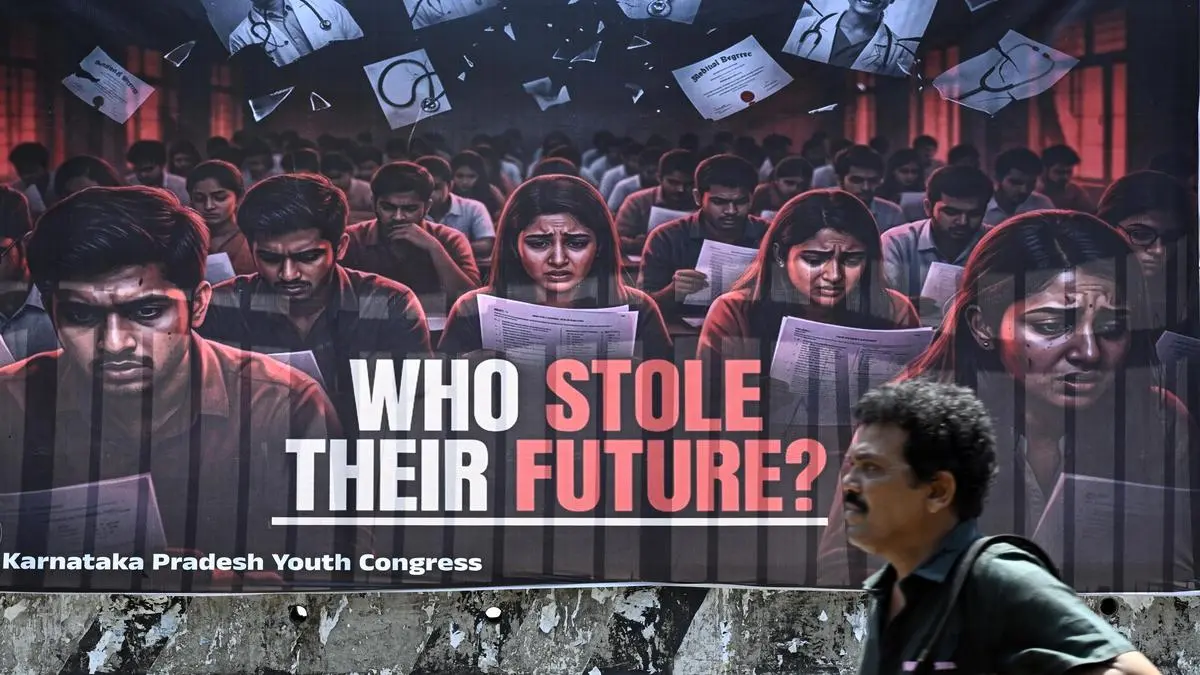
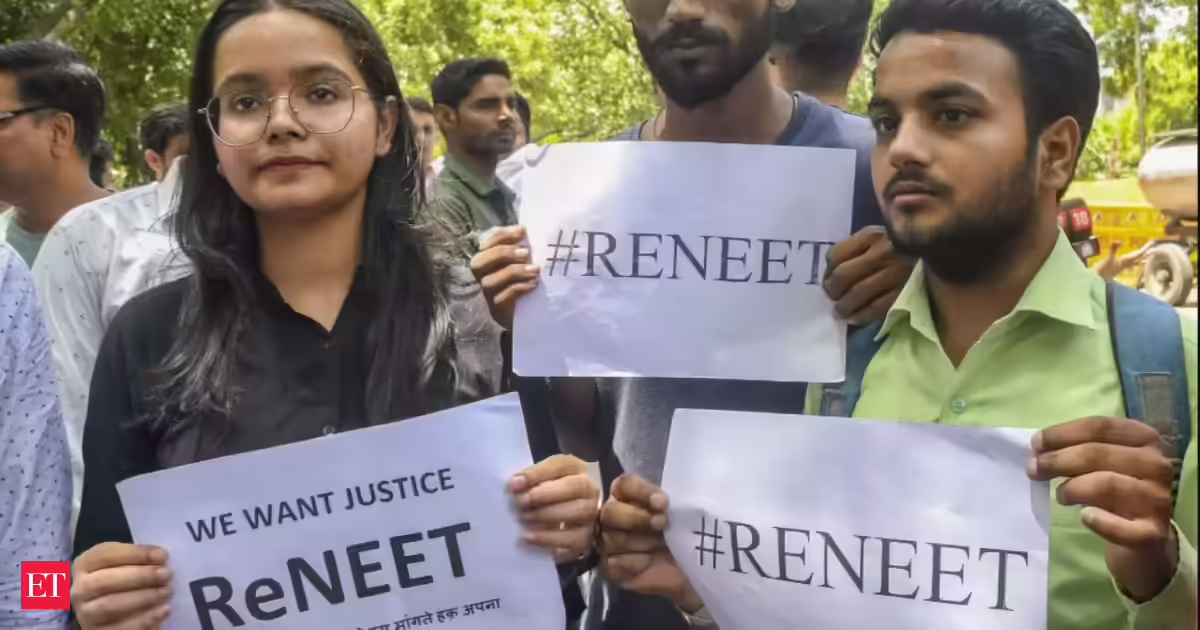
The decision to shift the National Eligibility-cum-Entrance Test (NEET) to Computer-Based Testing (CBT) from 2027 onwards may appear to be a logical response to the recurring credibility crisis in India’s examination system. After the cancellation of NEET-UG 2026, the government’s push toward digital examination delivery sends a strong message that the vulnerabilities of conventional paper-based testing can no longer be ignored. But while technology may offer part of the answer, the larger question remains: is India truly prepared for this transition?On paper, CBT addresses many of the weaknesses associated with traditional examinations. The risks linked to printing, transporting, storing and physically distributing question papers can be significantly reduced through encrypted digital delivery. Real-time monitoring, stronger access controls, and biometric authentication can further strengthen the security framework.Yet the assumption that simply replacing OMR sheets with computer terminals will automatically create a secure examination ecosystem may be overly optimistic. The real challenge lies not in software, but in infrastructure.Conducting a secure digital examination for over 22 lakh aspirants is unlike any routine recruitment exercise. It demands operational consistency, surveillance discipline, infrastructure reliability, and controlled environments at a scale India has rarely attempted.ChallengesToday, India’s computer-based examination infrastructure remains uneven. While some centres are professionally managed with robust systems and strong operational controls, many others continue to function out of generic educational institutions, temporary computer labs, or facilities that were never designed for high-stakes competitive examinations.In national examinations, consistency matters as much as technology. A single weak examination centre can raise questions over the credibility of the entire process. This is where Bihar’s experience offers an important lesson. Over the past few years, Bihar has quietly developed a more structured approach through its Aadarsh Pariksha Kendra initiative. These are dedicated, standardised examination centres built specifically for competitive examinations rather than improvised venues assembled for periodic use. The significance of this model lies less in branding and more in design philosophy.Instead of adapting existing infrastructure and layering security measures onto it, these centres are built with examination integrity at the core. Controlled entry-and-exit architecture, biometric verification, integrated surveillance, central monitoring capability, and purpose-built candidate movement design together create a far more predictable and secure examination environment. That is the larger takeaway.India’s examination reform debate often focuses on the visible symptoms — paper leaks, impersonation, surveillance failures, malpractice — but far less on the structural conditions that make such failures possible. Technology can strengthen examination security, but it cannot indefinitely compensate for weak infrastructure and fragmented execution.A secure exam is not merely about encrypted question delivery. It is equally about who controls the centre, how access is managed, whether surveillance is standardised, how candidate movement is regulated and whether operational discipline is uniformly enforced. Bihar’s experiment shows that a different model is possible.As India prepares for a digital examination future, the conversation may need to move beyond whether CBT is the right format and toward whether the country should begin building a standardised national examination infrastructure framework. Such a framework could eventually support not just NEET but other large examinations such as JEE, CUET, SSC, railway recruitment, banking examinations and public service commission tests. Building such capacity will require policy support, investment, and likely collaboration between public institutions and experienced private players under clear regulatory oversight.For decades, India has treated examination infrastructure as a logistical arrangement. Perhaps it is time to treat it as national public infrastructure. Because what is ultimately at stake is not merely the conduct of an examination. It is public trust in fairness itself.The writer is Whole-time Director at Innovatiview India Ltd. Published - May 31, 2026 12:00 pm IST