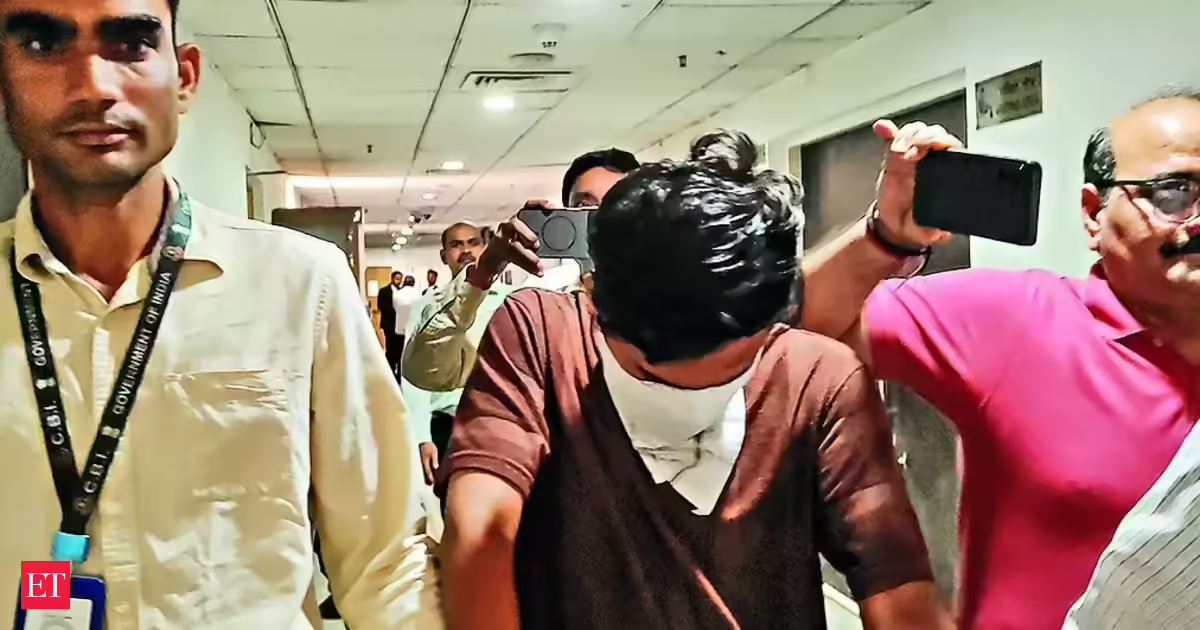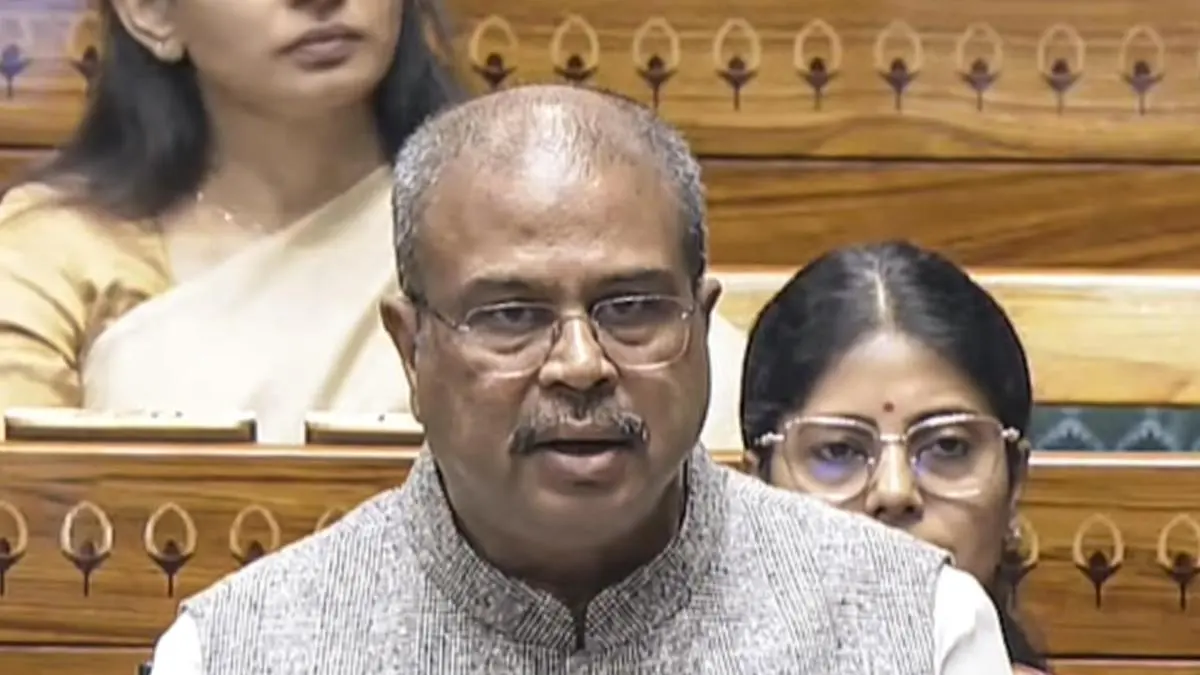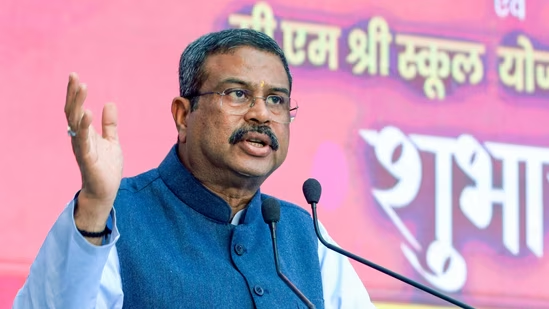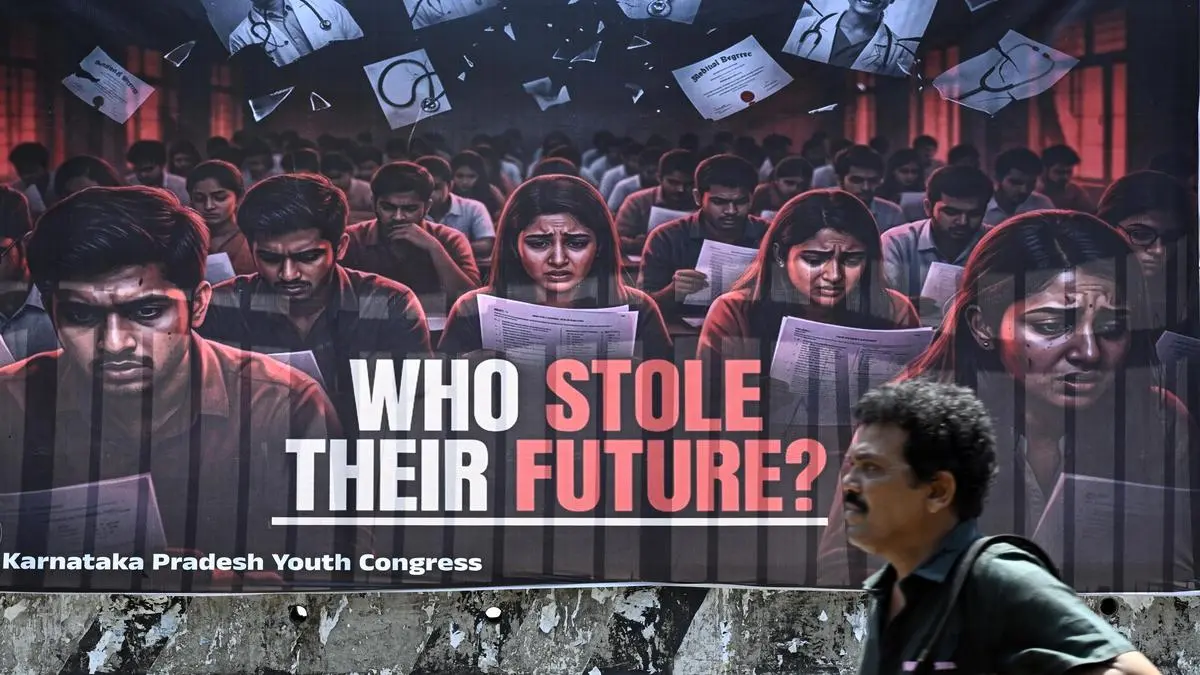
The Union government will transition the National Eligibility-cum-Entrance Test-Undergraduate (NEET-UG) to a computer-based test (CBT) next year, replacing the traditional pen-and-paper format to curb paper leaks, education minister Dharmendra Pradhan said on Friday, as he also announced June 21 as the date for the re-examination for those who took the NEET-UG this year.The Union government will transition the National Eligibility-cum-Entrance Test-Undergraduate (NEET-UG) to a computer-based test (CBT) next year (Representative phto)The National Testing Agency’s (NTA) on May 12 cancelled NEET-UG 2026 examination nine days after it was held after a widespread leak was confirmed by agencies. Pradhan, in his first remarks on the leak, said the government accepts responsibility for a “breach in command chain,” despite following recommendations from the Radhakrishnan committee — a seven-member panel established after the 2024 leaks to strengthen the agency.Admit cards for the June 21 re-examination, to be held in paper-pen format, will be issued by June 14, Pradhan said. Candidates will receive 15 extra minutes and can reselect their preferred exam cities.The shift to a digital format, from next year onwards, will require the NTA to upgrade its technological infrastructure and train personnel, experts said.Pradhan noted the Radhakrishnan committee made a “strong case” in October 2024 for moving to CBT mode, calling it the “sure way forward” to prevent leaks. A panel member, who spoke to HT and asked not to be named, welcomed the shift, adding: “Union education ministry and NTA also need to build strong infrastructure and work continuously for capacity building for smooth transition to CBT mode from next year.”Then-human resource development minister Prakash Javadekar proposed a similar online testing shift in 2018. The plan was shelved after the health ministry objected, citing inadequate computer access for disadvantaged candidates, score normalisation complexities, and the National Medical Commission (NMC) Act’s requirement for a “uniform” examination.Officials in the health and education ministries did not respond to queries for comment.Pradhan said that CBT is “relatively a bit more proof-protected and secure” compared to the traditional OMR-based format. While acknowledging that technology brings its own set of challenges—such as the evolving nature of cybercrime—he said, “...There is a challenge. But we have to trust our country’s system. And comparison—this is a matter of improvement.”NEET-UG currently requires candidates to answer 180 multiple-choice questions on OMR sheets. Under CBT mode — already used for the Joint Entrance Examination (Main) — students select answers on a computer, allowing them to review and modify responses during the test.The Radhakrishnan committee report called physical question papers “one of the weakest links” that “increases potential leakages” due to third-party logistics.A panel member said pen-and-paper exams are no longer sustainable, urging the creation of permanent, accountable NTA staff instead of “transient people running the show.” The panel’s central recommendation to replace contractual workers remains largely unimplemented. The NTA still relies on 43 contractual employees; only three of 16 newly created joint director posts have been filled.Ashish Mittal, director at Innovatiview India Ltd, a Noida-based technology provider working with the NTA since 2019, said executing a digital exam for 2.25 million students requires state-controlled infrastructure.“Public-private partnerships can play an important role in developing and expanding such infrastructure at a national scale,” Mittal said. “The credibility, process maturity, and execution capability of service providers should remain central to the evaluation and selection process.”Speaking to HT on Friday, NTA director Abhishek Singh saidthe agency currently has the capacity to test 150,000 candidates per shift. “We are aiming to build infrastructure for holding CBT exams in one shift for 10 lakh (1 million) students in one shift,” Singh said. “Currently, our sole focus is on holding re-examination of NEET on June 21. We will work towards improving the infrastructure after that and conduct NEET-UG 2027 in multiple shifts.”The digital shift means adapting preparation strategies, students said.“Digital format could sharply reduce the risk of paper leaks, it would also mean adapting to screen-based problem-solving, without the ease of underlining key points or revisiting marked questions in the same way as on paper. We may also lose the advantage of relying on repeated question trends from previous years,” said Ananya Tripathi, an aspirant from Prayagraj, Uttar Pradesh.The May 12 cancellation occurred after 120 questions from a “guess paper” — a compilation of probable questions by experts — overlapped with the actual exam. Pradhan said the government received a complaint on May 7.“By May 12, we were confirmed that, under the guise of a guess paper, the actual examination questions had indeed been leaked,” Pradhan said. “We did not want any deserving student to be deprived of their rights... Hence, our first decision was to cancel the examination.”The Central Bureau of Investigation (CBI) is probing the leak and has arrested seven people. A Delhi court recorded Thursday that the CBI traced the leak to an “NTA source.”“CBI will investigate the matter thoroughly. CBI is a trustworthy agency, and it will probe matters smoothly,” Pradhan said of potential insider involvement.Defending the NTA’s handling of 10 million students annually, Pradhan rejected calls to replace the agency. “The issue is not the vehicle; the issue is the challenge of the process,” he said. “We have to improve the system. We have to make it a ‘zero-error’ examination.”At least two students who appeared for the exam — one in Goa and one in Uttar Pradesh — died by suicide following the cancellation.“I have no words to explain the loss of precious lives. It is our responsibility that such incidents do not occur in future,” Pradhan said.
NEET retest set for Jun 21; exam to go digital in 2027
The Union government will shift NEET-UG to a computer-based test next year to prevent paper leaks, with a re-exam set for June 21. | India News
913 words~4 min read