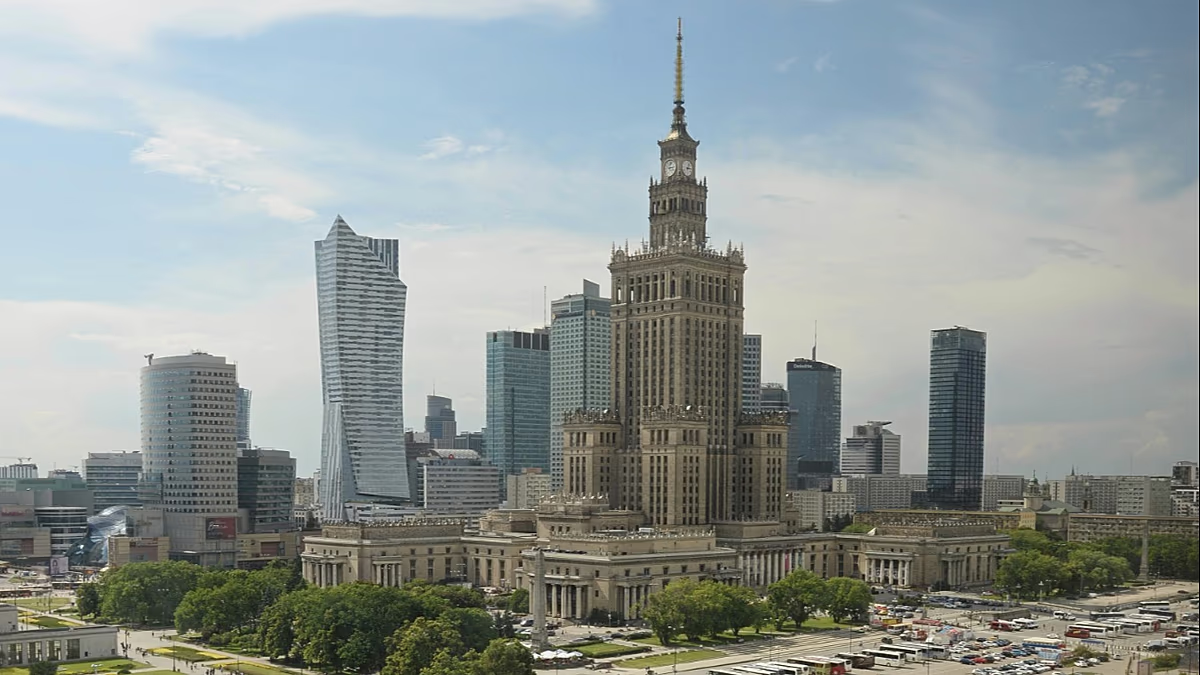
The 2026 Competitiveness Report for Eastern Germany warns this year that "the convergence process is in jeopardy". The new federal states risk being left behind. Meanwhile, other countries in Eastern Europe, Poland in particular, are managing to use this period to their economic advantage.
While some of those countries have seen dynamic growth, new industrial plants and rising investment in recent years, many regions of eastern Germany are struggling with a shortage of skilled workers, weak investment and demographic pressures.
"The convergence process in eastern Germany is no longer something that can be taken for granted. Unless politics and business take decisive countermeasures now, the gap threatens to widen again," says Joachim Ragnitz, deputy head of the ifo Institute in Dresden. He is the author of the ifo study on which the competitiveness report is based. It paints a sobering picture: the process of catching up with western Germany that has been under way for decades is stalling – and the gap could start to widen again.
Experts warn of widening economic gap
According to the competitiveness report, eastern Germany is above all lacking private investment and qualified workers. Between 2019 and 2023, private investment per inhabitant reached only around three-quarters of the level in western Germany. Excluding housebuilding and public infrastructure, the figure was just about two-thirds.