Chinaki Chuburi (Familiar Neighbourhood) or Akou Abar Pop Axomiya (Once Again Pop Axomiya) by Najma Mukherjee is the third instalment of the “Pop Axomiya” series of novels that originally started as “satirical bits, written as columns in leading Assamese dailies and periodicals from 2007 onwards.” A retired professor of Cotton University, Mukherjee writes in a largely experimental vein. In a society obsessed with binaries, the novel reimagines what it means to experience life outside such watertight compartments. In doing so, the novel becomes refreshingly original and revolutionary. Speaking about the inspiration for the novel, Mukherjee points to her own name, which she considers an “oxymoron”, for her Muslim-sounding first name and Hindu-sounding surname often stir curiosity. Chinaki Chuburi, then, is an extension of the same dichotomy where unfamiliar lives exhibit all “familiar neighbourhoods.”Non-binary realities of societyThe blurb of the novel readily underscores that Chinaki Chuburi is a queer novel with a protagonist who is intersex but is raised as a woman. The consideration that has gone into describing “Swargiyo Rongili”, the character in question, is reflected in their layered characterisation. In fact, Chinaki Chuburi is primarily a character-driven novel. Similar thoughtfulness is maintained while introducing the novel’s second main character, Jonaki. Both individuals are driven by an agency which society cannot fully grasp.Swargiyo Rongili, whose given name is Nirupama Boruah, chooses for themself a name that is eccentric. “Swargiyo” translates to “late”, and to describe their living self as deceased is a quirk that astounds their neighbours and readers alike. Swargiyo Rongili is a selfless individual whose humanity encompasses caring for the living and the non-living alike. She abhors the use of technology, reiterating constantly about a return to a primitive timeline where the earth rightly belonged to all forms of life.At the other end of this eccentricity is Jonaki, who believes in everything Rongili does not. Hers is an agency of self-centredness, but not the kind that ridicules others. She opts to remove her uterus, adopts a dog and a cat as her children, performs sologamy, is a staunch supporter of technological intervention in human life and finds Swargiyo Rongili fascinating but also slightly deranged. It is interesting that despite her own social peculiarity, Jonaki falters to sympathise with Rongili, showing that her revolution does not free her from her own judgements. The characters project two distinct non-binary realities of society but at the same time are also trapped within a labyrinth of their own.A third character that propels the plot in the narrative is the humanoid Astha, made by Jonaki, who begins its life as Jonaki’s aide but starts gaining a consciousness of its own. Certainly, as a humanoid, it is gender-fluid and because it mimics Jonaki, remains a “woman” in the narrative. When Champak, a boy from Jonaki’s village, falls in love with Astha and is discovered in an intimate moment by Jonaki’s mother, Astha’s questions about morality provide a biting satire on the scorn society has for anything that they deem unnatural. While talking about Astha, Mukherjee states that Astha can also be read as a metaphor for the marginal taking over the central narrative. This can be seen towards the end when it is suggested that parts of the narrative are its creation.Apart from these primary characters, there are also those who act according to their assigned role in society. They are the prototypes that provide social commentary. Few are able to break free from the internalisation of a cis-heterosexual patriarchal society and those who do are able to make space for others.Another crucial strand of the narrative that stands out is the seamless blending of history and folklore which form an organic part of the narrative, making the readers fall back on a sense of nostalgia and how that can be reimagined. Especially with Swargiyo Rongili, such anecdotes exemplify another element of her character, that is, imagination. She is motivated by a strong passion that tries to place experientiality within the history and lore of the place that have sustained the regionality of the inhabitants.Structurally subversivePraised for its intricate, nuanced and highly agreeable representation of the queer population, Chinaki Chuburi is also structurally subversive. The agency asserted by the characters is mirrored by an omniscient, multi-faceted narrator who disappears and reappears at will. Towards the end of each chapter, the narratorial voice changes persona. By the end of the first chapter, the narrator, a miniature of the author herself, disappears, leaving her pen to one of the readers. As the reader-narrator takes over, the question of authorial dominance is subverted.The three chapters in the novel are titled after the characters, namely “Swargiyo Rongili”, “Swargiyo Rongili and Jonaki” and “Jonaki, Shyamoli and Astha”. As it happens, the narrative dissolves Swargiyo Rongili’s presence in the third chapter, dissolving also the anthropogenic worldview. When Jonaki and Astha take over, the novel moves into a post-humanistic world. The narrative itself is highly postmodern. There is no meta-narrative, but multiple parallel narratives. In fact, the coming of post-humanism into the narrative also raises questions of ethics and territoriality, of whether the coexistence of humans and non-humans as alternate modes of lifestyle is a utopian possibility.One of the greatest merits of the novel is its open-endedness and refusal to pass any conclusive decision on the future of human civilisation. In its holism, the novel becomes an avant-garde of sorts, something that no Assamese author has conceived so far. Najma Mukherjee’s word play, of calling the era of Covid-19 (the timeline of the novel) the “third world war”, of using the inflection “teon” for “them” while referring to Swargiyo Rongili and of choosing two titles for her novel, truly mark her out as a kind of author who experiments and experiments insightfully. In becoming a novel dense with elements imagined and lived, feared and loved, Chinaki Chuburi indeed is a trendsetter for new Assamese literature.Chinaki Chuburi, Najma Mukherjee, NL Publications.
‘Chinaki Chuburi’: An Assamese queer novel that experiences life outside binaries
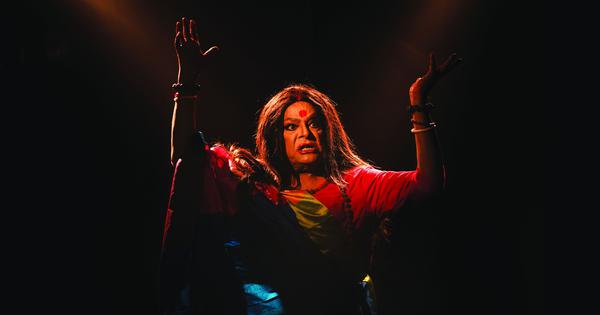
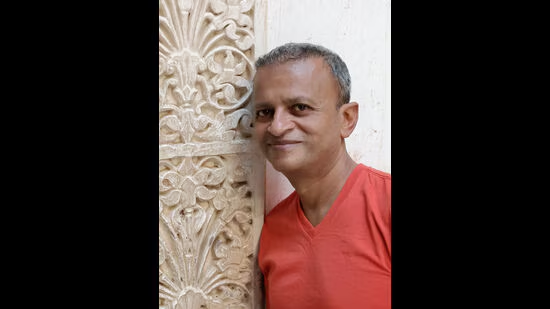
The agency asserted by the characters in Najma Mukherjee’s novel is mirrored by an omniscient, multi-faceted narrator who disappears and reappears at will.
988 words~4 min read