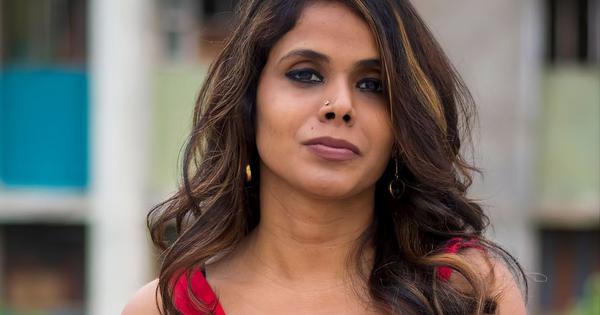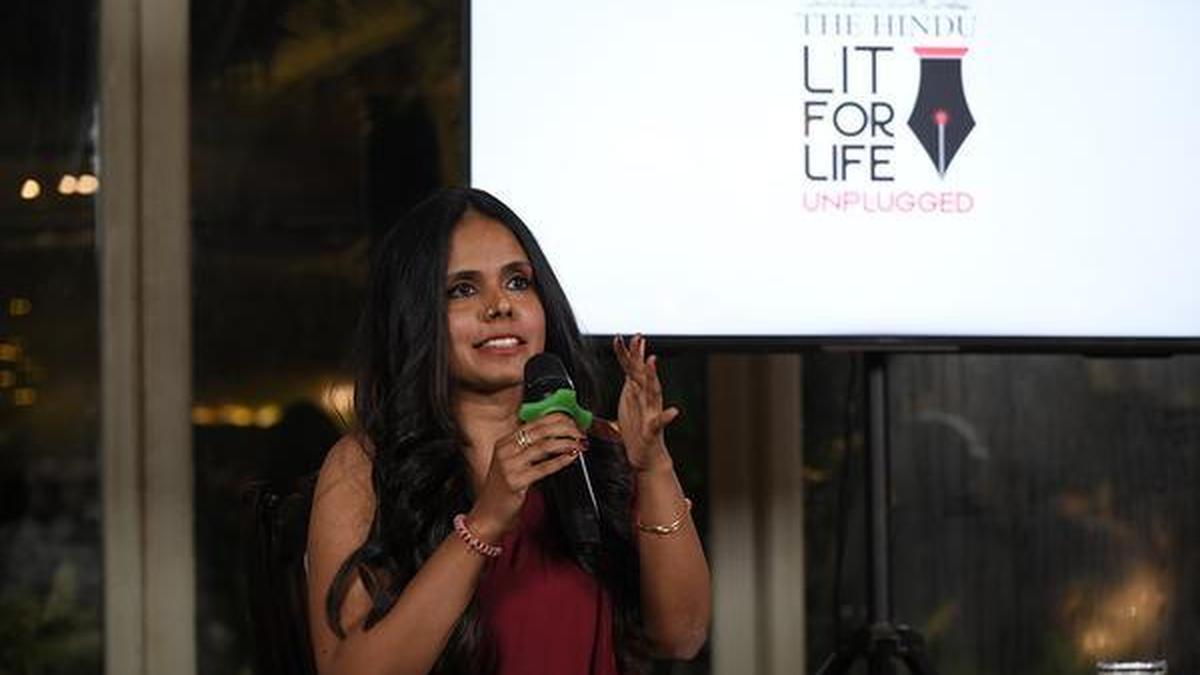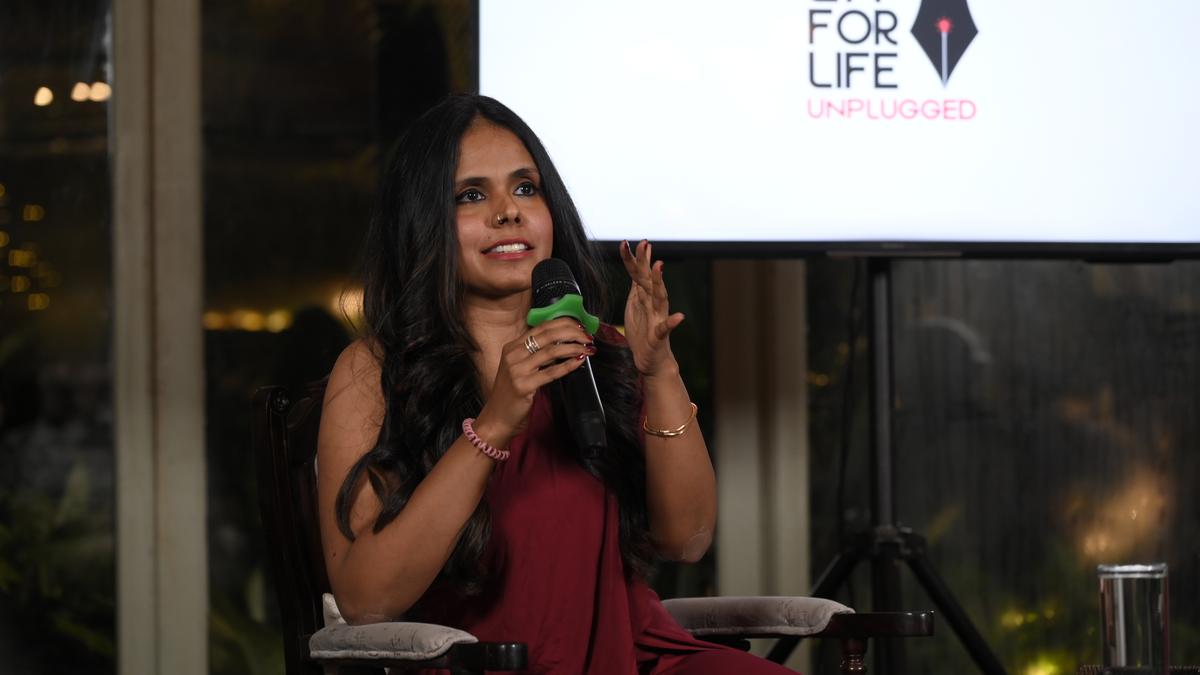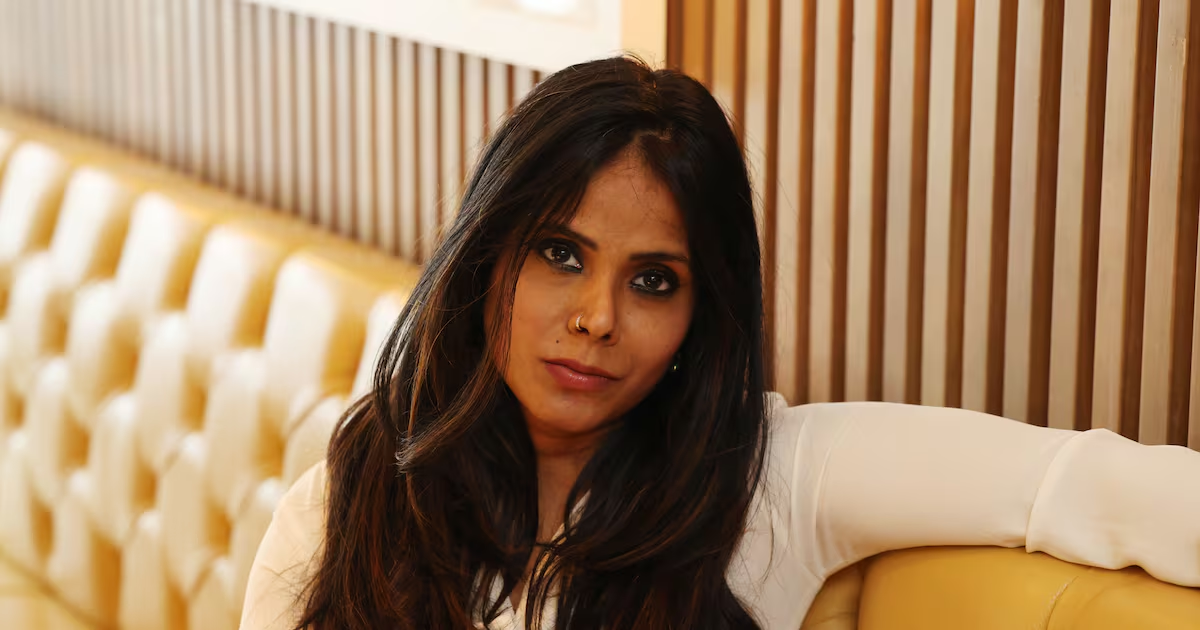
A striking feature of Meena Kandasamy’s blistering brand of genre-defying fiction is that she often inserts herself as a character in her books. Her latest novel, Fieldwork as a Sex Object, begins with a meeting between Kandasamy and her fictional protagonist Amrita “Amy” Chaturvedi, in the Indian seaside town of Pondicherry where real-life Kandasamy lives with her partner and two sons. In this opening scene Amrita presents Kandasamy with the manuscript of the first-person novel in which Amrita becomes the victim of a sexually explicit internet deepfake. “Let’s call it ‘a novel’,” Amrita tells her, handing over the printed pages. That “novel” is the one presented to readers in Fieldwork as a Sex Object. This intriguing editorial decision was influenced by the reception to Kandasamy’s widely praised second novel When I Hit You: Or, a Portrait of the Artist As a Young Wife. A powerful account of a woman’s abusive marriage, it was heavily inspired by her own short-lived marriage, blurring the lines between memoir and fiction. From that perspective, the decision to create distance between the author and the novel’s main character in this book seems deliberate. “I always insert myself as a character because I think we have to break down the fourth wall,” Kandasamy explains, sitting in a Dublin hotel. “I think people should know that fiction is being constructed in real time and with this particular book I wanted to make it clear early on, really make them understand, this is another person. With fiction, especially with women and because I have written auto-fiction before, people can start associating the work with something that has happened in your own life. So I needed that distance and it’s also a neat framing device.”An anti-caste activist, political consultant and poet, Kandasamy (41) has become synonymous with fearless writing. Her poetry collections Touch, Ms Militancy and Tomorrow Someone Will Arrest You built her a passionate audience over the past 20 years. Her debut novel Gypsy Goddess, about feudalism and untouchability, marked her out as a writer to watch and her second, When I Hit You, was shortlisted for the Women’s Prize for Fiction. Her third, Exquisite Cadavers, looked at racism and Islamophobia and experimented even more with the idea of fiction written in real-time.[ Meena Kandasamy Q&A: ‘I went to where Sylvia Plath is buried, and sat there hugging her gravestone’Opens in new window ]The protagonist of Fieldwork as a Sex Object, chronically online Amrita/May, lives in London surrounded by the Bloomsbury “Little India” set. She is a Brahmin, the highest rank in the traditional Hindu caste hierarchy. Her online bio describes her as a communist but leaves out her extreme privilege – she’s also the daughter of a billionaire Delhi-based high court judge. In the novel we witness her dealing with the fallout from being publicly shamed, when a pornographic video purporting to feature her having sex with a man goes viral. Kandasamy was interested in looking at our perceptions of unsympathetic victims. “It’s easy for people to take a stand if you are talking about someone like me, a lower-caste woman, an activist; in that case you can easily empathise. But Amy is not a perfect victim and she doesn’t want to be the perfect victim. She is annoying. She complains about the internet but has no problem with self-commodification. I wanted to explore how far will we go to stand up for someone’s rights even if they annoy the f**k out of us, you know? It was very testing to write her but I do like her; I can see where she is coming from”. When that book [When I Hit You] was published friends would tell me that they gave it to friends in abusive relationships because it was too precarious to talk to them directly about the abuse— Meena KandasamyThe inspiration came from having spent the past two decades observing what it’s like to be a woman in the public sphere, who challenges the far right. The response, she says, “is always, always character assassination, graphic slut-shaming, rape and death threats. It is almost as if calling out the immorality of fascism as an ideology has to be countered by calling into question the morality of the woman.” Having experienced these kinds of online attacks herself, in the novel she uses the backdrop of AI, the proliferation of deepfakes and what she calls the internet’s “unforgiving memory” to explore the ways women might navigate “this public stone throwing”. Written over five years, she says she wanted the book to engage “with the resilience of a woman who faces the fallout of rape culture as political strategy. What does her liberation look like?”[ Women in Ireland increasingly subjected to online hate and misogyny, groups warnOpens in new window ]When Kandasamy told her literary agent about her latest novel, he turned red in the face and got flustered. “The first draft had 140 mentions of the word f**k,” she says. There are also a whole lot of c**ks and c**ts in a book that is as provocative as it is propulsive. She believes this is why Atlantic, which published When I Hit You, passed on the book. “There was too much action in it for them,” she smiles. It feels appropriate that the novel was eventually picked up by Brazen Books, who on their website declare they publish “books with bite”. In the novel’s acknowledgments, Kandasamy gives a shout-out to “my sons from whom I hope to hide this until they are old enough to comprehend” and “my parents from whom I hope to hide myself on this book’s release”.She grew up in Chennai in Tamil Nadu, immersed in political activism, with academic parents. What will they make of it? “They will hopefully say I have a rich imagination,” she laughs. Amrita’s overbearing mother, trying to support her daughter through the crisis on the phone from India, has some of the funniest lines in the novel. “My own mother has quite an acid tongue. I mean she loves me with all her life, but when I was a girl I told her I wanted to be a doctor because I really like to take care of people. And she said, ‘Oh, you want to touch a lot of men’s d**ks?’ I was 12. I think, after that, I’ve never talked to her about becoming a doctor. A couple of years ago I was thinking to myself, I have to tell my mother, I didn’t become a doctor, but I have touched a lot of men’s d**ks.” I hope this book can say to young women, at every stage, we have to feel strong and not let anyone hold us back— Meena KandasamyIn addition to being very funny, Kandasamy’s fourth novel is bursting with compelling ideas and searing truths on digital violence, political extremism, gender identity and misogyny. It skewers India’s caste system, the Make India Hindu Again movement, Narendra Modi and incel culture. Many chapters are short, with titles all in lower case, such as “a historiography of incel literature”: “The truth – word for f**king word – is upper-caste men are raised to be incels. Yes, we gave the world the Kama Sutra. We also gave the world the hoax called semen-retention. Iykyk!” Kandasamy is interesting on how the book is likely to be received in different parts of the world. “People in England or Ireland can read it as an entertaining story about digital culture and the internet. Whereas in India, it can be quite a liberating book in the same way When I Hit You was liberating. When that book was published friends would tell me that they gave it to friends in abusive relationships because it was too precarious to talk to them directly about the abuse.”[ ‘You’re much more likely to be an incel if you live with your parents, if you can’t find a stable job’Opens in new window ]She says she also received “hundreds of emails with people saying ‘now I understand what my mother was going through with my father’. So, in that way it is not read as literature, or maybe that is also a type of literature.”In a similar way, literature as activism, the personal as political, she hopes this novel will be helpful to people being shamed online. Amrita does not hide away from the public shaming, but faces it head on in an unexpected way. Kandasamy advocates a sort of “brazenness” in the face of online shaming such as deepfakes which these days can happen as easily to a schoolgirl as to a social media influencer such as Amrita. Kandasamy’s core audience is young women. “I want them to look at the book as a mirror into their own lives, to understand another option exists, the option to be yourself with courage.“You need to meet it with brazenness. I know obviously it’s a violation of privacy. It’s the violation of the body. It’s a trauma. It’s all of this. But if it’s blackmail, if someone’s threatening to tell your father about this naked picture, you retaliate with ‘no, I’m going to tell my father about this naked picture of me. I’m going to tell my father to stand by me.’ Having written that earlier book about abuse and marital rape, I hope this book can say to young women, at every stage, we have to feel strong and not let anyone hold us back. Not let anyone shame us for our bodies.”I actually told my publishers, listen, I would rather have sex with strangers than make a video of myself cutting open a carton of books, and saying, wow, my new book has arrived— Meena KandasamyShe says she feels conflicted as an Indian woman by her own critique of her home country but that she has no option when so many inequalities need to be addressed. Amrita, on a Zoom call about feminism, gives some examples of stories from India: “Wife killed for cooking dinner late. Daughter killed for using mobile phone. Wife killed for not having male child.”While the worst of India is called out in her writing, others, including performative do-gooders, don’t escape Kandasamy’s pointed authorly gaze. Amy’s friend India – a white English woman – represents a certain type of white saviour. An Indian character called Child Soldier in the book explains: “If you come from Iran, India will ask if your cousin forced you behind veil. If you come from Afghanistan, she will ask if he shot you like Malala bang-bang. If you come from country called Africa, white people’s favourite place, she will ask if he cut your lady part … white people need a reason, a round-round-round story. To survive you must appeal to them.”[ Malala Yousafzai: ‘They made me into a mythical heroine. Growing up, I was a troublemaker’Opens in new window ]While, like Amrita, Kandasamy identifies as a communist, she is keenly aware that she exists in an industry at odds with those ideals. “Publishing is at the mercy of capitalism,” she says. Her latest novel offers a staunch critique of online culture but “then you go into the book publicity machine and that publicity machine nowadays demands certain behaviours from writers online”. Kandasamy, unusually, refuses to play that online game. “I actually told my publishers, listen, I would rather have sex with strangers than make a video of myself cutting open a carton of books, and saying, wow, my new book has arrived.”Fieldwork as a Sex Object by Meena Kandasamy is published by Brazen.
Meena Kandasamy’s message to women on online misogyny: ‘You need to meet it with brazenness’
The anti-caste activist and author, whose new novel is Fieldwork As a Sex Object, has become synonymous with fearless writing
1,919 words~9 min read