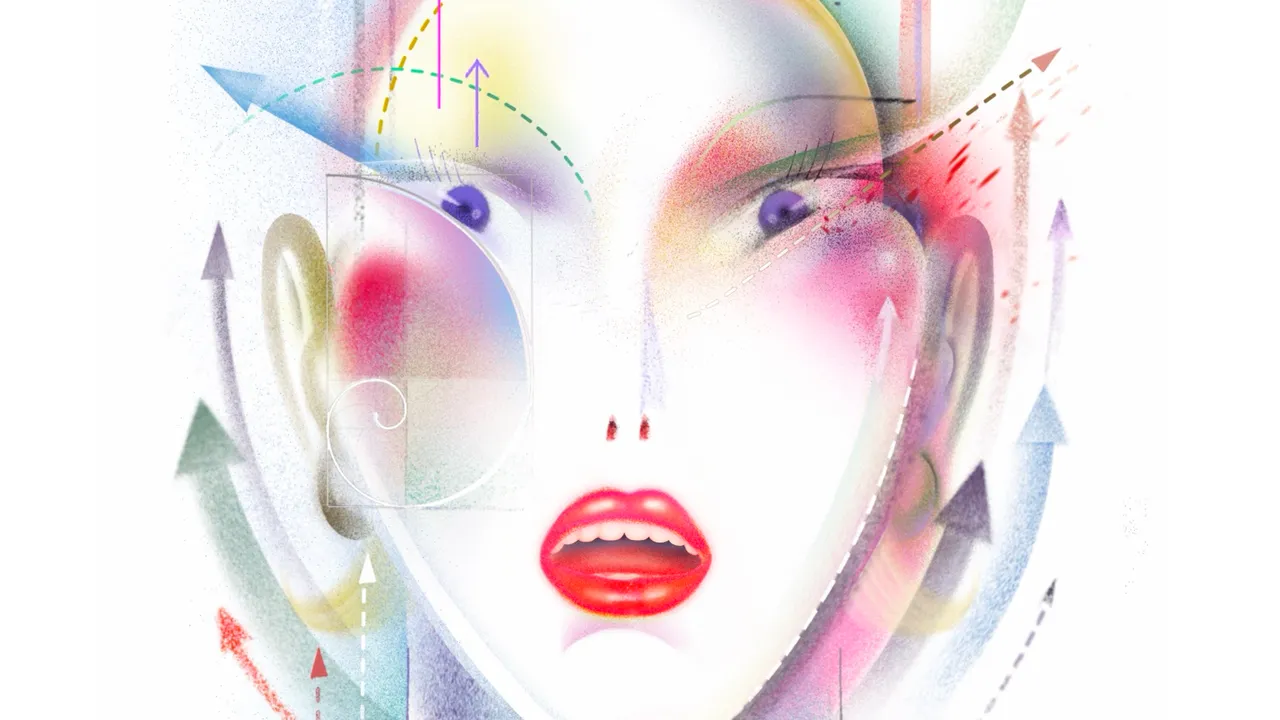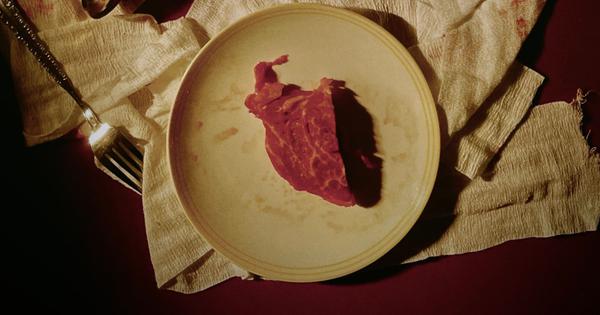
On the InstagramReality subreddit, where influencers’ pictures are scrutinised for editing and plastic surgery, there is a provision to file posts under “Uncanny Valley”. This category abounds with too-big lips, too-small chins, and too-high cheekbones; users find these unsettling because the features bypass conventions of desirability, and the faces bypass – even if slightly – the realm of the human and natural.Kaayaa, Guruprasad Kaginele’s fourth novel, is preoccupied with similar ideas. Where is the line between the beautiful and the grotesque? The desired and the disfigured? Between two of its protagonists, Malik (a plastic surgeon) and Kasturi (a senator), these polarities take shape in physical, cultural, political, and relational contexts. What emerges is a story marked by the uncanny: where characters slip from our grasp the more we learn about them, and language itself, thanks to Narayan Shankaran’s translation, alienates as much as it explains.Becoming someone elseThe novel follows Dr Malakheda, his wife Shamanthaka, his mother-in-law Kasturi, and his ex-wife Parimala through their lives in Manhattan, where they are known as Malik, Samantha, HIV Kasturi, and Pari respectively. Malik is sued for sexual misconduct during a breast augmentation surgery – this lawsuit threatens both him and Kasturi, whose fame comes from her miraculous HIV survival, and whose political career rests on her advocacy for women’s rights and HIV care. To add insult to injury, Samantha wants a divorce, and Pari, who has recently recovered from colon cancer, looks better than ever on a new man’s arm.The plot is packed, shuttling between timelines, characters, and ways to address the kaaya, or body. We witness the ending of Pari and Malik, which is the beginning of Samantha and Malik; we detour to the turbulent sex lives of Samantha and her college roommate; and we grow up with Kasturi, following her journey with marriage, abuse, disease, and politics – all before we return to Malik’s lawsuit, which has spiralled into a national scandal.Despite the novel’s ambitious scope, which covers more than it can reasonably do justice to, the desires that propel the story are clear. These are the universally potent desires of middle class, targeted ads, and, of course, plastic surgery: to be not-yourself; to splice, graft, or somehow mutilate parts of your life. Malik is eager to change his name when he migrates to America, while Samantha, who is born in New York, anglicises hers as a matter of assimilation. Kasturi covets the HIV prefix in public, but privately wishes it away – if only to protect her daughter from shame, an infection that spreads despite her best efforts.Who does Samantha want to be? This is Kaayaa’s most interesting question, and where the story is at its murkiest. She wants to be desired, but men have turned away from her all her life, believing she carries her mother’s disease. She is desired – first by Honey, her college roommate, who sees sex as fundamentally tied to violence, then by Malik, who thinks of her as a work in progress, surgically sculpting her body (“a hunk of meat”) to desirable proportions. This is a project haunted by Pari, and the new and improved Samantha ultimately becomes a projection of Malik’s past.These relationships are choppily developed over the course of the novel, dragging at some points and not giving others the space they need to breathe. But in Shankaran’s detached, almost clinical translation, hurt, jealousy, insecurity, and pettiness morph into something far more unsettling, where even the most merciless acts are treated as matter-of-fact.Diagnosing the times“Beauty and disease share the same symptoms”, Malik tells Pari. This belief is the beating heart of the novel, the axis around which all its events rotate.All but one: Kasturi’s HIV, an illness without symptoms. It arrives in an era that fills the gap in medical infrastructure with paranoia, homophobia, and prejudice against sex work, which means the incidental discovery of Kasturi’s HIV makes her an immediate pariah. But the ulcers, the lesions, the fevers never show.In its refusal to identify and treat disease, the novel turns its diagnostic eye to modernity. Its upscale American setting allows it to make certain assumptions about its characters, which it does very unabashedly: in the Kaayaa universe, women invariably want Botox, the only relevant Black people are sexual deviants, and studying the arts makes people believe in unscientific things, like jumping up and down to prevent pregnancy (there is an actual trampoline next to Malik and Samantha’s marital bed).The novel is clear and often harsh in its judgment of its culture, a gaze visible in the dialogue. Malik is constantly reminding us that “we live in MeToo times” (i.e., times where women’s accusations against men will always be believed, regardless of whether they are telling the truth). This, among many others, is a sentence I grew sick of seeing – because of how didactic it comes off as, how the syntax never changes through its many appearances, and how it is deployed at points of the story where plot advancement would have worked far better. I don’t expect characters to be feminists, or even likeable, but I do expect them to be complex, and Malik fails on that front when he spouts his patronising refrain.The only character who refuses this unrelenting cultural didacticism is Kasturi, a decision which sets the scene for her eventual lack of diagnosis. As we accompany her through “doing politics” – for instance, joining the 1968 Miss America protest in Atlantic City, and trashing her bra as an adventure – we realise she is more concerned with narrating shades of an experience than pinpointing a truth about the context in which it takes place, which makes her story far more engaging than the others.To Kaginele, who is a doctor by profession, there seems to be only one way to view both the kaayaa and the world that surrounds it – picking them apart with a scalpel, and finding, to borrow from Langston Hughes, the worms that eat at the rind. In his dissection and Shankaran’s subsequent treatment, the body is a site of disease, desire, and violence all at once. Post-op, Kaaya is stitched together: sometimes haphazardly, sometimes in careful, surgical sutures, leaving the seams as visible as the wounds they are meant to close.Kaayaa, Guruprasad Kaginele, translated from the Kannada by Narayan Shankaran, Penguin India.
‘Kaaya’: A carefully, if haphazardly, stitched novel about body as a site of desire and violence
Despite the ambitious scope of Guruprasad Kaginele’s novel, which covers more than it can reasonably do justice to, the impulses that propel the story are clear
1,057 words~5 min read