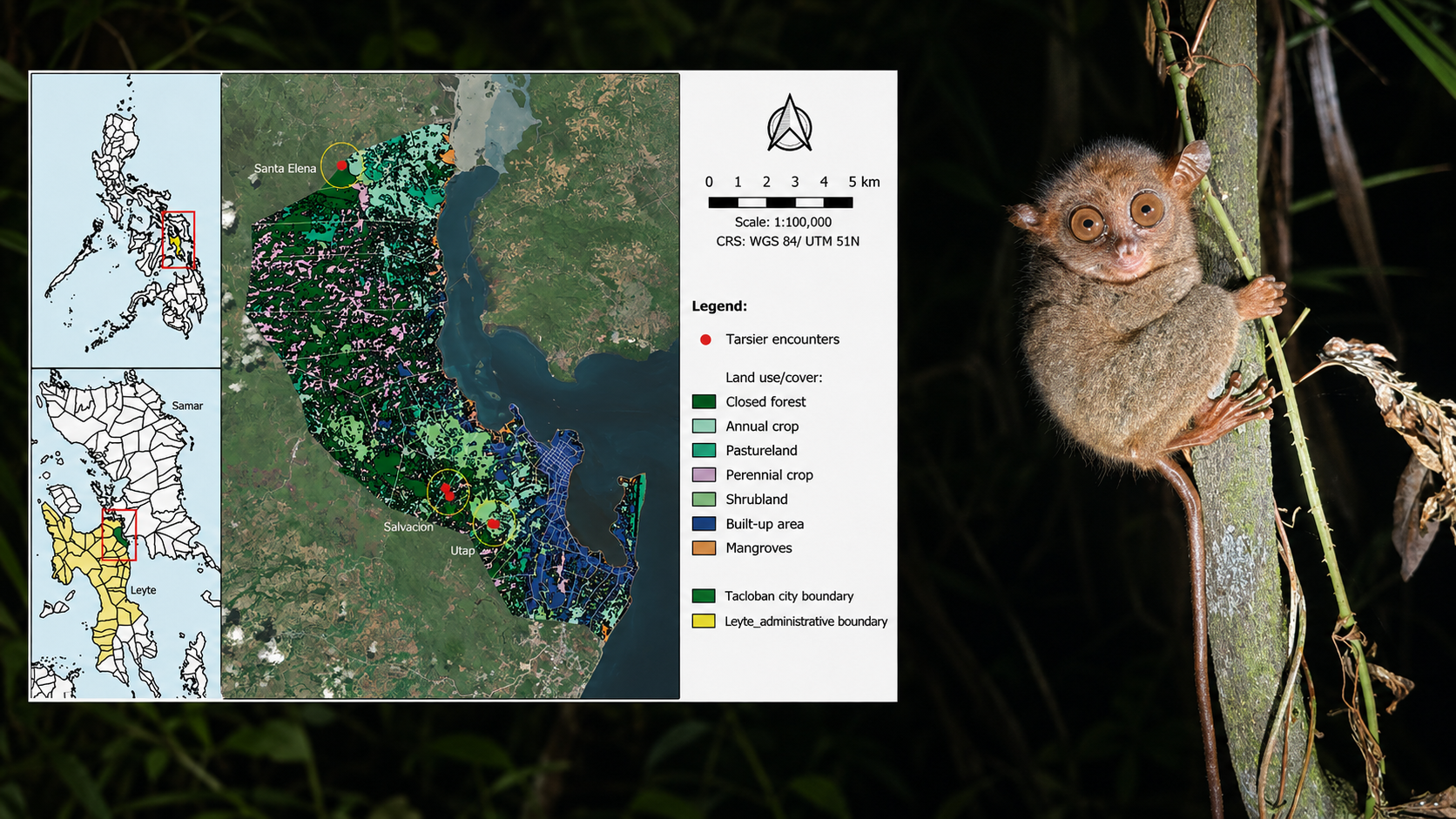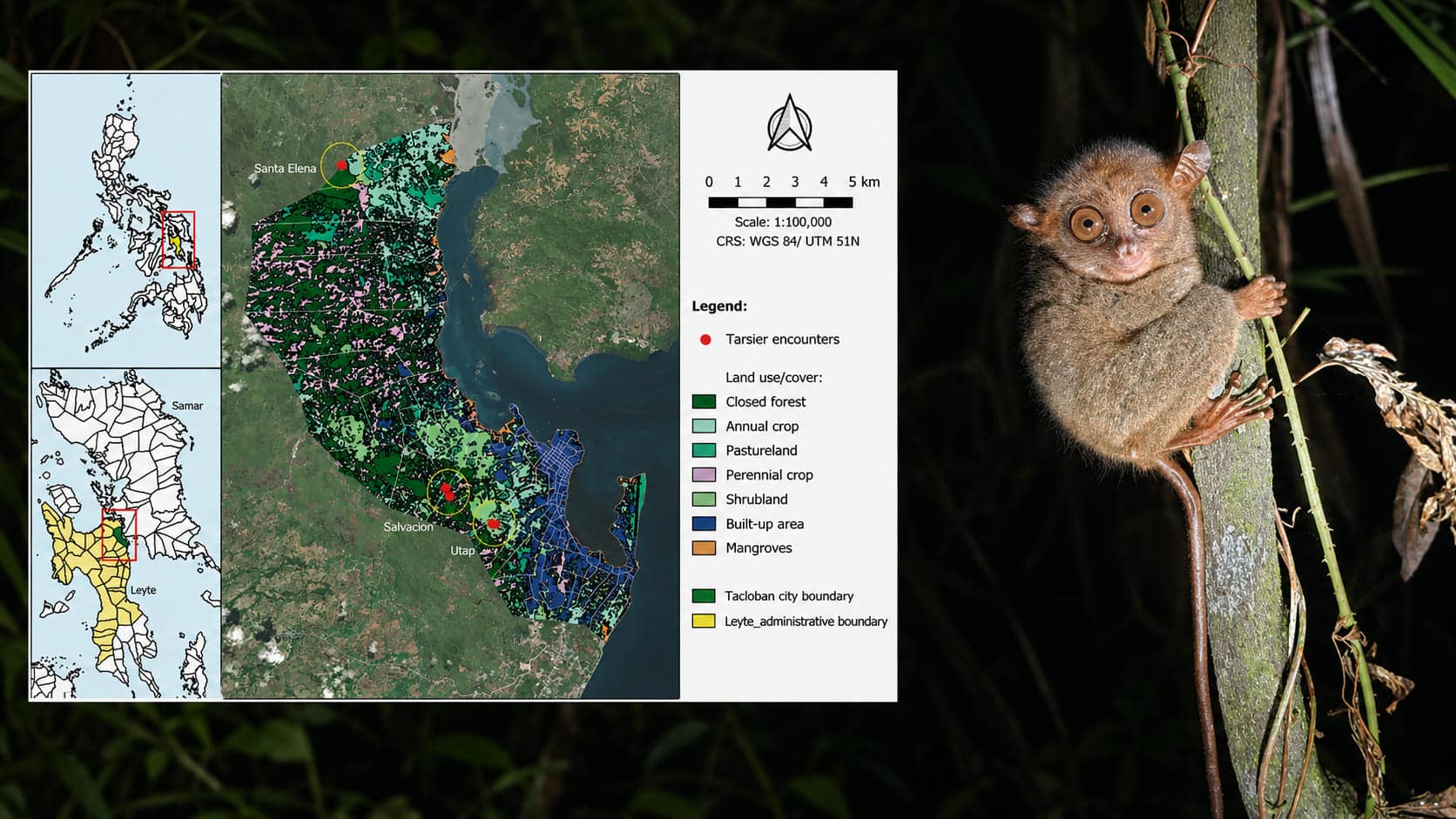
Map of the study sites where tarsiers were observed in barangays Santa Elena, Salvacion and Utap.
MANILA, Philippines — On most nights, the work began in the dark.
A team of at least three observers walked quietly in single file, moving slowly along roads, trails and footpaths with flashlights trained on vegetation at both sides of the path. They were looking for a small, nocturnal primate that has long drawn curiosity—and, in many places, mounting concern: the Philippine tarsier.
Between July 29, 2022, and Feb. 25, 2023, the night surveys documented what had previously been only anecdotal in Tacloban City: Philippine tarsiers were present in forest patches across three barangays, despite rapid urban expansion in a city that has been rebuilding and growing quickly since becoming highly urbanized in 2008.
Researchers recorded nine independent encounters across the three sites—one in Barangay Santa Elena, three in Barangay Salvacion and five in Barangay Utap—marking what the study describes as the first research documenting the Philippine tarsier within an urban landscape.