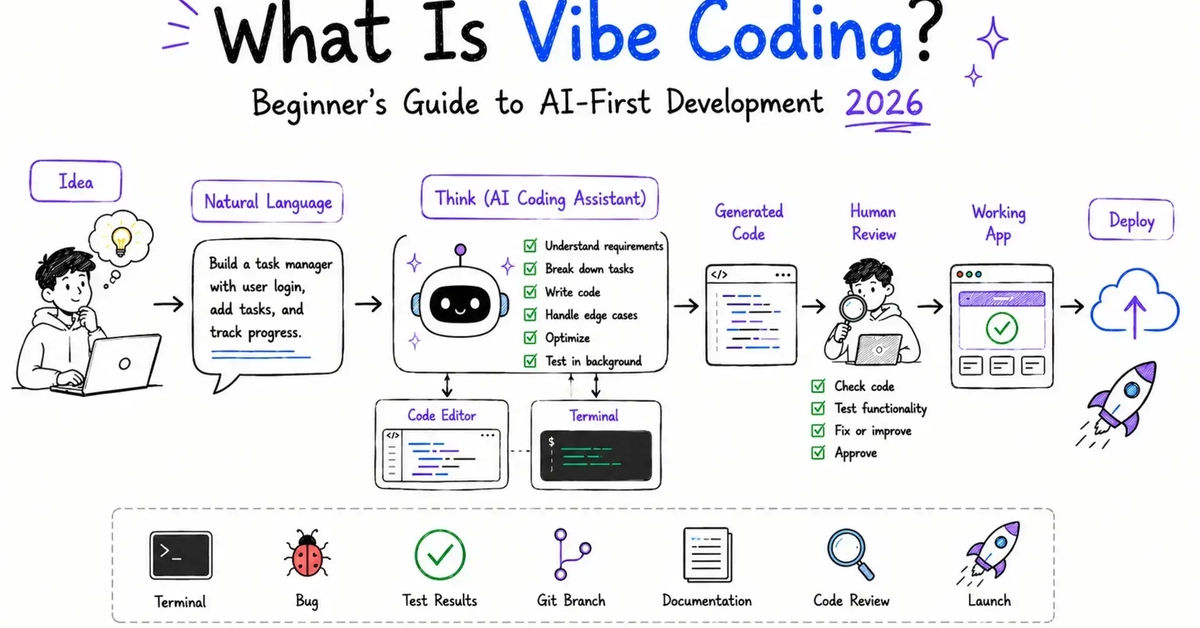
The phrase vibe coding has become a convenient way to describe a strange new relationship between humans, machines, and software. At its simplest, vibe coding means telling an AI system what you want and letting it produce the code. The human provides intent, mood, direction, and correction. The machine produces implementation. The result may be a game prototype, a tool, a website, a mod, a script, or an entire application. The person may not understand every line. They may not even pretend to. They describe the desired artifact, test whether it feels right, and keep prompting until the thing seems to work.
The term itself is recent. Andrej Karpathy coined vibe coding in a widely shared post in February 2025, describing a way of working in which you trust the model, stop reading the diffs, and "forget that the code even exists" (Karpathy, 2025); within the year the phrase had spread far enough to be named Collins Dictionary's Word of the Year (Collins, 2025). Karpathy was candid about what the mode gives up — in its original sense, vibe coding meant precisely not reviewing the output.
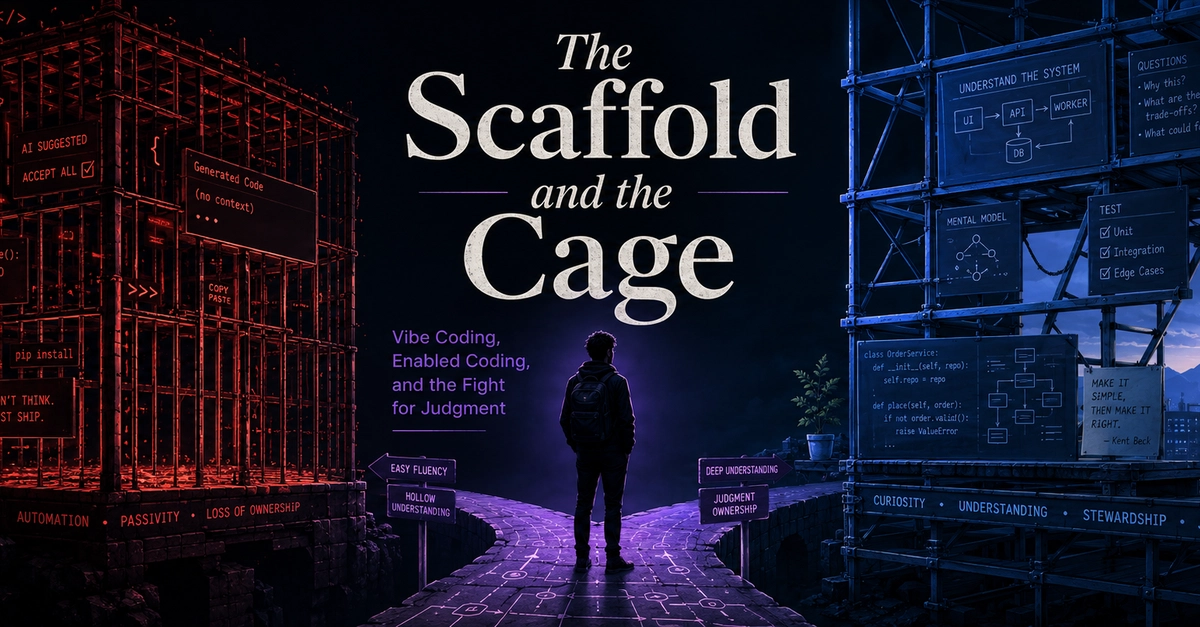
That description is useful, but it is also too blunt. It collapses many different practices into one label. It treats the person who blindly accepts generated code the same as the person who uses an agent to learn, debug, test, and gradually understand a system they could not have built alone. It also risks turning "vibe coder" into a social category — almost an insult — rather than a description of a method. The term can imply that someone is merely pretending to code, that they are outsourcing the real work while borrowing the identity of a programmer.