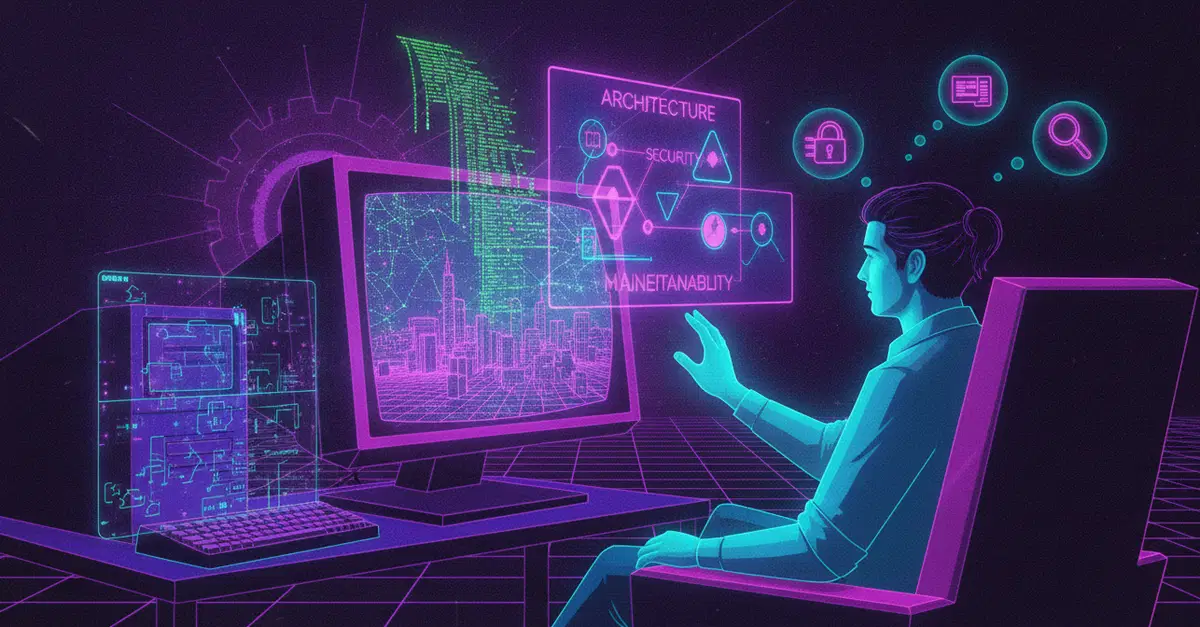
Vibe coding is real, useful, and produces working software. It is also, past a certain point, a way of generating a mess faster than any one person can clean it.
The term has come to mean a specific way of working with an agent: open the chat, describe what you want, look at what comes back, run it, describe the next thing, repeat. No upfront design. No structured workflow. No tests, often. Just iteration through conversation until the program does the thing.
The argument against vibe coding has usually been moral: "real engineers don't do this." That argument is not interesting and it is not even right. The interesting argument is structural. Vibe coding works inside a specific envelope, and outside that envelope it produces predictable failure modes. Knowing where the envelope ends is more useful than disapproving of the technique.
Where vibe coding works
There are real categories of work where vibe coding is the correct approach.