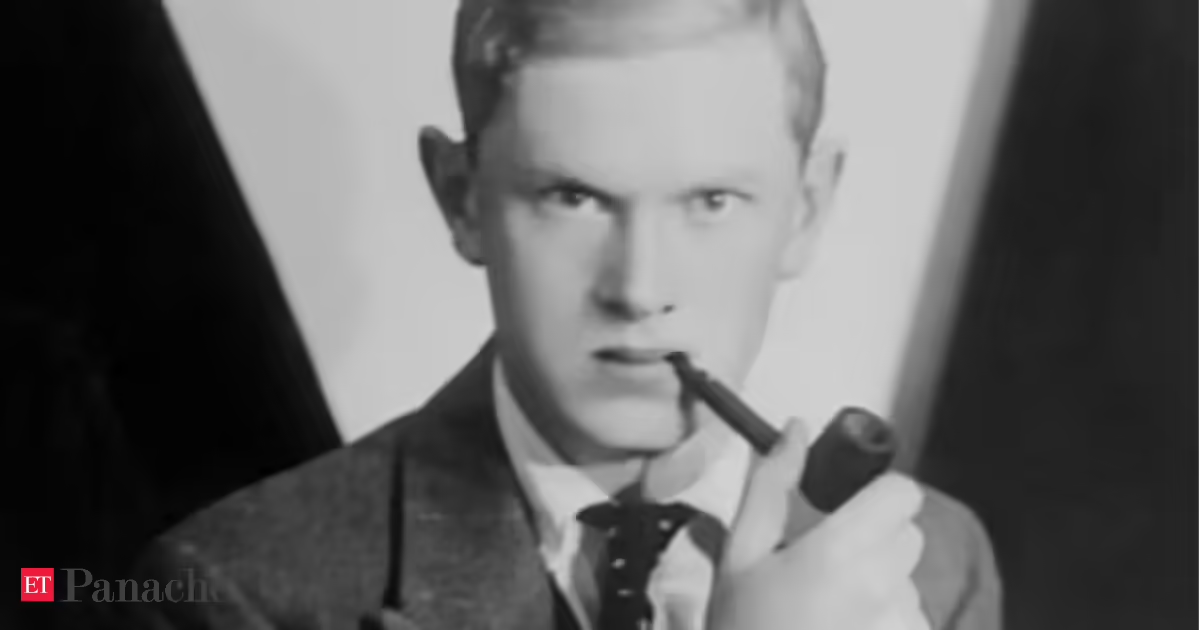
If you are too preoccupied with the future and too obsessed with the past, you will end up neglecting the present. Being completely engrossed over the past, wallowing in regret and dwelling in what could have been or daydreaming too much about the future which although rife with possibilities, exist only as an abstract concept, is unhealthy as you end up totally neglecting your present. This can impact not only your mental health but also ruin your relationships and affect your productivity and mental-wellbeing. Centuries ago, writer Evelyn Waugh warned readers about being preoccupied with the past and the future and to focus on the present in his novel Brideshead Revisited. Quote Of The Day On MindfulnessIn his 1945 novel Brideshead Revisited, one of the characters, Julia Flyte tells the narrator Charles Ryder: “Sometimes, I feel the past and the future pressing so hard on either side that there's no room for the present at all.”Deeper Meaning Of The QuoteThe quote urges readers not to neglect the present and all it signified to what could-have-beens and what may be. Being preoccupied with the past is unhealthy as it affects our ability to focus on the present, on our duties. Similarly, fantasising too much about the future can also negatively impact on our ability to do justice to our commitments in the present.Relevance Of The QuoteIn our fast-paced, hyper-connected world, we are rarely grounded in the "now." Instead, the "past" manifests as a digital archive of social media memories, fueling nostalgia or regret. Caught between the past and the future, we are tormented by a state of perpetual anxiety which affects our mental health and ability to be mindful. Who Was Evelyn Waugh?Waugh was one of the most celebrated authors of English literature. A graduate of Oxford University, he worked briefly as a school master before becoming a full-time author. Some of his most popular works are: Brideshead Revisited, Decline And Fall, A Handful Of Dust etc.His final years were marked by isolation. He converted to Catholicism in 1930 after his first marriage ended in a divorce. He fiercely opposed all attempts to reform the Church and the sweeping changes such as introduction of the vernacular Mass made by the Second Vatican Council greatly offended his sensibilities. His opposition to the changes made by the Catholic Church, his distaste for welfare state culture and declining health marked his later years but he was still known to be a great friend to those close to him.
Quote of the day by Evelyn Waugh: 'Sometimes, I feel the past and the future pressing so hard on either side that there's no room for the present at all...' ; lessons on mindfulness from British author
Dwelling on the past or excessively dreaming about the future can lead to neglecting the present, impacting mental health, relationships, and productivity. Evelyn Waugh's "Brideshead Revisited" highlights this through Julia Flyte's poignant observation. In today's world, digital archives and future anxieties keep us from being grounded in the "now."
414 words~2 min read