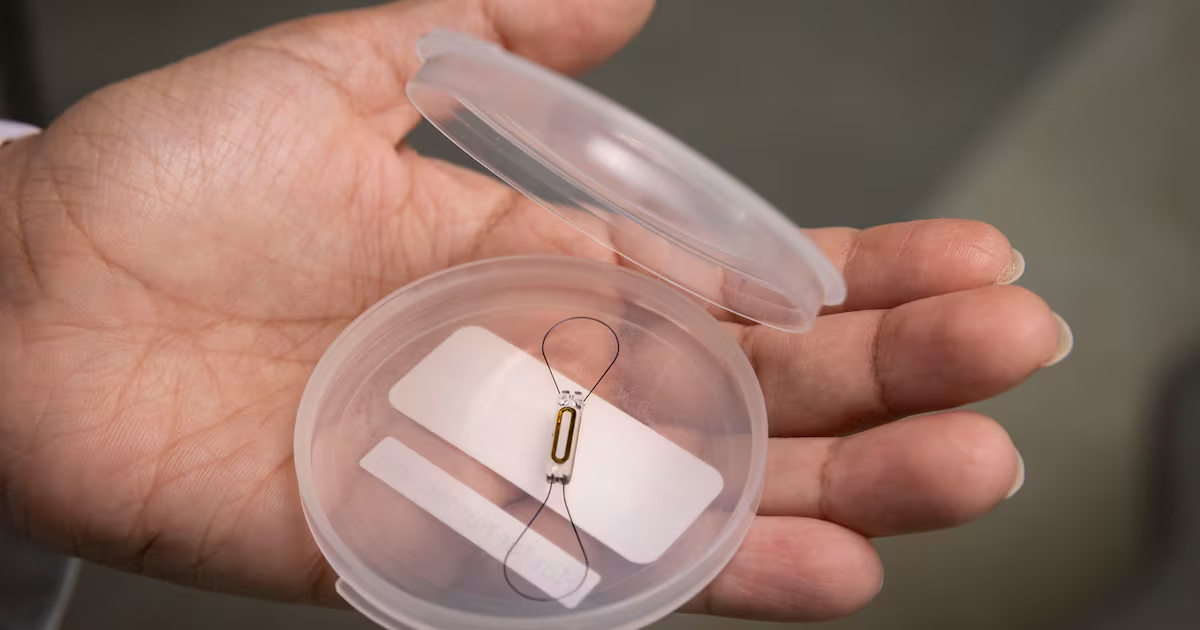
For patients with heart failure, insertable cardiac monitor (ICM)-based high-risk detection combined with centrally managed, nurse-facilitated, individually protocolized diuretic interventions are safe but did not lead to a change in heart failure outcomes, according to a study published online May 27 in the Journal of the American College of Cardiology.
Javed Butler, M.D., M.P.H., from the Baylor Scott and White Research Institute in Dallas, and colleagues examined whether ICM-based high-risk detection combined with centrally managed, nurse-facilitated, individually protocolized diuretic interventions are safe and improve heart failure outcomes. Participants with heart failure were randomly assigned to an intervention arm (high-risk heart failure alert-triggering protocolized diuretic regimen) or an observation arm (standard care; 357 and 354 participants, respectively).
The researchers found that 59.9% of participants had at least one high-risk episode in the randomized period, including 54.4% of those with left ventricular ejection fraction <50% and 62.5% with heart failure with preserved ejection fraction. The primary composite efficacy end point did not differ significantly between the groups (win ratio: 0.79; 95% confidence interval, 0.62 to 1.01; P = 0.06). The serious adverse events rate was 0.32% during a mean follow-up of 17.3 ± 8.9 months (prespecified safety threshold ≤5%). The intervention group had numerically higher cumulative cardiovascular death and heart failure events (hazard ratio, 1.43; 95% confidence interval, 0.95 to 2.15; P = 0.091). At 13 months after randomization, 67.2% of participants had a device-detected arrhythmia.