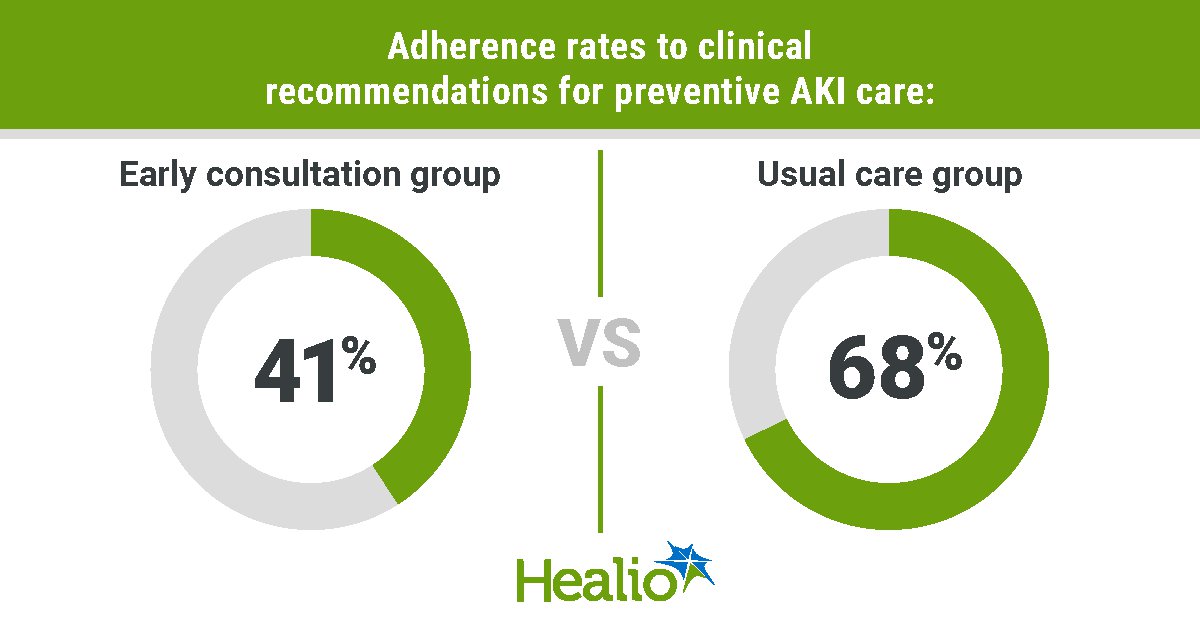
A randomized trial showed that early nephrology consultations triggered by real-time machine-learning risk scores failed to prevent increases in peak serum creatinine among hospitalized patients at risk for severe acute kidney injury.Recommendations for medication dosage and discontinuation, diuretics or fluids, and vasopressors were more likely to be completely followed in the usual care arm (68%) compared with the intervention arm (41%).Experts argued that future AI systems should pivot from risk-triggered advice to risk-triggered action.
Early nephrology consultations triggered by real-time machine-learning risk scores failed to prevent increases in peak serum creatinine among hospitalized patients at risk for severe acute kidney injury (AKI), a randomized trial showed.
Among 180 patients, the adjusted mean difference in 7-day serum creatinine was comparable between those who had an early nephrology consultation and those who received usual care (0.04 mg/dL vs -0.03 mg/dL, P=0.30), reported Jay L. Koyner, MD, of the University of Chicago, and colleagues.
Additionally, there was no significant difference between the two arms in the development of Kidney Disease: Improving Global Outcomes (KDIGO) stage 1 or higher AKI (42% vs 36%, P=0.47) or stage 2 or higher AKI (19% vs 13%, P=0.28), they wrote in JAMA Network Open.