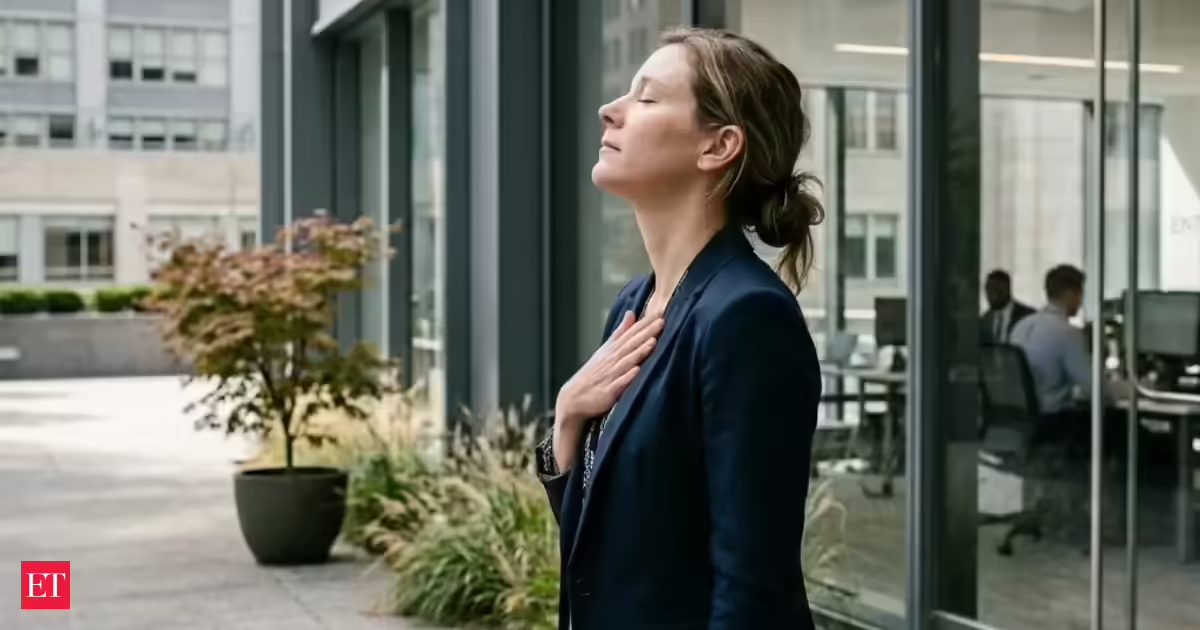
Conflicts in the workplace occur during those moments when one suddenly feels the air getting thick. An insulting statement made by the boss amid a meeting, an abrupt intervention made by a colleague, a heated exchange of emails, and many similar scenarios. Some react to such events immediately, while some choose not to react immediately. They take their leave for the time being, compose themselves and later react.Such actions are considered dramatic or passive-aggressive, but in today's competitive environment, the immediate reaction to a stimulus is considered normal. But, as psychologists will say, there is more to such actions than what one sees. The intentions behind the actions may not be obvious. According to the recent studies published in Cell Reports Medicine, one's mental state changes considerably even if the emotional event is brief.The role of stress in one's reaction to conflictAs claimed by the psychologists, a change is observed in the body of a person right from the moment of getting into a conflicting situation. Based on multiple studies about controlled breathing, deep breathing may contribute to lowering stress and achieving emotional balance.The study conducted in 2024 examined the connection between slow breathing and emotional regulation and found out that exercises were helpful in providing emotionally balanced processing during stressful situations. It should be noted regarding workplace conflicts because stress tends to cause such reactions as speaking fast, interrupting people, and defending oneself quickly without thinking about words.A brief pause is enough to create an emotional gap, say, researchers of workplace stress. Thus, the focus here is not on the absence of conflict within a brief pause but rather on the necessity to allow the nervous system to relax before engaging in a discussion.Why do tense people demand immediate answers?According to research related to workplace incivility, published in the Journal of Occupational Health Psychology,, rudeness or dismissing behavior causes employees to act out of emotional responses. For example, a study conducted by experts from the Journal of Occupational Health Psychology found that mistreatment in the workplace led to retaliation, emotional withdrawal, and distress.In many cases, emotional tension in itself causes the need for rapid reaction. Investigators researching the topics of provocation and rumination have learned that individuals who think about insulting comments while the exchange happens often demonstrate lower levels of inhibitory control and increased aggression. This explains the role of walking away because it can help prevent the mind from getting caught up in the anger before a response is made.The surprising reason calm people pause before responding. Image credit - GeminiEmotional impacts carry over outside the workplaceScientists claim that workplace conflict does not end once the conversation concludes. It has been discovered that incidents of incivility in the workplace cause employees to ruminate, feel exhausted, and disrupt their sleep even after leaving work. According to yet another daily diary study, workplace conflict hinders the physiological recovery process during nighttime sleep, which indicates that it follows an individual both physically and emotionally.This is why some individuals try to be careful when responding during a disagreement because an intense answer could keep the individual in conflict longer than needed. Taking a short breather before responding could minimize the risk of turning one emotional interaction into an emotionally strained relationship.Why do short breaks help to recuperate?The science about micro-recovery periods in the workplace is quite clear about the importance of taking breaks. Specifically, a meta-analysis analyzing recovery breaks showed that short pauses between high-demand tasks help minimize strain and increase well-being.According to psychologists, the reason behind such positive results is that short breaks interrupt the body's stress cycle while one does not reach complete emotional exhaustion. Furthermore, controlled breathing can also help recover from stressful interactions faster and decrease stress. In simple terms, a one-minute break spent outside of the room may help regain emotional stability and continue the dialogue more productively.Why the behavior is often misinterpretedFrom the point of view of those around, taking a short pause could seem impolite or disrespectful. It may be interpreted as an attempt to avoid further interaction with others or an emotionally immature response. Sometimes, however, the employee walking away may not actually be attempting to avoid further harm to the conversation. On the contrary, they are providing some distance to ensure proper emotional regulation.According to psychologists, such a difference must be noted, because the same behavior may seem disrespectful on the outside but be an exercise in self-control inside. This explains why, sometimes, the pause before responding merits closer scrutiny. Those individuals stepping out to collect themselves during conflict are not necessarily dodging responsibility. More often than not, they are simply giving themselves time to calm down before saying anything they will regret later on.
Psychology suggests people who step outside to breathe before answering aren't being dramatic - they're protecting the pause that lets emotion settle before words do damage
Workplace conflicts can escalate quickly. Psychologists reveal that a short pause before responding helps regulate emotions. This brief break allows the nervous system to relax, preventing impulsive reactions. Such pauses are often misinterpreted but are crucial for maintaining emotional balance and fostering productive dialogue. This practice helps individuals avoid saying things they might regret later.
783 words~4 min read