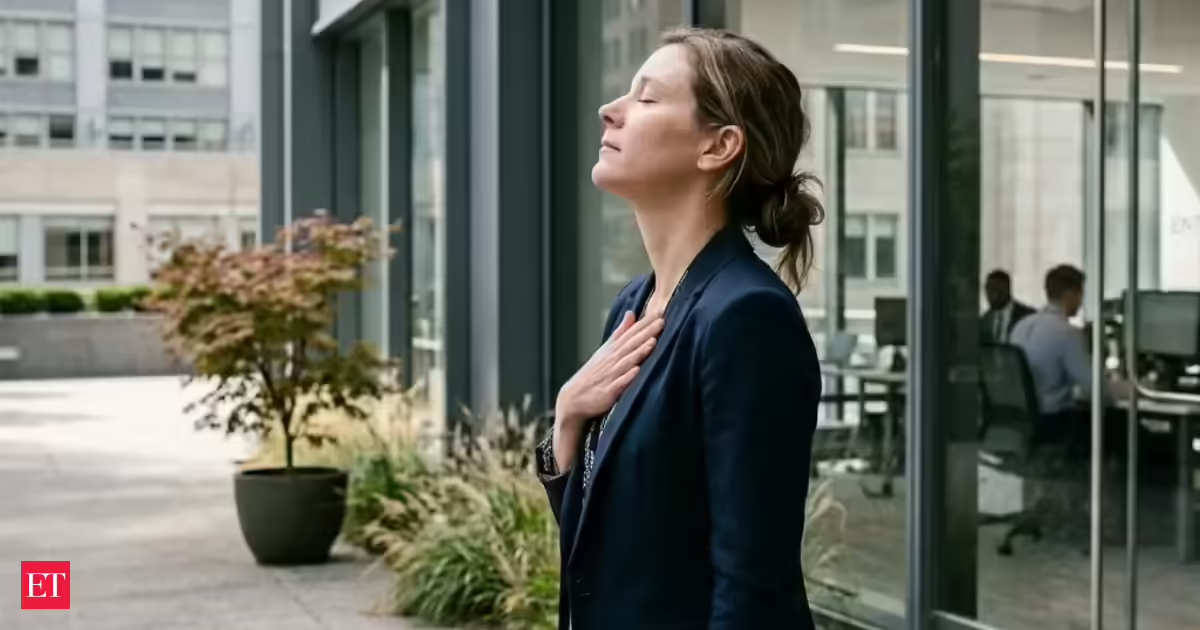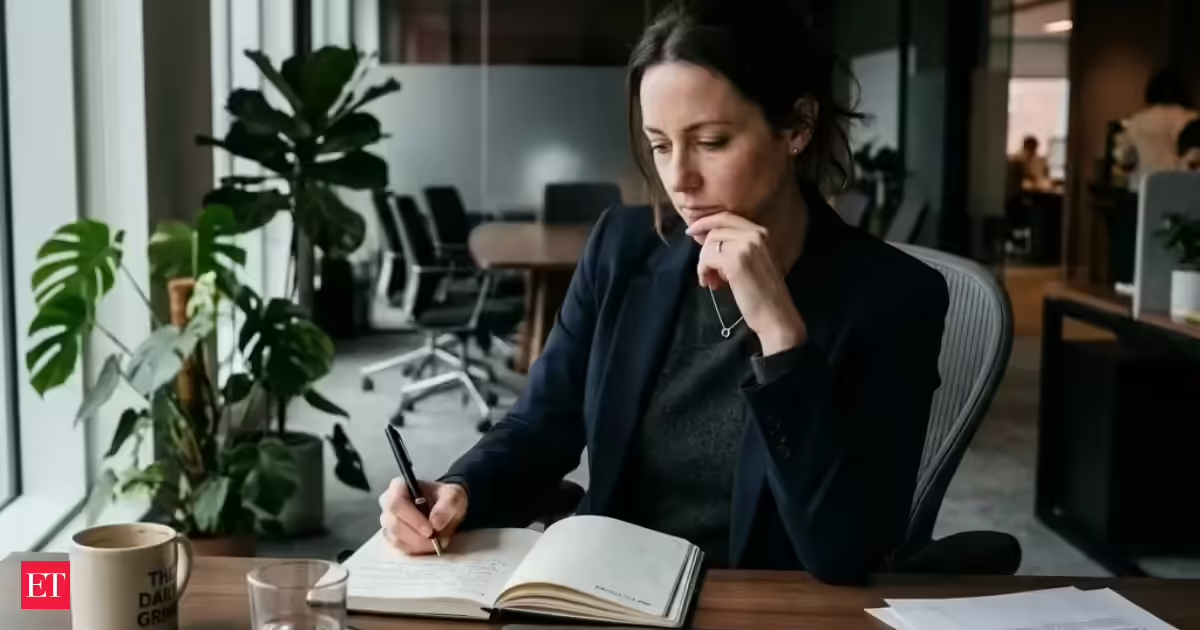
Have you ever noticed someone walking back and forth during an argument or while waiting for important news? Some people instinctively pace around the room when they're upset, worried, or deep in thought. Others prefer to sit still and process their emotions quietly.Psychology suggests that pacing is often more than simple restlessness. For many people, movement becomes a natural way to regulate emotions, organize thoughts, and release physical tension. That doesn't mean everyone who paces experiences stress in the same way, nor does it mean pacing automatically signals anxiety or another mental health condition.Instead, researchers point to several well-established psychological and physiological concepts that help explain why this behavior is so common.Movement can support emotion regulationOne of the strongest explanations comes from research on Emotion Regulation. Emotion regulation refers to the strategies people use to manage emotional experiences without becoming overwhelmed. For some individuals, pacing becomes an automatic coping behavior. Imagine someone waiting to hear the results of a job interview.You Might Also Like:Instead of sitting on the couch replaying every detail, they begin walking around the room. The movement provides an outlet while the mind processes uncertainty. Psychologists note that people regulate emotions in different ways, and physical movement is one strategy among many.The body and mind work togetherAnother useful concept is Embodied Cognition. This theory suggests that thinking is influenced not only by the brain but also by the body's actions and physical experiences. Walking while thinking may help some people organize ideas more effectively than remaining completely still.For example, a manager preparing for a difficult conversation may pace the office while mentally rehearsing what to say. The movement doesn't create better decisions by itself, but it can support thinking for some individuals.Walking may reduce the physical effects of stressWhen people become angry or worried, the body's stress response becomes more active. Heart rate may increase, muscles tighten, and energy levels rise as part of the body's natural response to perceived challenges.Pacing can become a way of channeling some of that physical energy. Instead of remaining motionless with heightened tension, movement provides a constructive outlet while the emotional intensity gradually decreases. This doesn't eliminate stress, but it may help the body transition toward a calmer state.You Might Also Like:Self-regulation often includes physical routinesPsychologists define Self-Regulation as the ability to guide thoughts, emotions, and behaviors toward desired goals. Many people naturally develop routines that help them regain composure. Some take deep breaths. Others write in a journal. Some call a trusted friend. Others pace.Imagine a student waiting outside an examination hall. Walking slowly through the hallway may help them feel more focused before entering the room. The pacing becomes part of a familiar calming routine.Walking can help organize complex thoughtsResearchers have found that light physical activity can sometimes support certain aspects of thinking and problem-solving.People often report that ideas become clearer while walking. For example, a writer struggling with a difficult paragraph may walk around the house before returning with a fresh perspective.Similarly, someone reflecting on a disagreement may pace while mentally organizing their thoughts before responding. The movement creates space for reflection rather than impulsive reaction.Personality and coping styles differNot everyone responds to stress in the same way. The Transactional Model of Stress and Coping, developed by psychologists Richard Lazarus and Susan Folkman, suggests people use different coping strategies depending on how they interpret stressful situations.One person may become quiet. Another may talk through the problem. Someone else may instinctively begin walking. None of these responses is automatically better than another, provided they help manage emotions in healthy ways.Pacing alone doesn't mean someone has anxietyA common misconception is that pacing always signals anxiety or emotional instability. Psychology does not support that conclusion. People pace for many reasons, including concentration, habit, excitement, anticipation, or simply because movement feels natural while thinking.Mental health professionals emphasize that everyday behaviors should be interpreted within the broader context of a person's overall functioning rather than viewed in isolation.Psychology suggests that pacing during moments of anger, stress, or worry is often more than a restless habit. For many people, walking back and forth helps the brain process intense emotions, ease built-up physical tension, and think more clearly. Psychological theories related to emotion regulation, embodied cognition, self-regulation, stress, and coping all suggest that movement can play an important role in managing emotional experiences. Rather than signaling a lack of self-control, pacing may simply be a natural coping strategy that helps some people regain a sense of calm and mental balance. FAQsWhy do people pace when they're angry or worried?Psychologists say pacing may help regulate emotions, release physical tension, and organize thoughts during stressful situations.Is pacing a sign of anxiety?Not necessarily. Many people pace while thinking, concentrating, waiting, or processing emotions without having an anxiety disorder.
Psychology says people who pace when they're angry or worried may be giving their brain a chance to reset and regulate the stress
Psychology suggests that people who pace when they are angry, anxious, or under pressure are often responding to the way the brain and body work together during emotional stress. Rather than being a meaningless habit, the movement can help release nervous energy, organize racing thoughts, and create a greater sense of emotional balance.
790 words~4 min read